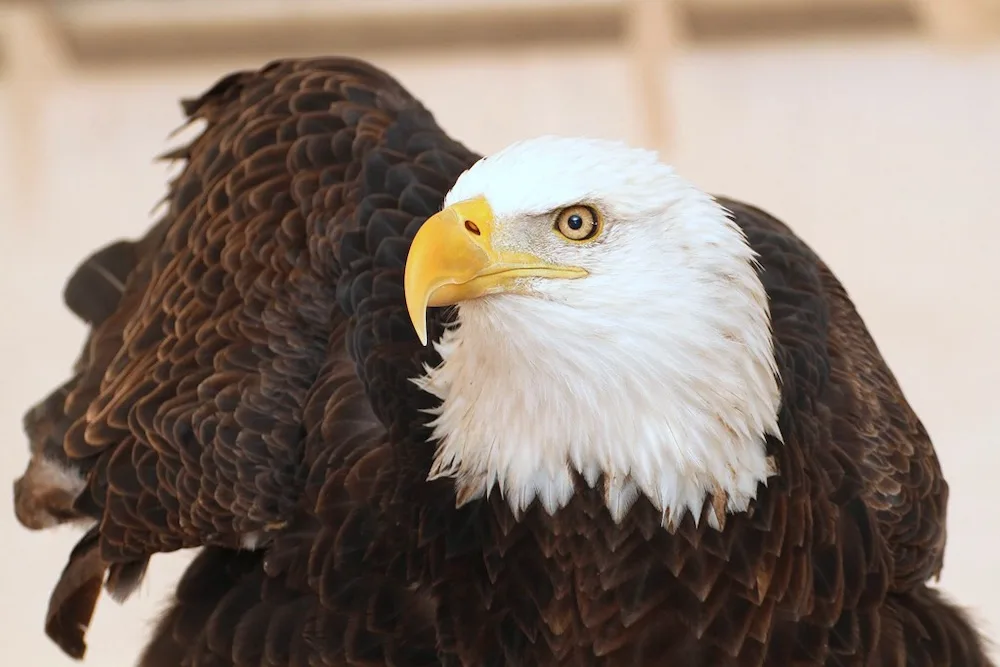
Missouri’s rivers, lakes, and wetlands may seem dormant of human activity for much of the winter, but they’re annually booked by thousands of feathered travelers on migration routes. Arguably, none are more distinctive or thrilling to encounter than the bald eagle. That’s why for years, the Missouri Department of Conservation has held a series of events known as Eagle Days to help educate visitors about these incredible raptors and, hopefully, spot one or more.
Read More: A guide to eagle watching near St. Louis
Discover your next outdoor adventure
Subscribe to the St. Louis Outdoors newsletter to get smarter about hiking, biking, paddling, climbing, and camping within the St. Louis region and beyond.
“In Missouri, we’re lucky because we get an influx of birds from Canada, Minnesota, and other places up north where the waters freeze, and they come here for easier access to fish,” says Dan Zarlenga, St. Louis regional media specialist for the Missouri Department of Conservation. “We time this event when we do, because the migration period is usually December, January, and February. But even as those visiting eagles return home, we have a good resident population, and that’s not something we had decades ago.”
Eagle viewing in the Show-Me State today is something of a given, but during much of the previous century, eagle viewing wasn’t always so easy. Estimated to span 100,000 nesting pairs when bald eagles were first adopted as the national symbol in 1782, the great birds were brought to the brink of extinction many times between the late 1800s and mid-1900s due to illegal hunting, habitat destruction, and chemical use. Zarlenga notes this final point, in the form of a pesticide known as DDT, was one of the chief causes of population decline in bald eagles when it was absorbed by fish, the birds’ primary food supply.
“It wasn’t necessarily lethal to the bird, but it compromised the integrity of the eggs,” Zarlenga says. “It put the damper on reproduction, which caused them to be endangered.”
Eagle conservation reached a crisis point by 1963, when, according to MDC information, only as many as 417 nesting pairs were known to exist. With federal protection under the Endangered Species Act, repopulation efforts, and numerous conservation policies, populations began bouncing back. The eagle was removed from the Endangered Species Act in 2007. As of 2025, MDC estimates that there are 617 active bald eagle nests in the state, climbing steadily from 123 in 2006.
Of course, the Mississippi River has long been one of the best places to view eagles in Missouri, especially during the winter months. Specific hot spots, most of them easily accessible from the Great River Road, include Lock & Dam 24 at Clarksville, Lock & Dam 25 near Winfield, Lock & Dam 20 near Canton, Old Chain of Rocks Bridge south of I-270 off Riverview Drive, and the Audubon Center at Riverlands and Riverlands Migratory Bird Sanctuary near West Alton.
Today, MDC hosts multiple Eagle Day events at public lands across the state, with one of the biggest and best opportunities for St. Louis area eagle watchers scheduled for February 7. Zarlenga says the free event—held in partnership with Audubon Center at Riverlands, the World Bird Sanctuary, the Illinois Department of Natural Resources, and the U.S. Army Corps of Engineers—gives visitors a unique opportunity to see bald eagles and other birds in their natural habitat.
“A lot of people think of winter as being boring, but one advantage is you don’t have leaves on the trees, so it makes things much easier to spot. It gives you a little bit of an advantage,” Zarlenga says. “We could be seeing bald eagles or just as easily see trumpeter swans, snow geese, herons, or pelicans perhaps. There’s a lot of cool waterfowl there.”
Visitors also can sit in on World Bird Sanctuary presentations, where they can see eagles up close, participate in crafts or educational activities in the Riverlands visitor center, climb inside a life-size eagle nest, or measure their arms against the wingspan of the famous birds of prey.
Can’t make it to an official viewing event? Eagles can be viewed any time in Missouri, often in large open areas or near bodies of water. Zarlenga suggests wearing layers and packing binoculars and your favorite birding app or guide to help with identification.
“Of course, a camera with a long zoom lens is always something to bring, if you have it,” Zarlenga adds. “And if nothing else, take a picture anyway with what you have. You can always try zooming in to help with identification.”
The Eagle Days event at the Audubon Center at Riverlands is from 9 a.m.–2 p.m. February 7. Admission is free. For more information, visit mdc.mo.gov/events/eagle-days.