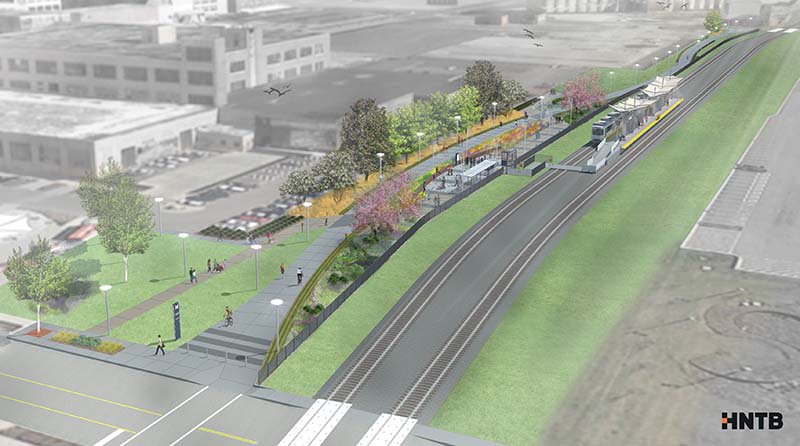
St. Louisans will finally be able to travel by foot or bike from Forest Park to the Gateway Arch once the highly anticipated Chouteau Greenway opens. The project is kicking off thanks to a Community Advisory Committee and an international design competition.
St. Louisans will have several opportunities to get involved—including as a member of the CAC, to which 206 locals applied, and which will offer advice for the project goals; as a team of local community members that will aid the project with information-gathering and neighborhood meetings; or as participants in the international design competition whose finalists will present conceptual designs to a jury next spring.
Discover your next outdoor adventure
Subscribe to the St. Louis Outdoors newsletter to get smarter about hiking, biking, paddling, climbing, and camping within the St. Louis region and beyond.
SLM spoke with Great Rivers Greenway’s vice president of communications and outreach, Emma Klues, to address the plans for St. Louis’ newest greenway and to discuss the community and international input required for the project.
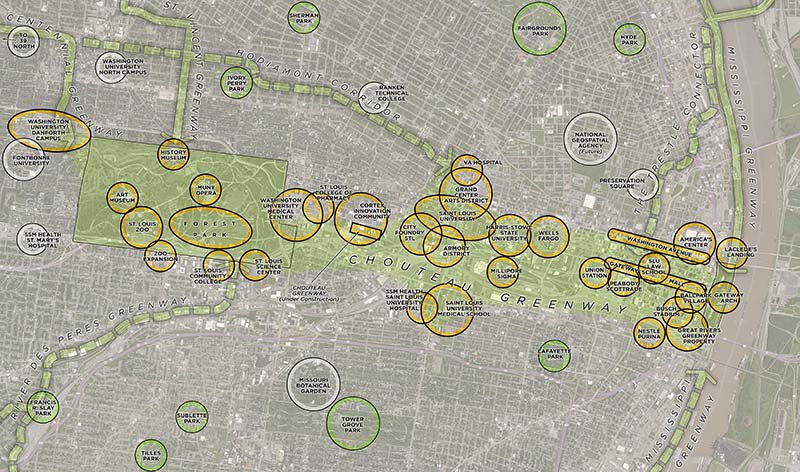
What is the goal of the Chouteau Greenway? The goal of the project is really to connect all of the different institutions and communities in this area together, so that there are ways for people to get around and have a unique St. Louis experience—whether that be cultural or educational institutions, businesses, or neighborhoods. There are all these amazing entities scattered throughout the area, and the Chouteau Greenway can bring them all together.
What is the international design competition? It is basically an opportunity to get the best of both worlds. We will be doing community engagement to make sure we understand what people here in St. Louis want and need out of a project like this. But then opening it up to the international design community to get ideas and best practices from all over the world.
When will the winner be announced? The four teams that are chosen will start designing in January; they will submit their designs in early April. The community will have a couple of weeks to provide feedback, weigh in, and then the final design will be chosen in May. It will be refined and workshopped a little. Probably by the end of June, the whole [conceptual design] process will be over. From that conceptual design, smaller pieces of the greenway can be tackled to figure out how they should be implemented and in what time frame, and then can be designed, engineered, and constructed.
What will the Citizen Advisory Committee members do? The advisory committee is a great chance for local community members to give us input on a variety of topics. Some of those topics will be the same as the survey that is out for people to take, and they will also help to guide the feedback into a set of community goals that both the designers and the jury will keep in mind as a way to evaluate the design throughout the competition.
Do you draw inspiration from other cities’ greenways? Absolutely. In fact, there are several greenways in other cities that are similarly more than a typical path. The Atlanta BeltLine, the High Line in New York, and the Indianapolis Cultural Trail are a few examples.
Final thoughts? This is a greenway that will be of a different quality than some of the other greenways. We have 113 miles and counting throughout the region already. But this one is really a unique greenway in that there will be more opportunities and experiences, because of all the connections and it being in the middle of our city.
Interested design teams can register to download the competition manual online and must submit their qualifications by November 21, 2017 to be considered.
Editor’s note: This post was updated to reflect new deadlines and selection process updates from GRG.