Being the outdoorsy type, I’ve long heard the lore of the Chubb Trail. Legendary in local mountain biking circles, Chubb has a reputation as one of the more technical stretches of singletrack in Missouri. I had never done the trail—by bike or on foot—so when a group of friends invited me for a day hike, I was excited to explore. Sure, it was summer in St. Louis—hot, humid, with a chance of ticks (and bears, apparently!) but it was the Chubb Trail. I had to check it out.
The Chubb measures 6.5 miles one way, with the western trailhead located in West Tyson County Park and the eastern end at the entrance of Lone Elk Park. We opted to start in West Tyson, on the north side of I-44 in Eureka (Exit 266). The entrance to the park is well marked, and it’s a straight shot back to a small parking area and the trailhead.
Discover your next outdoor adventure
Subscribe to the St. Louis Outdoors newsletter to get smarter about hiking, biking, paddling, climbing, and camping within the St. Louis region and beyond.
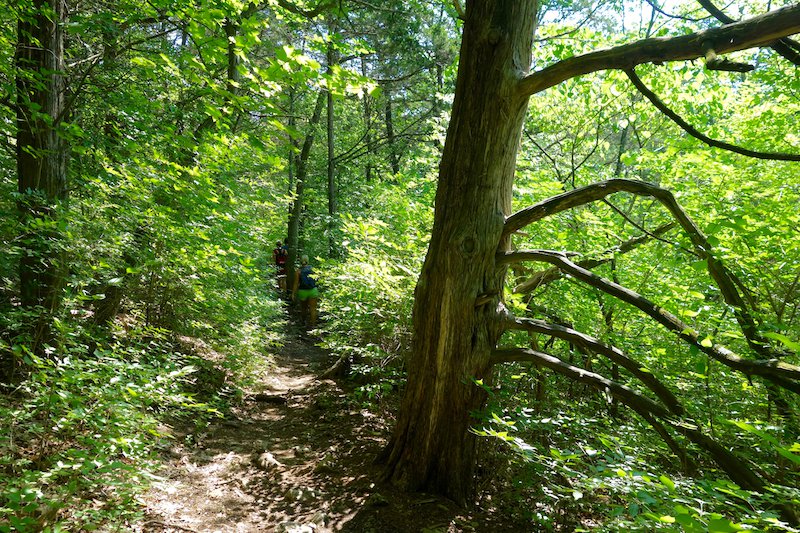
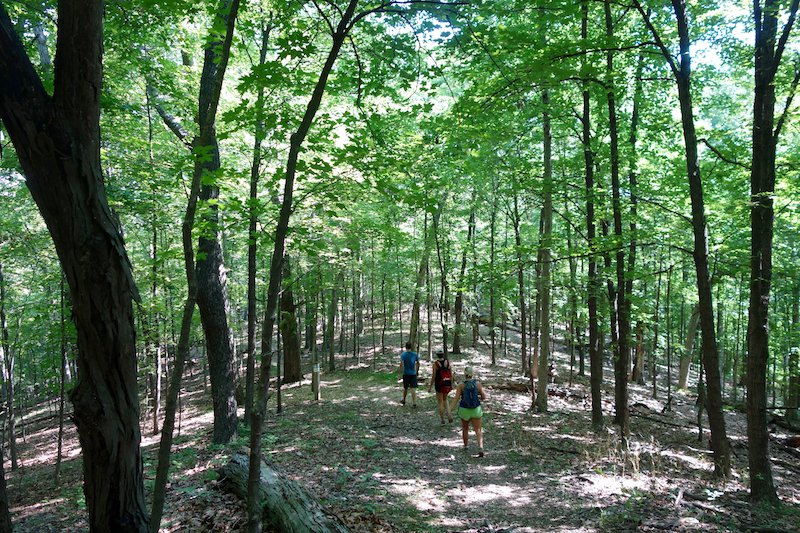
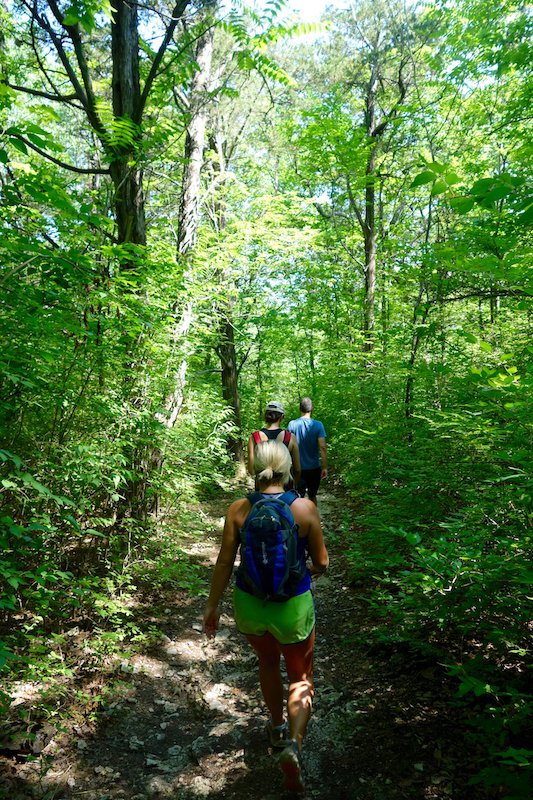
The trail itself is well-worn and clearly marked: Look for signs with a white tree on a blue background. From the parking area, it climbs a gentle hill before undulating along the ridges of the park. The forest is sparse, open, easily navigable. We came across a handful of other hikers and mountain bikers, but never felt crowded.
The first few miles reveal why the Chubb Trail is considered a ‘technical’ trail: Rocks, boulders, and exposed roots are strewn among switchbacks and a few steep climbs and descents. These can present problems for riders with little experience on a mountain bike, and hikers, beware the downhill. The terrain isn’t overly challenging, but you don’t want a twisted ankle.
One important note: Not long after you leave the parking area, the trail switches back, and if you miss the “Switchback Here” sign, you’ll find yourself on private property, wandering aimlessly through the woods until your group decides to turn around. At least that’s what I’ve heard…
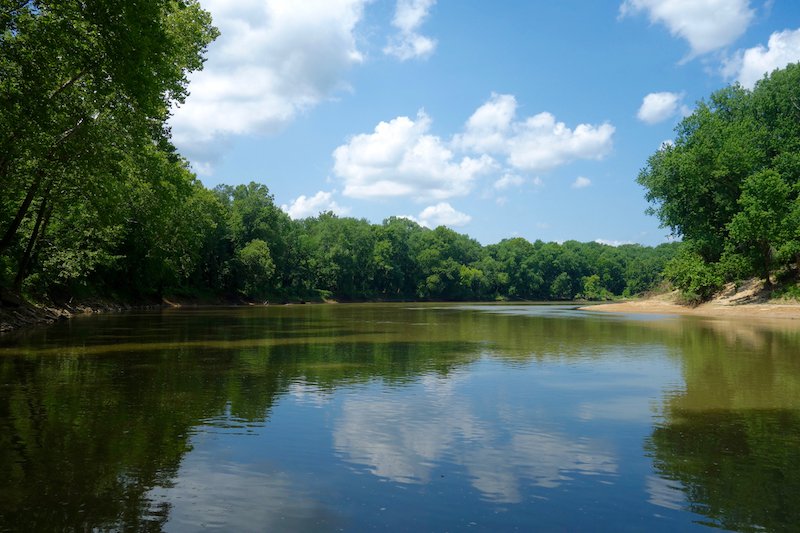
Back on the trail, though, the path makes its way uphill to a small clearing with a picnic table, then winds down to a grassy prairie reclamation area. From there, it’s across railroad tracks and down into the Meramec River bottoms as the trail winds along the banks of the river. Watch for stinging nettles, river-plain plants that can cause mild skin irritation. If you do come in contact with one, not to worry—the irritation only lasts a few minutes.
In addition to great views of the river, there’s plenty of wildlife to be seen along the trail: white-tail deer, turtles, red-headed woodpeckers, black snakes, blue heron. That large, suspiciously berry-colored pile of scat—bear droppings? Possibly…
About 4.5 miles in, we reached the river and turned back towards West Tyson, the 9-mile hike having given us a good feel for the legendary Chubb Trail.
Another favorite hike in the area is the Bluff View Trail in Wildwood. The 2.5 mile trail (5 miles out/back) starts at Bluff View Park off Old State Road and winds down the ridgeline to connect to the Al Foster Trail just east of the Al Foster Trailhead parking lot. The steepest part of the trail is the first half mile, which leads down to the lookout point that gives the park its name. The Meramec River winds below, the valley stretching beyond. It’s beautiful in early morning, when the mist is still settled in the valley. From the lookout point, the trail undulates down the ridge, switching back in a few spots, alternating between thick underbrush and widely-spaced forest. Two miles on, it connects to the Al Foster Trail, where one can turn left to head east towards Sherman Beach and Castlewood State Park or turn right and hike another half mile to the Al Foster parking lot.
Speaking of Castlewood, it’s ideal for short, easy-to-intermediate trails. One of my favorites is the Love Trail, which zig-zags up the ridge opposite the Ranger Station at the entrance of the park. It’s a mild climb throughout, popular with hikers and mountain bikers alike. The trail is well-worn and easy to follow, and switches back a few times as it climbs the 1.25 miles up to the Ries Road crossing. From here, you can double back the way you came, cross Ries Road to continue along the challenging Grotpeter Trail, or turn right to connect to a handful of other trails that wind along the ridge.