On the Move
Last year, BJC HealthCare’s Healthy Kids Express expanded its services when it added the nation’s first mobile pediatric diabetes unit, which helps students at underserviced schools manage and prevent the disease.
The Long Tail
Thanks to a five-year national grant, WashU’s long-COVID clinic has extended its outreach to underserved communities. For COVID-19 patients with persistent health challenges, the clinic aims to provide support and solutions.
Your guide to a healthier, happier you
Sign up for the St. Louis Wellness newsletter and get practical tips for a balanced, healthy life in St. Louis.
Persistent Problems
A new study from researchers at WashU and the Veterans Affairs St. Louis Healthcare System found that COVID-19 patients who were hospitalized within the first 30 days after infection face a 29 percent higher risk of death in the third year after infection compared to those who’ve not had the virus. The three-year death risk marks a significant decline, however, compared to such risk one or two years after infection. The study also found that patients with even mild symptoms can experience new health problems related to the infection three years later.
New Neurotechnology
NeuroAccess, a noninvasive brain biopsy device developed by WashU neurosurgeon Dr. Eric C. Leuthardt and biomedical engineer Hong Chen, could provide a safer way to diagnose tumors. The FDA recently designated the tech as a “breakthrough device,” a designation given to devices that show exceptional promise. Rather than performing high-risk brain surgery to obtain a biopsy, the device allows physicians to obtain blood-based liquid biopsies, an advance that could revolutionize diagnosing tumors and other neurological disorders.
Long-Term Relief
The Long-Acting Injection Clinic at SSM Health DePaul Hospital–St. Louis provides an alternative for patients who have behavioral and mental health disorders that may hinder their ability to take medication every day. The clinic substitutes oral medications that must be taken daily or on a short-term, regular basis with monthly injections that last longer.
Advances in ALS Treatment
The FDA recently approved tofersen (Qalsody), a new drug to treat a rare, inherited form of ALS. WashU neurologists helped conduct the clinical trials, which showed significant reduction in molecular signs of disease and neurodegeneration in the first six months of use. Some participants who used the drug longer saw improved muscle strength.
Weight-Loss Alternatives
For patients who’ve received bariatric surgery and are seeking additional weight-loss options, gastric revision provides an alternative. Dr. Darin Minkin, medical director and founder of St. Luke’s Des Peres Hospital’s bariatric surgical program, can convert a sleeve gastrectomy to a duodenal switch or gastric bypass, often resulting in significant weight loss.
Tech-Driven Transplant
Last year, WashU surgeons at Barnes-Jewish Hospital performed the first successful robotic liver transplant in the U.S. Using joystick-like controls to operate robotic arms equipped with surgical tools, the surgical team removed the patient’s diseased liver and transplanted a new, healthy liver through small incisions.
Robo Replacements
At Mercy Hospital South, surgeons have a new tool for knee replacement surgery. The Robotic Surgical Assistant (ROSA) system provides a minimally invasive alternative and uses data about a patient’s unique anatomy, collected before and during surgery, to provide the surgeon with details that help inform the implant fit.
AquaBeam
For patients with an enlarged prostate, Mercy Hospital St. Louis offers Aquablation therapy, a new treatment for lower urinary tract issues resulting from benign prostatic hyperplasia. With the AquaBeam robotic system, the minimally invasive procedure uses multi-dimensional imaging, automated robotics, and heat-free water jet ablation.
In Sync
Physicians at Mercy Hospital St. Louis are using new technology to provide pinpoint radiation treatment. Treating lung tumors with radiation can be difficult, as the target changes position while the patient is breathing. Synchrony technology, however, enables the treatment beam to synchronize with the target’s predicted location.
Under Construction
A look at new medical facilities and expansions across the St. Louis region
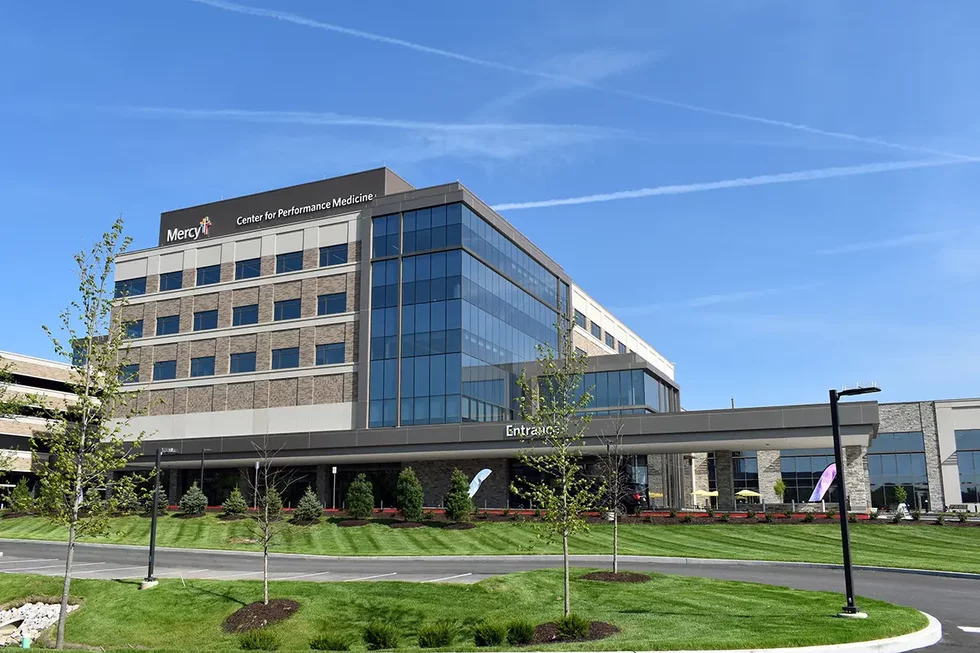
Mercy Center for Performance Medicine and Specialty Care
The 272,000-square-foot outpatient surgery center specializes in neurosurgery, orthopedics, urology, and weight-loss surgery. Since opening last spring, the facility has also added more services, including precision medicine, wellness programming, and imaging.
Jeffrey T. Fort Neuroscience Research Building
Washington University’s new 11-story, $616 million facility spans 690,000 square feet and aims to become the nation’s premier brain research center, providing space for neuroscience, neurology, and psychiatry research, with an emphasis on collaboration.
Siteman Cancer Center’s Ambulatory Cancer Building
Located on WashU’s medical campus, the nine-story building dedicated to outpatient cancer care will include 96 exam rooms, 88 infusion pods, imaging services, and a hematology and chemistry lab space.
SSM Health Cardinal Glennon Children’s Hospital
Slated for completion in 2027, the state-of-the-art, 14-story children’s hospital at Chouteau and Grand will offer more than 200 inpatient beds, larger areas to accommodate patients’ families, and expanded services.
Mercy Hospital Washington’s Cardiovascular Cath Lab Expansion
Mercy Hospital Washington is embarking on a $10 million expansion of its cardiovascular catheterization lab, which will increase the number of procedure rooms and add more modern equipment.
Mercy Wentzville
Mercy plans to build a $650 million hospital in Wentzville, near the intersection of Interstate 64 and Interstate 70. The 483,000-square-foot, 75-bed facility will provide a more convenient option for residents in St. Charles County, where the population continues to grow.
SSM Health Outpatient Center in St. Charles County
Scheduled to open in October at the Streets of Caledonia in O’Fallon, Missouri, the 66,000-square-foot facility will offer pediatric care, primary and specialty care for adults, imaging, and a retail pharmacy.
BJC Sickle Cell Treatment Center
In April, BJC HealthCare opened a sickle cell treatment center in the Center for Advanced Medicine—the 12th facility of its kind in the nation. The 1,700-square-foot center helps patients manage pain during sickle cell crises and provides an alternative to the emergency room.
Washington University’s Center for Translational Bioinformatics
The new center is creating a cross-discipline hub to accelerate precision medicine research, integrating patient data and genomic datasets.
Drug Discovery
To help make further advances in drug development and innovation, Washington University recently partnered with Deerfield Management, a health care investment firm, to launch VeritaScience. The new collaboration is designed to provide selected WashU investigators with funding and expertise for drug discovery, development, and commercialization. Investigators can submit proposals to VeritaScience’s scientific review team, and accepted projects will receive a development plan to help promote investigational new drug readiness. Deerfield has committed up to $130 million, along with functional expertise, to support the initiative during the next decade. Deerfield managing partner James Flynn said in a press release, “We intend to equip the researchers of selected projects with flexible capital, expertise, and operational support to help them realize their discoveries’ potential.”
Hospital at Home
When Mercy Hospital St. Louis started reaching capacity, the institution found a new way to care for patients: Through its Hospital-at-Home program, patients receive a minimum of two daily nursing visits, as well as 24/7, 365-day access to the Mercy team. “Patients want to be able to receive their care in the home; they want the care to be brought to them,” says Aaron Pickrell, Mercy hospitalist and regional medical director of Mercy Hospital-at-Home. Likewise, BJC HealthCare has its Virtual Bedside Nursing pilot program, where senior nurses can virtually visit the hospital to help patients with such items as discharge management, case assessment, and patient education, and they can mentor newer nurses. The program has garnered an 85 percent patient satisfaction rating. “[Patients] have the undivided time,” says Tom Maddox, vice president of digital products and innovation for BJC HealthCare. “The virtual nurse doesn’t get pulled away because he or she’s literally not there to go do the other stuff. Patients are feeling heard and attended to.”
Canine Care
Nursing students know a thing or two about providing support. And during stressful times, such as finals and midterms at Saint Louis University Trudy Busch Valentine School of Nursing, they’ve received additional support themselves—from dogs. Professor Margaret Bultas, however, thought therapy dogs could also help ease day-to-day stresses, so she conducted a pilot study on the presence of dogs in classroom settings as a therapeutic solution. Bultas found that students who were exposed to her certified therapy dog, Jessie, experienced a significant decrease in stress and anxiety, as well as a significant increase in happiness. According to the study’s results, 99.4 percent of students said they wanted the dog in the classroom. Bultas hopes to gather more data, and she’d like for professors to have more access to dogs in classrooms across campus. Jessie’s available when faculty members request a visit. “She’s only 5, but she acts like an old soul,” says Bultas. “She literally just lies in the classroom and sleeps during class, but students will look over and smile… She just changes the atmosphere.”