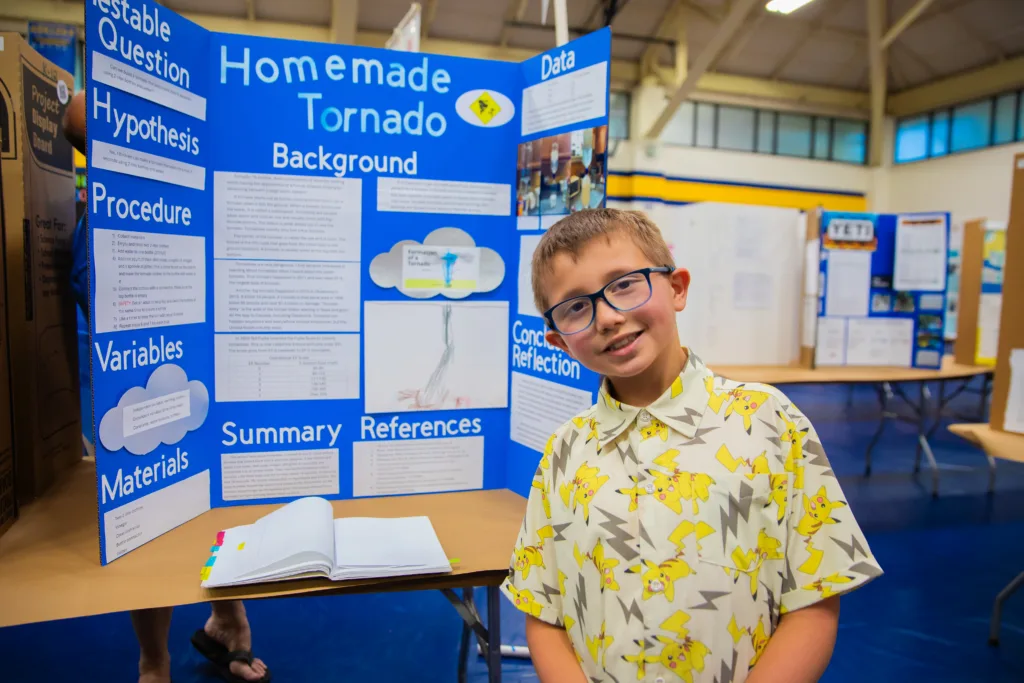
When most people hear the words “science fair,” they picture papier-mâché volcanoes, baking soda eruptions, and poster boards covered in construction paper. The St. Louis Science Fair still has plenty of colorful displays. But for some students, it’s also the first step toward conducting college-level research, working alongside university mentors and presenting discoveries with the potential to improve lives.
Discover fun things to do with the family
Subscribe to the St. Louis Family newsletter for family-friendly things to do and news for local parents, sent every Monday and Thursday.
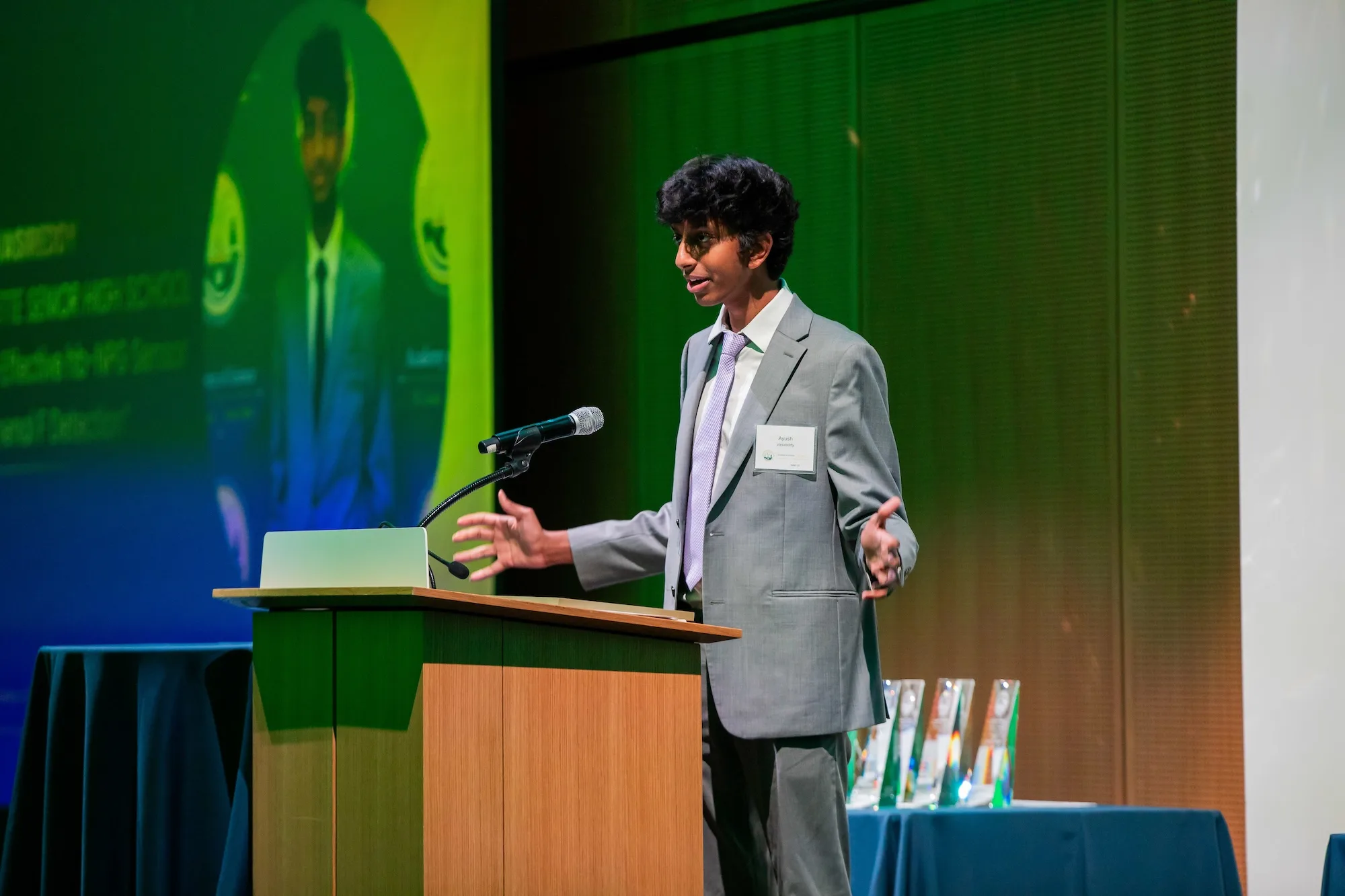
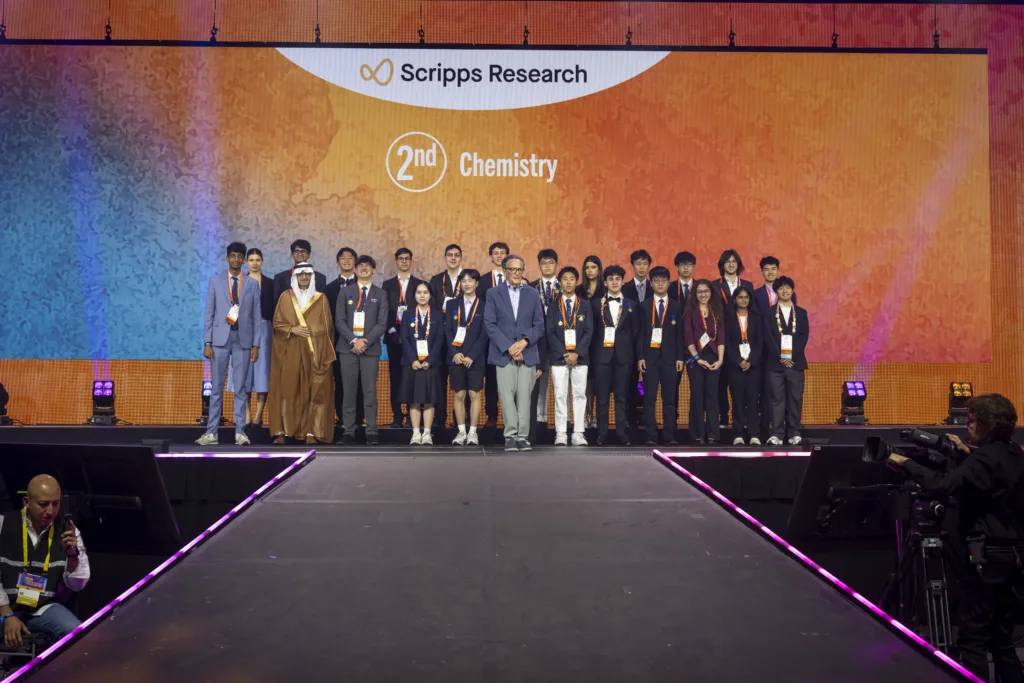
Just ask Ayush Vasireddy. The local high school student recently earned second place in chemistry and three special awards at the Regeneron International Science and Engineering Fair (ISEF), making him one of the world’s most decorated student researchers this year. His project—a low-cost sensor capable of rapidly detecting Bisphenol F (BPF), a chemical increasingly used in plastics—could eventually make it easier to monitor water quality and strengthen public health protections.
“It’s really astounding,” says John Nahon, development manager for the Academy of Science of St. Louis. “He ended up in the top 2 percent of the most-awarded students in the world.”
While Ayush’s accomplishments are extraordinary, Academy leaders hope that parents see something even bigger: The science fair isn’t just about winning awards; it’s about helping kids discover that they belong in science.
More than a classroom assignment
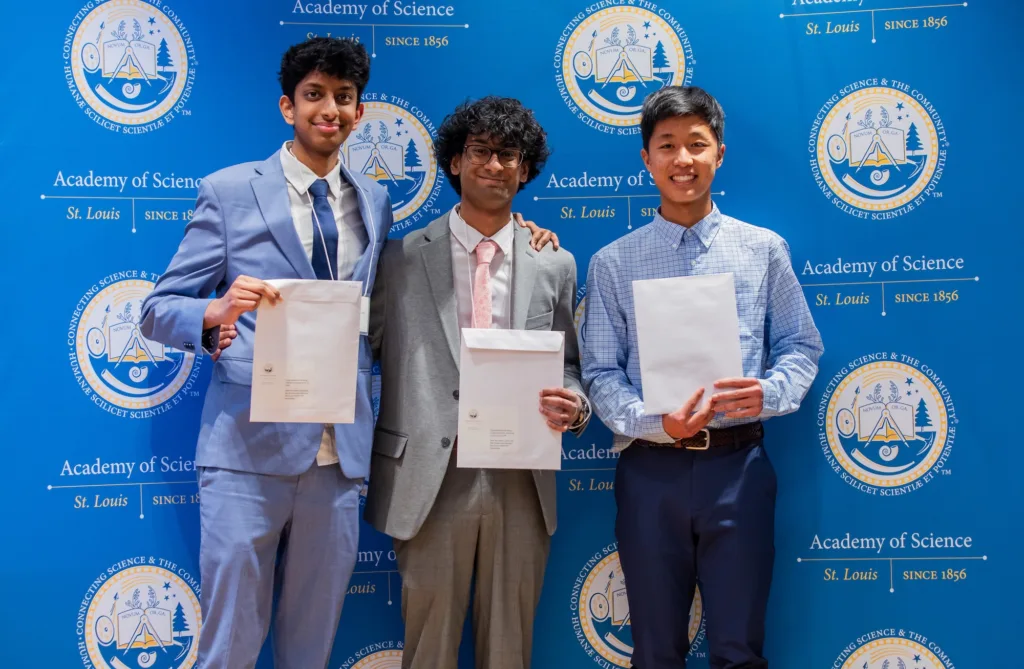
The Academy of Science of St. Louis hosts the annual St. Louis Science Fair, which welcomed about 3,000 students representing roughly 1,100 projects this year. While many participants are completing their first independent investigations, the Academy’s Honors Division gives high school students an opportunity to pursue research at an entirely different level.
This year’s Honors Fair included approximately 50 student researchers. After presenting their work before panels of scientists and researchers, 10 finalists advanced, with two ultimately earning spots to represent St. Louis at ISEF—the world’s largest international science competition.
There, students compete against more than 1,700 research projects from around the globe.
“Ayush was competing against students from countries that have government-funded research programs,” Nahon says. “To conduct this research here in St. Louis and perform at that level is incredible.”
Working with University of Missouri–St. Louis professor Dr. Keith J. Stine, Ayush developed a nanoporous gold sensor that can detect BPF far more quickly and affordably than current laboratory methods. His invention is already in the patent process.
Rather than sending samples to expensive labs for lengthy testing, the sensor allows researchers to analyze samples almost immediately—technology that could one day make environmental monitoring faster, easier, and more accessible.
Helping kids see themselves as scientists
The Academy believes science fairs accomplish something that extends far beyond STEM knowledge.
Research shows that many children decide surprisingly early whether they see themselves as “science people.” The Academy’s mission is to help ensure the answer is yes. “We really believe that starts in K through 12,” Nahon says. “Helping students build a science identity is one of the most important things we do.”
Unlike traditional classroom labs with predetermined outcomes, science fair projects ask students to investigate questions that genuinely interest them. Along the way, they practice problem-solving, perseverance and independent thinking.
For older students, that often means working alongside professional researchers from institutions including Washington University in St. Louis, Saint Louis University, and UMSL.
“They’re doing real research,” says Christina Carlson, chief programs officer for the Academy. “They’re not doing the stereotypical baking soda volcano. They’re doing work that can actually change people’s lives.”
Building confidence beyond the lab
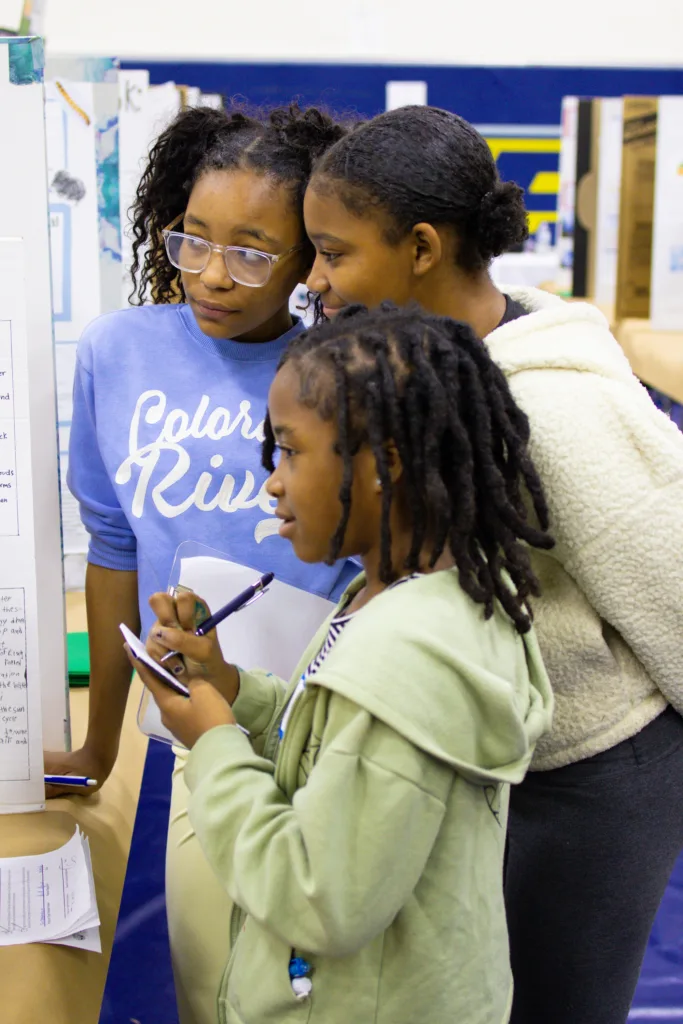
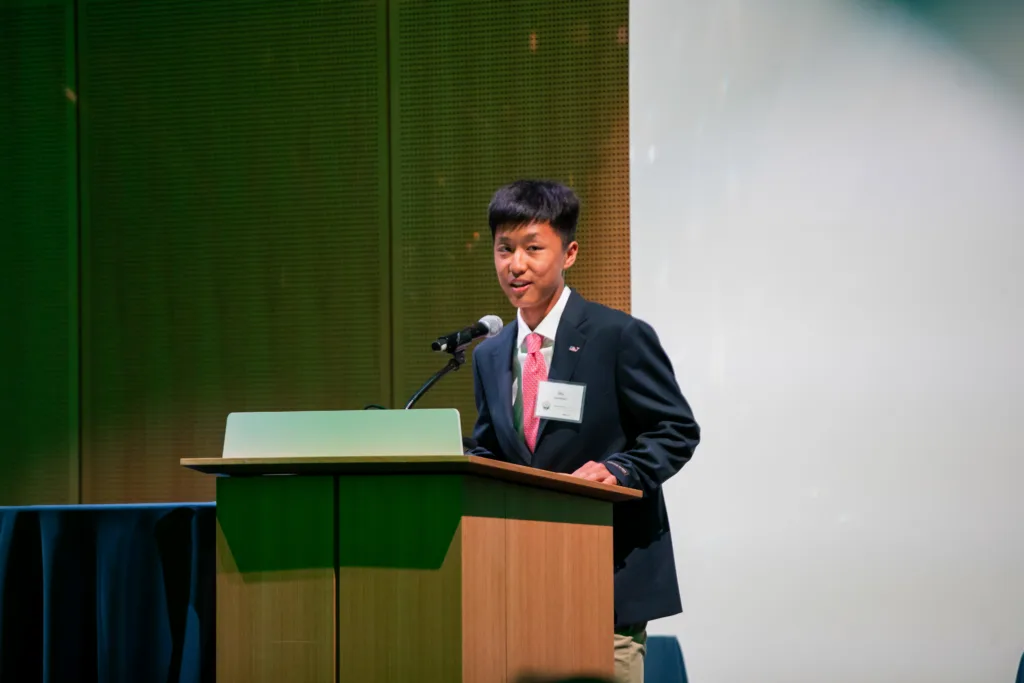
Science fairs also develop skills that extend well beyond STEM careers, leaders agree. Students present their findings before panels of Ph.D.-level judges, explain complex ideas to general audiences and answer questions on the spot—experiences that build confidence in communication as much as scientific knowledge.
“You could do the most amazing research,” Carlson says, “but if nobody understands it or knows how it works, it’s hard to make an impact.”
Nahon says one of his favorite moments this year came not from the awards ceremony, but from watching younger students proudly explain their projects to classmates and family members during public viewing hours.
“One student’s mom told us afterward, ‘My girls feel like they’re scientists now,’” he says. “That’s exactly what we hope for.”
Opening doors for every student
The Academy is working to make those opportunities available to more children across the region. Participation in the St. Louis Science Fair is free, and the organization has expanded partnerships with Title I schools by providing materials, teacher training and additional support so more students can participate regardless of financial circumstances.
“Our world is shaped by everyone,” Carlson says. “It’s important that every student has the opportunity to see themselves in science.”
That work also supports a broader vision: The Academy hopes stories like Ayush’s remind families that St. Louis is one of the country’s leading centers for scientific research, with world-class universities, hospitals and companies creating opportunities for students close to home.
“We want St. Louis to be a place where science is trusted and scientists thrive,” Nahon says. “Students don’t have to leave St. Louis to do world-class science.”
How to participate
The next St. Louis Science Fair will take place March 8–13, 2027, at Saint Louis University. Registration opens August 30, and students throughout the St. Louis metro area can participate through their schools or by entering individual projects.
The program is free. For registration information, project guidelines, and timelines, visit the Academy of Science of St. Louis’ Science Fair webpage.