Got a dinosaur-obsessed kid who can pronounce Parasaurolophus better than you can? Or maybe a suspicious-looking rock that’s been sitting on a bedroom shelf because your child is convinced it’s a fossil?
Bring both to the Saint Louis Science Center on October 17.
Discover fun things to do with the family
Subscribe to the St. Louis Family newsletter for family-friendly things to do and news for local parents, sent every Monday.
The inaugural St. Louis Prehistoric Life Show is bringing fossil hunters, scientists, artists, collectors, museums, universities, and plenty of prehistoric specimens together for a free, all-ages celebration of ancient life. And unlike many museum experiences, this one encourages kids to get their hands on the science.
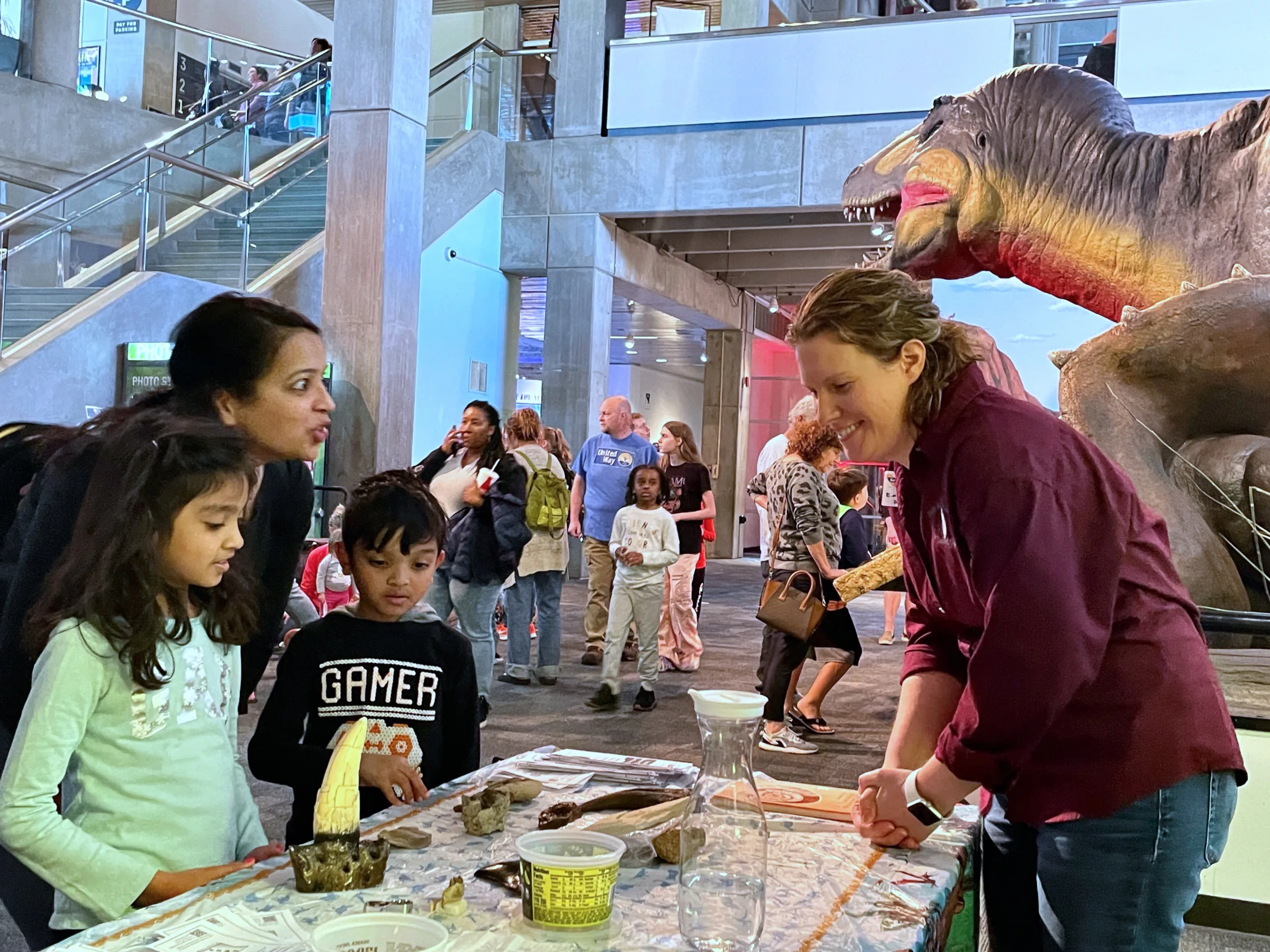
Families can crack open rocks in search of real fossils, sift through gravel for more prehistoric finds, make jewelry with fossilized crinoids, bring mystery rocks to experts for identification, and explore thousands of fossils from Missouri and beyond. There’s even a familiar face for SLM readers: Mylo Mundwiller will bring his Dino Trading Post to the Science Center for a supersized toy dinosaur swap.
For co-founder Jon Porter, the event fills a gap he has noticed since he first became interested in fossils as a teenager.
“If you’re in a sport, there’s sporting events with thousands of people. If you’re into comics or anime or anything like that, there’s comic cons,” Porter says. But for people fascinated by fossils, fossil collecting, or dinosaurs, he says, “there’s nothing like that.”
Until now.
A prehistoric playground
Porter began imagining a St. Louis fossil show several years ago, eventually sharing the idea with his wife, Kristen Tippit, and their friend and fellow co-founder Asa Kaplan. What started as conversations around a kitchen table grew into the volunteer-run St. Louis Prehistoric Life Show and Paleoheritage, a nonprofit dedicated to documenting and protecting fossils, stories, and sites.
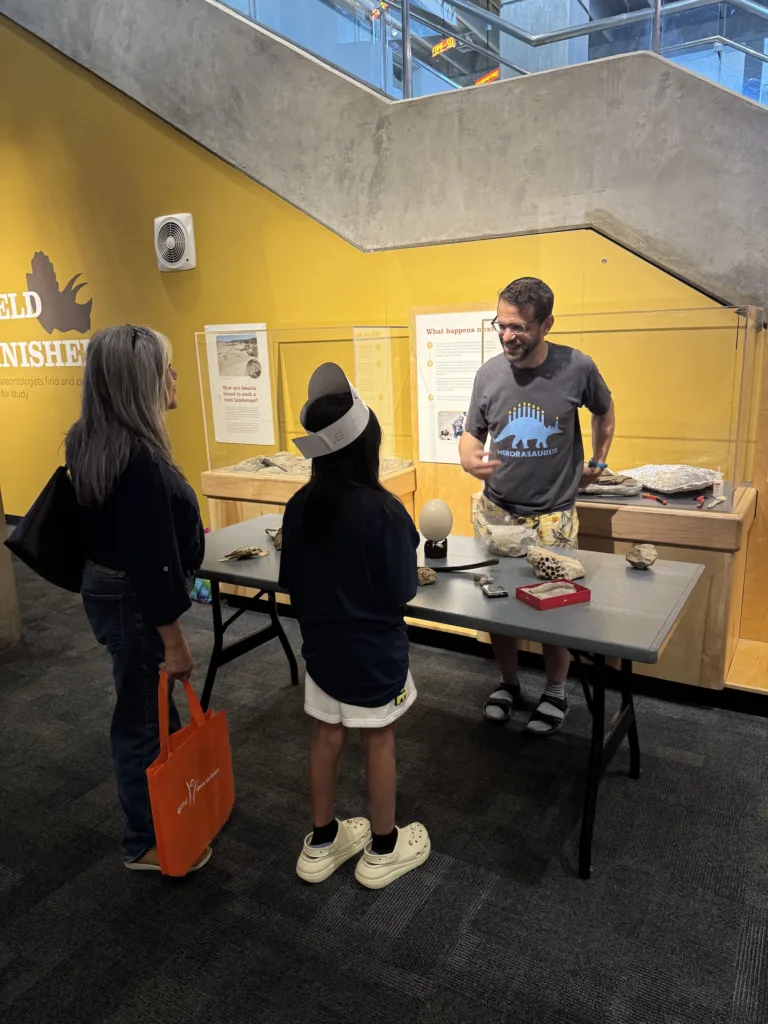
The group initially imagined working its way up to a venue such as the Saint Louis Science Center. Instead, it landed there for its first year.
“It’s the premier facility for this kind of event,” Porter says. “It’s a dream come true.”
The show will spread across six spaces on the Science Center’s lower level, with roughly 100 participants coming from across Missouri, the Midwest, and beyond. Participating organizations range from Mastodon State Historic Site and the Missouri Dinosaur and Paleontology Center to the University of Missouri and local fossil-hunting groups.
Each space offers something different. The Atrium will bring together local fossil clubs, museums, universities, specimens, activities, and the Dino Trading Post. The T. Rex Room will showcase museum-quality private collections representing years of work by fossil hunters, with specimens ranging from Pennsylvanian sea life to fluorescent minerals.
But the displays are only part of the experience.
“We want to ensure that grown-ups and kids alike, everyone feels welcome,” Porter says. “It’s about sharing information, but having fun with it.”
That means plenty of opportunities to touch, make, investigate, and ask questions. At the show’s Dig Site, kids can sort fossil-filled gravel, use rock hammers to split open layered rock, and string real crinoid fossils into bracelets. If they uncover a fossil while digging, they can take it home. Fossil cracking and gravel sorting will be available while supplies last.
Porter, who has spent a chunk of his career teaching middle school science, says that hands-on approach was intentional.
“There’s a big difference between seeing things behind glass and experiencing them,” he says.
His hope is that visitors might “walk into a room and have an experience, and when you walk out, you’re a different person.”
Is that a fossil?
Families should also check pockets, gardens, and rock collections before heading to the Science Center.
At the Fossil Road Show in May Hall, visitors can bring in a rock, known fossil, or mystery find and have experts from across Missouri examine it for free.
Think Antiques Roadshow, minus the appraisal and plus a few million years.
Experts can help visitors determine what they’ve found, how old it might be, what kind of creature it came from, and the environment in which it once lived. Mizzou’s geology team will also have tables in May Hall.
Elsewhere, visitors can explore collections assembled over lifetimes of fossil hunting and meet some of the collectors behind them. In the Dino Den, a paleoart gallery will feature work from more than two dozen artists, including professionals, academics, model makers, and other contributors from Missouri, across the country, and even Europe. Some artists will demonstrate their work live, giving kids a look at how scientists and artists use fossil evidence to reconstruct animals no human ever saw alive.
The gallery will also include Lola, a giant Tyrannosaurus skull sculpture by St. Louis artist Nicki Mizell that was previously featured in Smithsonian Magazine.
Over on the Energy Stage, live talks and demonstrations will run throughout the day, covering fossils, paleoart, and even a volcano demonstration. Families can also pick up a scavenger hunt-style map to help explore all six spaces.
Mylo’s Dino Trading Post gets a bigger home for the day
There’s another hands-on experience that requires no rock hammer. Mylo’s Dino Trading Post, the South County toy swap St. Louis Magazine first visited in 2025, will pop up with an expanded booth at the show.
The neighborhood trading post began when Maggie Mundwiller and her then-5-year-old son, Mylo, created a simple way to curb the constant requests for new dinosaur toys: Take a dino, leave a dino.
Porter and the other organizers met the Mundwillers through the local fossil community and wanted to bring the kid-created project into the larger event.
“We’re just big fans of the whole thing,” Porter says.
Families are encouraged to bring a dinosaur to trade, but organizers also want children who arrive empty-handed to be able to participate. Visitors with prehistoric toys their kids have outgrown can donate them to help keep the trading post stocked throughout the day.
A show for the dinosaur experts and the dino-curious
Although the show has plenty for the kid who can identify a Triceratops at 20 paces, organizers don’t expect visitors to arrive with any prehistoric expertise.
Porter says many of the scientists, museum representatives, collectors, and educators participating in the event are accustomed to fielding questions from people with wildly different levels of knowledge.
And he emphasizes that the event isn’t only for children.
“There’s something for everyone,” he says, adding that organizers intentionally avoided watering down the science for younger visitors.
That accessibility extends to the price. Admission is free, no advance ticket is required, and the show is entirely volunteer-run. According to the event’s website, the show costs about $5,000 to produce, with donations through Paleoheritage helping pay for activities, supplies, volunteer food, and other expenses.
Porter says the free model reflects the organizers’ emphasis on education and outreach and aligned naturally with the Science Center’s free general admission model.
Organizers hope the event also serves as an entry point into St. Louis’ broader fossil community. Visitors can sign up through the show’s website for updates on local fossil-related events and activities, and Porter hopes the Prehistoric Life Show itself can eventually become an annual tradition.
For Porter, bringing those people together is about more than finding the next generation of dinosaur fans. Part of his work with Paleoheritage involves reconnecting with longtime fossil collectors and preserving the stories behind their collections before they’re lost.
“It’s not just the fossils that need saved,” he says, “but it’s the stories behind them.”