As St. Louis basks in the glow of hosting the U.S. Figure Skating Championships, one local program has already spent the past five years fueling the city’s growing skating momentum—one P.E. class at a time.
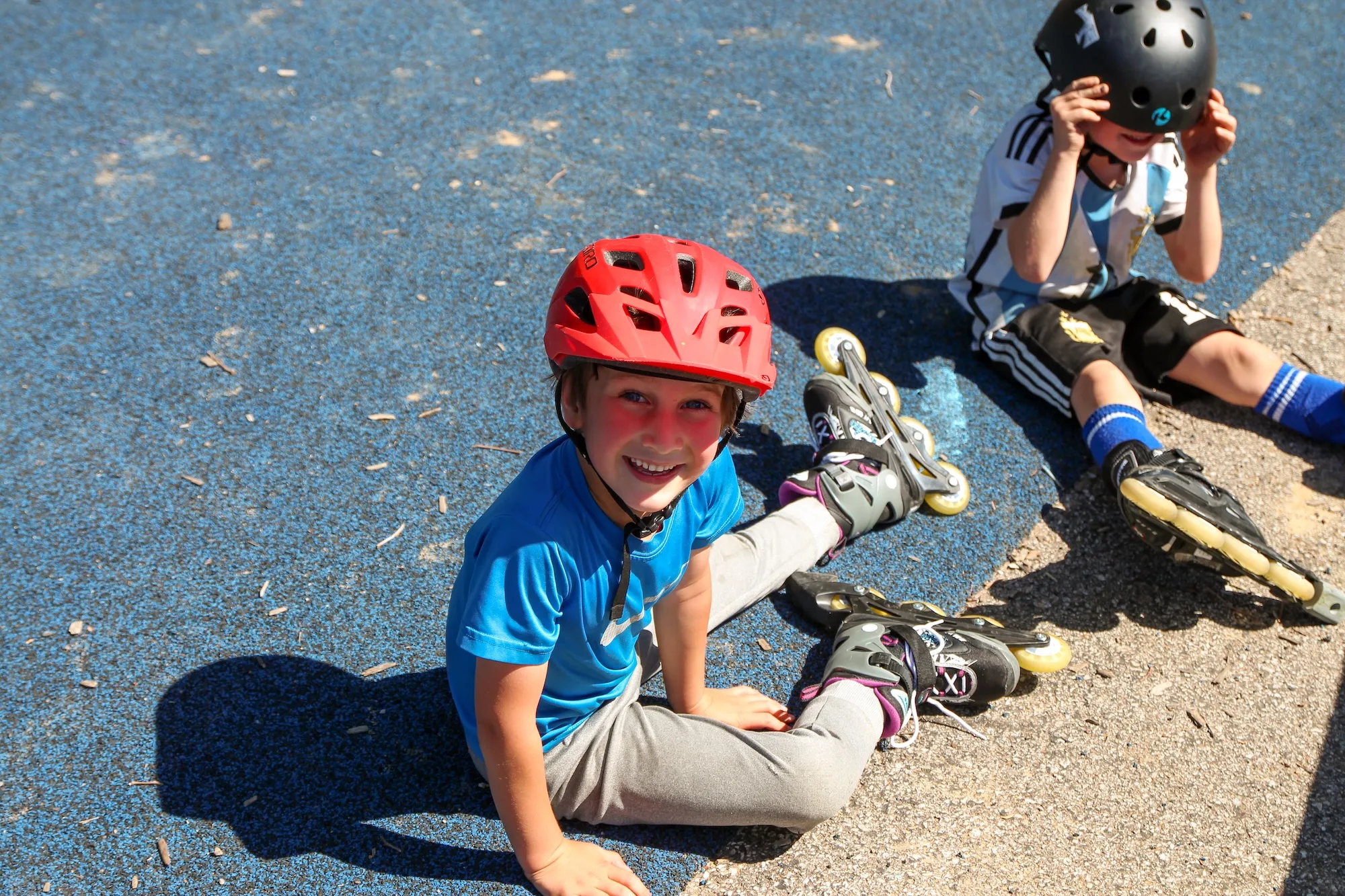
From elementary school gyms to summer camps across the metro area, Skate St. Louis founder Auggie Bindbeutel has become Missouri’s largest provider of inline skating instruction, teaching countless kids skills that extend far beyond the rink.
Youth inline skating may look like play, Bindbeutel says, but it’s also a gateway to confidence, coordination, and a lifelong relationship with movement, which is perhaps why so many local parents have been contacting him or their school to work with Bindbeutel to teach their kids. “My goal is to show kids that skating isn’t just a unit in P.E.; it’s a skill they can carry with them for life,” Bindbeutel says. “A lot of kids would never try skating if it didn’t show up in their school gym fully set up and ready to go.”
The Sunset Hills native initially launched Skate St. Louis as a way to serve Great Rivers Greenway’s locations, and it quickly evolved into a robust summer camp program. This year, Skate St. Louis has plans to reach more kids than ever. “Once parents see how quickly their kids pick it up, demand just explodes,” he says. “I’ve never had a kid who couldn’t learn to skate if we gave them the time and the chance.”
Discover fun things to do with the family
Subscribe to the St. Louis Family newsletter for family-friendly things to do and news for local parents, sent every Monday.
A New (In)lineup
Much of Bindbeutel’s plans for his fifth year in business include spreading out his roughly 270 pairs of skates across a full slate of school and community center rotations, with each schedule including 120–300 kids.
A new Learn to Skate program will also launch this year in rented spaces across a range of municipalities, as well as public freestyle events.
“I’m trying to work with The Dome at America’s Center to host a skating event inside, on the concourse, which is something fun that the U.S. Bank Stadium, where the Vikings play in Minneapolis, do every year,” he says. ” I also have a meeting with CITY SC and Enterprise [Center] to discuss potentially doing that here for some of the public events. Anyone can bring their own skates or rent some from me.”

In early 2026, Bindbeutel explains, the program will also enter a period of opportunity for expansion with youth figure skaters and hockey players. “A lot of the main ice rinks in town are getting remodeled or rebuilt around the St. Louis area,” Bindbeutel explains. “Kirkwood Ice Rink, for example, is going to shut down the first week of March to get renovated and won’t probably be back until early September.”
With Kirkwood being home to the largest youth hockey programs in the area, Skate St. Louis has plans to fill the void that might arise there and across the region for practice and conditioning. “It’s also a cheaper way for kids to train for sports on ice, and they still get the muscular development and coordination development through inline skating,” Bindbeutel says.
A Perfect 10 in Parenting
The skills learned through inline skating make for an all-around more athletic person, Bindbeutel explains. Even when it might not seem like it directly translates to a child’s chosen spot, those skills can still apply. “Someone who knows their body well enough to balance on skates and maneuver in that sport typically has good body awareness and coordination into other sports,” Bindbeutel says. “I put a big emphasis on kids being active and healthy in their younger years, because even when people don’t pick it back up until they’re 10 [years old], 15 years down the line they at least have a good foundation for getting active.”
Bindbeutel explains that inline skating develops kids’ ability to sense where they’re shifting their weight when they’re turning and coordinating that with a pushing movement to propel themselves forward, backward, or come to a stop. “It’s the same thing you do in many other sports, especially in soccer, when you’re switching from offense to defense,” he says. “But as a whole, developing that quad strength in the legs and lower-back strength, in tandem with all the coordination of the different drills, develops the whole body at a higher level and much quicker than many other sports.”
Bindbeutel also notes that St. Louis already offers a number of top facilities. “We actually have some of the best facilities in the world, and we’re very lucky to have those,” he says. “We just sometimes have to use them a different way, without having to do too much to modify them.”
Bindbeutel has seen a student as young as 3 years old in his camps and as old as high schoolers, but the primary range is for grade 2–8. That doesn’t mean the lessons learned come to a full stop in childhood, though. “I try to always lead by example with myself; I’m 28, and I’ve been skating since I was 7 or 8 years old,” he says. “And I’m not old by any means, but I can show them, Hey, I’m 20 years older than some of you, and I’m still able to do X, Y, and Z… And the example of their P.E. teachers, principals, and other teachers participating shows them, Oh, I can do this my whole life. I can be active and do healthy habits forever.”

For those who are nervous about lacing up for the first time, Bindbeutel coaches proper positioning and provides a confidence-boosting talk. “A lot of kids who have never skated are worried about falling or hurting themselves,” he says. “So I tell them that out of the 4,000 kids I’ve taught, the worst I’ve ever had happen is someone kind of scrape up their knee or elbow. And they all quickly realize that even as bad as that might have seemed, it wasn’t that bad in the scheme of things, and they can get right back out there and get back to learning.”
Schools and organizations interested in hosting a Skate St. Louis camp or class can call Bindbeutel for a free demonstration to ensure their indoor floor’s surface is safe for skaters and from skates—and most always, they are. “As long as you have a flat surface and a group of kids you want to serve, I have pretty much all the skates to accommodate, whether it’s a one-off event, a Learn to Skate program, or a P.E. unit where we take over for two or three weeks in the class and teach.”

Finding His Bearings
Providing accessibility to skating for St. Louis’ kids is close to Bindbeutel’s heart. An athlete from a young age, the Skate St. Louis founder competed in track and field through high school and college as a sprinter and jumper. He began inline skating around age 7 or 8 after ice and roller hockey proved too expensive for his family. He learned the sport from an older neighborhood friend with Down syndrome whose athletic ability left a lasting impression. Skating quickly became both a source of freedom and a form of off-season training.
“It allowed me to just forget about the stress of life or family situations at the time, and really get out there and push my limits,” Bindbeutel says. “Skating was the one sport that made me feel completely free, and I wanted to give that feeling to other kids.”

Bindbeutel says he’s never met a kid he couldn’t teach who wanted to learn, even if it requires one-on-one attention. To Bindbeutel, the chance to learn, grow, and feel empowered should never be limited based on age, ability, or affordability.
“Our job as adults is to give these kids opportunities,” Bindbeutel says. “And if they latch on to certain things, we should do our best to allow them to pursue that. If you work with them and are persistent enough, every kid can learn.”