
Sending a kid hundreds or thousands of miles away to college comes with an uncomfortable parenting reality: Eventually, something is going to go wrong, and you won’t be there to fix it.
Maybe it’s relatively minor. They get the flu and need medicine or can’t figure out which dentist takes their insurance. Or maybe you get the phone call every parent dreads.
Mindy Horwitz has been the person on the other end of both.
When one college student was involved in a car accident near Big Bend and Forest Park Parkway, Horwitz says she was able to reach her within about 15 minutes and stay with her on the side of the road.
Another time, a mom called around 8 p.m. after a fire forced her student’s apartment to evacuate. Horwitz headed to campus, stopped at CVS for toothbrushes and deodorant, waited while the students finished talking with the fire marshal, then helped get them to temporary housing.
It’s all part of mindyKNOWS, the St. Louis-born college concierge service Horwitz founded to give families something that’s hard to pack into a dorm room: a trusted local person.
“If you have a sister, an aunt, or an old college friend who lives nearby, that’s the kind of role we’re filling,” Horwitz says.
Discover fun things to do with the family
Subscribe to the St. Louis Family newsletter for family-friendly things to do and news for local parents, sent every Monday and Thursday.
It started with WashU parents helping from afar

The idea began in 2018, when Horwitz’s oldest son was a student at Washington University. Horwitz joined a Facebook group for WashU parents and began noticing a pattern. Parents living far from St. Louis were trying to help one another navigate a city that many of them didn’t actually know.
She remembers seeing a parent in Boston telling one in San Diego where their St. Louis college student should go to the dermatologist. Parents traded orthodontist recommendations and tried to crowdsource solutions to other problems.
“As local parents, there was an opportunity to help,” she says.
She launched mindyKNOWS in 2019. The premise is simple: Parents might not live near their college student, but someone who knows the community does.
Today, the service has expanded beyond St. Louis to 10 college campuses, each with a local “Mindy” who can help families navigate the community surrounding their student’s school.
What exactly does a college concierge do?
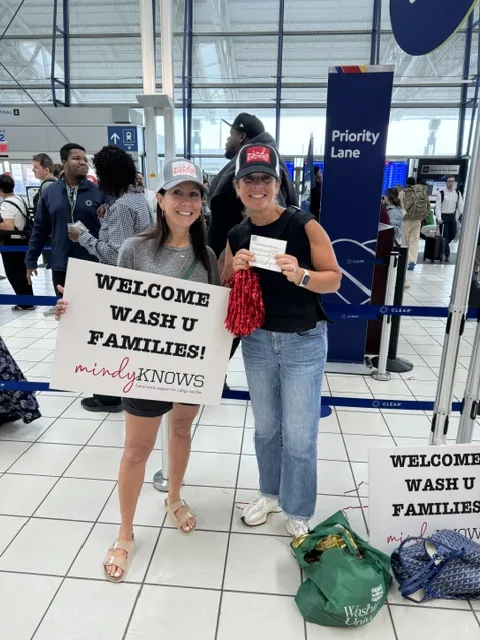
The answer ranges from fun to frightening. mindyKNOWS can help families celebrate birthdays, arrange deliveries, navigate move-in and move-out, or find local services. It can also step in when a student is sick, has car trouble, needs a tutor or therapist, encounters an apartment problem, or needs help finding a physician or specialist. Sometimes the value isn’t completing an errand at all, Horwitz says; it’s simply knowing whom to call.
Membership includes unlimited local guidance and recommendations. A parent planning a visit, for example, can ask for help putting together plans for family weekend. A student who needs a dentist can ask for a local recommendation.
Additional charges generally come into play when someone from mindyKNOWS needs to leave home and make a delivery.
Families can choose month-to-month, semester, or full-school-year memberships. Horwitz says some begin with a shorter commitment and extend it once they understand how they use the service.
And though the relationship typically starts with the parent, that can change over time. If mindyKNOWS works with a family throughout a student’s college years, Horwitz says, the student begins to know the local team, too.
“Then the kids start to reach out if there’s something that they need,” she says. “They know us well enough to reach out.”
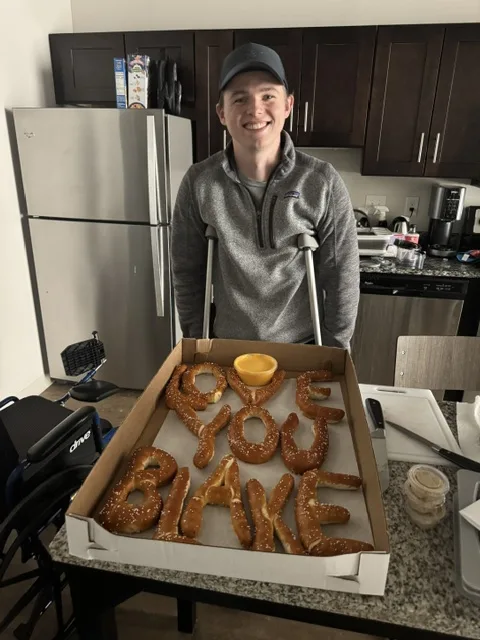
Independence doesn’t have to mean doing everything alone
For parents, that raises an important question: At what point does helping a college student become too much help?
Horwitz is clear about what mindyKNOWS isn’t there to do. “We are not here to cook for them and to do their laundry and to clean their rooms,” she says. “Those are life skills that they need to learn on their own to become successful and independent adults.”
College students should learn how to navigate daily life, solve problems, and build confidence without Mom and Dad stepping in every time something goes sideways, she adds. But Horwitz doesn’t think independence requires handling every difficult situation without support.
“We don’t believe that independent means alone,” she says.
Instead, she sees a local “Mindy” as one person within the larger network a student gradually builds in a new city, alongside friends, professors, coworkers, and other people they learn they can turn to.
How involved that person becomes also depends on the student. If Horwitz is dropping off medicine and the student would rather treat the interaction like a DoorDash delivery, that’s fine. “I am happy to be as inconspicuous as a DoorDasher,” she says.
If the student wants to talk, she’s happy to do that, too. “We’re going to read the room and connect in the way that they feel comfortable,” she says.
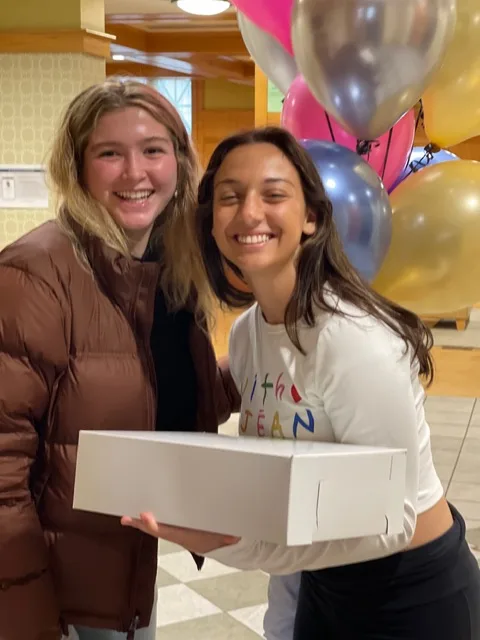
When Google isn’t quite enough
One of the biggest advantages Horwitz believes a local connection offers is knowing where to turn when the answer isn’t obvious.
Health and mental health care are good examples. Horwitz says the team tries to help families find providers that accept their insurance, although she acknowledges that can be challenging, particularly with mental health care.
When she doesn’t personally know the answer, she turns to her own network.
“I have a community of other parents who have raised their kids in St. Louis,” she says. “So when I don’t know, when we don’t know, we know who to ask.”
She describes mindyKNOWS as a conduit between families who need help and people in the community who know how to provide it.
“We’re connecting the needs with the resources,” she says.
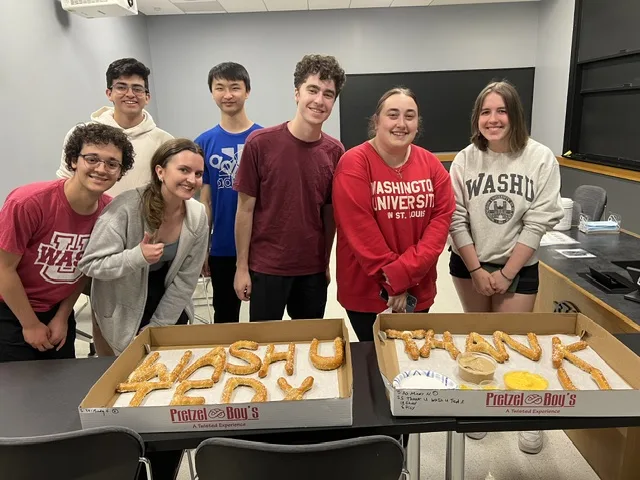
Then there was the snowstorm
A few years ago, a major snowstorm brought St. Louis to a near standstill. One of Horwitz’s clients had a sick college student who needed medication but had no way to get it. Her mom called mindyKNOWS.
Horwitz couldn’t simply hop in the car herself, so she started thinking through who might be able to navigate the roads. She remembered a police officer she’d grown up with and reached out.
The officer helped connect her with an off-duty officer who had a vehicle capable of getting through the snow. He went to CVS, picked up the student’s medication, and delivered it to her dorm. “All was well,” Horwitz says.
It’s an extreme example, but it captures the role Horwitz envisioned when she started the business: having someone nearby who knows the community well enough to figure out what to do next.
“You never know what’s going to happen,” she says.
College isn’t always ‘the best four years’
Horwitz also has some advice for parents before their kids ever arrive on campus: Be careful about promising them the best four years of their lives.
College can be wonderful. It can also be a major transition, particularly for a student who’s living far from home for the first time. Rather than adding pressure to have a picture-perfect college experience, Horwitz encourages parents to give students room to experience the highs and lows that come with that transition.
That might also mean thinking ahead about who is in their student’s local support system before a problem arises.
A first-year student may want more reassurance than they do as a senior. Another might barely interact with their local “Mindy” until the day something goes wrong. The relationship can change as the student does.
Building a village away from home
Horwitz describes her work as a “win, win, win.”
“I love what I do,” she says. “It fills my cup. I feel really lucky to be able to help.”
Families get someone they can call. Students get a local resource. And the women serving as “Mindys” get to use their knowledge of their own communities to help someone else’s kid.
Horwitz hopes to continue expanding that network, although she says the focus is on finding the right people rather than simply adding as many campuses as possible. “I think we want quality more than quantity,” she says.
Ultimately, she wants mindyKNOWS to become a familiar resource for families navigating college far from home. Because sending a child off to build an independent life doesn’t mean they stop needing people in their corner, she adds.
“We think human connection is everything,” Horwitz says. “The more human connections one has, the fuller life can be.”