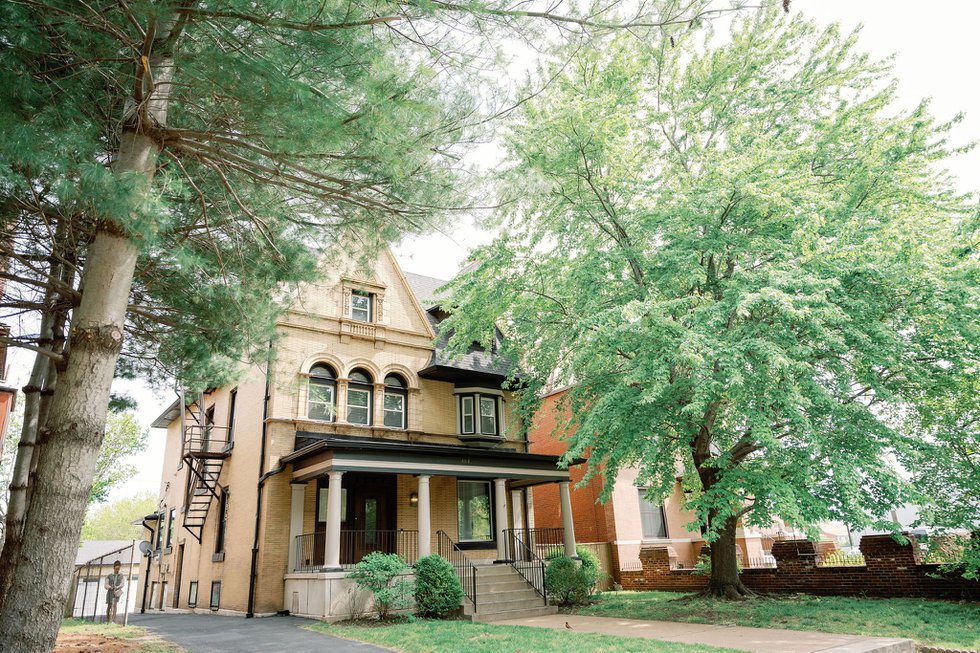
As I’m pulling up to her brick house in the Central West End, Ronke Faleti texts me that it’s fine to park in the driveway. She greets me in the foyer of the old home—it dates to 1895—and, showing me to the kitchen, begins heating the water for tea. Tea bags steeping in our cups, we settle in on a brown leather sofa in the adjoining hearth room for a chat. It’s exactly the way a hangout with two friends might begin, but Faleti and I have never met before. This warm feeling of welcoming is exactly what she’s trying to cultivate at the space I’m visiting today: the newly opened Korédé House (4317 Forest Park), Faleti’s former home, which she has re-envisioned as a “third space” for women. A third space, a term that was coined by sociologists in the early ’80s, is a place that’s not a primary residence or an office, but rather a place where people in a community can gather, interact, and escape the stress of home and work life. Faleti has curated hers to be a place where women, who pay for either memberships or a day pass, can socialize or find solace, work remotely or relax, and, particularly helpful for mothers, offload some chores like childcare and laundry.
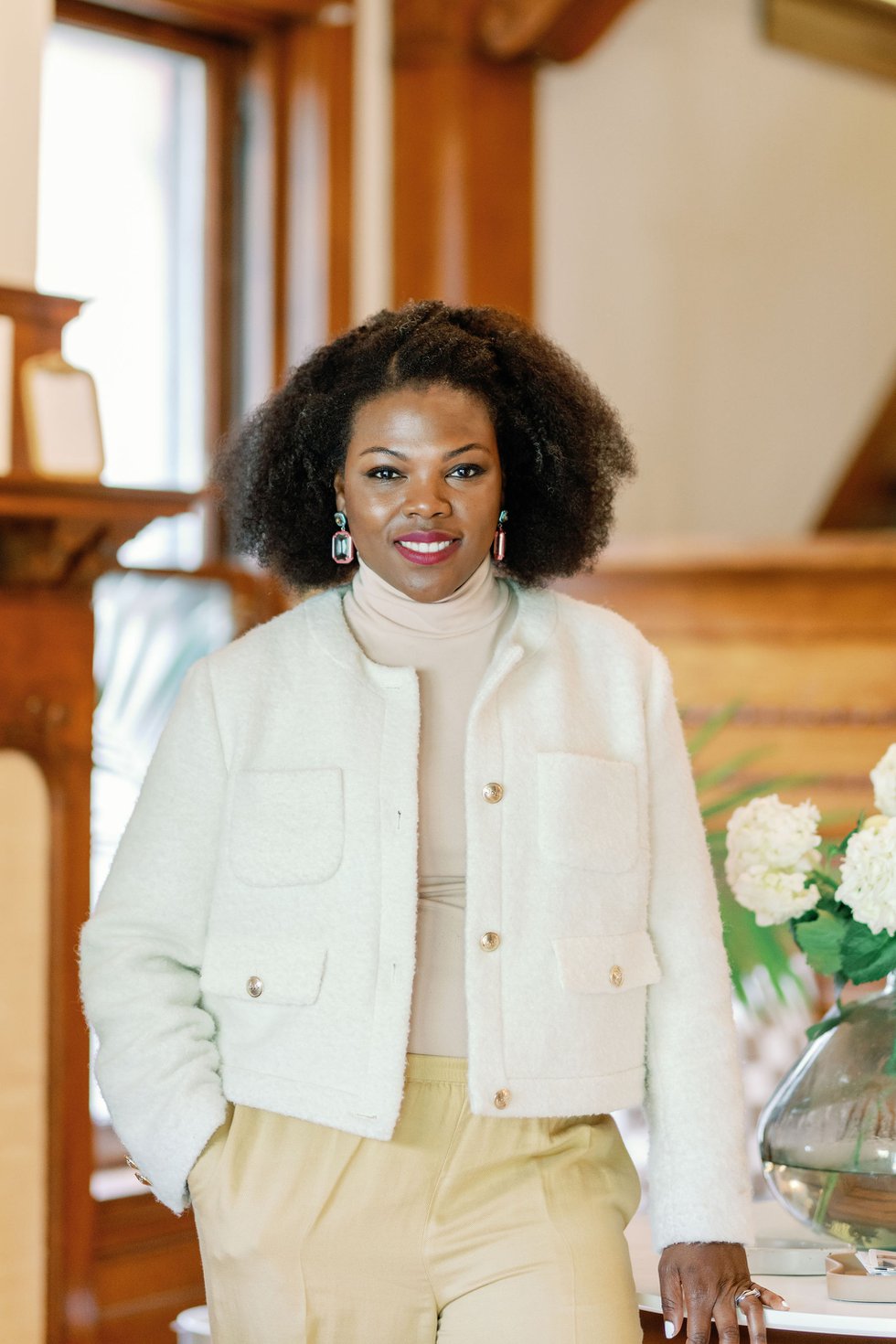
The COVID-19 pandemic was the catalyst for Korédé House. At the same time that COVID forced many workers to collapse their homes and offices into a single place, it also all but killed third spaces when many shut down due to public health orders. Faleti certainly felt the chaos, stress, and isolation of that uncertain time: She had just given birth to her fourth baby, and was working full time as an executive at Wells Fargo, homeschooling her other children part time, and supporting her husband, Yinka Faleti, in his run for Missouri Secretary of State.
Discover fun things to do with the family
Subscribe to the St. Louis Family newsletter for family-friendly things to do and news for local parents, sent every Monday.
“I felt broken,” she remembers. “I felt like, ‘Where’s the village?’ One night, I grabbed my car keys, and I told my husband I was going for a drive.” From the car, she called a friend who lived west and asked to come over. At her friend’s home, they each had a glass of wine and watched “trash TV.” After 20 minutes, Faleti felt better.
After that experience, Faleti began asking family members and friends where they went when they needed an escape. Her three older sisters, all moms, said that they hide in their cars or in the bathroom. A member of Faleti’s women’s group from church told her that she lies to her family about needing to buy shampoo and wanders the aisles of Target for some quiet time.
“We are raising the next generation,” Faleti remembers thinking. “We need to be whole. Where’s our third space—a place that’s not work, a place that’s not a coffee shop where I feel like I have to hurry up and go, a place where we can fight the isolation, a place where we can get some help because it’s shared.”
Faleti researched third spaces, but it wasn’t until her family moved from their Central West End home to one in Creve Coeur, that she decided to use their former residence as Korédé House. The original plan was to rent it out on Airbnb, but Faleti says that her husband reminded her of a prayer she had said a year before: “God, give me my own house so I can use this one for you.” She took it as a sign she would use this space to help mothers and families grow.
“Mothers are one of the reasons I wanted to pursue this, especially during the pandemic,” Faleti says. “I think mothers change the world in three ways. One is with the work of our hands, just like a father. The second, which is unique to us, is that we nurture the spark in the future. We have an immense opportunity to shepherd and shape the future—future chefs, future doctors, future artists—that are replacing us. The third way, and the big reason why Korédé House is here, is that we also shape the future by inadvertently inflicting trauma. Oftentimes, we’re overwhelmed, and we’re the source of everything for our kids. There are many women who I know who are in therapy about their moms, and my hypothesis is that the ‘mom’ wounds are there because [the mother] was stretched too thin. Sometimes she didn’t have the reprieve she needed, and she lashed out.”
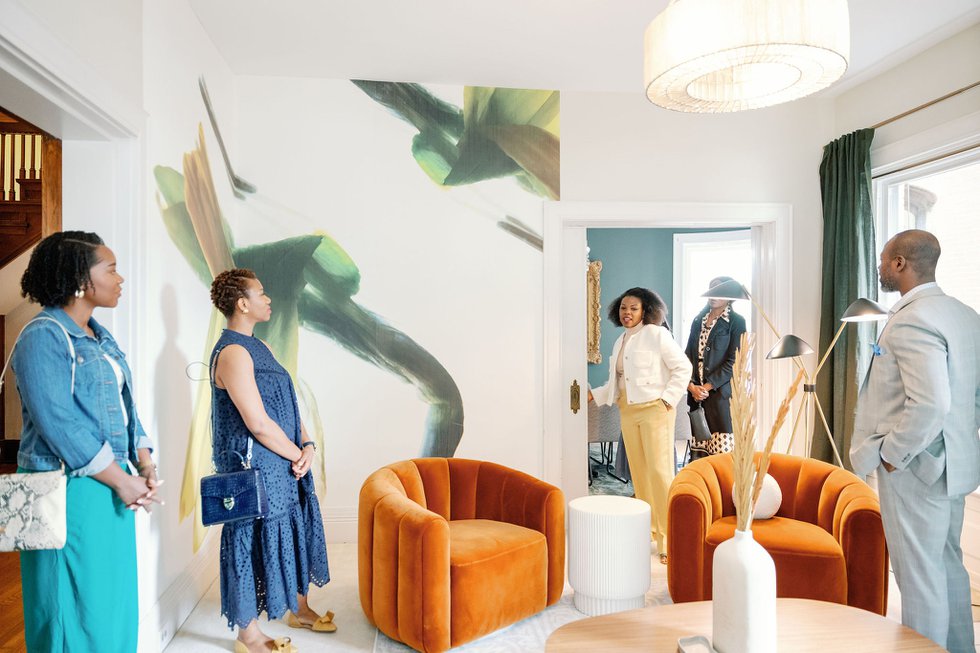
Korédé House, which officially opened May 6, offers memberships—either an annual plan or an all-inclusive plan—as well as day passes to women for use of community spaces, a creative workspace, a shared kitchen, nap lounge, up to four hours of child watch daily, and laundry assistance. Soon, Faleti hopes to hire a private chef who can create take-and-go meals. For postpartum moms, Korédé House offers a bedroom next to the nursery, where new moms can take a much-needed nap while knowing someone is caring for their baby. For women in crisis, there is another suite that can be booked for an overnight stay. All-inclusive plans are $500 a month, annual plans are $247 a month, and a one-time purchase of a $47 community pass allows women access to the home and the ability to pay for services as they go. Members use an app to book childcare, which is provided by Jovie, and costs $20 a day for each child, but will not exceed $60.
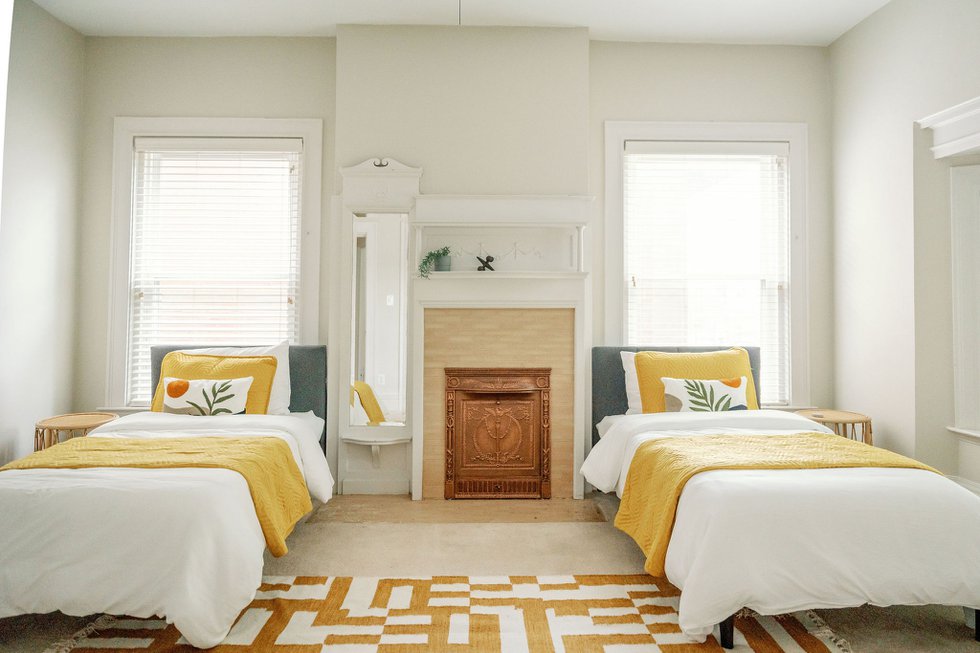
For Korédé House to succeed, it will need enough members that it feels like a place to find community, engineer a sense of belonging, and also maintain some space to find solitude. To accomplish that welcoming feeling through design, Faleti hired Meagan Givens of M Interiors to create Korédé’s homey but beautiful rooms. Each day, members will answer a prompt or question—recently, it was How are you like a butterfly?—to jump-start the getting-to-know-you process in a deep but meaningful way. And part of the recipe is Faleti herself: “I’ve been blessed that people feel at home with me,” she says. You can let your hair down here, you can be.”