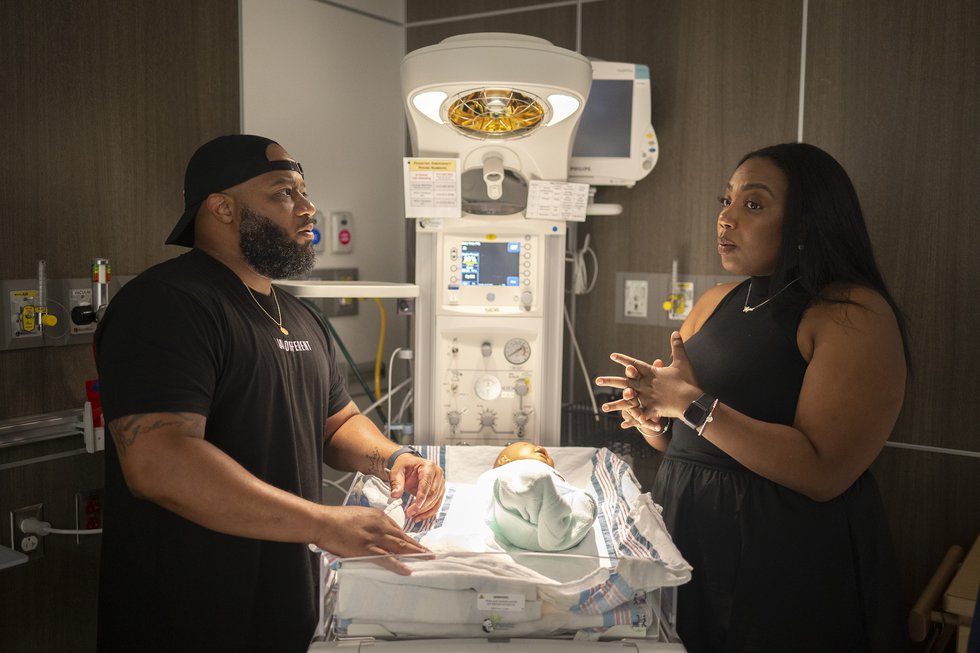
In December 2017, Brad Edwards and his partner were preparing to welcome their beautiful twin boys into the world. He, like many, assumed labor and delivery would go according to plan. He believed that when they left the hospital, he would be bringing home both his children in the throes of overwhelming joy. But when his babies were delivered stillborn, his life—and his perspective on fatherhood—was forever changed.
“I held any of the emotions I had from my experience for years, and it took one day, sitting in my basement with my friends watching football, to start having a conversation about it,” Edwards says. “I started sobbing, and I couldn’t control my emotions. I just held everything in. I wanted to be there for my family, her family, her. I just never had the opportunity to talk and share what I was feeling and the guilt I felt from the not knowing—how I felt like I failed her and those two boys because I should have known better.”
Discover fun things to do with the family
Subscribe to the St. Louis Family newsletter for family-friendly things to do and news for local parents, sent every Monday.
Edwards’ grief over his tragic loss ignited a deep desire to support and empower his community in the fatherhood journey, through both mental health resources and education on topics from pregnancy to postpartum. In 2020, the St. Louis-based Dear Fathers—a platform designed to share stories of Black fatherhood—reached out to Edwards, noting his grassroots community service work, with the concept for a mental health resource to aid the Black community amid the pandemic. The result, a virtual mental health support group called STR8 Mental, officially launched on May 18, 2020—the same day that Edwards’ daughter Carrielle was born.
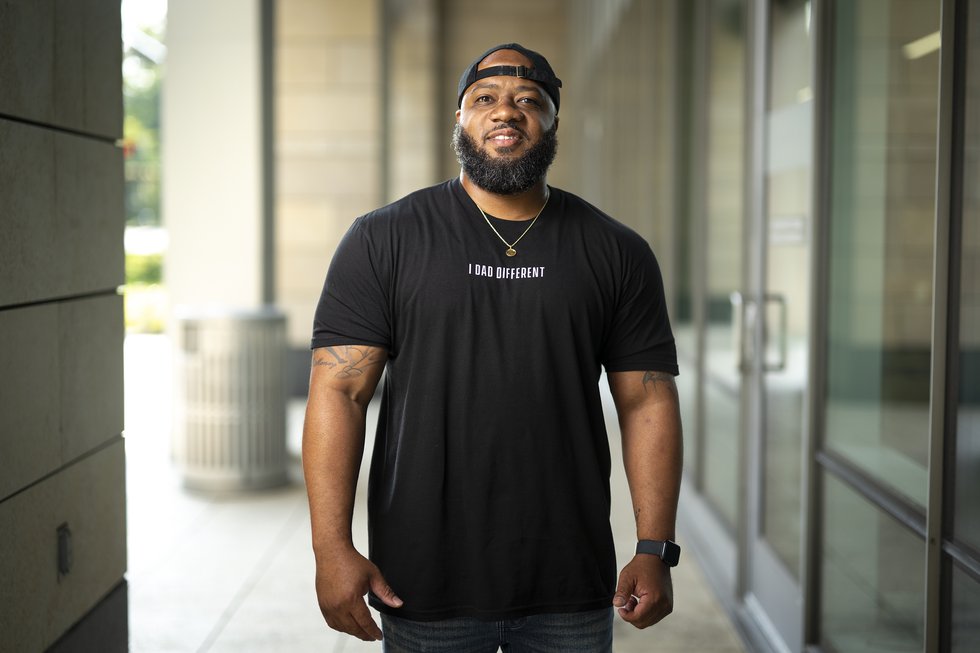
“With [the COVID-19 pandemic], we saw there were going to be a lot more deficiencies in the Black and brown communities, and we also noticed that mental health was being talked about more than ever within the Black community,” he says of the initiative. “Being able to pair mental health specialists that look like these men, that understood them from a cultural aspect, was crucial. Not only were we successful in providing one-on-one therapy for 80 percent of the men who attended, but we also had well over 5,000 guys from across the country come on to the platform just to have these conversations.”
Edwards says it was special to watch the impact of STR8 Mental extend far beyond the men themselves, reaching their entire families: “[In many cases], it was their first time being introduced to what a therapist looked like. Not only were we able to get those guys help, but because of their experience, they now have ways to get help for their children, their nephews, their cousins. It really changes the whole family from just one man being exposed to mental health resources.”
With the success of STR8 Mental propelling him forward, Edwards sought new ways to support his community. Most recently, in summer 2024, Edwards introduced his new initiative Dads to Doulas—a free, six-week program that gives participants hands-on doula training, so they can be informed partners. It’s an initiative that is raw and authentic to Edwards, he explains, because of the trauma that he endured. “Through my experience losing my twins, I realized that there was a lot I didn’t know, and there was a lot that I didn’t take the time to educate myself on,” Edwards says. “So by the time another opportunity came, when I was preparing to have my baby girl, I had become familiar with what a doula is. One of my good friends is a doula. I said, ‘Alright, I need you to help me create a playbook. What do I need to look for? What should her levels be? What should I be looking for with the placenta?’ So it was just a few different things I wanted to be educated on to make sure that I could be not only knowledgeable but also an advocate for her, because I know that Black women die at much higher rates than any other race.”
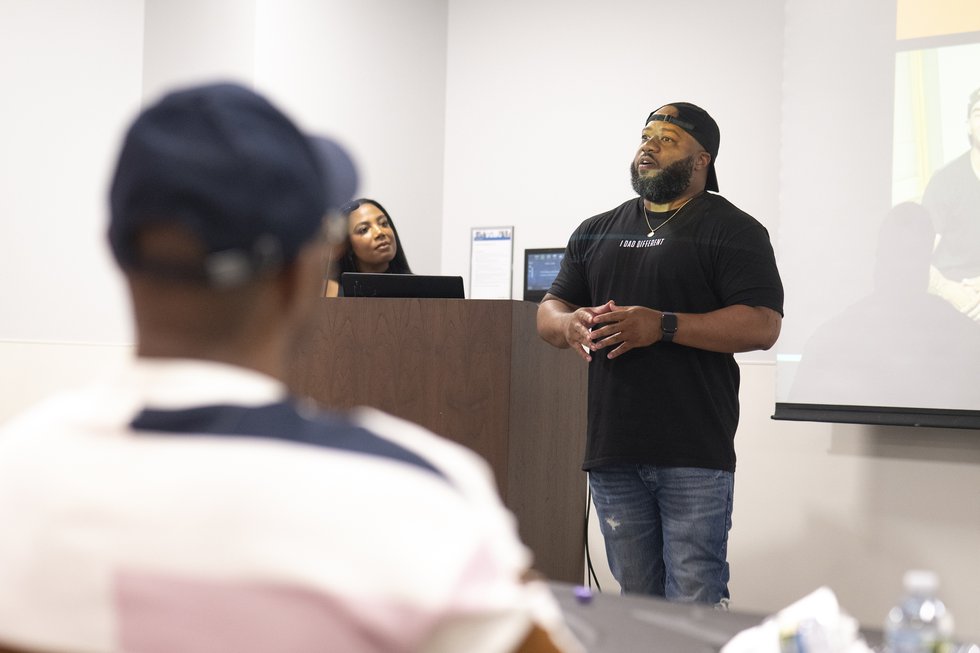
According to Dear Fathers, a Black mother with a college education is at a 60 percent greater risk for a maternal death than a white or Hispanic woman with less than a high school degree, and Missouri is the 46th worst state for Black infant mortality. These are just a couple of the reasons that Edwards thinks Dads to Doulas is needed in the metro area. “Last year, in the state of Missouri alone, we lost enough babies to fill 13 kindergarten classrooms,” Edwards says. “We had 447 Black babies die before their first birthday. That’s devastating for any community.”
The doula education that Edwards’ friends shared with him was essential for Edwards during the birth of his daughter Carrielle in 2020. Although his daughter’s mother didn’t necessarily want a doula in her birth plan, Edwards started a group chat with his doula friends, who were able to answer questions throughout the process. “She was able to make her feel comfortable and walk us virtually through that whole time, which also went on the postpartum,” he explains. “I had never heard about preeclampsia or learned about it, but she had to go back to the hospital because she was at stroke levels with preeclampsia. So my first 48 hours of my daughter being in the world when we came home, I had to do everything myself because her mom was back in the hospital with life-threatening blood-pressure issues going on.”
Since that experience, Edwards has been a strong advocate for men understanding everything as it relates to labor, delivery, and postpartum: “It’s very important for men to understand what that looks like for the mom, and how she just went through this whole traumatic situation, and that she really can’t understand why she feels the way she does because her hormones are all over the place. And that men also face postpartum depression. I think not only do we save lives in the delivery room, but we also save relationships in that postpartum phase of life.”
These lived experiences and convictions are what shaped Dads to Doulas. “We have to do better. But in order to do better, you have to educate the communities. You have to make men aware. You even have to make some of the women aware,” Edwards says. “If we’re looking at the man to be the leader of his home, his community, his village, what better way than to educate him so he could become advocate?”
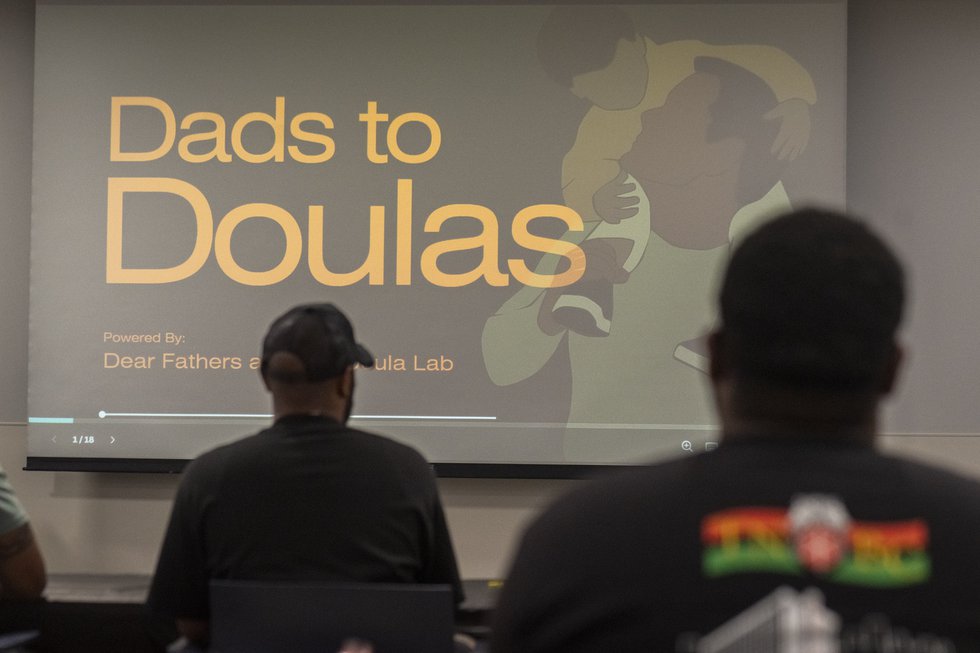
Registration for Dads to Doulas is currently open, and training for the next session begins October 1. Leading the initiative are also the team’s two maternal health specialists, Charity Bean and Kyra Betts, both of whom Edwards credits with taking the program to new heights. “The response has been overwhelming honestly,” Edwards says. “I think Black men don’t have a lot of resources that are created specifically for them. And as a Black man, our life experience is very unique. So things need to be tailored in a way to where it’s digestible and culturally makes sense. In this program, we’re noticing that men are in the emotional and mental space to hear the information, digest it, and want to execute the change, whatever that is.”
Edwards and his team hope to take what they learn from this pilot course and expand the program to other cities across the country. “I would love for us to be a real game-changer as it relates to health care and making sure that these families don’t ever have to suffer any of the same loss I did, if it can be avoided,” Edwards says. “I want people to understand that our shared experience should be shared. Every time I share my story with some brothers, that’s therapeutic for me. I don’t want us to be so tight-knit with our experiences that we’re not able to use that to empower not only ourselves but also someone else who needed to hear them.”