This content was originally published in St. Louis Magazine‘s Private School Handbook.
Swing Thing
Discover fun things to do with the family
Subscribe to the St. Louis Family newsletter for family-friendly things to do and news for local parents, sent every Monday.
Years ago, history teacher Don Burrus taught a lesson on 1950s cultural dance trends, including the jitterbug and the Lindy hop. The students were so engaged in the lesson, he decided to move it to the dance floor. More than three decades later, Bishop DuBourg High School’s Swing Dancers club puts on a show worthy of American Bandstand.
Coaches instruct the swing-dancing students in more than 40 dance moves, including aerials, a forearm stand on the shoulders of the male partner, and the “death drop,” in which the female dancer plunges nearly to the ground. The group performs almost 60 shows per year.
“It makes you a little nervous in the beginning, because you don’t want to mess up in front of everyone,” says club member Kaitlyn Faulkner, “but then you learn to loosen up and just have fun.”
Performances are given at such venues as the Missouri Botanical Garden, outside The Sheldon Concert Hall and The Muny, as well as at various senior centers. The dancers include both current students and alumni who participated in the club while in high school.
In addition to learning complex dance moves, the students enjoy the camaraderie. “It’s a social thing as much as it is a dance thing,” Burrus says. “They dance with their partners, but they’ll end up dancing with the senior citizens at the senior home—and end it with the Hokey Pokey.”
Extra Mileage
The Super Mileage Vehicle Challenge Club at John Burroughs School takes the engineering element of the traditional robotics club and turns up the dial—producing a fully functioning car.
The club, which was started nine years ago under club sponsor Dan Barton, enters a go-kart-esque car in competitions to see which vehicle gets the best gas mileage. The students are involved in every step of the process, from designing the car to welding the frame to wiring the electrical system. “To see the whole process—going from nothing to something someone can actually drive—gives them an appreciation for the car,” says Barton.
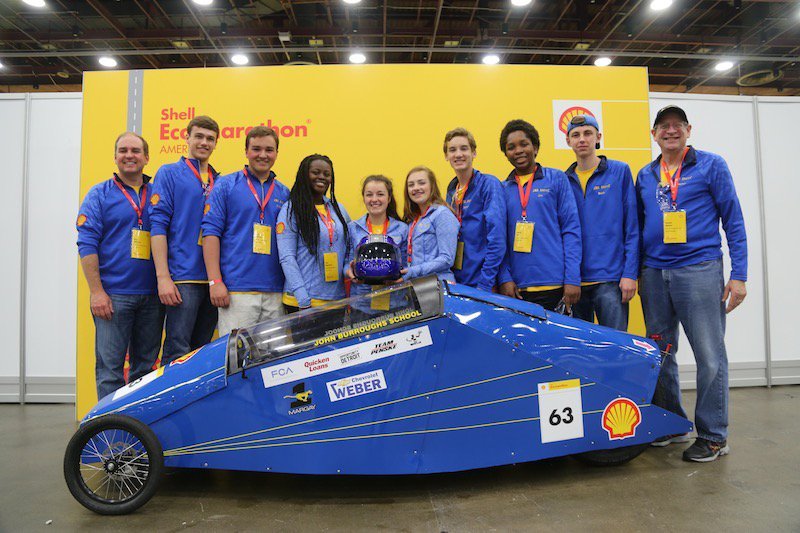
For the past eight years, the team has participated in the Missouri SuperMileage Challenge and even helped start the biodiesel category. This year, it earned entry into the Shell Eco-marathon, a high school and collegiate vehicle efficiency competition involving 100 schools from the Americas. At the competition, the Burroughs Super Mileage Vehicle Club improved on its personal best, going from 150 to 218 miles per gallon.
“Once they finished doing all the calculations, they told us,” recalls club member Matthew Williams. “Our whole team was there. We were so excited—that was one of the greatest moments of the whole trip.”
Williams hopes to improve the team record to 400 miles per gallon next year, but beyond records, he sees a future in engineering. “I joined thinking, ‘Oh, that’d be cool,’” he says, “but now I’ve totally opened my eyes to the world of engineering.”
The Meat of the Matter
At DeSmet Jesuit High School community events, you won’t find hired chefs or catering-company workers behind the grills. Instead, you’ll see members of the Barbecue Society, a new organization that teaches the ways ofgrillmasters.
Club advisor Trevor Bonat, who grew up around barbecue at his family’s restaurant, wanted to share his love of barbecue with students. In just the first year, the society has grown to 17 students. In addition to teaching cooking techniques—how to trim ribs, spicing techniques, how to tend a wood- or charcoal-fired barbecue—Bonat shares some history. “There’s an incredible amount of history wrapped up in barbecue,” he says. “We want to help kids learn American history through barbecue.”
The organization has visited Sugarfire Smoke House and plans to travel to Memphis and the World Series of Barbecue, in Kansas City. The group also hopes to field a competitive barbecue team that can partner with local nonprofits to cook for the underserved.
“Cooking for other people brings joy,” Bonat says. “When you’re cooking for others, it brings joy to both the cook and those eating the food.”
Holding a Note
Look out, Anna Kendrick: A cappella is catching on at some St. Louis schools, thanks in part to the popularity of such TV shows as The Sing-Off and Glee.
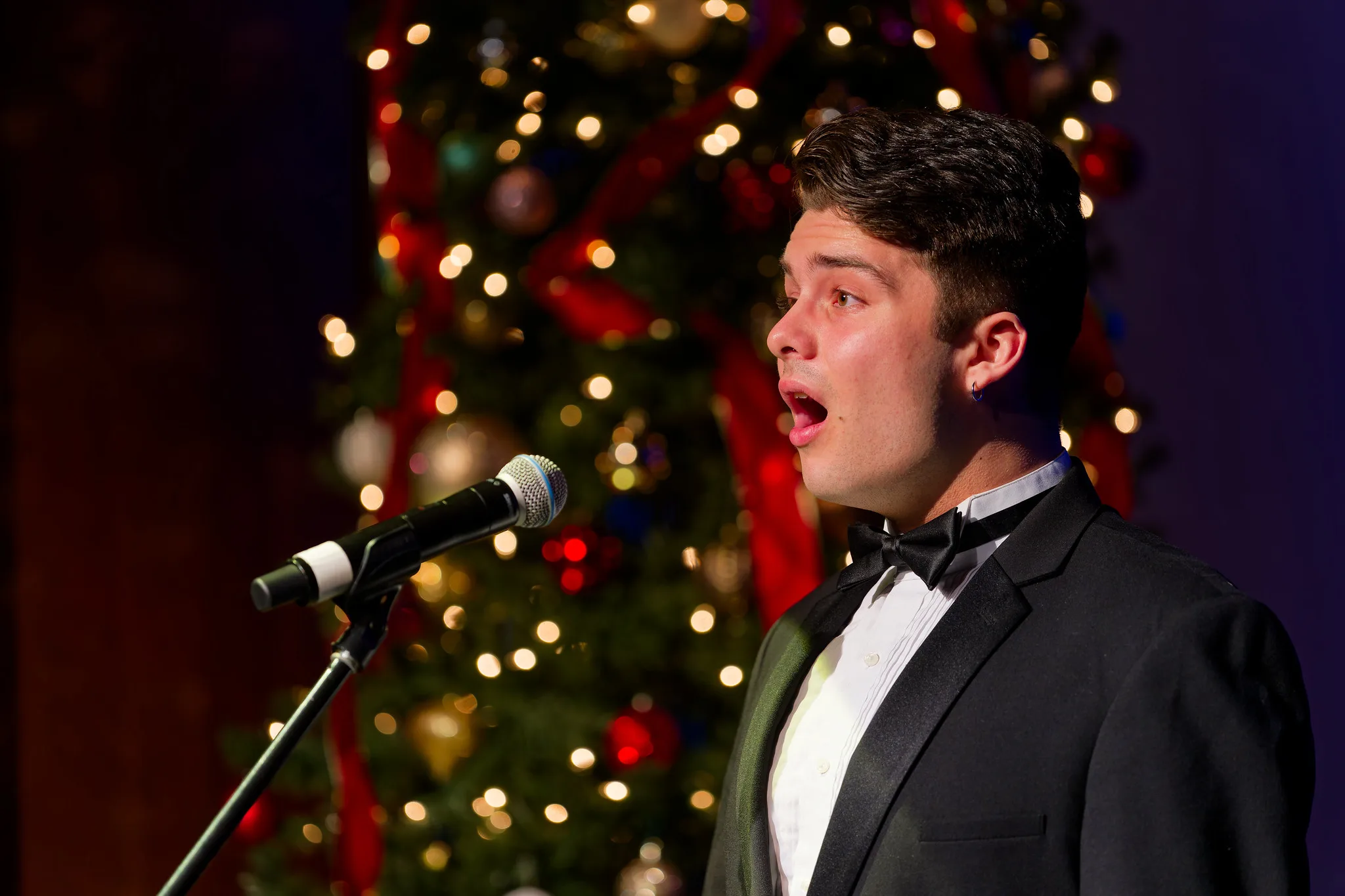
At Christian Brothers College High School, instructor Charlie Mueller recently shifted the upper-level choir Brothers in Harmony’s focus from traditional choral music to a cappella–style music. “It gives them the possibility to perform the music they hear on the radio but in a complex way that’s musically challenging,” he says. “The thing that gets kids most excited about doing music is having their opinions heard in what kind of music they like and want to perform. That’s so important for keeping an interest in the arts.”
In this first year, the group has started small, performing at CBC open houses and hosting its inaugural “A Cappella–Fest,” featuring performances by Brothers in Harmony and a cappella groups from the Grand Center Arts Academy, Rosati-Kain and
St. Louis University high schools, and COCA. Next year, the CBC group hopes to participate in the International Championship of High School A Cappella, the high school version of the competition seen in the movie Pitch Perfect.
Besides increasing its presence on the a cappella scene, Brothers in Harmony encourages growth in musical skill. “Being in Brothers in Harmony developed my range,” says group member Matthew Murray. “Freshman year, I could not sing as high as I can now. The different styles of music we’ve done have helped me develop different types of singing, like belting and falsetto. Being able to do both styles introduced me to a wider range of music.”
Editor’s Note: This article has been updated to correctly attribute the quote from Kaitlyn Faulkner.