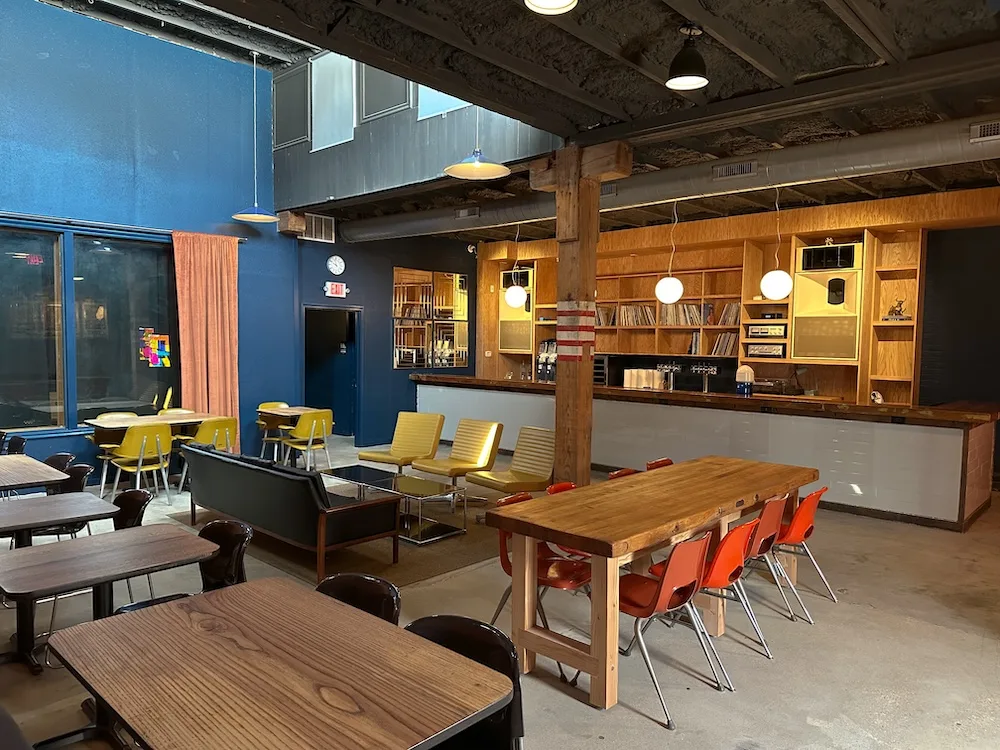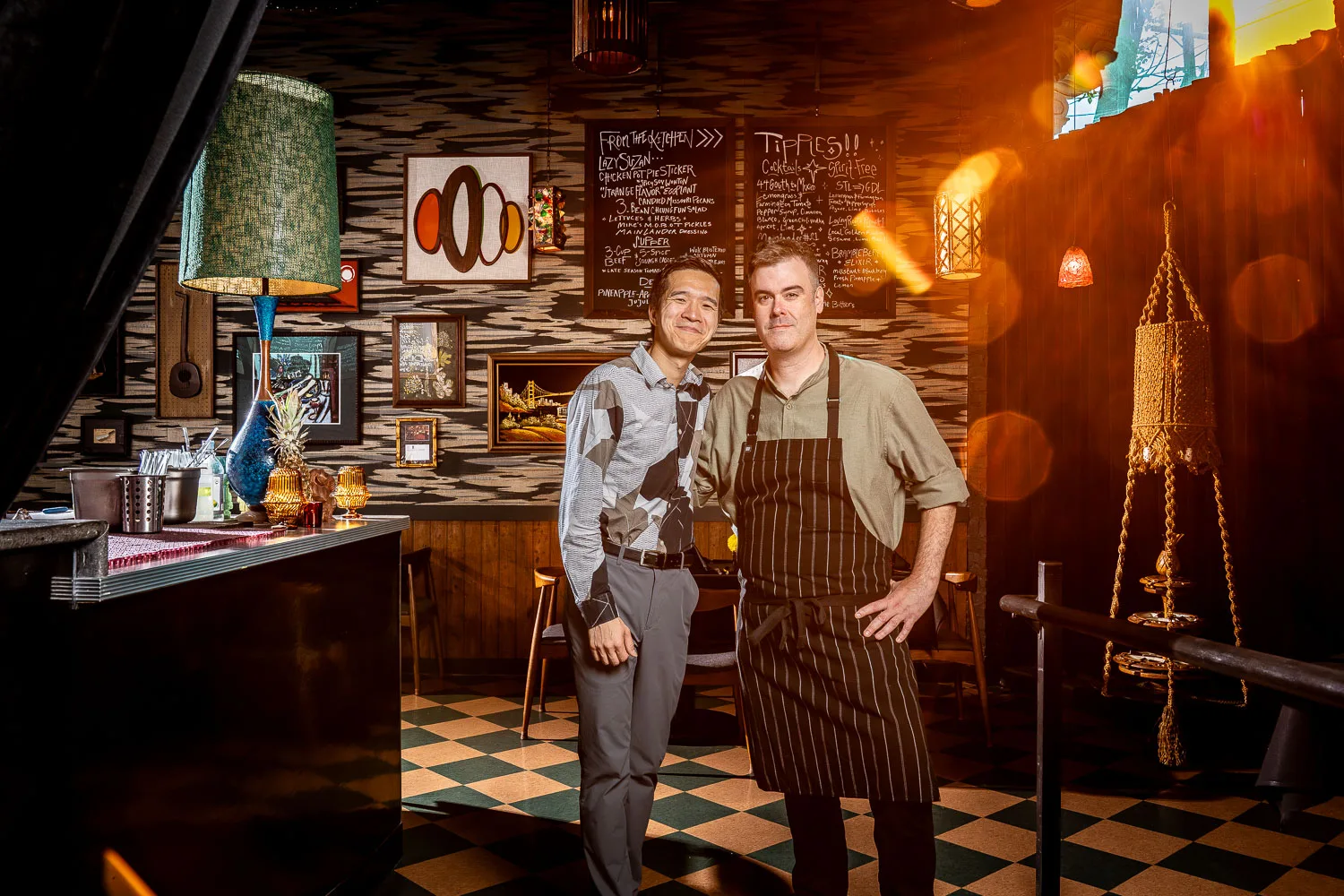
Not long after Blake Askew and Gordon Chen opened Mainlander on South Euclid in 2023, they realized that they needed to expand their supper club concept to allow more people to experience their transportive culinary magic. Now in its new digs at 392 N. Euclid, about a half-mile up the street, they’ve done just that with The Jujube Inn, a nostalgic lounge that complements Mainlander’s adjacent dining room and is quickly becoming a force in its own right. Askew recently shared more about the move, the new concept, and what to expect.
The original Mainlander was incredibly successful. Why did you decide to do something different? We’d started to really get into a rhythm after about the first 12 months or so; we were booked every month, had great regulars, and felt like what we were doing was working and that we had accomplished what we set out to do. But we were just scraping by. What we were doing wasn’t enough in terms of wanting to have a healthy business we could grow with a future. We tried to think of a way to expand what we were doing there to have a little more revenue and comfort. There were limitations to the space. We asked ourselves whether we could do lunch or takeout or to-go drinks, but we didn’t even have a place to store extra food. We got to the point where it was purely a financial decision: If we are going to make this a long-term thing, we had to figure out a way to make it a little bigger, which meant uprooting and starting over.
Find the best food in St. Louis
Subscribe to the St. Louis Dining In and Dining Out newsletters to stay up-to-date on the local restaurant and culinary scene.
Rather than simply expanding the dining room component, which you call the Supper Club, you decided to add a bar.How did that come about? Traditional thinking told us that we should have a bar. What I’ve always been taught throughout my experience in the industry is that healthy restaurants that serve alcohol and have a wine list and cocktails do so with the food there to support the sales because that is where the margins are. So we thought, OK, let’s get into that traditional restaurant mode and focus our efforts on that sort of expansion. But we had to do it with intention.
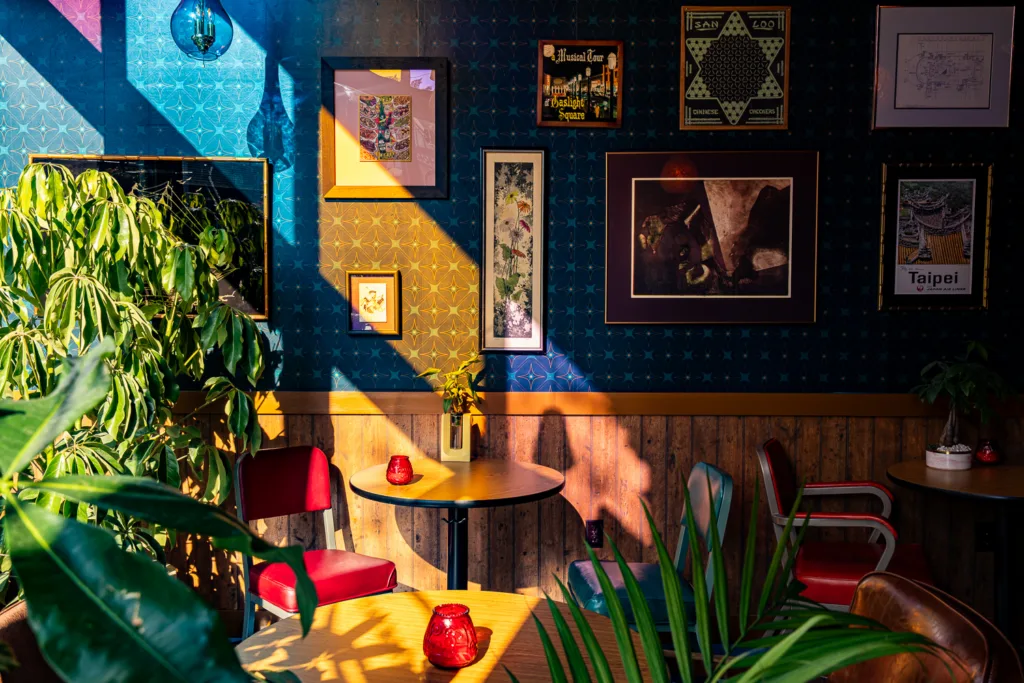
What did that mean to you? We really had to think about how we would make adding a bar work without disrupting the concept of the prepaid ticket, pre-fixe monthly supper club. We needed to think through how to put those two things together; we had this whole bar space we could create there logistically, but we also wanted to recreate what we’d been doing down the street and protect that concept a bit. We were afraid that if we tried to change that too much it wouldn’t work. Our bread and butter has always been our regulars who we see every month, and our thinking was that if we were going to be a bar and restaurant now, we needed to shield that from the dining room so as not to disrupt it or alter it. We knew that the bar had to complement the dining room but not impede it in any way, and we wanted to make sure that the value was still there for the restaurant. We were concerned that the value could go down if someone could just walk into the bar and get the same food, so we really wanted to differentiate the two.
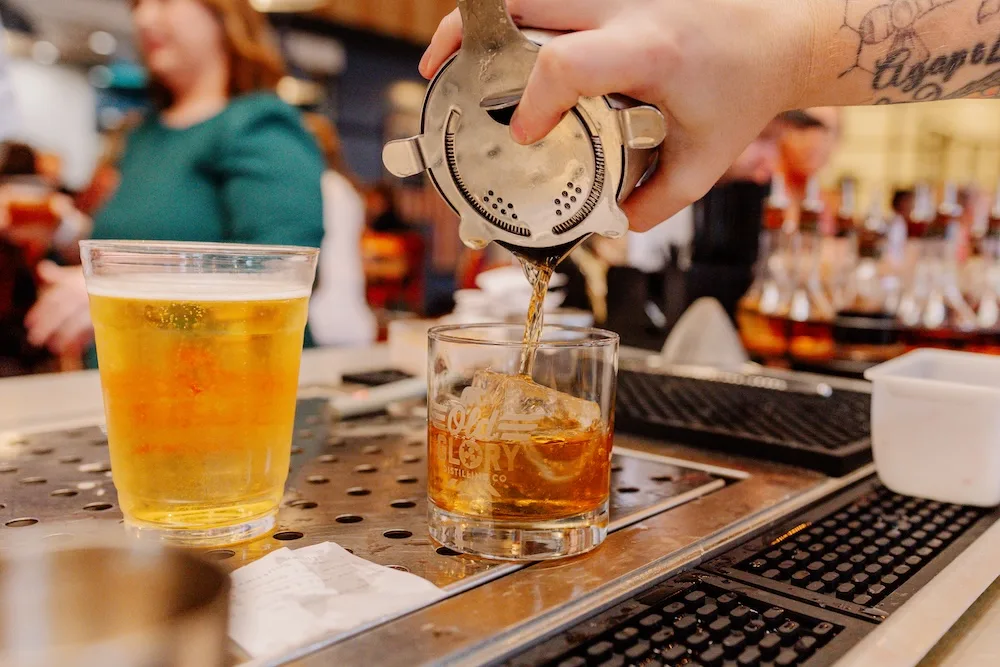
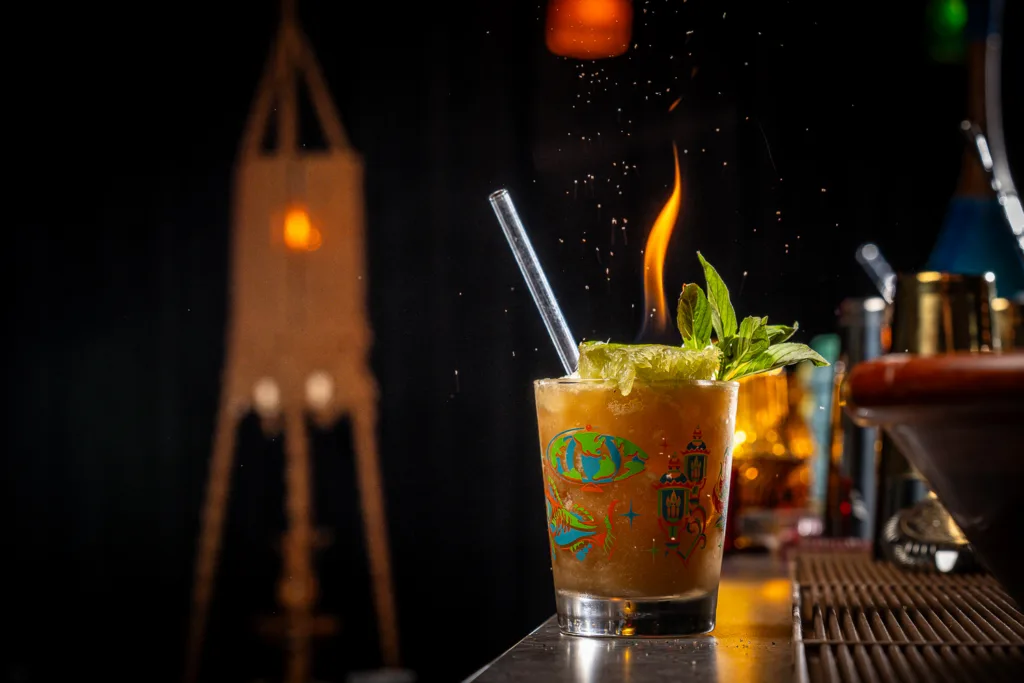
You note that cocktails have always been a part of the Mainlander concept. How has that evolved and impacted what you are doing now at The Jujube Inn? Originally, the Mainlander pop-up series, which began at the end of 2021, was conceived of as a cocktail pairing dinner. We quickly realized that was not practical: In order to reach diners, we found out that we had to have an alternative to that model that was not centered on alcohol, and once we did that, it became about 50/50 regarding who wanted drinks and who didn’t. That was surprising to me. Here was this thing that was supposed to be a boozy event that was all about exploring the idea of how great tiki drinks are, the craft cocktail revival of the past 20 or so years, the evolution of tiki drinks over the last hundred years and what tiki food is. That was the lens we wanted to look through, but we realized times were changing and you could not rely on a bank of diners who wanted to get boozy when they went out. Liquor sales were already going down then, so we had to shift our focus. Now, it’s kind of like here we are again. We want The Jujube Inn to be a drinking establishment, and there is a major focus on cocktails, but we have also put a lot of focus on N/A cocktails and are evolving that as we go along. We’re also seeing a lot of people spend time in here to eat; it’s a bar setting, but they don’t touch any alcohol which again has surprised me. Our food sales are equal to our liquor sales. People are treating Jujube more like a cafe than a bar. It’s still so early into what we are doing to say exactly what is going on but we’ve been seeing people coming in earlier in the evening, like between 6-8 p.m. and having dinner – maybe with a drink but maybe not. Late night, we will see groups there just for cocktails, but usually you see liquor sales being higher than food sales in a bar, and we are just not seeing that.
How has that response informed what you are doing at The Jujube Inn? The idea really has evolved from what we had originally envisioned. We’d planned that Jujube would just serve snacks to go along with the drinks, but people were coming in for the food. Part of that is the reputation we have built, which is all about the food and our special vibe and mood with the added benefit of having a fantastic cocktail list. So far, the pattern has been that there is a line of people outside the door at 5:45 – usually older clientele from the neighborhood who want a place where they can come to eat a full meal and get in and out for $50. They are looking for dinner, so we are now doing a new blue plate special every single month; again, we are taking a page out of what has worked for us before, which is that you can come in once a month and will have a diff experience, just like the supper club. It keeps us fresh, interesting and inspired, and it keeps the staff on our toes. There is always something new and another opportunity to be creative. We used to refer to the original Mainlander as a permanent pop-up in the sense that we had an idea of what we wanted it to be, but it wasn’t fully baked and we could let it shake out and be what it was to be. We feel like we are on that journey again with Jujube.
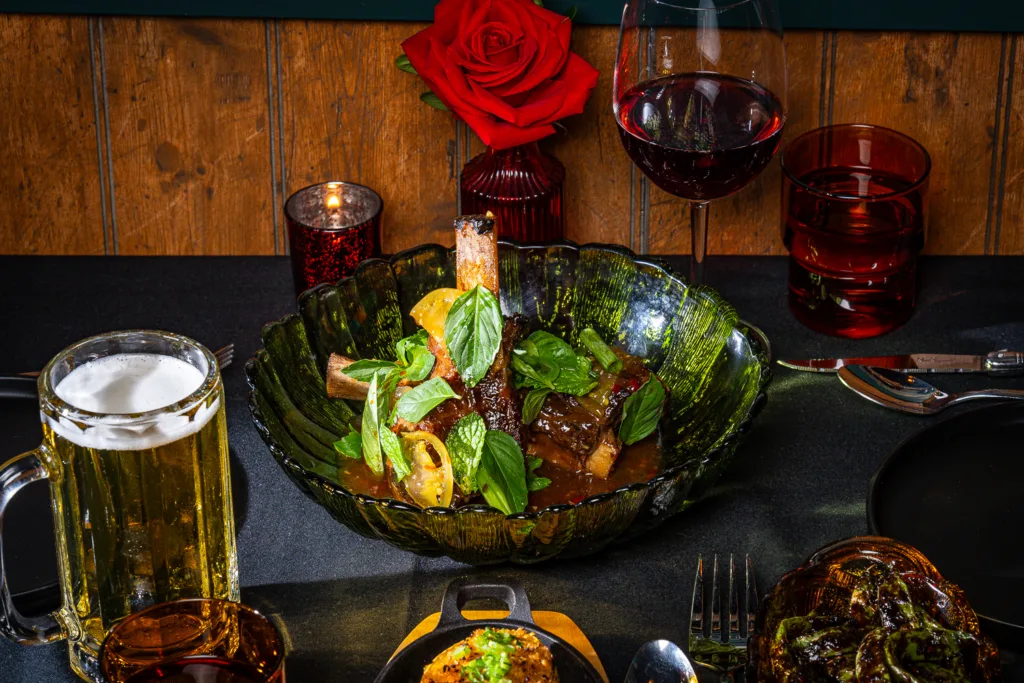
Why do you think Mainlander has been successful in a challenging restaurant climate? The biggest battle we have is trying to get people to dine in person and leave their houses. And I think a lot of the reason they don’t want to go out is that they are tired of being disappointed for the amount of money they are spending. There is this idea that the concept, environment, and ideas are the things that will sell your place, but what has gone by the wayside is hospitality and service, and people are rebelling against that, even if they don’t put it in that context. The landscape out there is difficult, and I’m not faulting small business owners. We are trying to compete in a market with the big dogs who have way more money and buying power and are able to give diners perks and benefits while the mom-and-pop shops wither. We have to charge the same, or more, as bigger entities, but we get judged on a harsher scale because the expectation is higher. It is really hard, but for us it comes down to trying to connect with every single person who comes in the door.
Why is the no-tipping policy so important to you? We could literally be paying our employees 65 percent less if we were on a tipping model, but we feel strongly that the only way we are going to rebuild this industry and have a foundation for the future is by getting rid of tipping. It’s a major undertaking, and I don’t expect a gold star for it, but I think it gets lost on our guests that we don’t do that, which to me is a symptom of everything that is wrong with this business. Sometimes, customers want to leave money, but we don’t want to take it because we don’t have a system for how to deal with it. We have a few hundred bucks sitting around that we call “lost money” because people just leave money because they are used to doing so. That money belongs to the employees, so we are working with them on trying to figure out how they want to spend it. Tipping may be a norm, but we are hell-bent on doing things differently.
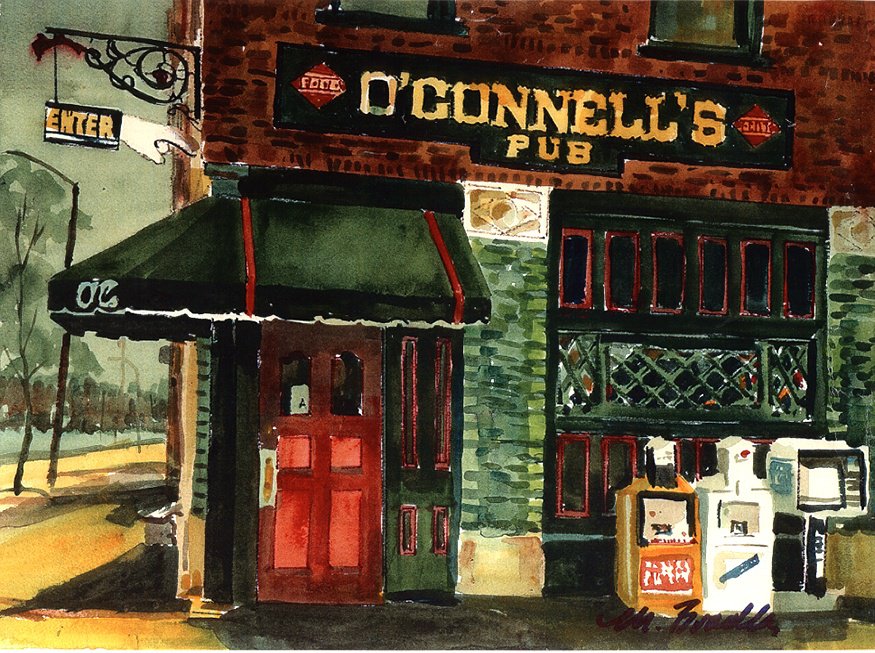
Another place that was known for doing things differently was Duff’s, the iconic restaurant that occupied the space that is now Mainlander and The Jujube Inn. Do you feel its presence? We definitely feel that we are aligned with the values of Duff’s. One thing in particular sticks in my mind; we have this cool book called Secrets of the Central West End that was published in 1992, and in it there are a couple of pages about Duff’s and a short interview with [owner] Karen Duffy. She talked about how when the restaurant opened she had no money and was just throwing the place together. All of the furniture was mismatched out of necessity, and if you brought in an item they would pay for part of your tab or you’d get a free meal depending on what you brought in. There was this bartering thing going on, and I totally understand that spirit. We have guests bring us things that we put up in the restaurant as well. We had a lady who was a big Don Ho fan bring us this record that we framed and hung in the bar. We’ve also heard from various people repeatedly that there is a Duff’s ghost. They ask if we’ve heard from it, and there have been some little things that have happened that could maybe be attributed to that. The basement underneath Jujube is not finished and not well-lit. It’s the side of the basement where Duff’s used to hold events and political meetings and poetry reading back in the day. We spend a lot of time down there thinking about what it was like, what they did down there, and what we could do. It’s in the air for sure.
What else do you have planned for Jujube? We would love to expand our hours. But one thing we want to make sure people know about us is that we are open until midnight, and the kitchen serves food until midnight. That is more and more rare. I wish we could stay open until 2 a.m. and maybe someday we will, but for now, you are able to come in until midnight and have a meal with drinks. We’re also formulating a plan for spring. We have a fantastic patio, and we are licensed for it, so something is coming that will be a sort of cocktail patio situation.
A lot is in the works. What do you want Jujube to be to people? I think it is all about our hospitality and staff and the way we treat guests. It’s about the comfort and throwback feeling we want to give; we want people to feel like they are on a little break from everything else that is going on. When you walk in the door, all of that is out there, and in here is a different story. That’s why we want to be retro and nostalgic. It moves people away from right now and puts them in a different place. It gives them an old-time feeling of being taken care of in a warm, welcoming space where you know we are happy that you are here.