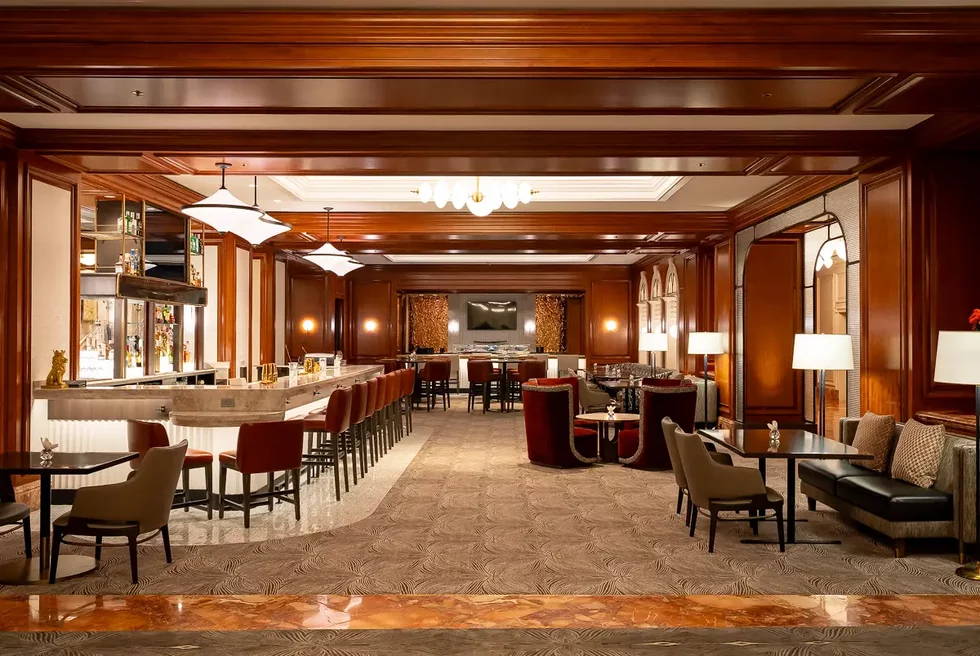
The Lobby Lounge at The Ritz-Carlton, St. Louis, home base and longtime gathering place for the 300-room Clayton hotel, will celebrate its grand reopening this week. The multi-million dollar “reimagination” of the 100-seat space, which included the transposition of the sushi bar and the main bar, took place over the summer months. A ribbon-cutting is scheduled for 5 p.m. Thursday, August 29, followed by a VIP reception. Guests of the hotel and residents are welcome to make reservations via this link after the grand opening, beginning at 7 p.m. Here’s what to know before you go.
The Overview
Find the best food in St. Louis
Subscribe to the St. Louis Dining In and Dining Out newsletters to stay up-to-date on the local restaurant and culinary scene.
It had been 11 years since The Lobby Lounge was last remodeled, so “we all knew it was time,” according to Vadim Morozov, the hotel’s executive assistant manager of food, beverage, and culinary, who uses the word “reimagination” for the project. The ownership and team members knew that whatever they did would be disruptive, Morozov says, so they thought Why not go all the way and do something meaningful, something to really elevate the experience?
They transposed the sushi counter and main bar, expanding the size of the latter and bringing it front and center into the room. New menus—for food, cocktails, wine, and sushi—were created across the board, programs designed to appeal to Ritz traditionalists and to attract a younger clientele. The intent was not to change the identity of the Lounge, which has been a gathering place for 33 years, but instead give it new life, in terms of the look and offerings. The glassware, flatware, plateware, and menu binders are all new.
“Our goal was to maintain the heritage of the space,” says Morozov. “It’s always been The Lobby Lounge, and now it’s The Lobby Lounge. It is the place.”
The Redesign
The reimagination took place in phases, with different parts of the room walled off at different times, so the Lounge could remain open during the transition. Morozov says, “The project was so well-orchestrated and disguised that, except for some occasional noise, guests had no idea what was being done.”
The design lead for the endeavor was Kristin Emory from Parker-Torres Design, headquartered in Sudbury, Massachussetts. Parker-Torres has spearheaded numerous hotel and restaurant/bar reimaginations at other Ritz-Carlton properties, as well as The Phoenician in Scottsdale, Arizona, The Don CeSar in St. Pete Beach, Florida, and The Chase Park Plaza Royal Sonesta in St. Louis.
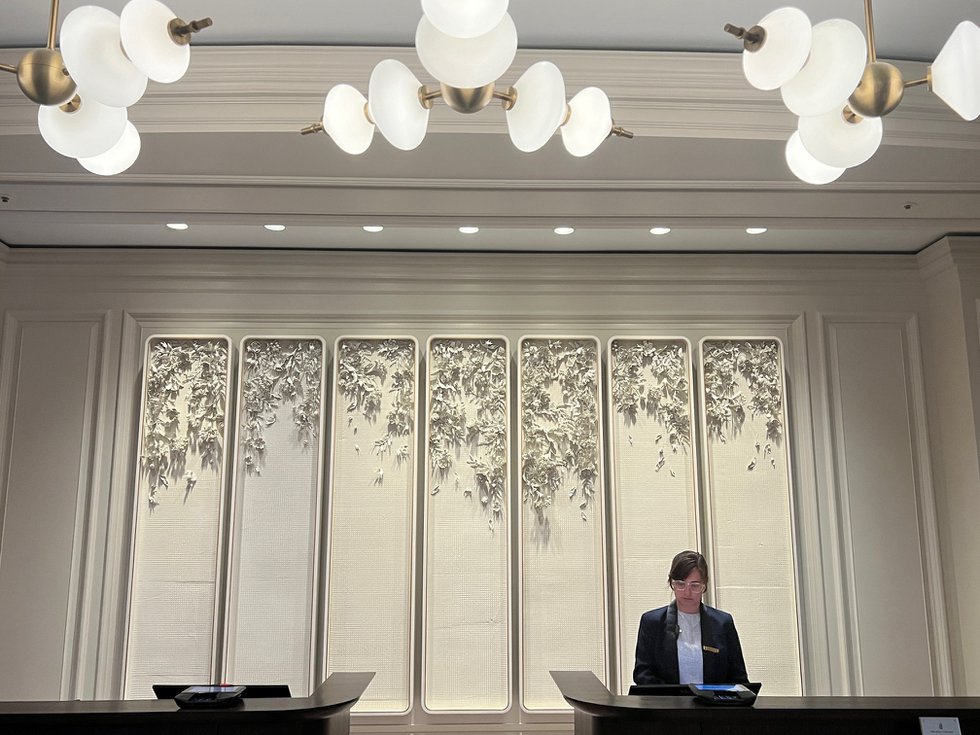
When developing the design for this space, she says, “we really wanted to blend the rich history of St. Louis with modern design elements, translated through historic motifs juxtaposed with contemporary furnishings and whimsical architectural details.” One signature element is the relocation of the forceful, dark-blue “O” painting to a focal point directly inside the front doors—a “hello to St. Louis” nod courtesy of local artist Ted Collier. Another is the 3-D art panel installation behind the reception desk, recalling the flora and fauna of the Flight Cage showcased at the 1904 World’s Fair.
The most practical change is the long overdue transposition of the sushi bar (formerly located mid-room) with the main bar (located on the back wall). A gleaming,12-seat bar now anchors The Lobby Lounge, virtually guaranteeing a more gracious and spacious experience, according to marketing coordinator Kate Smith.
“When laying out the space, we wanted to frame specific moments,” Emory says, such as guests catching sight of that bar through an illuminated textured glass archway. “There’s nothing better than an active lobby bar,” Morozov says. “It immediately sets the ambiance and the tone for your experience.” And even at first glance, this one lures in guests.
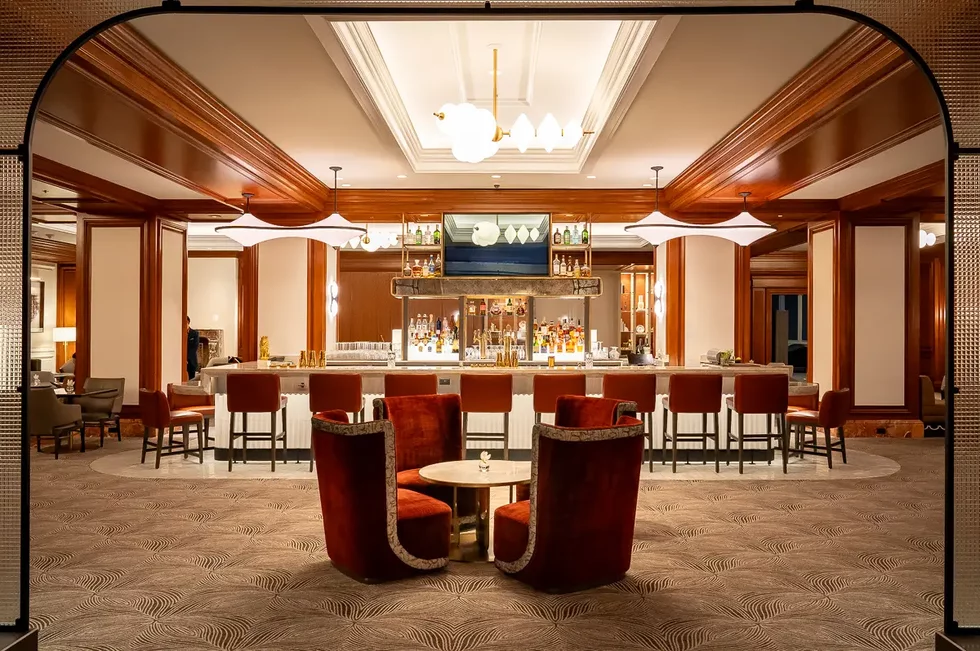
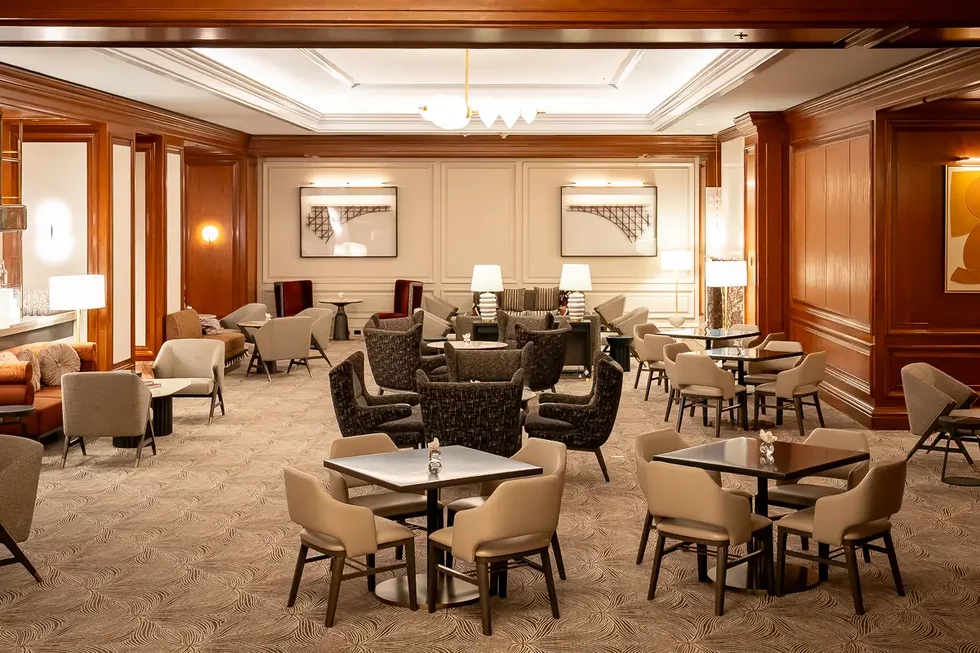
Regulars at The Lobby Lounge will immediately notice that LED lights have replaced incandescent bulbs throughout the space, lending a contemporary crispness. Above the bar, suspended from different ceiling heights, are two modern fixtures—that look either whimsically stretched or perhaps conjoined. The ceiling coves’ gilded trim is now a pristine white, and the fixtures reach out laterally, an axial change from the prior ornate, hanging crystal chandeliers.
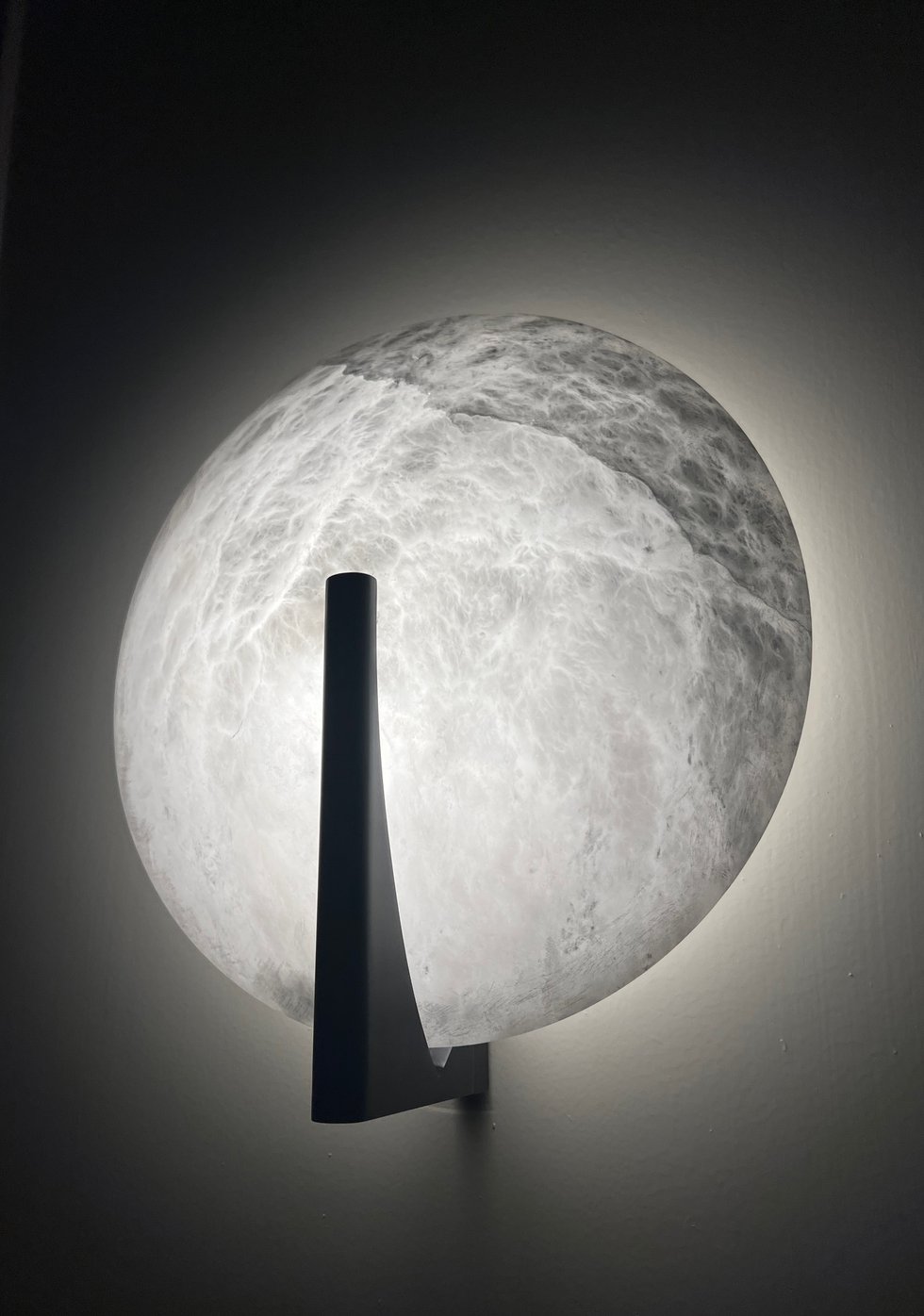
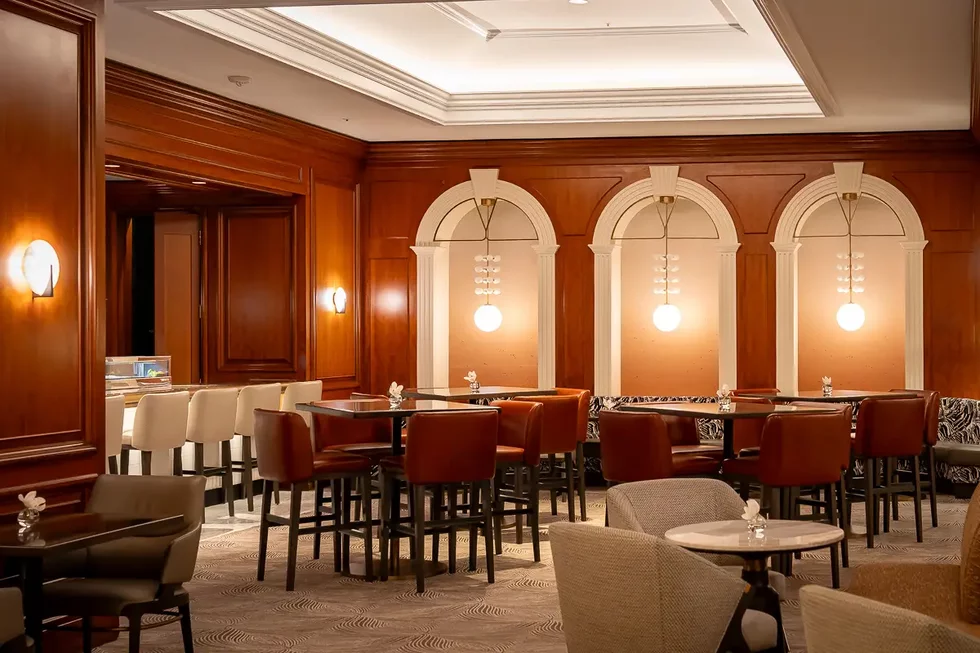
Similarly, five-light crystal sconces (the ones with sometimes askew, clip-on empire shades) have given way to flat, glowing disks that evoke the texture and candlepower of a full moon. Table lamps and a preponderance of their drum-shade counterparts illuminate different zones, accenting low- and high-top tables, an upholstered banquette, and group seating, some with couches that cleverly wrap around mahogany-veneered columns, which in the prior iteration, were ubiquitous. Some of the panels have been fitted with textured, off-white panel inlays, effectively updating the wood presence while maintaining its integrity.
As guests meander from the main bar to the sushi bar, some will recall that the room’s former russets and burgundies live again on barstools, stool-height chairs, and cradling upholstered barrels. They may discern that former dark-blue and white geometric print carpet has become a wash of pastel grey and white swirls, while the ambient music remains unchanged. Morozov calls it “polite jazz.”
The Sushi Counter and Beyond
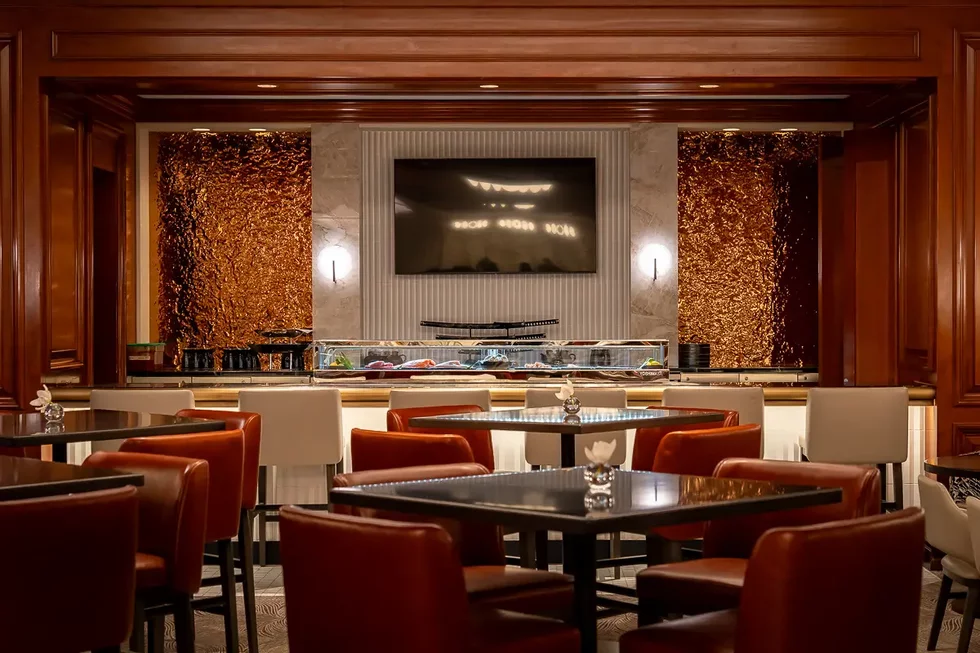
In keeping with the reimagination, the sushi bar has found its rightful place in The Lobby Lounge, tucked along the back wall, its six seats facing the two sushi chefs, one of whom is longtime Lobby Lounge veteran, Masuzo Kudo. Such positioning means that an omakase dinner can now be conducted at the sushi bar while cocktail bar guests go about their business immediately behind them. The back bar—a combination of flat-screen TV and decorative samurai swords flanked by hammered copper wall panels—is a curious contrast in texture, utility, and design.
The sweeping grand staircase, a popular perch for many family and wedding photos, remains unchanged, save for a run of the now-familiar putty and dark-gray carpet that also coordinates with the furniture in the Lounge proper.
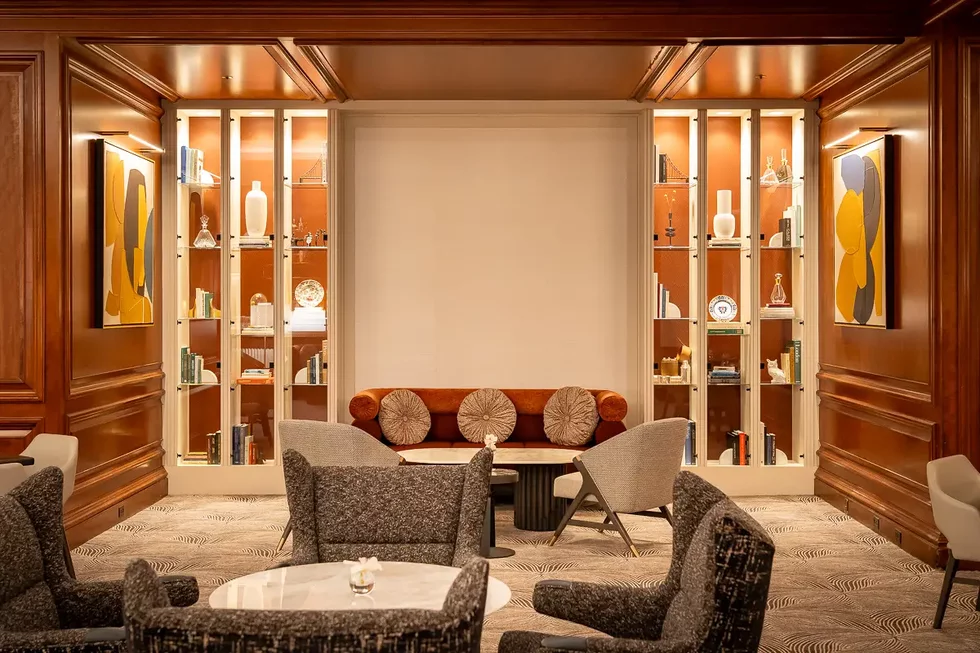
Weekend revelers will be happy to hear that live entertainment will return to The Lobby Lounge on Friday and Saturday nights beginning in September. Regulars will soon notice that the musicians and dance floor will now be less intrusive, as a result of the deepening of the staging area, anchored by what Emory calls a “feature wall,” which showcases curated accessories telling the story of St. Louis and works by local artists.
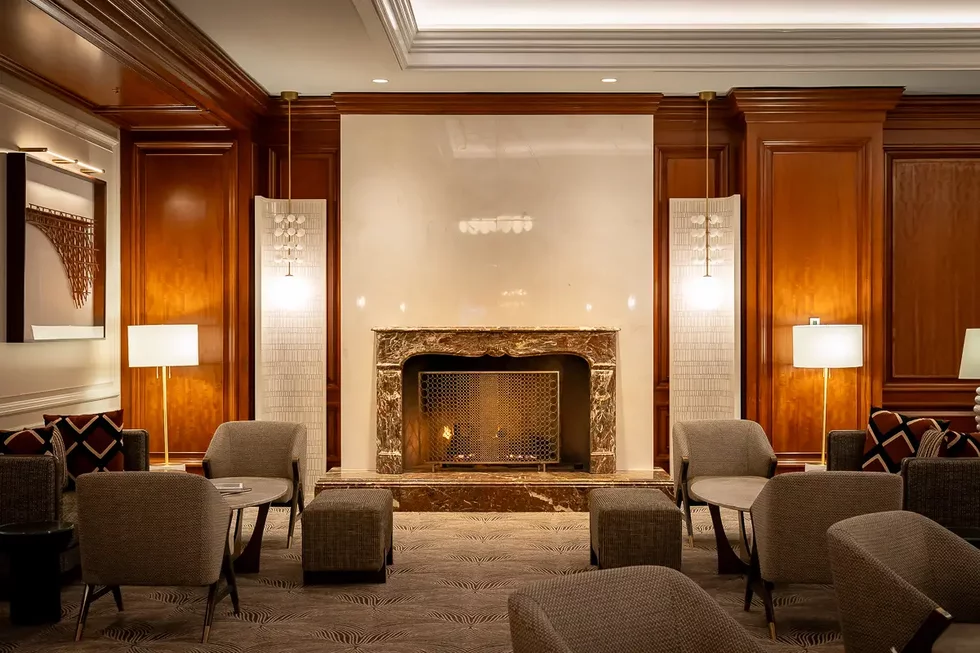
The granite fireplace, another focal point in the space, remains the same, but the surround was modernized, lightened, and brightened. On the adjacent wall is a diptych showing two spans of a wooden bridge, another nod to the city’s history.
Morozov, who arrived in St. Louis only two months ago, says he doesn’t want to look back. “I’m sure it [the former Lobby Lounge] was very nice, but this room is what this property means to me. I am more than happy to be working with what was just created here.”
The Menu
New cocktail, food, and sushi menus are exclusive to The Lobby Lounge. The hotel’s executive chef, Yalcin Arslan, oversees the food menu, which has been reimagined like the rest of the space.
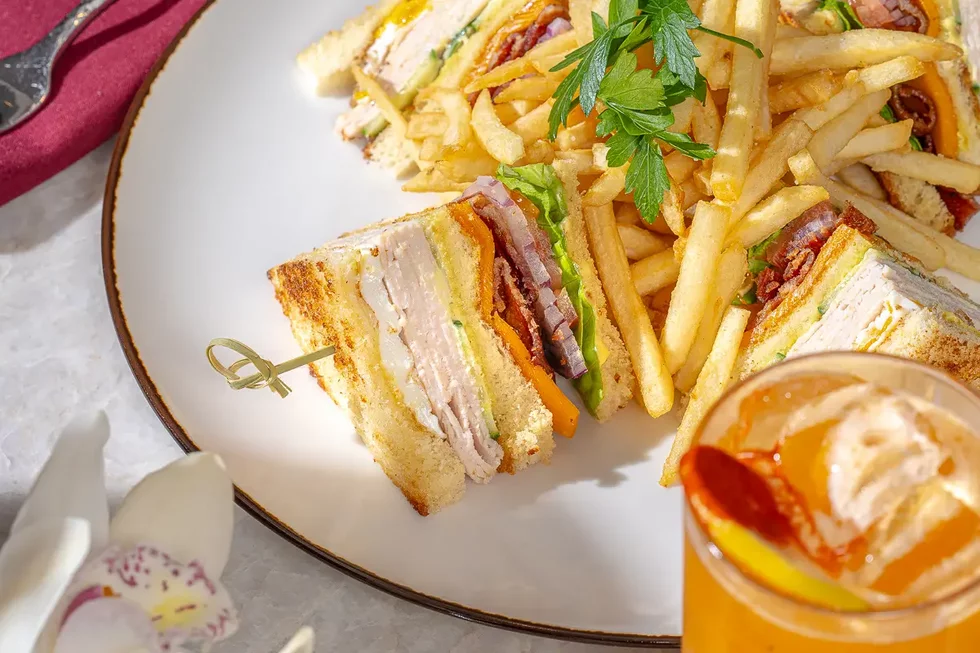
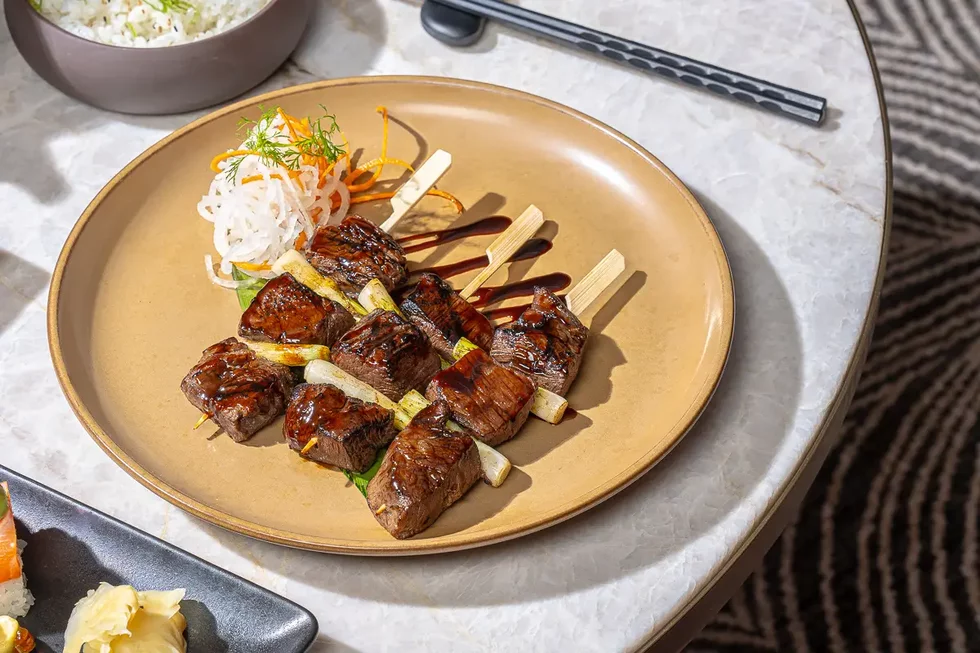
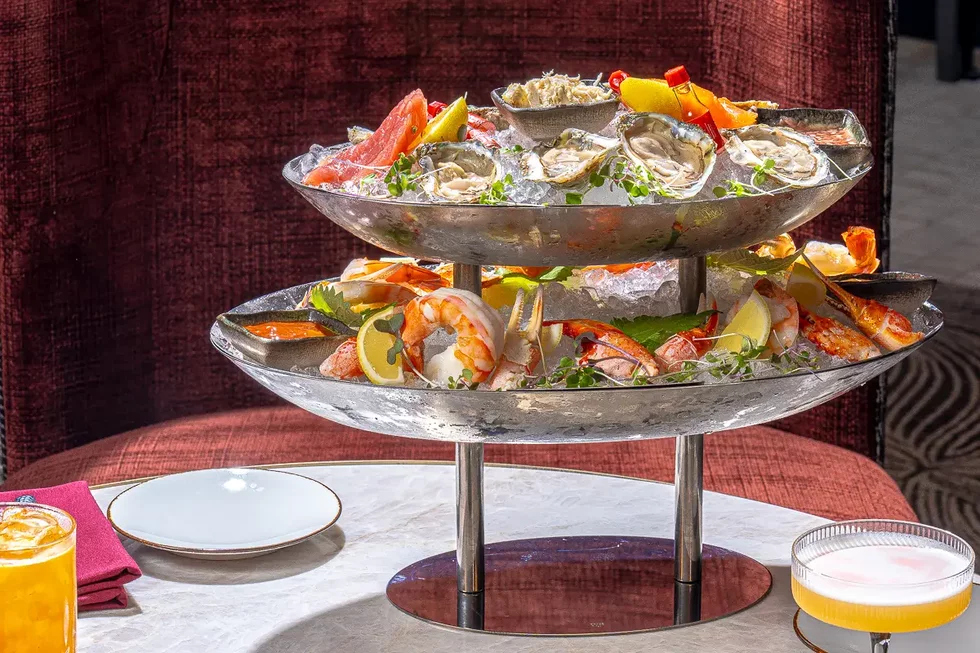
The triple-decker Forest Park club, for example, is served warm with a poached egg on top. The Caesar salad contains a hard-boiled egg and capers. There are culinary nods to the city as well, such as St. Louis-style toasted ravioli, a St. Louis BBQ chicken salad, and gooey butter cake. Other dishes on the 20-item menu include crispy chicken wings, mozzarella arancini, ebi (shrimp) tempura, wild mushroom fettuccine, and The Ritz-Carlton Seafood Tower.
The Lobby Lounge, long known for its sashimi, nigiri, and maki offerings, carries on that tradition. Specialty rolls now include an Osaka-style Philadelphia roll with salmon and a spicy tuna tartare (both pictured below).
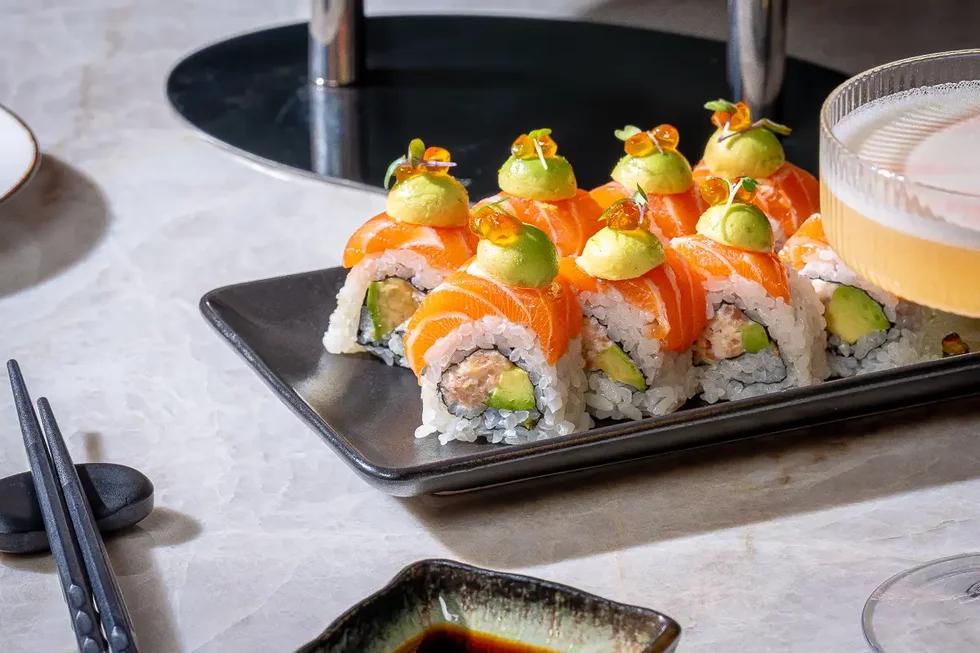
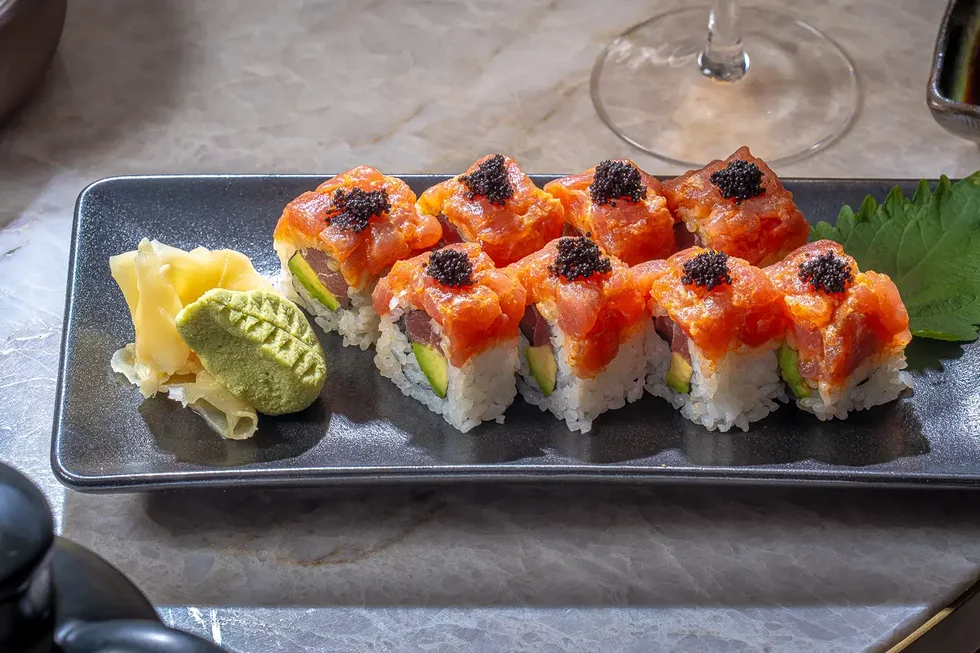
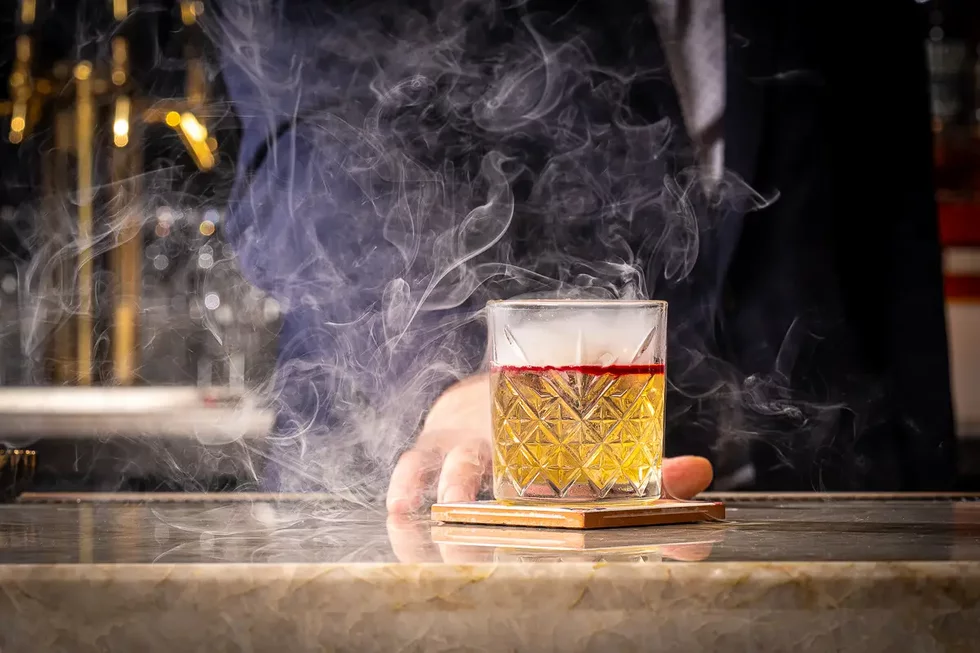
More casual options include three flatbreads and sandwiches, including a half-pound cheddar burger with twice smoked bacon and sweet and spicy pickles. In addition to French fries, the selection of side dishes has been expanded to include sweet and spicy buttered cauliflower, onion rings, sweet potato waffle fries, and a side salad. Morozov says guests can expect some table-side theater as well, such as sauces and soups poured at the table and a smoke garnish for one of the cocktails.
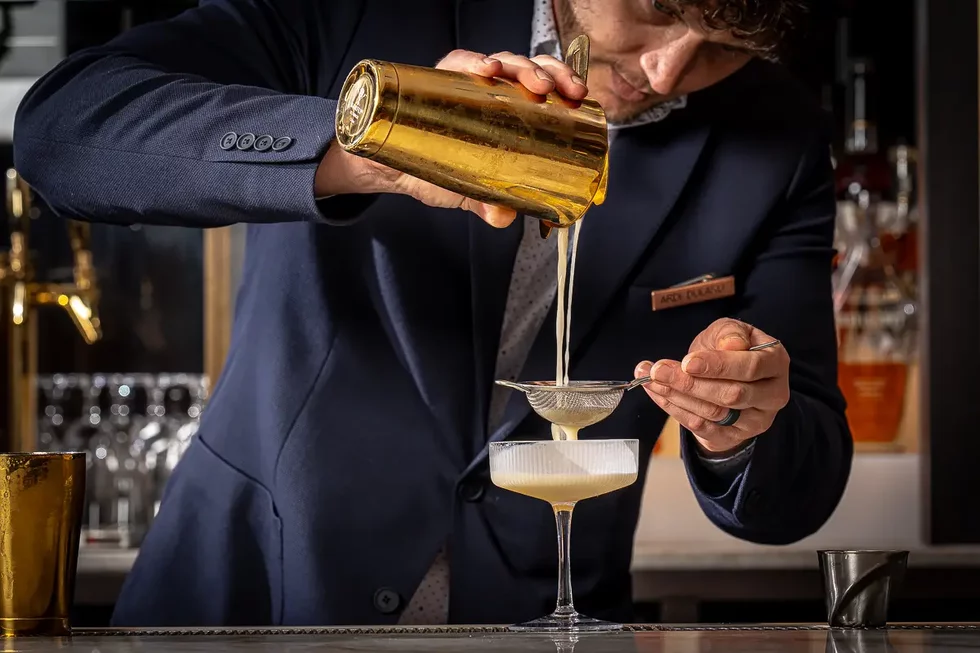
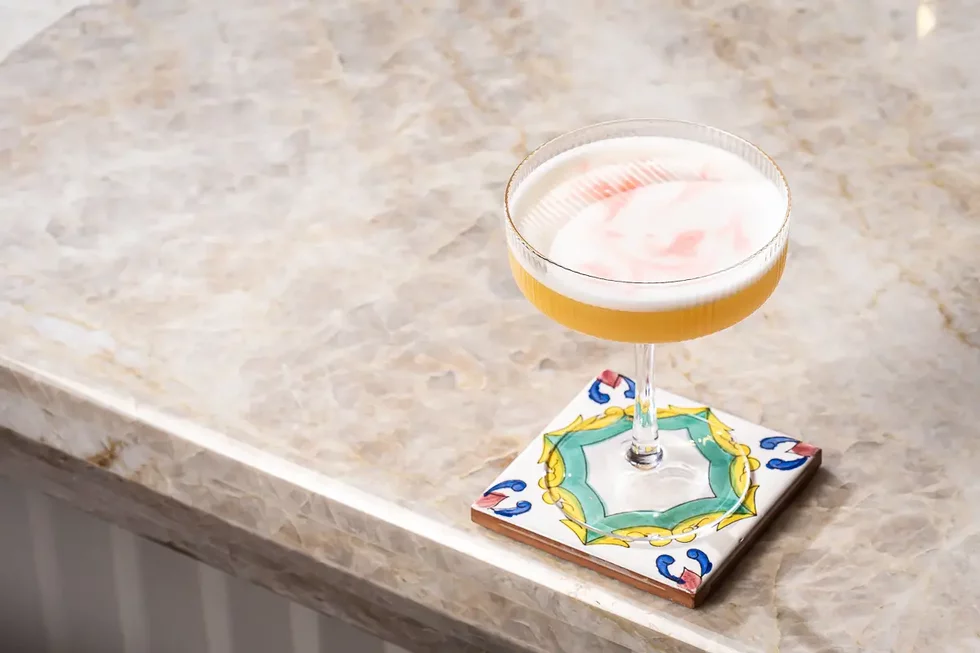
The cocktail menu contains eight signature libations, inspired by the heritage of St. Louis and made with in house infusions and shrubs. “I come from the East Coast, and my senior manager, Ardi Duluku, comes from the West,” Morozov says, ”so we bring different ideas and techniques to the table, but we agree on the classic cocktails, which are fundamental to any good bar program.
“I’m a big martini guy,” he continues, “which is a cocktail that’s very easy to get wrong.” He’s also a certified mescal sommelier and, as such, hopes to expand the palate of patrons with more mescal-based cocktails and flights. “Tequila is only one part of the broader agave and mescal spectrum,” he says.
Low- and no-alcohol cocktails, which are extremely popular on both coasts, have also found a place on The Lobby Lounge menu, with such names as Red Brick Sunset and Where the Rivers Run, made with Lyres nonalcoholic amaro, passion fruit, lemon, agave, and ginger beer.
“These are well-conceived, complicated cocktails,” Morozov says, “not just juice and soda. With all of the creative forces on our team, we have an opportunity to introduce guests to something they may not have tried before.”
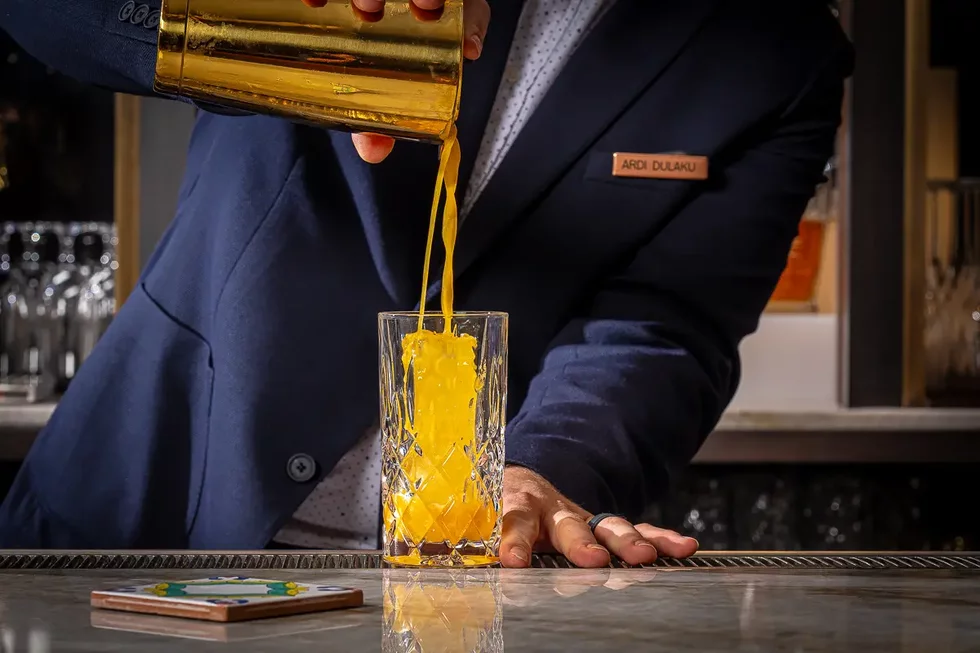
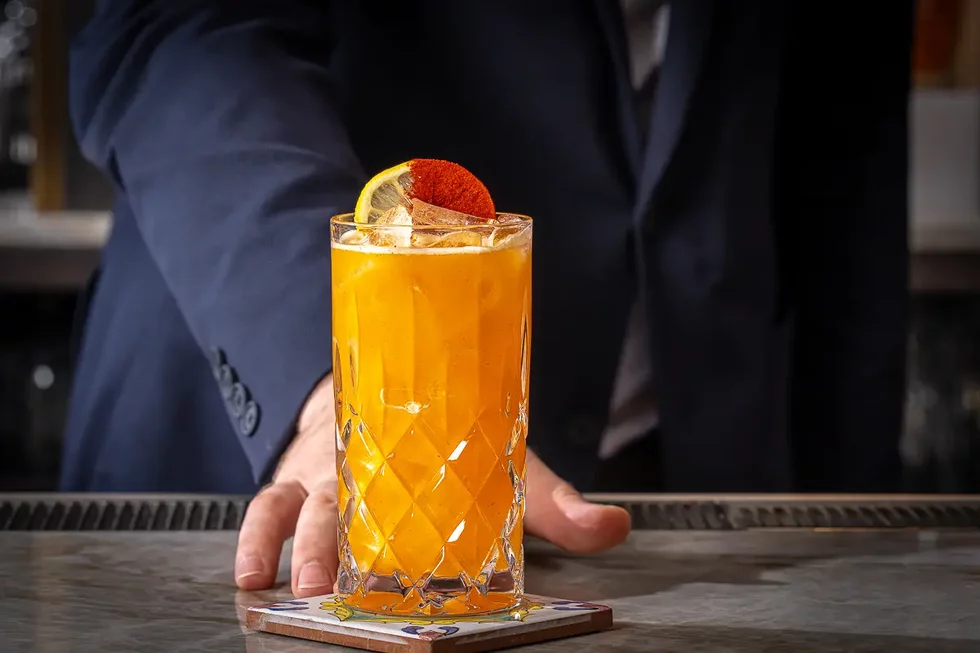
Morozov and Duluku designed the cocktail menu to be approachable, which to him connotes that guests should be able to read about a drink and almost imagine what it tastes like. There’s also a focus on forward-thinking concepts, such as a “Nightcap” section, including Muddy Waters, mad with Baileys, coffee liqueur, chocolate bitters, and cream.
Such ingenuity is bolstered by state-of-the-art bar equipment, including a custom “clear ice” machine and an express chiller that can “frost” a room-temperature beer or cocktail glass in a matter of seconds.
The Lobby Lounge’s wine list is small but mighty, Morozov says, and includes 20 glass selections and 120 bottles, “a mix of must-haves and creatives.” There are four wines on tap, with selections from smaller-production or up-and-coming wine makers. “We visited these wineries in person to show we were committed to their wines,” Morozov says. “We’re obviously proud of our choices and happy we can offer guests what amounts to a $30 to $40 glass of wine for under $20,” which is one of the ways that the team may end up describing them, he says.
Morozov has worked at seven hotels under the Ritz and St. Regis umbrella, but this is his first stint in the Midwest. An 11-year veteran, he refers to himself as a “food, beverage, and service triple threat,” focused on creating new guest experiences. “At so many bars, even world-class establishments, I feel like I’m only a transaction,” he says. “My goal is for our guests to discover some personal connection with me and with my team.”