Walk into almost any St. Louis brewery, and you’ll find both an American pale ale and an IPA on tap. At first glance, the two styles seem remarkably similar. Both feature American hop varieties known for citrus, pine, and tropical fruit flavors. Both trace their roots to the American craft beer revolution. Both appeal to drinkers who enjoy hop-forward beers.
So what’s the difference? The answer isn’t necessarily the hops themselves. It’s how brewers use them. An APA aims for balance, allowing hop flavor and aroma to work alongside a noticeable malt backbone. An IPA pushes those same hops further, delivering bigger aromas, firmer bitterness, and a more assertive hop experience.
Find the best food in St. Louis
Subscribe to the St. Louis Dining In and Dining Out newsletters to stay up-to-date on the local restaurant and culinary scene.
Think of it this way: An American pale ale lets the hops share the spotlight with the malt. An American IPA hands the hops the microphone.
American pale ale helped introduce many drinkers to bold American hop character long before IPA became craft beer’s flagship style. As breweries experimented with stronger, hoppier beers, IPA evolved into the industry’s most recognizable style. Pale ale, meanwhile, stayed true to its original purpose: delivering hop flavor without overwhelming balance.
At St. Nicholas Brewing Co., that philosophy is reflected in Peloton American pale ale, a 6% ABV beer that offers a strong hop presence without crossing into IPA territory. “I think American pale ales are somewhat underrated compared to IPAs,” says Carl Bundy, owner and brewer at St. Nicholas Brewing Co. “Historically, craft beer drinkers don’t look for subtlety. If they’re choosing between a pale ale and an IPA, they’ll typically choose an IPA, with probably more flavor, bitterness, and ABV.”
But that’s also why he believes summer is the perfect time to rediscover the style. “Right now, in the heat of summer, an American pale ale sounds pretty delicious without being as aggressive as some IPAs can be.”
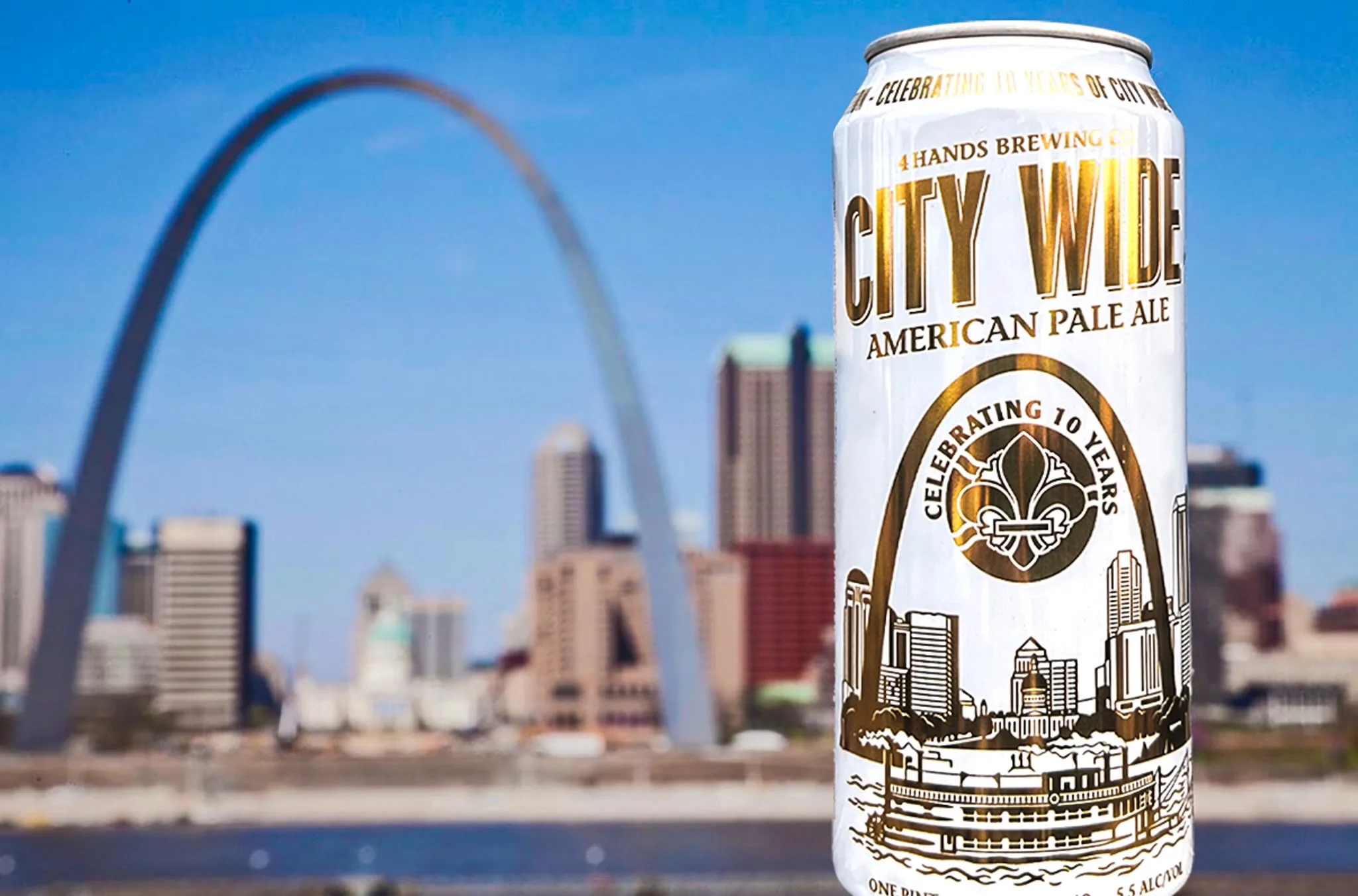
Nearly a decade after its debut, 4 Hands Brewing Co.’s City Wide remains one of the region’s defining examples of American pale ale. Brewed with centennial, citra, and simcoe hops in both the kettle and during dry hopping, City Wide delivers citrus, melon, and tropical fruit aromas while finishing crisp and balanced.
For Jeremy Danner, Midwest sales manager and marketing/content director for 4 Hands, City Wide also illustrates one of the biggest misconceptions about American pale ale. “The major difference between our pale ales and IPAs is the amount of hops added on the brewhouse as compared to similar amounts during dry-hopping,” Danner says. “This allows us to add huge hop flavors and aromas without contributing much to the overall bitterness of a beer, so we’re able to create vivid, distinct hop profiles beer to beer while reserving larger bittering hop charges, and higher IBUs as a result, in our IPAs.”
In other words, a pale ale isn’t simply a lighter IPA. It’s designed differently from the beginning.
In a Nutshell
English IPA
- Earthy, floral and herbal hop character
- Balanced by biscuity malt
- Typically 5%–7% ABV
American Pale Ale
- Bright citrus and pine hop flavors
- Balanced by a supportive malt backbone
- Typically 4.5%–6.2% ABV
American IPA
- Bigger hop aroma and firmer bitterness
- Bold citrus and tropical fruit flavors
- Typically 5.5%–7.5% ABV
Must-try American pale ales in St. Louis
American pale ale may not dominate tap lists the way it once did, but breweries across the region continue producing excellent examples of the style. These beers have all been pouring in recent weeks, while a few are included because they’re simply too good not to keep an eye out for. (Craft beer moves fast, so before making a special trip, check the brewery’s current tap list or social media to make sure your favorite is still available.)
American Pale Ale | Civil Life Brewing Co. | 5.0%
A textbook interpretation from one of the St. Louis region’s most respected traditional breweries. Citrus and floral hop notes are balanced by a sturdy malt profile, making this one of the area’s benchmark pale ales.
Perfect Storm Pale Ale | Good News Brewing Co. | 5.2%
A hop-forward but approachable pale ale that showcases citrus and tropical fruit while staying grounded in balance rather than intensity.
American Pale Ale | Point Labaddie Brewery | 5.3%
A straightforward interpretation that highlights citrus-forward American hops while maintaining a clean, balanced finish.
Pitchside Pale Ale | Bluewood Brewing | 5.5%
A balanced pale ale with citrus-forward American hop character supported by a clean malt backbone. It is approachable, easy drinking and built for repeat pours.
City Wide American Pale Ale | 4 Hands Brewing Co. | 5.5%
Brewed with Centennial, Citra and Simcoe hops, City Wide balances bright grapefruit, citrus, melon and tropical fruit flavors with just enough pale malt sweetness to remain exceptionally drinkable. It intentionally blurs the line between pale ale and IPA without losing the balance that defines the style.
Retro Brew | 2nd Shift Brewing | 5.6%
A modern interpretation of the classic American Pale Ale, Retro Brew delivers expressive hop character while maintaining the balance and drinkability that define the style.
Pitman Pale Ale | Friendship Brewing Co. | 5.8%
Named for Pitman Hill Road near the brewery, this American Pale Ale combines bright hop flavor with restrained bitterness. It is a clean, approachable example of the style.
Lookout Pale Ale | Logboat Brewing Co. | 5.8%
A Columbia favorite featuring bright American hop character with a smooth, balanced finish. It is an easy introduction to the style and built for drinkability.
Trixie | Third Wheel Brewing | 5.8%
Named after the brewery’s three-wheeled mascot and beer wagon, Trixie showcases everything that makes an American Pale Ale so approachable. Double dry hopped with Cascade and Amarillo, it delivers citrus and pine aromas while a bready Maris Otter malt backbone keeps the hops in balance.
Dry Hopped APA | Schlafly Beer | 5.9%
One of the beers that helped define American Pale Ale in St. Louis. Dry hopping delivers fresh hop aroma while maintaining a balanced malt backbone that has kept it relevant for decades.
Peloton Pale Ale | St. Nicholas Brewing Co. | 6.0%
Brewer Carl Bundy describes Peloton as a compromise between an American Pale Ale and an IPA. It delivers a strong hop presence without becoming aggressively bitter, making it an excellent example of why the style remains underrated.
Pale Ale | Big Muddy Brewing | 6.0%
Generous additions of Cascade hops give this classic American Pale Ale bright citrus, floral and lightly spicy hop character, while a touch of caramel malt provides balance. It is a straightforward, old-school example of the style that proves great pale ales do not need to chase the latest hop trends.
American Paint APA | Rock & Horse Brewing | 6.6%
A strong American Pale Ale brewed with a generous dose of Citra and Mosaic hops. As the brewery asks, “Or is it an IPA?” It is a fitting example of how modern pale ales often blur the line between the two styles.
Must-try American IPAs in St. Louis
Fantasyland | Urban Chestnut Brewing Company | 6.0%
Brewed with a distinctly American hop profile, Fantasyland delivers bright citrus, pine and tropical fruit character over a crisp malt backbone. At 60 IBUs, it is an excellent example of a classic American IPA that balances bold hop flavor with everyday drinkability.
Double Dry Hopped Citra IPA | Six Mile Bridge Beer | 6.0%
A showcase for Citra hops, this IPA uses an aggressive double dry hop schedule to amplify citrus aroma and flavor while maintaining a clean, crisp finish. It proves that big hop aroma does not always require a high ABV.
Drink Outside IPA | Main & Mill Brewing Co. | 6.7%
A modern American IPA showcasing expressive citrus and tropical fruit aromas with a crisp, clean finish that keeps the hops front and center.
Citrapolis IPA | Modern Brewery | 6.8%
One of the St. Louis region’s signature hop-forward beers. Citra hops drive bold citrus aromas and flavors, while 70 IBUs provide the firm bitterness expected from a modern American IPA.
Elusive IPA | Public House Brewing Co. | 6.8%
A balanced American IPA highlighting citrus, pine and tropical fruit flavors without excessive sweetness, making it approachable for a wide range of hop lovers.
2211 IPA | Mississippi Culture | 7.0%
A contemporary American IPA built around bold hop character while maintaining the balance that keeps each sip inviting rather than overwhelming.
Bignose IPA | Friendship Brewing Co. | 7.0%
A classic American IPA featuring assertive bitterness layered with bright citrus and pine hop flavors. It remains a favorite for drinkers who appreciate a traditional, hop-forward IPA.
Blitzkrieg IPA | Stubborn German Brewing Co. | 7.0%
Bold citrus, pine and resinous hop character are backed by 66 IBUs, creating a textbook American IPA with a clean finish and assertive bitterness.
Incarnation IPA | 4 Hands Brewing Co. | 7.0%
Brewed exclusively with Mosaic hops from the first bittering addition through dry hopping, Incarnation delivers pineapple, passion fruit, blueberry and candied citrus flavors over a clean malt base. At 40 IBUs, it showcases how a well-balanced IPA can emphasize hop flavor as much as bitterness.
India Pale Ale | Civil Life Brewing Co. | 7.2%
Civil Life’s interpretation of the American IPA emphasizes balance as much as hop intensity. Citrus and pine hop flavors are supported by a sturdy malt backbone for a refined take on the style.
Goodle Day IPA | Point Labaddie Brewery | 7.4%
A robust American IPA featuring layers of tropical fruit, citrus and resin supported by a clean finish and a firm but balanced bitterness.
Art of Neurosis IPA | 2nd Shift Brewing | 7.6%
One of the St. Louis region’s benchmark American IPAs. Bright citrus, pine and resinous hop character combine with firm bitterness for a classic West Coast-inspired drinking experience.