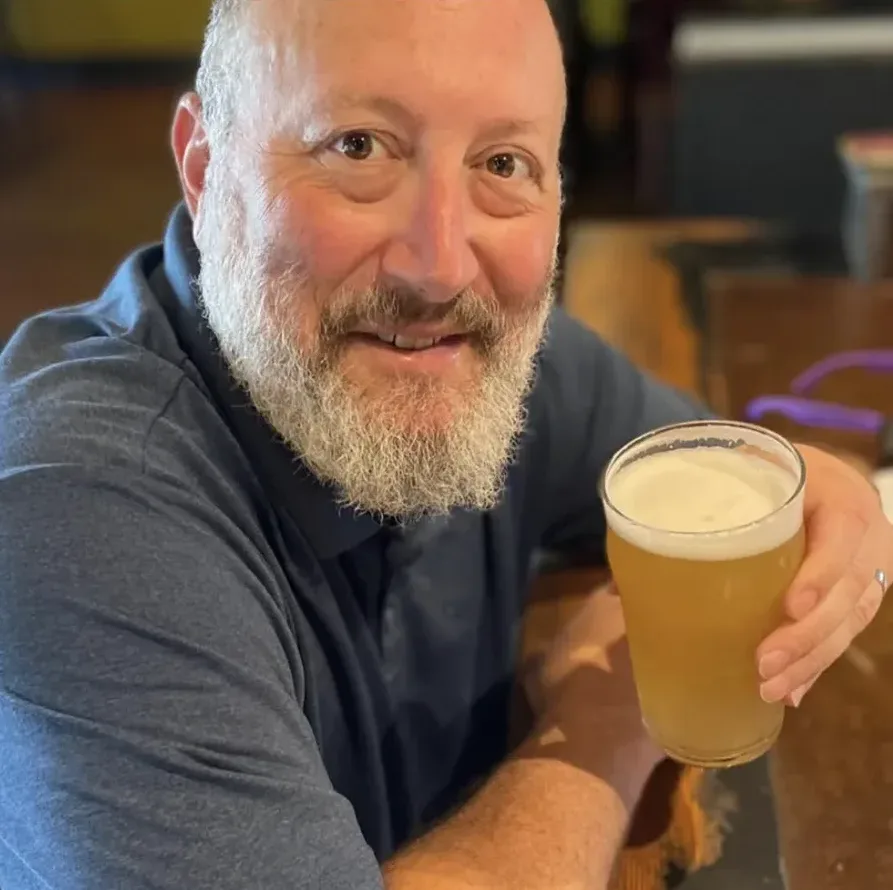
When Schlafly CEO James “Otto” Ottolini talks about beer, he doesn’t start with strategy or growth charts. He starts with a glass in someone’s hand.
“For me, holding what you do in your hand is one thing,” he says. “But when you see people holding what you do in their hand, making memories, toasting one another, celebrating a loss or a new family member, that’s the magic.”
Find the best food in St. Louis
Subscribe to the St. Louis Dining In and Dining Out newsletters to stay up-to-date on the local restaurant and culinary scene.
Ottolini, who was named CEO on December 18, is not a new face at Schlafly. He’s worked across nearly every part of the brewery for more than two decades. And in a moment when St. Louis beer drinkers have seen brewery closures and contractions, he’s clear about what his promotion means.
“Schlafly is known for quality,” he says. “We make solid liquid. That’s all we’ve ever been about.”
Consistency Over Noise
That reputation matters right now. It is no secret that the craft beer world is experiencing a period of correction. Local breweries have closed. National brands have contracted or filed for bankruptcy. Beer consumption is declining. The headlines have been hard to miss.
Ottolini does not deny any of it. He simply views the moment through a longer lens. “There’s a lot of capacity,” he says. “If we were economists looking at this industry, we’d say we make far more beer than people are drinking. Any industry does that at some point. Then it corrects.”
Add in changing demographics, fewer drinks per capita, and an explosion of choices competing for people’s time and discretionary income, and the picture sharpens. “You walk down the beer aisle and think, ‘I might have been thirsty when I walked in here, but now I’m overwhelmed,’” Ottolini says.
While some breweries respond by constantly chasing novelty, Ottolini believes Schlafly’s strength has always been restraint. Consistency, he says, is not the opposite of creativity; it is the result of intention. “When people say Schlafly is consistent, they don’t mean it as a knock,” he says. “They mean they know what they’re getting.”
Listening, Not Chasing

That trust was built over decades with beers that became part of people’s routines. Pale Ale. Oatmeal Stout. Kolsch. Beers that didn’t need require reinvention, because they already did their jobs.
Innovation still plays a role, but only when it serves the drinker rather than exhausting them. Ottolini says the real challenge is knowing when an idea adds something meaningful and when it simply adds noise. “The magic trick is giving people something they didn’t even know they wanted,” he says.
That mindset shapes how Schlafly looks at adjacent categories. The brewery already produces nonalcoholic beer, which Ottolini views as a direct response to consumer demand. Cannabis and THC beverages, however, raise a different set of questions.
“It’s certainly on our radar,” he says. “But alcohol is heavily regulated, and cannabis regulation is all over the place. I’m a high-compliance person; I like to make sure everything is done right.”
Trying to be everything to everyone, he adds, is how brands lose their sense of self. “You end up looking like the beer aisle,” he says.
Local Still Matters

For Ottolini, staying grounded also means staying local. Schlafly distributes beyond St. Louis, but he believes the brewery has never stopped feeling rooted here. “People move away and still ask friends to bring our beer back,” he says. “Visitors seek us out because it feels tied to the city, not imported into it.”
Ottolini says that familiarity is not something Schlafly takes for granted. He encourages drinkers who may not have recently checked in to do so again. “Taste us again for the first time,” he says.
Looking ahead, Ottolini isn’t promising reinvention. He’s promising attention. “If you experienced Schlafly two weeks ago,” he says, “that’s the Schlafly you’ll recognize a year from now. If anything, it’ll be better.”