“African cuisine” is only slightly less descriptive than “cuisine of this solar system.” Africa cultures are so incredibly diverse, their cuisines so varied, it’s absurd to think that they could be corralled into anything even remotely comprehensive. So we entered the new Africana Restaurant & Adinkra Lounge (5860 Delmar) wondering whether we’d be able to make any sense of a menu that could have been some kind of regional free-for-all.
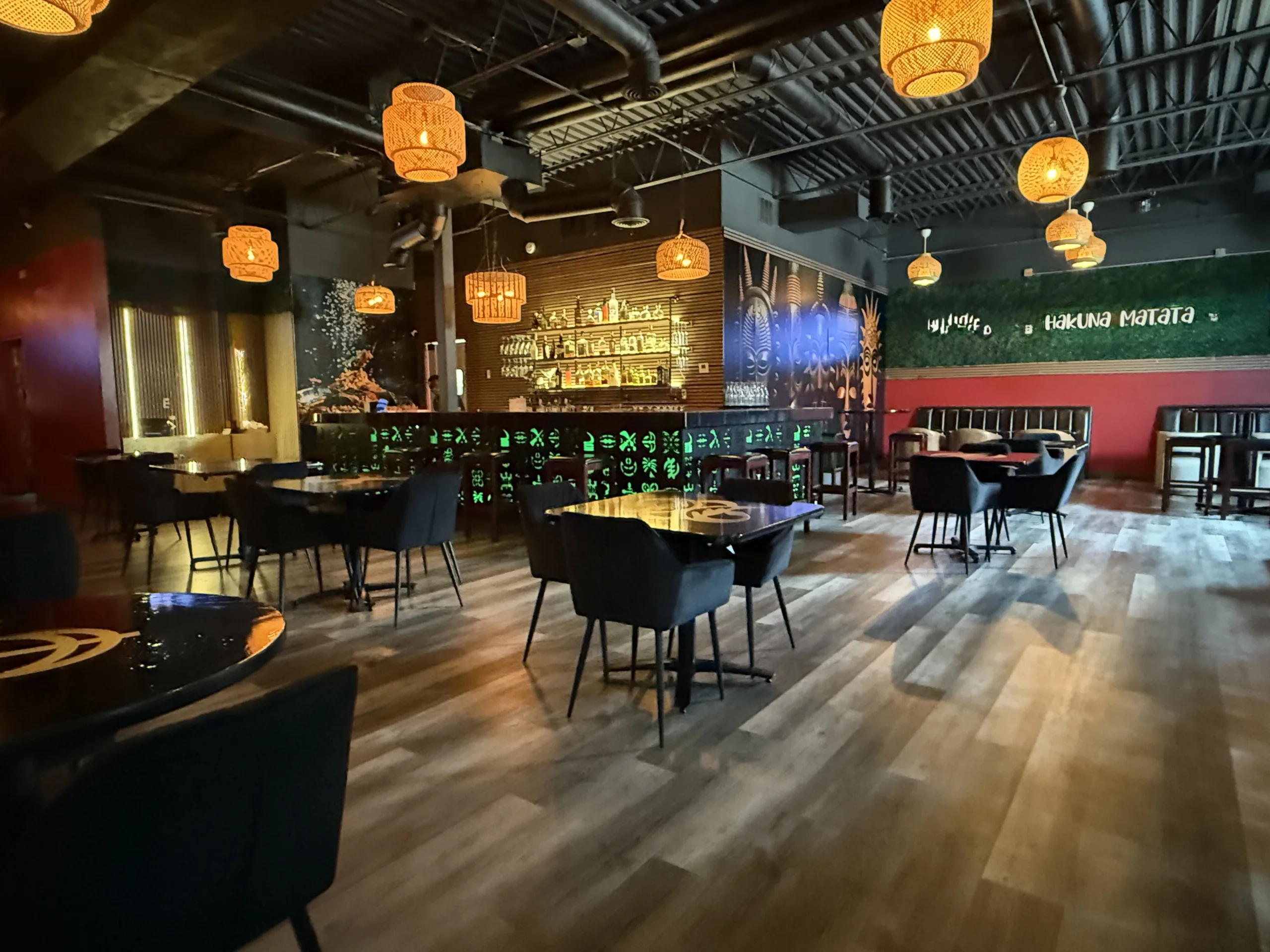
The place is cool, with a backlit bar that affords almost a cocktail lounge feel. Covering an entire wall is a pair of enormous murals, abstract African savannah landscapes in muted blues, warm yellow, and red. Tables are spread nicely; lighting is diffused to a soft glow by wicker shades that hang across the ceilings, and there’s a small stage for a DJ, which was empty on our visit.
Africana shares the same owners as five-year-old House of Jollof (503 Paul) in Florissant. The new location is referred to as “the luxury brand … House of Jollof 2.0.”
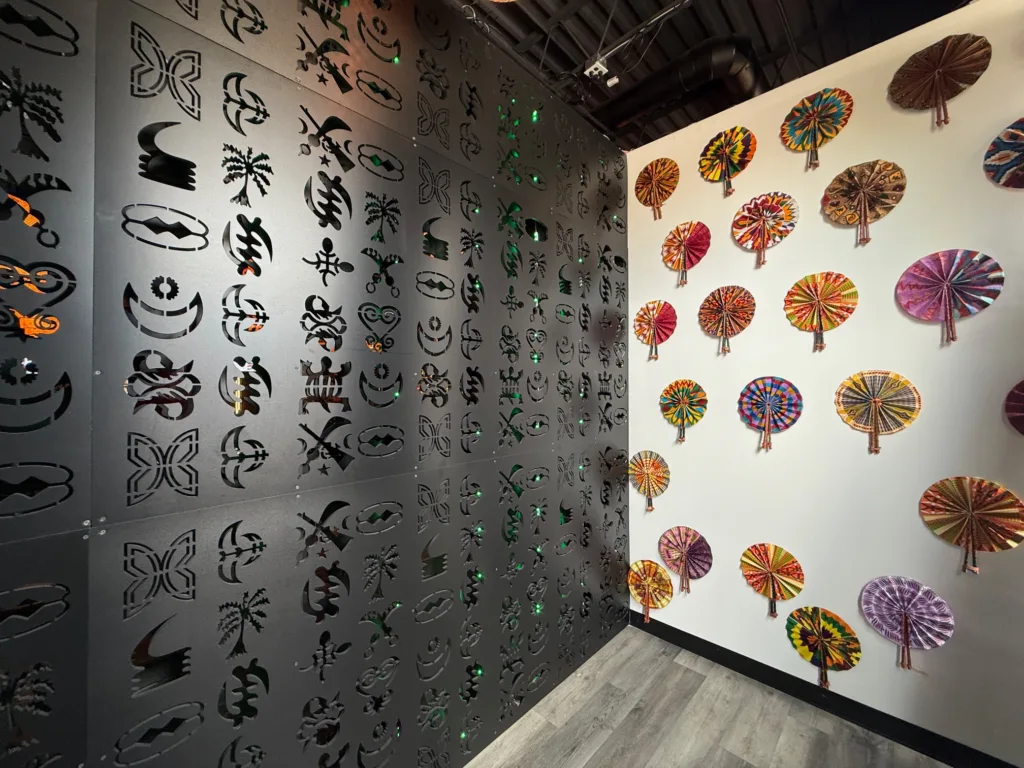
Adinkra dominate the décor. They’re symbols from West Africa, most prominently from Ghana, which are a kind of hieroglyphic, each with its own meaning. The bar and one wall that separates the door from the dining room are both lined with these, glowing in the low light, and others decorate each tabletop.
Before dining, a staff member offers a pitcher and empty bowl—a chance to rinse your hands, as most of the dishes here are meant to be eaten with the fingers—though many diners prefer to use the cutlery on the table.
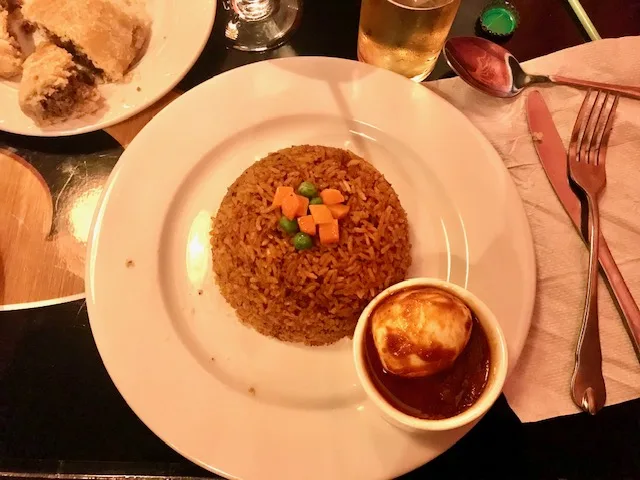
Africana’s food is concentrated almost entirely on the specialties of Ghana and Nigeria. Basically, that means lots of soups and stews, elaborately prepared, with layers of flavors. Jollof rice is to the cuisine of West Africa what BBQ is to Texas: Jollof defines the whole spirit of shared dining—everybody’s Mom has the best recipe. Reputations for restaurants specializing in Nigerian food have risen and fallen by the quality of their jollof. The closest that the U.S. has to it—and this is probably not a coincidence—is jambalaya. The similarities are pretty obvious. Long grain rice is added to a thick, much reduced paste dominated by a tangy tomato paste that’s been hopped up like nobody’s business with a whole kitchen of ingredients. Red bell peppers, Scotch bonnets, onions, garlic, ginger, along with curry powder, bay leaves, and thyme, are smashed into a slurry that manages to smell just as good as it tastes. Africana’s version, a sculpted mound, is lavish with a smoky redolence, and there’s a choice of what you’d like with it. Chicken or beef are most traditional, but you can order a side of goat, catfish, or tilapia, or uh, cheese steak. (Yeah, we didn’t go there.)
The closest counterpart to waakye rice might be—again, no coincidence—the classic red beans and rice of southern Louisiana. The same ingredients, rice and dark red beans, are cooked the same way, together in a pot. Waakye (pronounced “WAH-chee”) uses sorghum leaves in the cooking process, giving the dish a smack of bittersweet earthiness.
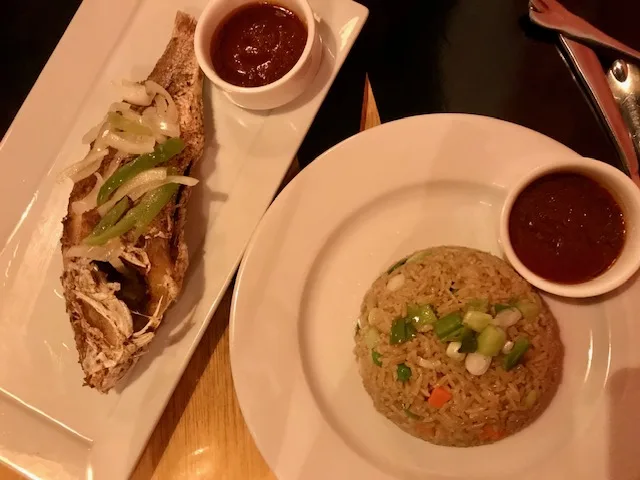
If you’ve eaten red snapper in the Caribbean, you’re going to recognize the Nigerian version here at Africana. The whole fish is deep-fried, the skin crispy, the meat flaky moist. It’s topped with slices of onion and green pepper. Add a side of fried plantains, and you have a splendid dinner.
Trying to find a familiar culinary comparison to fufu is a bit more challenging. If you’ve ever eaten Hawaiian poi with a meal (and not in a little cup at some cheesy tourist luau, so you can say you’ve tried it), you’ll have an idea. Fufu works as a carbohydrate. In West Africa dishes, it plays a role somewhere between mashed potatoes and bread. It looks like a ball of bread dough, with much the same consistency. At Africana, it’s made in house from boiled and pounded cassava, formed into warm balls wrapped in plastic, and served in hollow coconut shells.
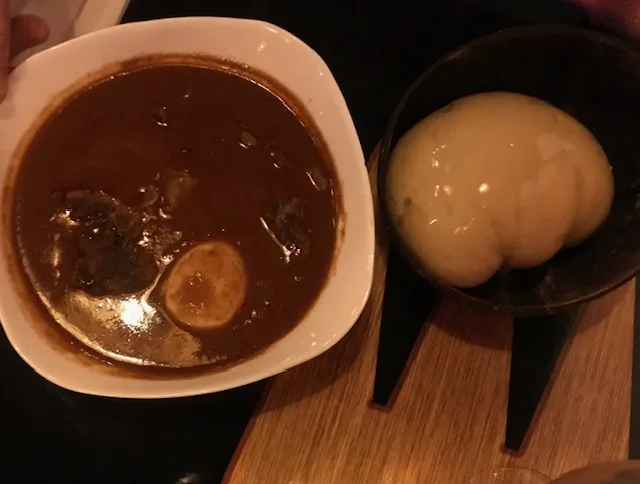
The normal way to eat fufu is to pull off a piece about the size of a quarter and flatten it slightly with your fingers to make a little scoop for dipping up soups and stews. And there are a couple of absolutely scoop-worthy dishes that you should try it with here, including the goat soup. If you ever long for the taste and texture of the birria stew at the old Pueblo Nuevo in Hazelwood, you can get a fix with a big bowl of Africana’s goat soup. Same fragrance, same silky broth, with the warm glow of chilies. It’s lovely. Instead of dipping corn tortillas in your soup, it’ll be mouth-sized gobs of fufu.
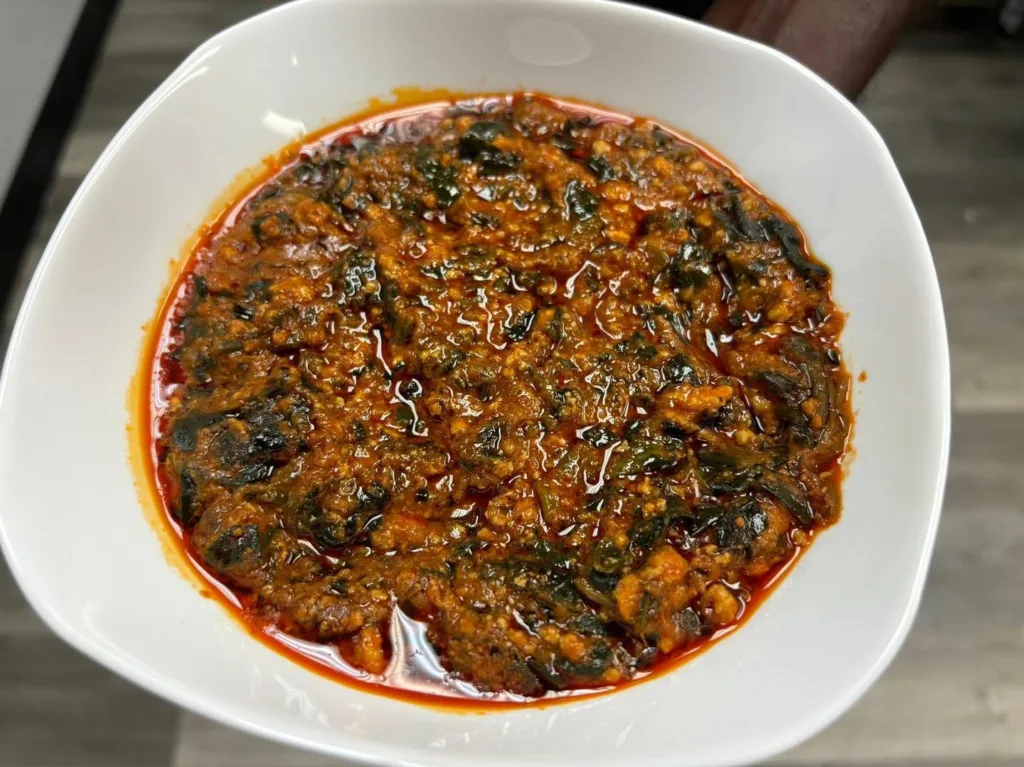
Another dish entirely enlivened with pinches of sticky fufu is particularly noteworthy: egusi soup, sort of the national dish of Nigeria. It’s Yoruban in origin, a complex mixture of tomato sauce, chilies, onions, peppers, and spinach. The thick, wonderful russet mash has the texture of minestrone. Part of the consistency comes from dried, finely ground gourd seeds. They’re supposed to be full of the good fats and antioxidants—but, either way, they give a luxurious mouth feel to the soup. Again, you can get it with a variety of meats, but opt for the chicken legs, which add a satisfying weight to the soup.
Dipping our fufu through that egusi, we realized the soup was pretty much like the whole dining experience at Africana: We began with “Well, this is going to be different.” Then, “Yep, this is definitely different.” Then, “This is something one could get used to.” And finally, “How soon can we come back?”
Africana Restaurant & Adinkra Lounge
📍 5860 Delmar, Skinker DeBaliviere
📞 314-384-9153
⏰Noon–10 p.m. Wed–Sat
Find the best food in St. Louis
Subscribe to the St. Louis Dining In and Dining Out newsletters to stay up-to-date on the local restaurant and culinary scene.