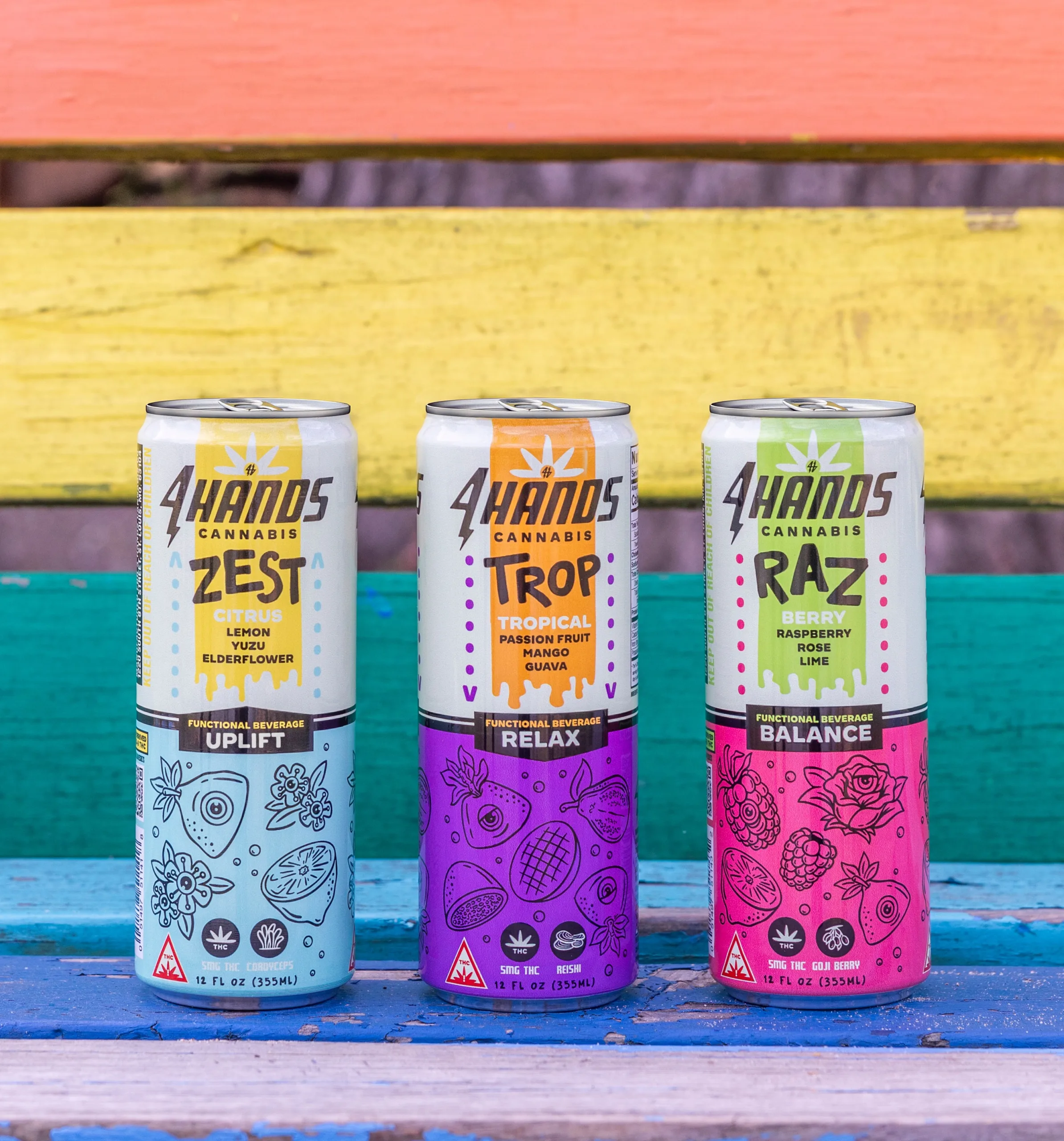
If you’ve been to a bar or local liquor retailer over the past year or so, chances are you’ve encountered hemp-derived THC beverages alongside a selection of craft beer and alcohol seltzers. Such brands as Mighty Kind, Triple, Plift and 4 Hands have become some of the biggest players in the category here in Missouri, finding success as an alternative for those who either abstain from alcohol or want a different sort of social lubricant or way to unwind at the end of the day.
These beverages could soon disappear from retail shelves and bars, however, thanks to a proposed law that passed the Missouri House last month. The bill, sponsored by Republican State Rep. Dave Hinman of O’Fallon, Missouri, would prohibit hemp-derived products from containing more than .04 mg of THC per container and require sales through licensed dispensaries. (As a point of reference, 4 Hands and Mighty Kind seltzers sold at retail and bar outlets contain 5 mg of THC.)
Find the best food in St. Louis
Subscribe to the St. Louis Dining In and Dining Out newsletters to stay up-to-date on the local restaurant and culinary scene.
What does this mean for the future of the category? We asked several industry leaders to weigh in about how we got here, possible outcomes, and what they’d like to see happen.
Kevin Lemp. Founder, 4 Hands Brewing Company: “There has been a massive influx of hemp-derived everything that has entered the market, whether that’s flower, pre-rolls, edibles—every line item you find at a dispensary can be found at a gas station, and I understand why that is a concern. I feel like this category happened very quickly and that there were no guardrails or regulations, which made it spiral out of control. Now, there is a reaction that is happening, and I fully understand that reaction, but I also know that there is a meaningful conversation we are able to have about low-dose beverages. Everything is being lumped into one group; I am not supportive of that entire group, but I know that what we are doing is safe, and we are regulating ourselves. The product we are putting out is a good, stable product. If we can build a category around that with legislation and guardrails, it can be successful.
The problem with the gray area that everyone has been operating in is that you will have bad actors and a group of individuals looking at the category as a money grab, rather than a holistic approach to build the category and a brand. There needs to be a regulatory shakeup and guardrails. We have built our beverage brand as if we were already being regulated by the Missouri Cannabis Board, but it’s entirely self-regulated. We need regulation, and we need good actors to make sure we are all putting really safe products on the shelves. Guardrails and regulations are hyper-important; prohibition is the wrong move.
I am hopeful, though, that there will be a low-dose beverage carveout in the legislation. We have markets that are already setting that precedent: Chicago just passed a low-dose beverage carveout, and Tennessee has not only passed that but also implemented an excise tax and new licensing system for retail partners on and off premise where you need to apply for license very similar to a liquor license to sell these beverages. I feel like we are having good and compassionate conversations with lawmakers. We all understand the concern, and we feel that with the right guardrails there can be a low-dose carveout for beverages because there is a customer that wants them, and quite frankly, maybe needs them, and having their only access be through dispensaries just won’t work for them. This is not a dispensary versus hemp-derived narrative. We want to be partners in it.”
Todd Harris, Co-founder, Plift Beverages. “There have been conversations around hemp-derived beverages in the Missouri State House for the last two sessions, which is nearly three years, and each year the [hemp-derived THC] beverage community has lobbied for some level of regulation and some very specific asks for regulatory certainty like testing and labeling requirements. We have been lobbying for and asking for regulation for the last several years.
While this bill essentially bans intoxicating hemp products in Missouri, what it actually does is provide the guise of whatever happens on the Federal level to take precedence. For laypeople out there, this means that these beverages that are currently sold in reputable retail outlets throughout the country—places like large grocery chains, Total Wine, and Circle K that have a lot of risk involved and therefore engage in a high level of rigor to make sure the products they put on their shelves is safe and reputable—will no longer be widely accessible at retailers. This is the worst-case scenario: The industry as we know it ceases to exist.
I will be the first one to say that the stuff you find at gas stations is scary—things like 7-OH, kratom, and other products outside of hemp and cannabis can be unbelievably scary. All hemp products get lumped in with that stuff, and then beverages get further lumped in, even though there is a very different market and business model. We work through a three-tier (distribution) system not because we have to but because we think it is the best way to be in the market. I’m not in the vape, gummy, or flower market, so I can’t speak to those products and don’ t want to speak to them, but for us, we have been in the industry for five years, and my partner was the chief compliance officer at a big [marijuana brand]; we were built to be compliance and regulation first. Good actors want regulation. I would die on this hill: Anyone who doesn’t want regulation is a bad actor. I am a free market guy, but it has to have rules, especially when you are talking about intoxicating products. That’s the only way they can be readily available and sold in places like Costco and Schnucks.
Selfishly, I am a beverage guy, so ultimately, I would love to see these beverages survive and thrive. Consumers have spoken; this is a several billion dollar category, and I would love to see them have the option to discover new product types by creating a regulatory framework that is not overly cumbersome but allows good actors to create reputable products and provide consumers accessibility. Ask anyone in the bar business, and they will tell you that tickets are down and people are drinking less. I am not anti-booze, but I am pro-choice. I am cautiously optimistic that there will be a path forward for products like ours because consumers are asking for it.”
Joshua Loyal, Founder, Mighty Kind. “For the most part, there are products like ours that are kind of a proven concept: People like the drinks, and brands like ours have been self-regulating. We were one of the first hemp-derived THC seltzers in the world and believe that it is important to start with good manufacturing practices and take it from there.
Liquor distributors are embracing these beverages as a savior for them because people are drinking less alcohol, and they need to replace it with something. Foundationally, at our core we created these beverages as alcohol alternatives; they are an option for bars and restaurants to serve to those who are wanting to be celebratory but don’t want to drink alcohol. We have to be in those places to survive. We need these beverages to be allowed and legal in places where people are socializing. If you ban them and try to put them in dispensaries, a lot of customers are not going to go to a dispensary. The whole idea is to have them readily available so that it’s an option for people.
Bars and restaurants are already carding and making sure to serve responsibility. If we are already trusting them with alcohol, why can’t we trust them with cannabis drinks? I’m hopeful that the conversation in Missouri is going to end up in the right place with reasonable regulations. All of those laws are welcome by brands like us; we would rather have fair regulations and clarity versus none at all because it benefits everyone. I stay optimistic and feel like everything will work out eventually, but there is certainly a reality that if this were to stop business from happening in Missouri until something happens federally—which is what the bill is saying—it would mean turning off this business for a year. Most would go out of business or move out of state. This would be mad for Missouri, but I have faith that there will be either an extension for another year or two before a ban takes place, and in that time, we will figure out regulations and make it happen. There is too much money on the line.”