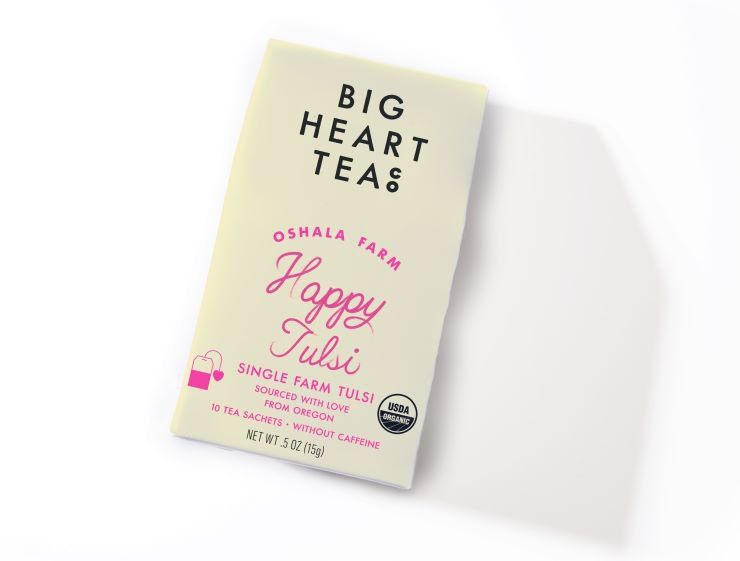
Last week, Big Heart Co. dropped their latest offering: Happy Tulsi. This naturally sweet herb is certified organic, single-farm, and domestic. Happy Tulsi is the companies’ first domestically grown herbal tea, and it’s grown and late-summer harvested by Oregon regenerative family farm, Oshala Farm. Founder, Lisa Govro, says Big Heart Tea. Co. doesn’t just carry tulsi-based teas, but around 60% of their product line has tulsi in it in some form. She says their newest tea is named Happy Tulsi, not only because it’s domestically-sourced, but because the scent and look of it “puts a smile on your face and lifts your spirit.” She describes Happy Tulsi as greener and having a brighter hue compared to their other tulsi-based teas. Govro says Happy Tulsi tastes fresher and that has to do with it not having a long supply chain life, since it was produced in Oregon.
“The fact that we got it [tulsi] from a U.S. farm is pretty huge. It was a lot of work and a lot of communication back and forth, but it also validated that we can get more herbs here now that we have a better idea of how the system works in the U.S.,” Govro says.
Find the best food in St. Louis
Subscribe to the St. Louis Dining In and Dining Out newsletters to stay up-to-date on the local restaurant and culinary scene.
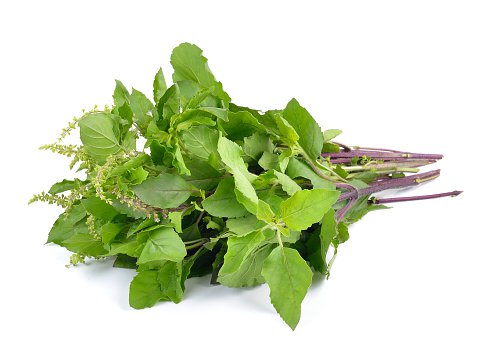
There are many varieties of tulsi, a.k.a The Holy Basil, but the type that Big Heart Tea Co. uses is called ‘rama.’ Besides tulsi being sweet, the flavor profile is a mint and basil combination. Govro describes it as a “distinct” taste that is “very flavorful and tasty.” She says the best way to drink it isn’t with added sugar or lemon, rather by itself. She prefers it iced, which makes for a refreshing summertime drink. The biggest difference between the various types of tulsi is the look of the plant; Govro says that rama blooms with little light purple flowers.
Big Heart Tea Co. has used tulsi as the main herb base in its collection of healing herbal teas for the past decade. Tulsi has its roots planted in India. India has a deep history of growing, cultivating and celebrating the sacred “queen of herbs.”
The difficulty of locating herbs domestically at scale is locating a farm to partner with that has the skills and expertise in drying and milling herbs for final use. This is an issue Big Heart Tea Co. faced head on in 2020 when the global supply of tulsi hit a standstill and they had to reconsider where and how to acquire their ingredients. Luckily for them, in the beginning of 2021 that’s when they found Oshala Farm through social media. The two companies talked and arranged a contract for Happy Tulsi.
Tulsi is an adaptogenic herb, which is a small classification of herbs that work with the central nervous system to help one’s body adapt to mild stress, anxiety, and reduce fatigue. Tulsi also has anti-inflammatory compounds and antioxidants and helps protect one’s body against toxic chemicals. Some additional health benefits include protecting against infection and treating wounds, lowering blood sugar, lowering cholesterol, and easing inflammation and joint pain.
Tulsi can be used for skin and hair care, as well. It contains linoleic acid, which is known for its positive effects for skin. Tulsi also contains triterpenoid ursolic acid, which is used to treat and prevent itching, ringworm, skin cancer, etc. Notably, it’s used for its anti-aging elements so people can use it to enhance skin elasticity and as an anti-wrinkle.
Govro describes tulsi as the “best friend you never knew you had.”
“Tulsi is one of my first herbal loves. I just adore this herb. I think that everyone should have the opportunity to experience the life-changing effects of it.”
To purchase Happy Tulsi go to bighearttea.com.