This article appeared in the January 2021 issue of St. Louis Magazine.
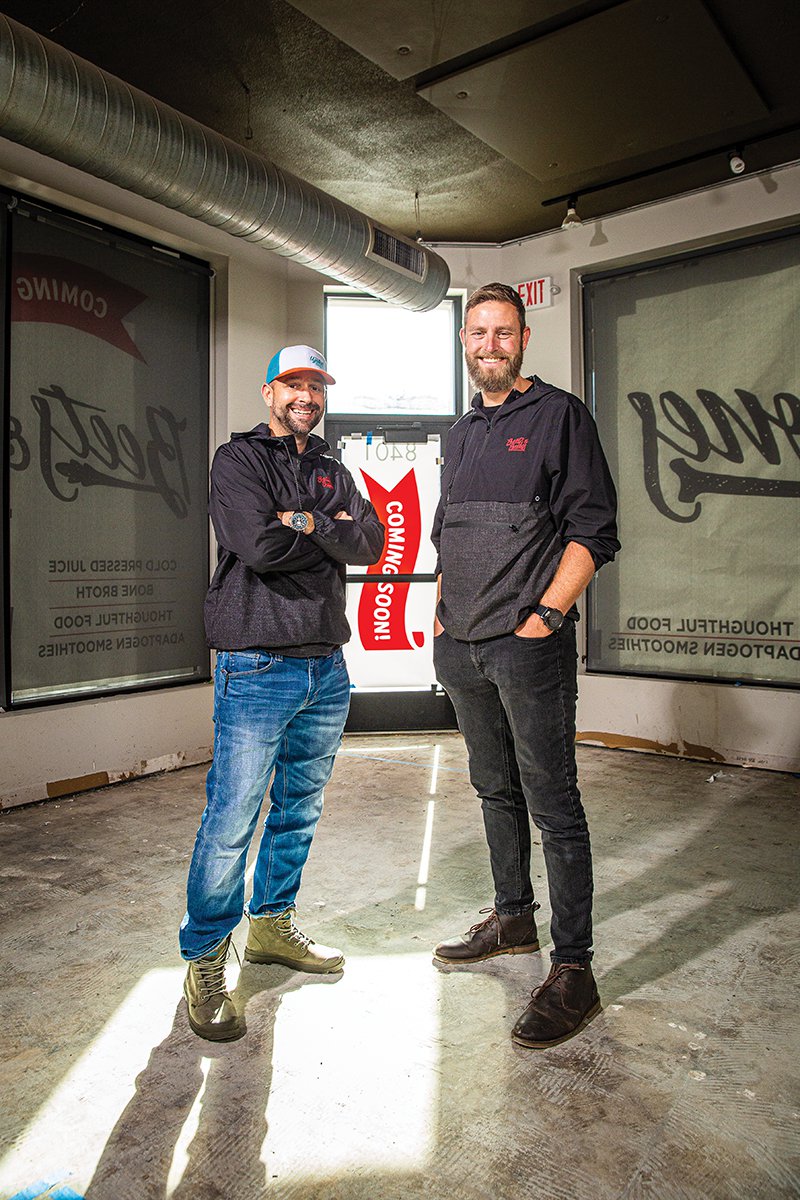
When Nick Zotos began planning a new concept over his daily espresso, he had no idea that his partner would be Conor VanBuskirk, owner of the café where he gets that espresso. It turns out that Zotos’ brand and VanBuskirk’s rebrand would be stronger together. Beets & Bones—combining a fresh juice bar with trendy bone broths—opened inside VanBuskirk’s two Upshot Coffee shops in St. Charles County. Sensing that they had trapped lightning in a glass juice bottle, the duo sought out a second location. After a construction delay, Beets & Bones is slated to open its first standalone location in Clayton this April.
Find the best food in St. Louis
Subscribe to the St. Louis Dining In and Dining Out newsletters to stay up-to-date on the local restaurant and culinary scene.
Where did you both get started in the restaurant business?
NZ: I started at Spiro’s busing tables, then doing saganaki and Caesar salads tableside. I worked for Smith & Wollensky Restaurant Group, opening their restaurants around the country. I met Mike Shannon at the Houston location, and he asked if I’d come back home and help Mike Shannon’s become more of a fine-dining restaurant. I had a lot of weight on my shoulders, but I did what Mike wanted done.
Conor, you hitched your horse to a good wagon.
CV: And it was completely random. Nick just walked into my coffeeshop for espressos. Oftentimes, opportunity is like that. We both felt the connection would be stupid to overlook and were willing to see where it would take us.
How did you get started in the industry, Conor?
CV: My dad ran the cafeteria for Principia College. I would wait tables there, but my dad had, like, 10 other businesses, too. I’d spend weekends cleaning churches and dentists’ offices and refinishing wood floors. We pretty much just worked around the clock to make ends meet. We never really got ahead, but we both learned a heckuva lot. The majority of my personal job experience has been running Chocolate Chocolate Chocolate for the past 17 years and then the coffee shop and then Beets & Bones. So for the most part, I’ve been stuck in my own world for the past 20 years.
Any mentors, food-related or otherwise?
CV: I watched the Abel family work very hard at Chocolate Chocolate Chocolate. Whether they’re successful or not didn’t change the way they approached their business. When they began shipping all over the country and then internationally, they continued to work their tails off. When you’ve made it or you appear to have made it and everything was going right, they decided to keep their foot on the gas. You can become successful, but that’s how you stay successful.
NZ: I’ll never forget Tim Flaherty, a perfectionist who taught me the fundamentals of cooking. I couldn’t even cut a chive properly in this guy’s eyes. He would swoop in and reject the ones I just cut, repeatedly. I remember him saying, ‘You’ll get this right, even if we have to go through five pounds of chives.’ I became a complete sponge when he was around.
How did VB Chocolate Bar transition into Upshot Coffee?
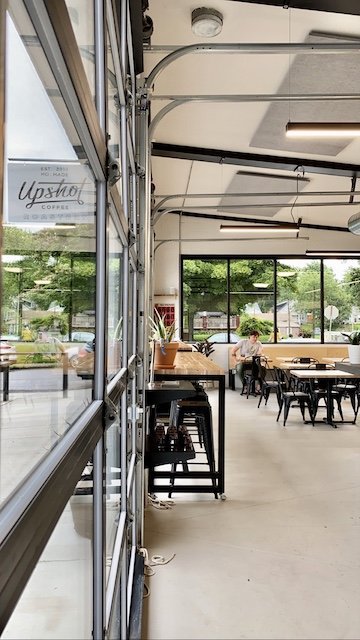
CV: It was the bar part that became a big stressor for me. I knew it was going to eat me alive. I couldn’t do the coffee part, the food side, and the bar well—I had to pick one or the other. I wasn’t built to go in at 6 in the morning, work till 3 a.m., and then still have some kind of life. For me, the coffee side won out. It was more of a 6 a.m. to 5 p.m. model, where I could be home, go to my kids’ events, and allow me to keep some semblance of a normal life.
So does chocolate play any kind of part in Upshot coffee?
CV: We have a mocha latte. [Laughs.] Seriously, we still have our drinking chocolate, which remains one of our signatures, but that’s about it. Between opening up the second location and working with Nick on Beets & Bones, there was no time to make chocolate. Eat it, yes. Make it, no. The Beets & Bones model fit easily into what Upshot was doing, so that was an easy way to launch it.
So Beets & Bones started as a brand within a brand?
NZ: It was like a ghost kitchen within Upshot Coffee. People would come in for a cup of coffee and a killer cinnamon roll and then see all these fresh juices and bone broths. Then the juice fans started buying broths. People started buying all three. The synergy became a good thing.
Juice bars are pretty straightforward. How did bone broths become part of your business model as well?
CV: That was all Nick.
NZ: I didn’t just want to have juice—everybody has juice. I wanted a twist, something that was evolving on the coasts or in Chicago that wasn’t yet mainstream in St. Louis, and it hit me: broths. In higher-end kitchens, there’s always some kind of stock cooking, and the two ideas fused together. And you’ve gotta admit: Beets & Bones sounds good.
Juices are produced fresh, but broths have a long cook time. Are the pots simmering day and night at Beets & Bones?
NZ: We produce them, label them, and then freeze them—seven different kinds. We then thaw the broth in Conor’s former chocolate circulators and can dispense them on demand. We start with cold broth and dispense it hot, on demand.
What are the seven varieties?
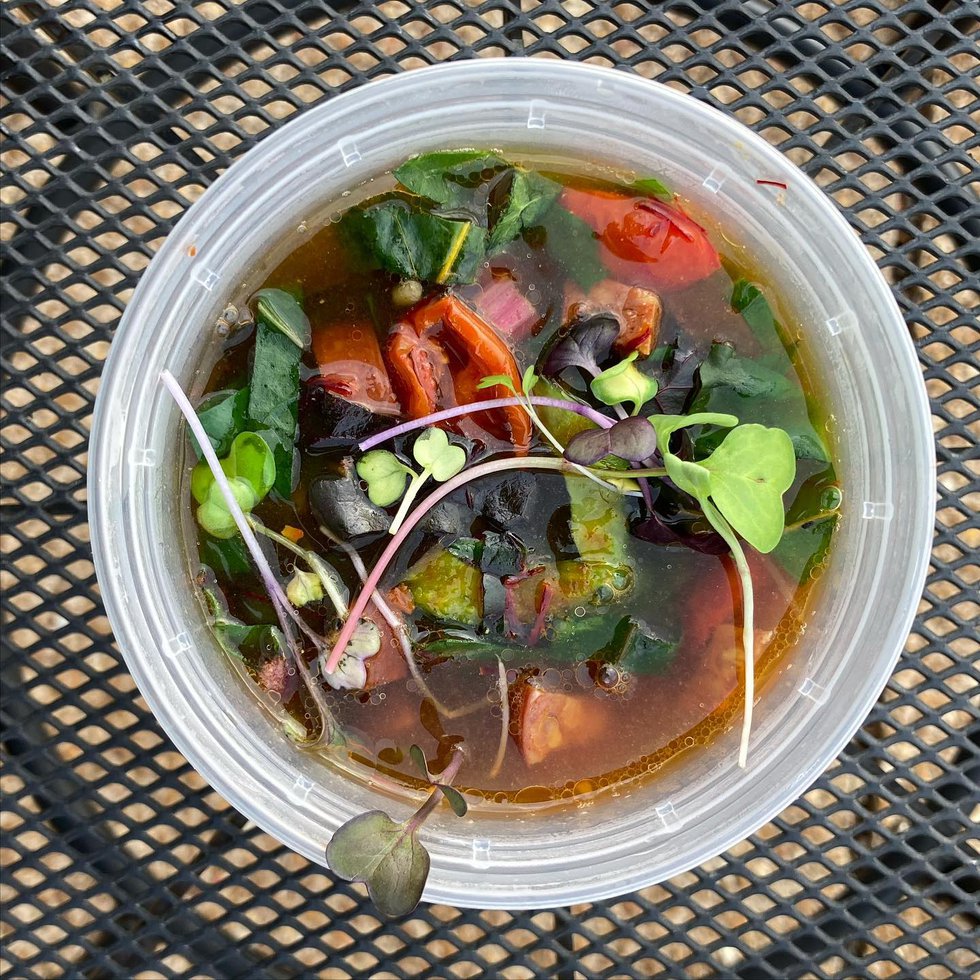
NZ: There’s pork, spicy beef, chicken, turkey, range—which is turkey, chicken, and beef—a vegan broth, which contains 25 different vegetables, and the classic, which is beef shinbones, knuckle bones, and marrow bones, with mirepoix and aromatics and a touch of vinegar at the end. Also in the works are lamb, orange-rosemary duck, and spicy pork.
Do people use your products for supplements to a meal, for meals themselves, for a mid-afternoon snack, or all of the above?
CV: People buy across the board all at all times of the day—broths for now, juices for later, or vice versa. Like coffee, our regulars know what they want; they have their favorites. But if we have a special, they trust us enough to give that a shot. And like the restaurant business in general, it’s your regulars that keep you in business.
How do new juice flavors come about?
NZ: Product availability—the supply chain—has a lot to do with it, and with COVID, it’s all out of whack. When I know what’s available, I start to brainstorm flavor profiles, like this new one that we started called the Fire Cider. It’s currently overtaken Sweet Green as our most popular juice flavor.
What’s in it?
CV: Two kinds of apples—Granny [Smith] and Fiji—ginger, orange, a little cayenne pepper, and lemon. Apples are plentiful, and I can usually get them from one of our local farmers. Sweet Green has spinach, pineapple, green apple, red apple, mint, ginger, lime, and parsley. We need to get maximum yield and buy at a good price, or the model doesn’t work.
And some vegetable types are better than others in color, flavor, and juice content.
CV: For example, we use Tuscan kale, the black Dinosaur kale. It tends to yield better and produce better flavor. If we were to use a flowering kale, the juice turns brown after it starts to sit, and if the juice tastes amazing, but it’s brown, it won’t sell. If you make an ugly juice, you’ll throw it away. That Tuscan kale holds the pH from the lemon and lime, for example, and holds onto its brilliant color. From a retail standpoint, a lot of the time it’s the color that sells the juice.
What else doesn’t produce a good juice?
NZ: Blueberries make a flavorful juice, but the juice yield is horrible, so from a business standpoint they didn’t make sense. We do a seasonal one made with strawberries called the Pinky. It’s unbelievable, too, but from a production standpoint, it’s a pretty tough juice to juice.
Is there an average yield ratio in the juice business?
CV: Fourish to one. Four to five pounds of fruits and vegetables yields 16 ounces of finished juice.
Why did you choose glass bottles?
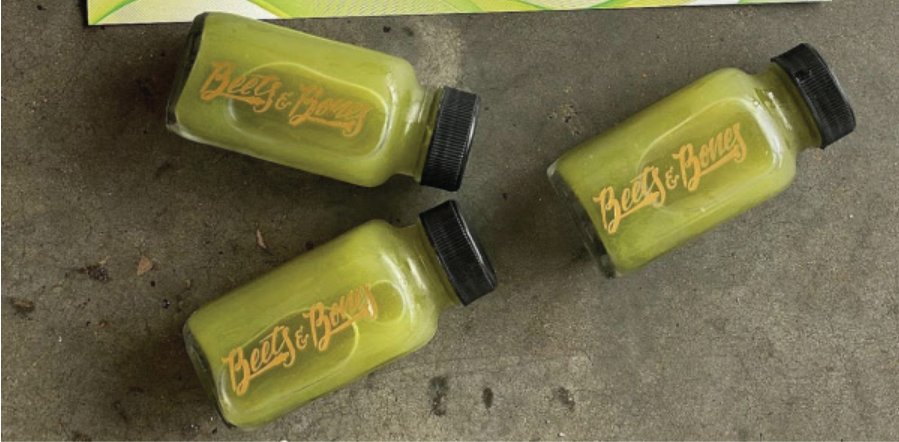
CV: We thought that if we’re going to put that much effort into the produce and the juice, we should use a container that won’t compromise it at any point. It’s quality control, it’s waste reduction, it looks nicer, and it feels better in your hand. Other than cost and breakage, there’s no downside.
NZ: We buy them back for a dollar and reuse them. People also hold on to them, take their cold brew to the office in them, and use them for vases.
Over the summer, you did a collaboration with Katie’s Pizza & Pasta that was called “a timely amuse bouche.”
NZ: Besides having really great food, owners Ted Collier and Katie Lee are known for giving back to the community. So they offered a daily ‘immunity shot’ for free to their employees, plus small glasses to dine-in guests and curbside customers.
CV: We made a juice especially for them, and it exploded—like 40 gallons a week, literally, for weeks. You have no idea how much produce it took just to provide that one juice. The servers would explain what it was and who we are. We launched in St. Charles, but it was that collaboration that introduced us to the St. Louis market.
NZ: Seeing our product next to food that we really believed in and enjoyed was powerful. It made us feel proud.
Are your products available anywhere at retail in St. Louis?
CV: Besides our shops, our juices are available at Pastaria Deli & Wine and The Annex in Webster.
When scouting your second store, how did you settle on Clayton?
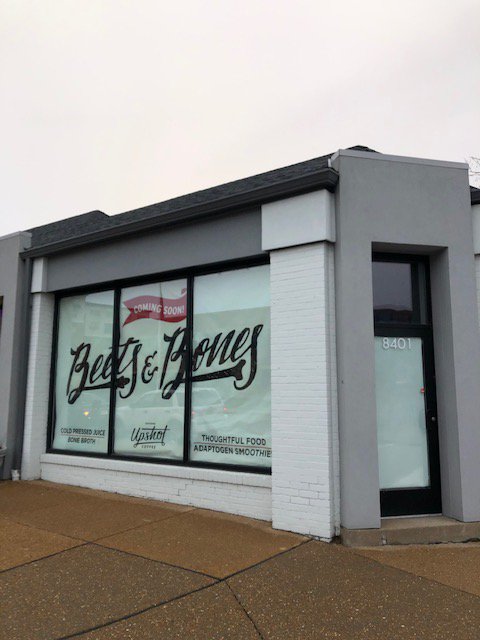
CV: We called a lot of places all over town, and quite honestly there didn’t seem to be much interest. I don’t think anyone knew who we were or understood what we were offering. We wanted to rent space in a COVID market, and no one would return our call. We knew that the spot we came upon in Clayton, the old Northwest Coffee [location], had all the right elements. And as luck would have it, Nick went to high school with the broker. He knew our idea could be an important business for Clayton at this point in time.
Did the pandemic change the timeline for opening?
NZ: We wanted to open in December, but we pushed it back to January, and then it got pushed back for us. COVID and quarantines affect everybody, including contractors, inspectors, and equipment deliveries.
Can you describe the restaurant’s interior?
CV: The seating is fairly limited due to the refrigerated cases needed for juices and grab-and-go products. There’s a long, L-shaped wraparound counter, with a two-group Slayer espresso machine. We have a walkup window on the side street, Crandon Drive. Guests enter through one door and exit through another. We’ll have contactless pickup for online ordering.
Will the food offerings be the same at both the Clayton and St. Charles locations?
NZ: Seventy percent of the items in Clayton will be different than in St. Charles: a lot more broth bowls, broth on tap with optional add-ins, and more gluten-free and vegan items, because that neighborhood needs options like that.
Are there any items that you think will push the envelope?
NZ: I’m working on a version of lox and bagels but using a vegan lox with carrots as the base, smoked using a pastrami-type rub. We’ll have a completely vegan burger, with seared TVP [textured vegetable protein], a Greek tofu-type cheese, and a vegan bun.
Which of your menu items are likely to be the most popular?
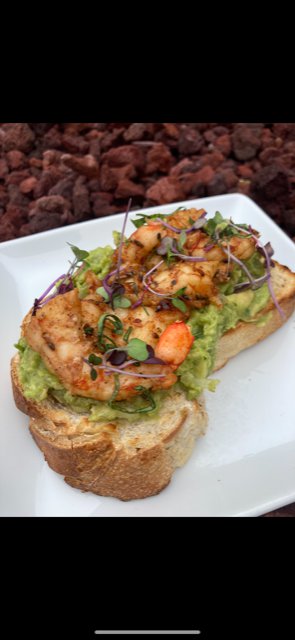
CV: Of the five kinds of avocado toast, the shrimp is unbelievable. When Nick first gave me a taste, I said it was the best shrimp I’ve ever tasted.
NZ: We smoke the shrimp with a mild wood, like cherry, and we add lavender and tarragon, which complements the avocado really well. All the toasts go well with coffee and juice. And fresh-baked pastries complement the coffee.
To that end, you have hired a pastry chef as well.
NZ: Both our pastry chef and general manager are talented restaurant veterans.
How many juice bars have an executive chef, plus a support staff like that?
NZ: It would be hard to find our exact concept with the quality of people we have on board, but we have aspirations to do other concepts. It would take a long piece of paper to list them all. You need good building blocks to even begin. Our overarching idea is to raise the bar, to stay ahead of what’s out there.
When you first started Beets & Bones, how much customer education was involved?
CV: The juice component took off more quickly, because it was more familiar. It was necessary to explain why it costs what it does, why our $9 juice is different than the $4 ones you get from a C-store. Now bone broths are really new for people in this area, so that’s an ongoing education, one we’ll be working on for a little while.
What is the target demographic for Beets & Bones?
CV: About three-quarters of our customers at Tower Grove [Farmers’ Market] were split between twentysomethings and people 55-plus. But I think moms and dads with kids will be interested, too. Really, our customer is anyone interested in healthy foods that also taste really good.
NZ: I agree. There’s no one demographic we appeal to over another.
CV: You know, you don’t often pay attention to this stuff until you need to. You may not be a customer today, but you may get some news regarding your health that forces you to start thinking about this tomorrow.
How’s the response been so far?
CV: I get 15 to 20 messages a day: ‘Please, please open up,’ and ‘Please send us a menu.’ Everyone is excited but getting impatient.
NZ: We’ll do as many pop-ups as we can, given the COVID constraints—under a sidewalk tent, out of the pickup window—because people seem to be digging what we’re putting down.
Is the plan to do more Beets & Bones, or will you veer off and tackle another concept?
CV: The plan is to open more Upshot Coffees and more Beets & Bones and build enough infrastructure to grow these brands. Once we get through the pandemic, you’ll see another one here soon and even outside of St. Louis if we have the opportunity.
How has the pandemic affected you personally?
CV: Obviously, this last year has been a major challenge for most people in the world—being quarantined, losing income, having to teach your kids versus going to work. Our customers at both businesses need to know how much we appreciate their constant support before and during this ordeal. We’re still here, because they wanted us here. It’s because of them that we were able to open up in a new market and realize our dreams.