To reduce drunk driving, why don’t more bars make breathalyzers available? —Tom S., University City
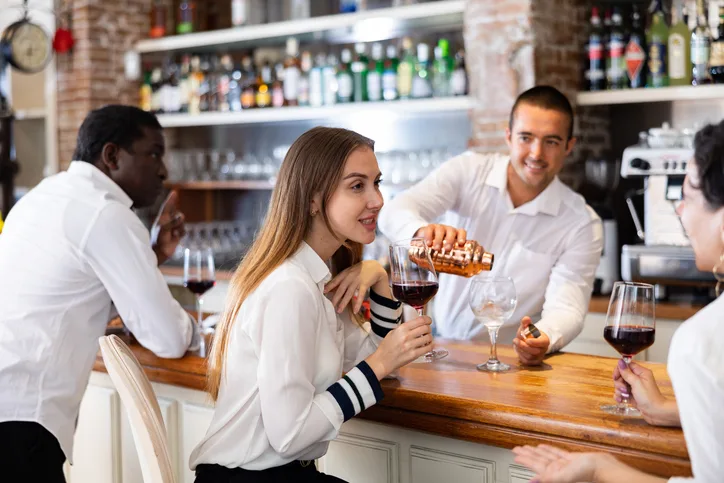
On the surface, onsite breathalyzers seem like a no-brainer, a “blow before you go” exercise to see if patrons are too impaired to drive. Vending machine-style breathalyzers that dispense individual straws are, in fact, available to bars. Thousands are already in use throughout the U.S. and world.
Find the best food in St. Louis
Subscribe to the St. Louis Dining In and Dining Out newsletters to stay up-to-date on the local restaurant and culinary scene.
Asked if he’d ever considered installing a breathalyzer in either of his two downtown bars, The Wheelhouse and Start Bar, co-owner Stephen Savage says he might if one was provided for free. “We’re always looking to create a safe drinking environment,” he says. “The overriding issue is helping people become more responsible.”
For establishments serving alcohol, however, it’s a double-edged sword. They’re in business to serve alcohol but not too much. Therefore, some argue that it’s counterproductive to provide such a service to patrons because it flies in the face of the business model. As an anonymous bartender at a longtime county neighborhood watering hole put it, “Breathalyzers are not money generators. They have a reverse effect.”
Savage, on the other hand, isn’t worried about the effect on sales if the bar were to offer breathalyzer testing. “People are going to drink no matter what,” he says. “We can’t stop that. But we will do whatever it takes to stop intoxicated people from driving home.”
The county bartender adds that bar employees are trained to intervene before too much gets served, he adds. “Many places even pay for an Uber ride home.” He also suggests that it shouldn’t be the bar’s responsibility to ensure that a patron is drinking responsibly; rather, it’s the responsibility of the adult who is drinking. “If you bump into the wall on your way out the door, you shouldn’t need us—or a breathalyzer—to tell you that you’ve had too much to drink,” he says.
Then there’s the issue of having systems in place to accommodate patrons who blow above the legal minimum. One of the biggest stumbling blocks to onsite devices is that patrons will challenge one another to blow higher and higher numbers, effectively turning the device into a party game and potentially worsening the problem that it was designed to alleviate.
There’s also the issue of liability. If a patron is involved in an accident or a DUI violation after using a breathalyzer, then there might be a direct connection back to the bar, possibly resulting in a lawsuit, in addition to the possibility of creating a false sense of confidence.
Breathalyzers are sensitive instruments that must be routinely maintained and calibrated by a certified technician (another cost), which brings up the question of accuracy. Studies have shown that a breathalyzer is not always accurate in determining blood alcohol level—a blood test can be more reliable. Several scenarios illustrate why such devices can be problematic. If patrons drink and immediately blow, the device can register mouth alcohol and yield a higher result. Or if the patron drinks several shots—and even waits a period of time before blowing into the breathalyzer—the results might skew in the other direction.
In recent years, consumer-based breathalyzers have become increasingly popular, especially as prices have dropped—there’s even a smart-phone based breathalyzer app.
Since accuracy is never assured, however, the safest course is total abstinence when driving. As the ads say, “If you drink, don’t drive.”
If you have a question for George, email him at [email protected].
Follow George on Twitter @stlmag_dining or send him an email at [email protected]. For more from St. Louis Magazine, subscribe or follow us on Facebook and Twitter.