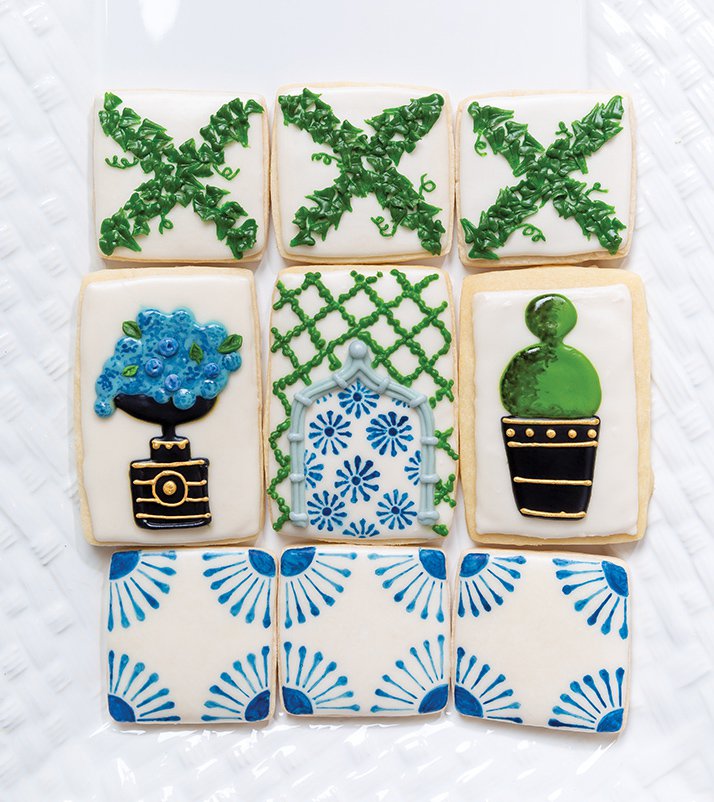
Amanda Eaton has found herself a joyous obsession. An assistant professor of speech pathology at Fontbonne University, she’d majored in art for a minute, but three kids and a career left her no time to paint. Now, she’s icing cookies with the care of a ceramic tile artisan, frosting botanicals with every leaf detailed, arranging tiny Dalmatians on her cake stand, creating carbohydrate masterpieces inspired by wallpaper, textiles, Chinese porcelain… What she needs to design next is a label, so she can package all the custom orders pouring into Alchemy Cookie Co. (314-753–3333).
Eaton was looking for a project, something that would take her speech therapy clients’ minds off what they couldn’t do and give them a little creative confidence. She wound up setting them a heck of an example—and starting her own cookie company.
Find the best food in St. Louis
Subscribe to the St. Louis Dining In and Dining Out newsletters to stay up-to-date on the local restaurant and culinary scene.
How’d you come up with the name? Alchemy’s a seemingly magical combination and transformation. I’m taking things I love—chocolate, dogs, art, cookies—and combining them into something totally new.
You’ve iced a bunch of Dalmatians, but your dog’s a German wirehaired pointer. I think my husband ate all the pointers.
So have you iced any husband cookies? I’d botch it. He’s too cute.
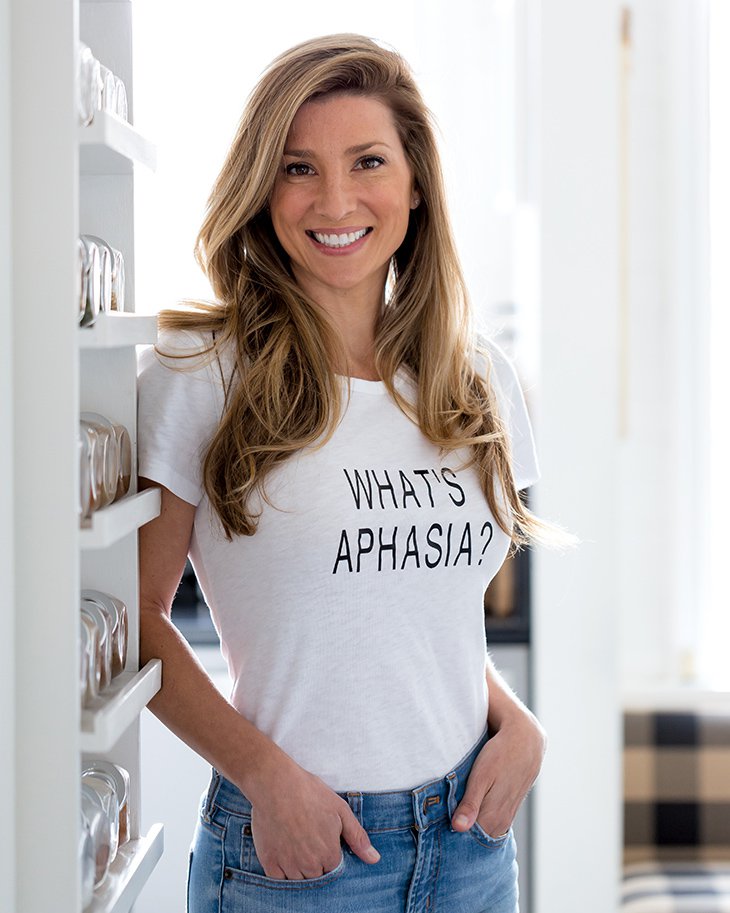
You really started this a few months ago? Over the holidays. In clinic, I work with people who have aphasia. We talk a lot about old self versus new self. There’s this overwhelming sense that their old self was better, so we ask clients and students to come up with something they’d love to do that they couldn’t do before—and mine was making cookies. I’d never even made a Christmas cookie.
How’d it go? The first batch I made was inedible. The icing was like concrete. I’ve since tweaked the recipe. I can even make them vegan now, or gluten-free, and I’m working on keto. Those aren’t as good yet, but if you’re keto, you’re probably pretty happy that you have a cookie!
After icing, what were the next challenges? Technique—straight lines; wet-on-wet so the design isn’t raised; using vodka to create softer shadings. It dries fast, so the cookie doesn’t get soggy, and the residue evaporates. Above all, though, the challenge is making them taste good.
Thank God. So many gorgeous cookies taste like cardboard. I use shortbread, because it holds up to the sweetness of the icing without getting overpowered. Then I experiment with flavorings: lemon-rosemary, chocolate-espresso, toasted coconut and Key lime, toasted pecan with maple-cinnamon frosting…
When did you realize that you had a talent for this? It was more that I just couldn’t stop. It sounds silly, but I’ve been so happy ever since I started making these cookies. I do realize it’s just a cookie—this is not serious work—but now I’m getting orders, and it’s usually for a special gift, so I get brought into that story… One woman had back surgery, so she showed me her X-rays. Her surgeon is from India, where it’s customary to give flowers as gifts, so some cookies will be orchids and some will be vertebrae—which look like orchids.
There’s a serious subtext here, at least as an example for your clients. Permission to do something just for fun is important, especially in brain recovery. My Ph.D. is in cognitive neuroscience. You don’t have to be engaged in an activity that’s directly related to the deficit; focused attention and high effort on anything will bring improvement. [She grins.] Even cookies.