Origins
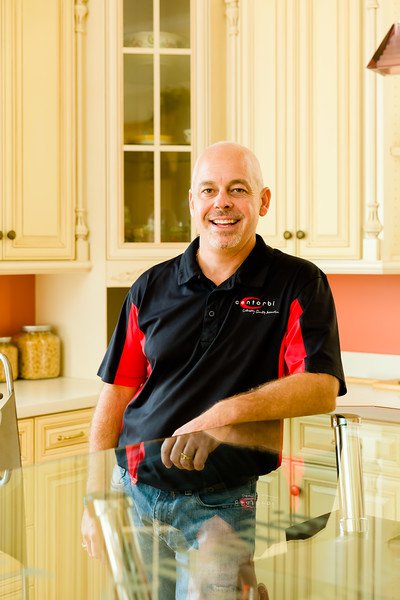
At 14, Derek Centorbi began helping his grandfather with his kitchen-remodel business. In college, he worked part-time building cabinets for a small shop. “I learned both sides, different aspects,” he says. “I decided there’s no better time to start my own business; but I enjoyed the manufacturing side better.”
Get a weekly dose of home and style inspiration
Subscribe to the St. Louis Design+Home newsletter to explore the latest stories from the local interior design, fashion, and retail scene.
Present Tense
Now, Centorbi (179 Hughes, St. Charles, 636-949-5438, centorbi.com) has a 10,000-square-foot showroom and factory equipped with a computer program for designing and building. Want butterfly-shaped kitchen cabinets? Okay. “The programming would be interesting,” he chuckles, “but yeah, we would be able to do it.”
Portfolio
Centorbi offers two lines, Innovations (traditional) and Slimline (contemporary). “They’re all custom-built,” Centorbi emphasizes. “You couldn’t do what we do on a mass-manufactured scale. Everything is built per project.” The process begins with photos and measurements, and installation occurs about eight to 10 weeks later.
Range
In addition to maple or cherry, you can choose from 16–20 exotic hardwoods; most people choose solid painted finishes, but glazing and distressing are popular, too. Centorbi often conceals fridges into what look like armoires, and even once built great room wainscoting that mechanically opened to reveal a TV.
Seeing Green
“We’ve started using a lot more green materials, including sustainable hardwoods,” Centorbi says. The company recently completed kitchen cabinetry made out of reclaimed barn wood. “We even had a client who cut down a tree in their back yard, had the logs processed, dried them and then sent them to our shop, and we built a piece of furniture for them out of that.”