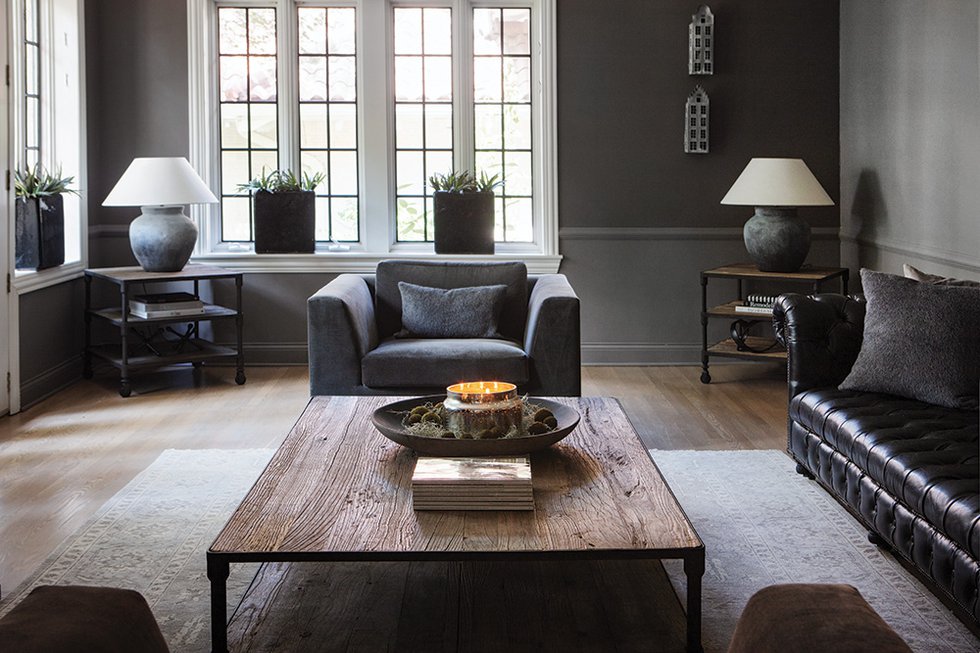
It was important to Derksen to allow as much natural light as possible into the living room.“I didn’t want drapes, but I wanted something decorative,” she says. The oversized clay planters on the windowsills are from Garden Heights Nursery. Derksen picked up the pair of abstract prints at Hobby Lobby and customized them by painting the frames the same gray as the wall.
Photography by Carmen Troesser
It was important to Derksen to allow as much natural light as possible into the living room.“I didn’t want drapes, but I wanted something decorative,” she says. The oversized clay planters on the windowsills are from Garden Heights Nursery. Derksen picked up the pair of abstract prints at Hobby Lobby and customized them by painting the frames the same gray as the wall.
Photography by Carmen Troesser
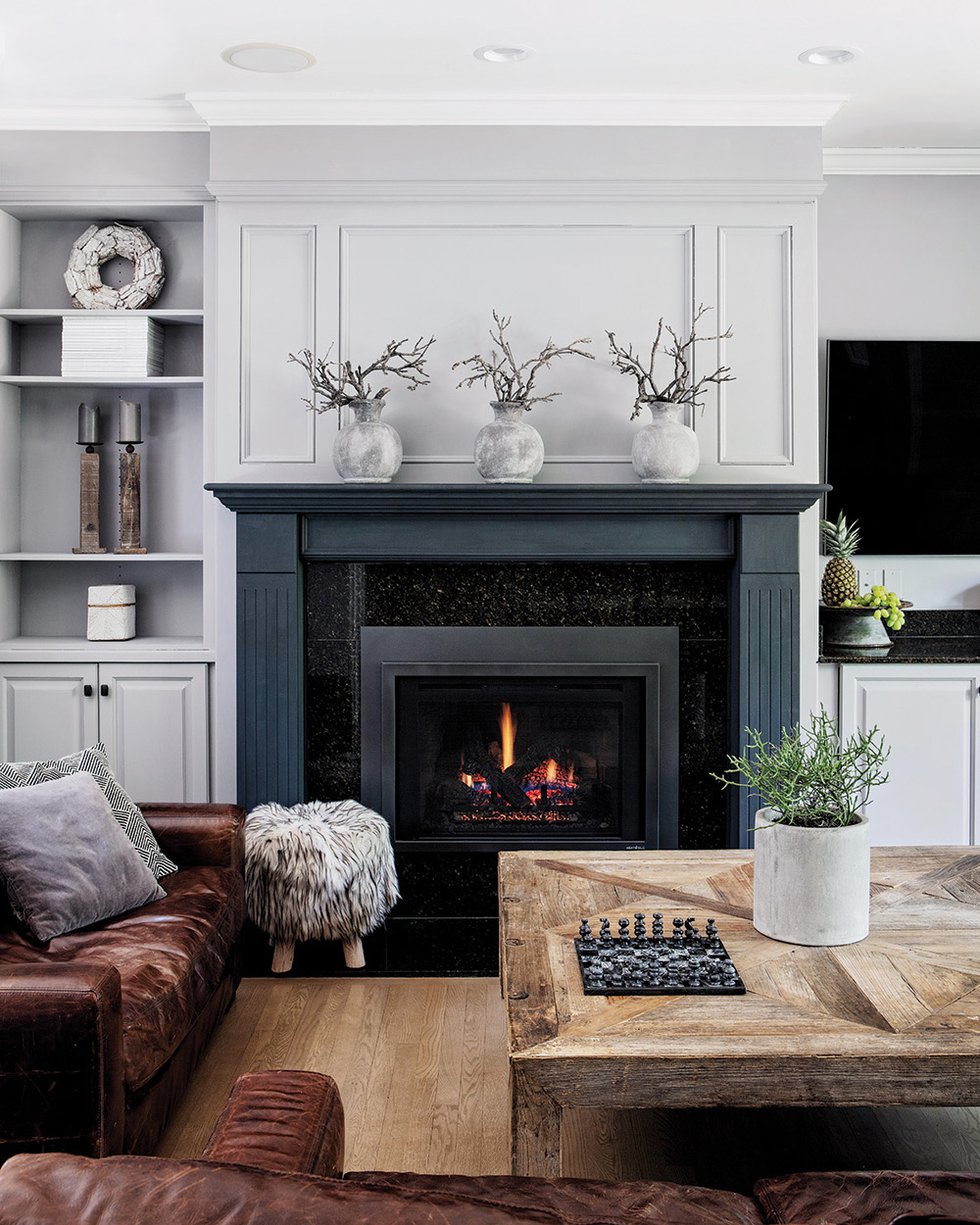
“The Dutch are welcoming, open, and proud of their homes. People are often invited in spontaneously for a coffee and a chat, so we keep our houses looking nice and cozy all the time,” Derksen says. She painted the walls Smokey Wings, by Behr Premium Plus, in a matte—never gloss!—finish; the mantel is painted in Behr’s chalk-finish Classic Noir. The charming fur stool is a product of creative problem-solving. “My daughter was always sitting on the floor in front of the fireplace, so I bought a little stool and a cream-and-black faux-fur pillowcase, cut it open, and pulled it over the seat,” Derksen, a mother of three, says. The three jars above the mantel are filled with sycamore branches collected from the yard. “Flowers are more expensive here than in the Netherlands,” she says, “so I look for interesting plant materials to use as natural accents instead.”
Photography by Carmen Troesser
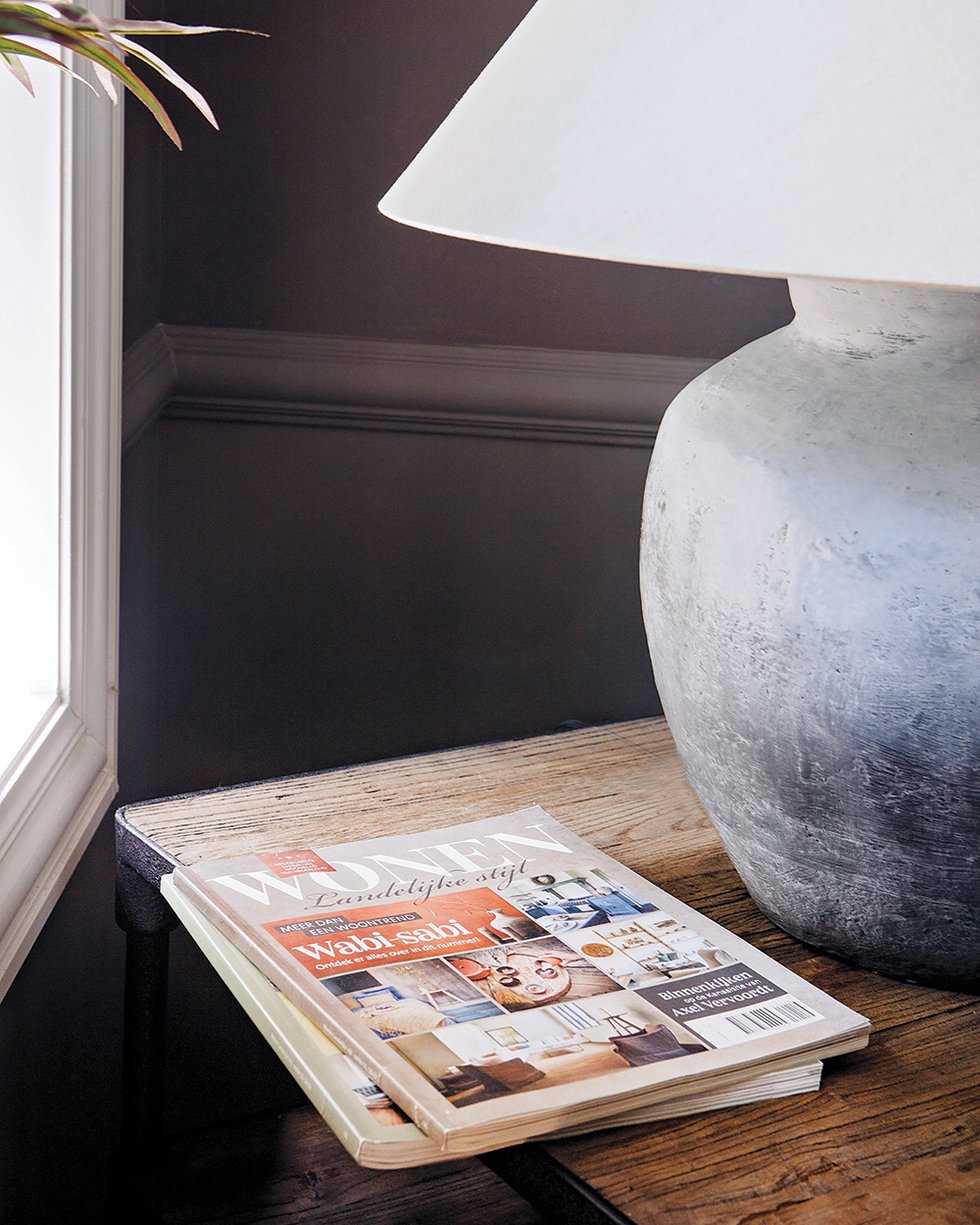
Derksen honed her style by reading Dutch shelter magazines, which, she says, motivated her to experiment. Every few weeks, she pops into area shops to see whether anything grabs her attention: “I love the selection process, the curating, then bringing something home and finding just the right place for it.”
Photography by Carmen Troesser
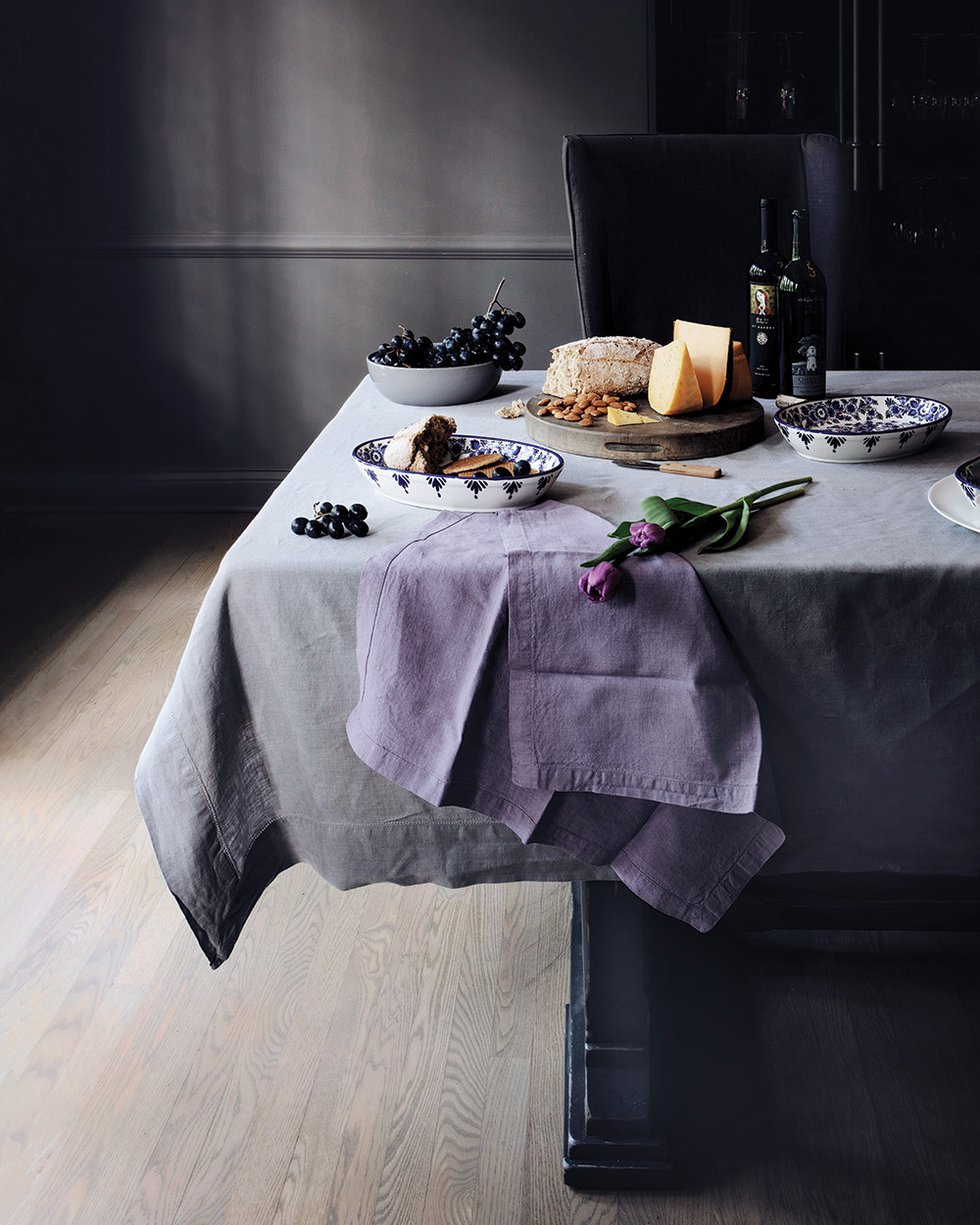
Unlike many U.S. homeowners, the Dutch don’t keep formal dining areas, preferring to spend time in the family room, which is often located adjacent to the kitchen. In St. Louis, however, Derksen decided on a traditional look, without sacrificing comfort, and a local preference for real estate with dining spaces. The large-scale chairs, she says, allow guests “to relax and spend time talking.” Small layered vignettes, such as this one, featuring an assortment of blue-and-white Dutch serving dishes atop soft lavender-and-gray linens, are a testament to the homeowner’s minimalist aesthetic. “These [colors and textures] give the room a sense of calm and harmony,” says Derksen.
Photography by Carmen Troesser
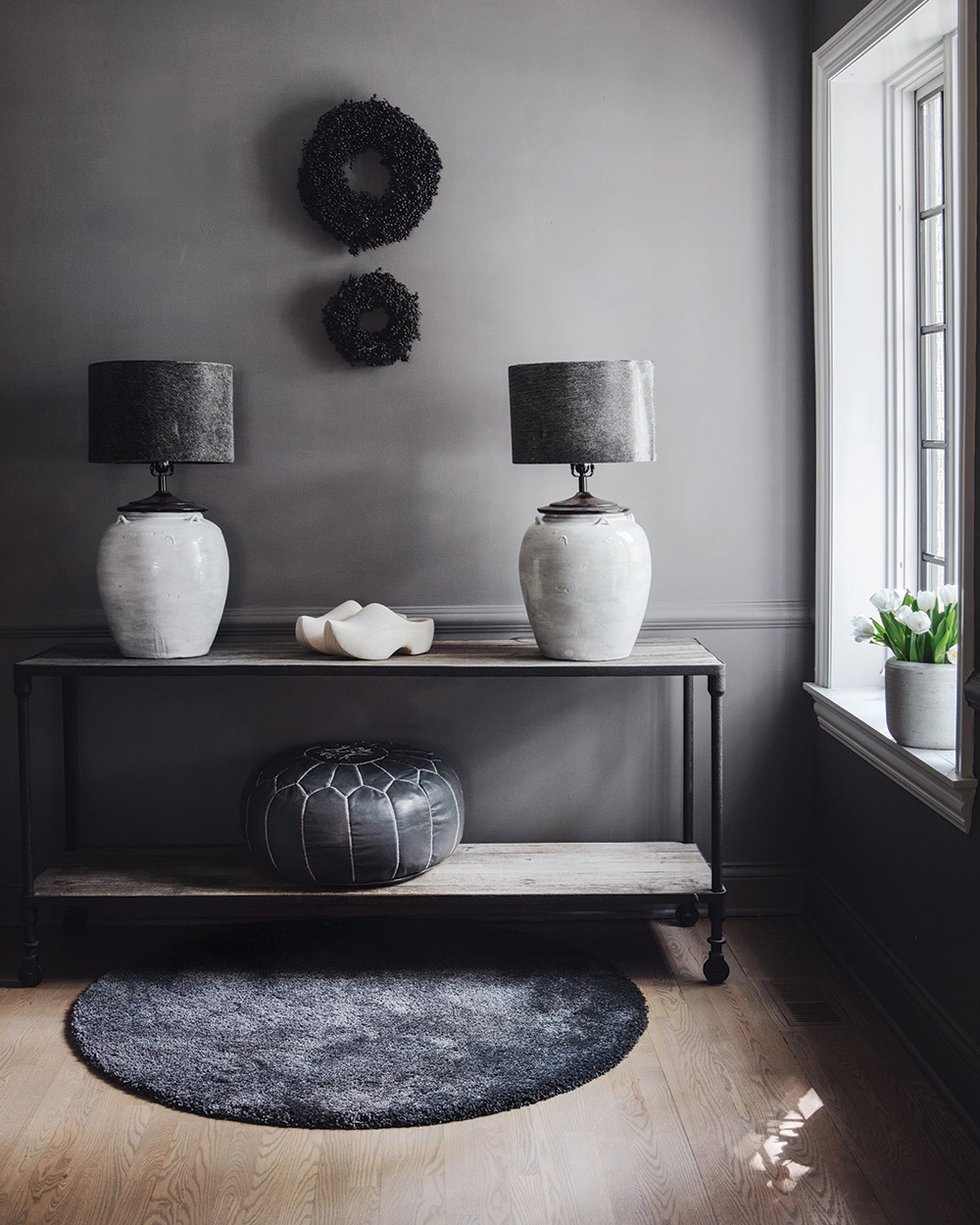
It’s hard to miss the wooden clogs at the entry. “They symbolize Holland, of course,” says Derksen. “When you live abroad, you want that little item to remind you of home.” The two wreaths on the wall, also from Derksen’s collection, are made of small berries and painted black. The round Moroccan leather pouf with white topstitching was purchased on a trip to Croatia. Derksen likes how it echoes the shape of the wreaths. The console table, made of elm and cast iron, is from Restoration Hardware’s (fittingly named) Dutch Industrial Collection.
Overlay
It was important to Derksen to allow as much natural light as possible into the living room.“I didn’t want drapes, but I wanted something decorative,” she says. The oversized clay planters on the windowsills are from Garden Heights Nursery. Derksen picked up the pair of abstract prints at Hobby Lobby and customized them by painting the frames the same gray as the wall. Photography by Carmen Troesser
“The Dutch are welcoming, open, and proud of their homes. People are often invited in spontaneously for a coffee and a chat, so we keep our houses looking nice and cozy all the time,” Derksen says. She painted the walls Smokey Wings, by Behr Premium Plus, in a matte—never gloss!—finish; the mantel is painted in Behr’s chalk-finish Classic Noir. The charming fur stool is a product of creative problem-solving. “My daughter was always sitting on the floor in front of the fireplace, so I bought a little stool and a cream-and-black faux-fur pillowcase, cut it open, and pulled it over the seat,” Derksen, a mother of three, says. The three jars above the mantel are filled with sycamore branches collected from the yard. “Flowers are more expensive here than in the Netherlands,” she says, “so I look for interesting plant materials to use as natural accents instead.”Photography by Carmen Troesser
Derksen honed her style by reading Dutch shelter magazines, which, she says, motivated her to experiment. Every few weeks, she pops into area shops to see whether anything grabs her attention: “I love the selection process, the curating, then bringing something home and finding just the right place for it.” Photography by Carmen Troesser
Unlike many U.S. homeowners, the Dutch don’t keep formal dining areas, preferring to spend time in the family room, which is often located adjacent to the kitchen. In St. Louis, however, Derksen decided on a traditional look, without sacrificing comfort, and a local preference for real estate with dining spaces. The large-scale chairs, she says, allow guests “to relax and spend time talking.” Small layered vignettes, such as this one, featuring an assortment of blue-and-white Dutch serving dishes atop soft lavender-and-gray linens, are a testament to the homeowner’s minimalist aesthetic. “These [colors and textures] give the room a sense of calm and harmony,” says Derksen.Photography by Carmen Troesser
It’s hard to miss the wooden clogs at the entry. “They symbolize Holland, of course,” says Derksen. “When you live abroad, you want that little item to remind you of home.” The two wreaths on the wall, also from Derksen’s collection, are made of small berries and painted black. The round Moroccan leather pouf with white topstitching was purchased on a trip to Croatia. Derksen likes how it echoes the shape of the wreaths. The console table, made of elm and cast iron, is from Restoration Hardware’s (fittingly named) Dutch Industrial Collection.Photography by Carmen Troesser
In 2010, when Barbara Derksen and her family relocated to St. Louis from Nijmegen, the Netherlands, they were unsure how long they’d be staying. Ten years and two houses later, they’re happily living in an elegant Clayton house with reminders of home in every room.
Passionate about the modern natural look—a hallmark of Dutch interiors—Derksen says it was at first difficult to find items that fit her European sensibility, but by regularly visiting local shops, she slowly turned her vision of home into a reality.
Get a weekly dose of home and style inspiration
Subscribe to the St. Louis Design+Home newsletter to explore the latest stories from the local interior design, fashion, and retail scene.
We will never send spam or annoying emails. Unsubscribe anytime.
“Every piece in this house speaks to me,” says Derksen. “It’s gezellig, a wonderful Dutch word for which there is no exact English translation. It’s the feeling you have when you’re in a place that really warms your heart.”