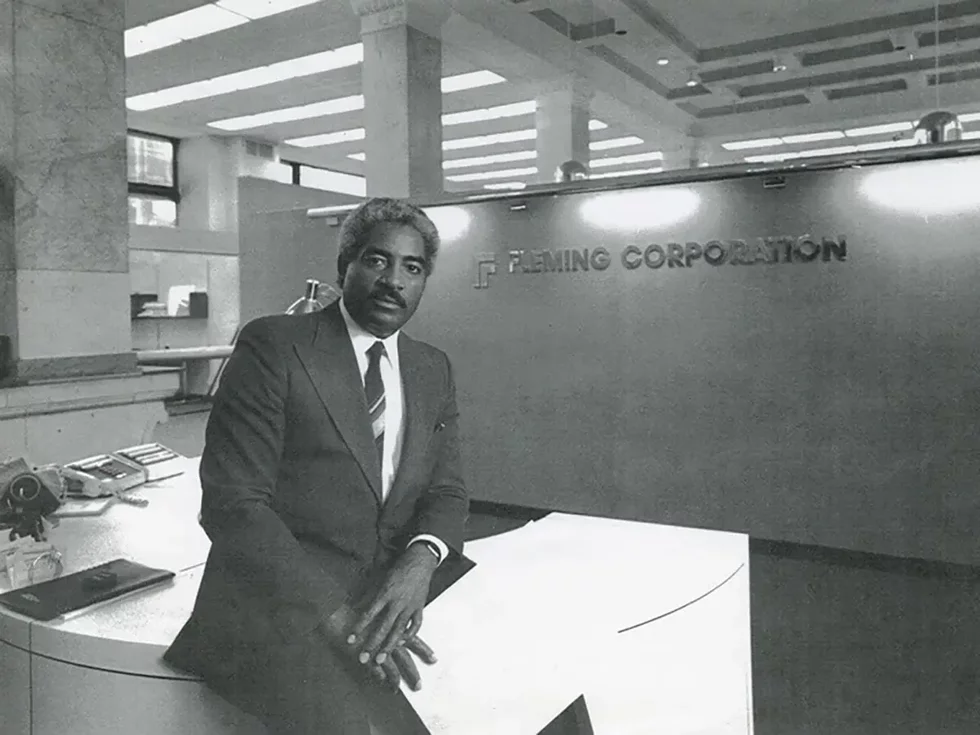
The name Charles Fleming might not be universally known in St. Louis, but it should be.
The first African American graduate of Washington University’s University College with a B.A. in architecture in 1961, Fleming would go on to become one of the most successful Modernist architects in St. Louis, with offices across the country in Atlanta, Washington D.C., and San Francisco. And, at a time when federal assistance in home mortgages discriminated against African Americans, he helped members of his community work toward home ownership. Fleming died in St. Louis on July 8, 2024.
Get a weekly dose of home and style inspiration
Subscribe to the St. Louis Design+Home newsletter to explore the latest stories from the local interior design, fashion, and retail scene.
“I always knew he was a catalyst but I never realized his impact,” says John Gaskin III, a family member.
Charles E. Fleming was born in 1937 in St. Louis, in a historic African American community in Richmond Heights. His father worked in the nearby S.A. Aloe Company, a manufacturer of steel products, including surgical supplies. His grandfather was a plasterer and painter. As a young man, Fleming would watch his grandfather work, kindling an early interest in the building arts. Fleming attended Douglass High School in Webster Groves and graduated in 1955.
The world of architecture that Fleming went on to study was hardly friendly to African Americans. Modernism today is often seen as hostile to Black communities. The historic Mill Creek community in Midtown, for example, home to more than 20,000 African Americans, was demolished at the behest of new concepts of urban renewal often trumpeted by Modernists. Many of St. Louis’ first Modernist buildings served the wealthy, white central corridor.
“He was very determined,” recalls his cousin, John Gaskin II. “He was going to finish his architecture degree at any cost.” Fleming attended night school and worked during the day. When he graduated, he sought to harness Modernism for African Americans.
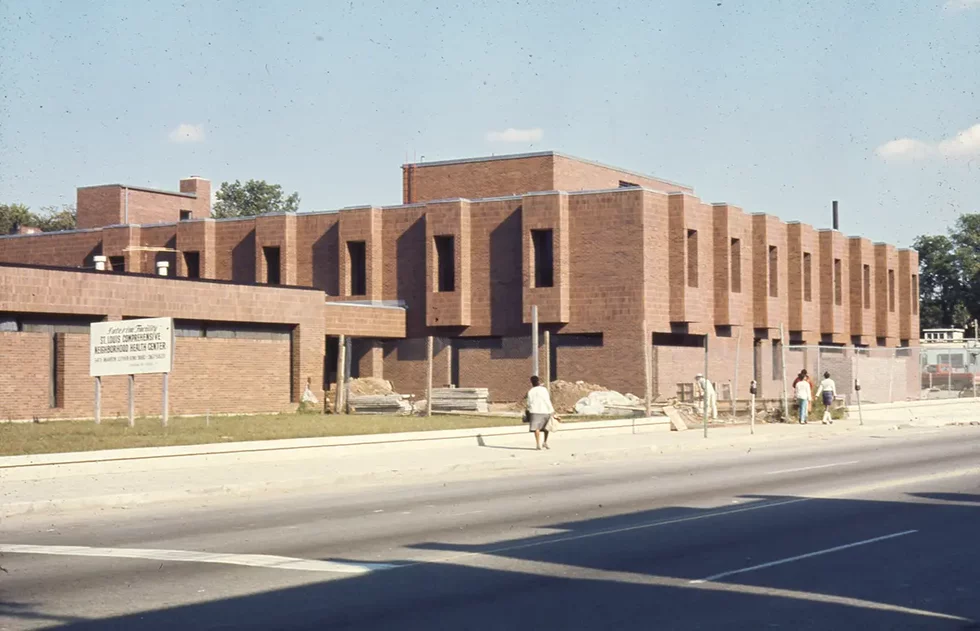
Fleming’s St. Louis Comprehensive Care Center, located at the corner of Dr. Martin Luther King Drive and Belt Avenue but since demolished, combined brick—an archetypal St. Louis building material, yet hardly a Modernist one—bringing a utilitarian yet elegant design to North St. Louis. Michael Willis, who worked for Fleming at different times throughout his career, remembers seeing the Center for the first time and thinking, I want to work for the person who designed it.
The Gateway National Bank, at 3412 North Union and also since demolished, was the first minority-owned bank in Missouri, and another major commission for Fleming. The building, with its forward-thinking design, was a source of pride in the community. Fleming gave the upper stories a sense of weightlessness by sitting [them] on a glass first floor, while the vertical buttresses drew the eye upward, further lengthening the height of the bank. In time, the building represented something more, a desire to help fellow African Americans attain housing equality during a time of racial discrimination in home loans, according to friends and family.
“The milk of politics is money,” says Virvus Jones, father of current Mayor Tishaura Jones, in a recent interview. He and Fleming realized they would have to work hard to get what African Americans in St. Louis deserved. Throughout the years, the elder Jones worked with Fleming on various community initiatives and remembers how the architect looked to other cities for best practices, in particular in the area of minority hiring. Fleming encouraged African Americans to move to the suburbs, where he had purchased land in Town and Country and designed his own home. Fleming also developed Bennett Avenue in Richmond Heights, a street of ranch houses, where African Americans could buy homes in segregated St. Louis County. Jones remembers how Fleming helped break down barriers along Lindell Boulevard, one of the most exclusive streets in St. Louis, by designing some of the houses for its African American residents, including 5583 Lindell, home to Dr. Leslie F. Bond.
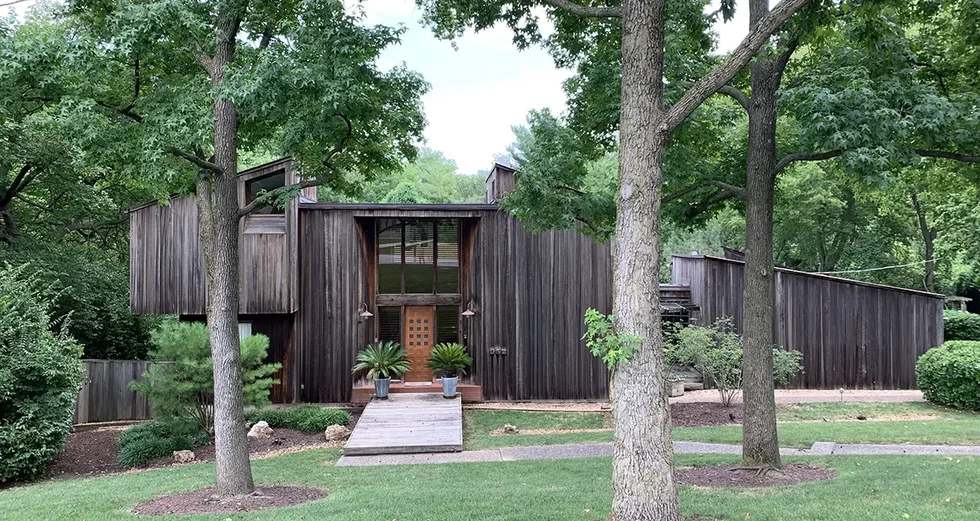
In addition to designing great buildings in St. Louis and beyond—including the Murtala Muhammed International Airport in Lagos, Nigeria—as well as working to promote civil rights, Flemming fostered a positive working environment, growing his firm, the Fleming Corporation Architects and Engineers, to more than one hundred employees from its founding in 1978. “He was cool to work for,” says Willis. “He just wanted to know about you. He was always thinking about the next step ahead—and he had confidence in the people he hired.”
Gaskin II, who worked as an executive in the Fleming Corporation for thirty years, calls young architects who grew up in the firm’s welcoming environment, “Fleming’s Disciples.”
Willis perhaps sums up Fleming’s career and life best: “Do it with style, grace and beauty.”