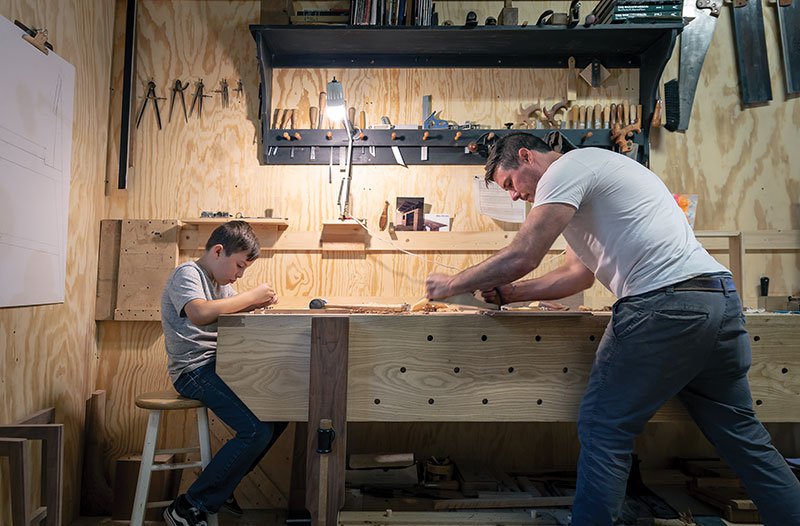



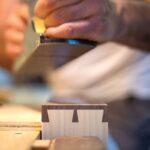
Ryan Johnson grins as he planes a piece of walnut that’s about to become a Danish-sleek, Shaker-simple tapered chair leg. “The table for these chairs almost ended my marriage. The rails cross in the middle, so it’s an X-shaped base, and the first time I cut the joint, I wasn’t happy with it. It was maybe repairable, but I scrapped it and started over.”
The house payment was due, and the Johnsons have seven kids to feed—but the second joint was perfect.
Get a weekly dose of home and style inspiration
Subscribe to the St. Louis Design+Home newsletter to explore the latest stories from the local interior design, fashion, and retail scene.
He remembered a comment a stranger made after listening to Johnson talk about his work: “The reason you’re not making any money is because you’re in love with it.”
He wasn’t always. At 11, sweeping up wood shavings for his dad, he swore he’d never be a carpenter. He wanted to be a musician, or “the cool English teacher.”
But for his high school graduation, his father gave him a toolbox and said, “See you at work on Monday!”
“I thought I was going to be going to concerts all summer! But as I got immersed in the craft, I started getting those little glimmers of approval, those ‘Attaboy’s from salty old carpenters…”
He worked for a decade as a journeyman carpenter, but his dad saw Ryan’s excitement at doing the refined trim work everybody else found tedious.
When his doctor commissioned a 10-foot table, Johnson salvaged wood from an old barn and taught himself to do a wedged- through dovetailed tenon—no screws.
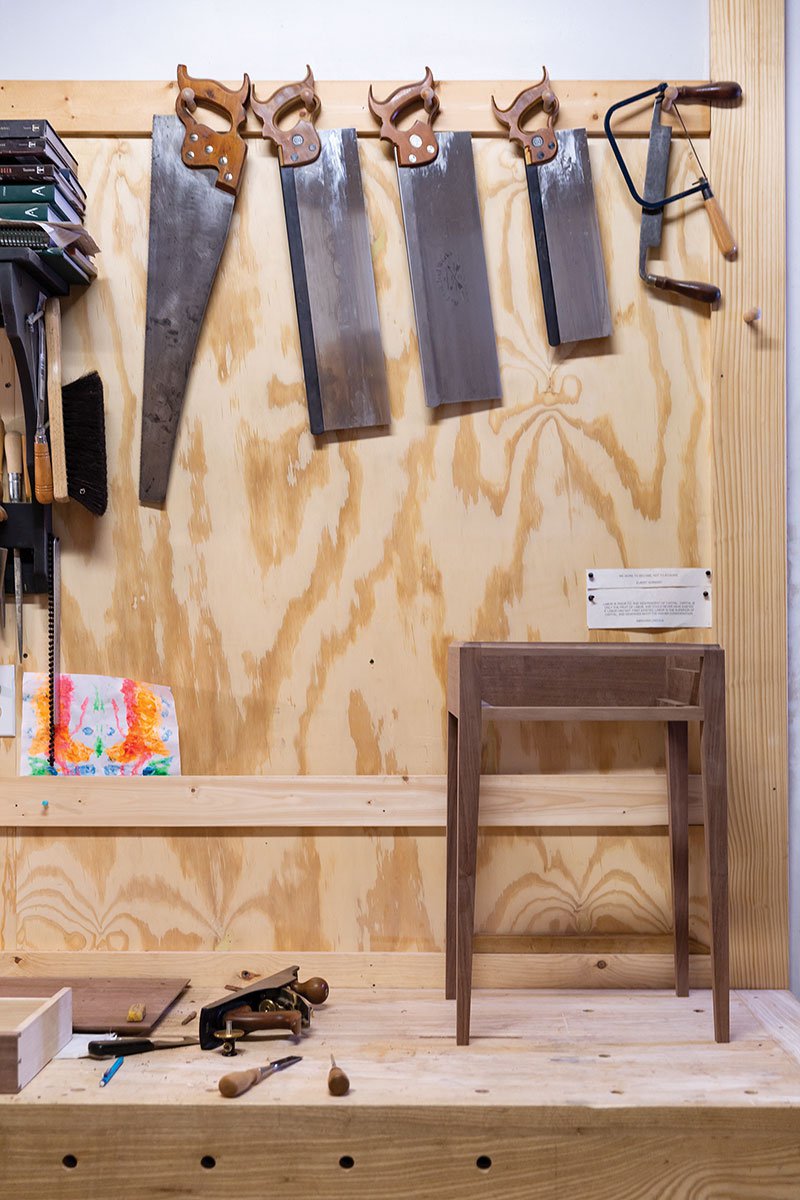
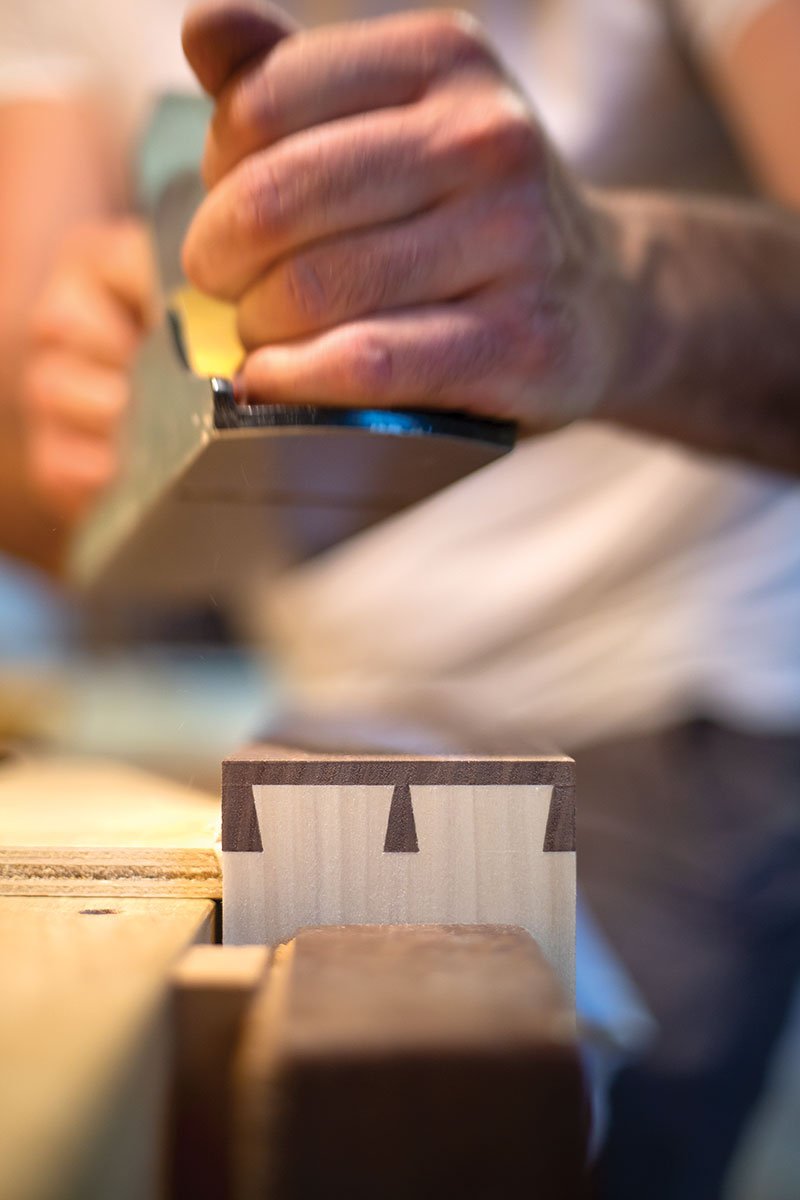
Never again did he want to use screws. He read and practiced, learning old joinery techniques, Japanese techniques, ways to craft pieces whose parts fit together so tightly, the glue was only insurance.
Salvaged wood had just come into fashion, and he could find it free—but it was dirty, and it hid screws from its previous life and ruined expensive blades. He shows me the kiln he built himself so he could air-dry clean walnut.
“Manufacturers introduce steam during the drying process,” he explains, “and it darkens the sapwood near the bark and lightens the heartwood, muting the brown, which is warm and rich, with red and purple and orange highlights, to a lifeless gray. Commercial lumber suppliers are out for money, and they can sell more lumber by including the darkened sapwood.”
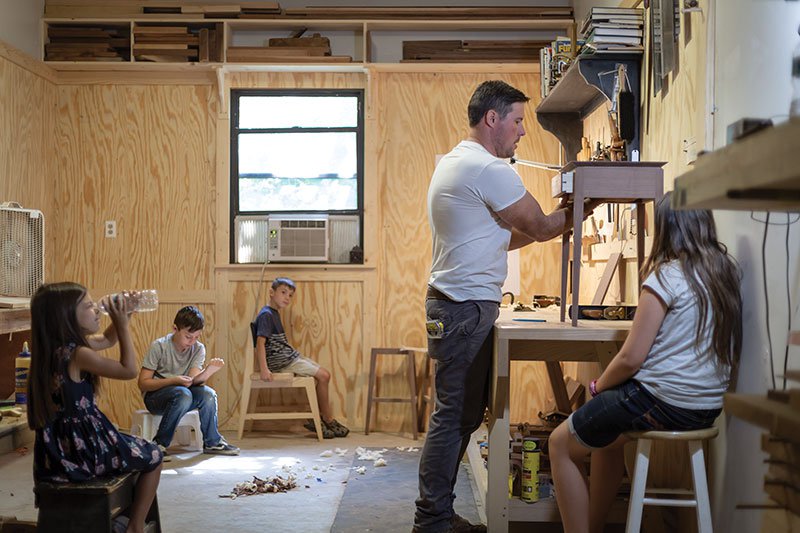
He sets the chair legs aside; he’ll give them a week, let them acclimate and release any tension before he puzzles out the joinery. “Wood’s a humbling medium; you can do everything right and it’ll still split or twist,” he says. The music in his immaculate workshop shifts from doom metal to Tchaikovsky to old blues and Fat Possum roots music. Inside his head, though, it’s quiet. “I mentally build each piece ,” he says.
When people tell him R.J. Johnson & Sons Furniture Co. needs marketing—photos of his adorable kids or storytelling for the millennials or video of himself working shirtless—he rolls his eyes: “It feels antiquated now, but I have this crazy idea that you do a good job, and you’re fair to people, and your work stands on its own.”
Friends urge him to stop being so OCD—“Dude, nobody’s gonna see that.” But he still finishes the underside of a table as carefully as the top. As the Shakers put it, “God sees.”