Chicken Delight
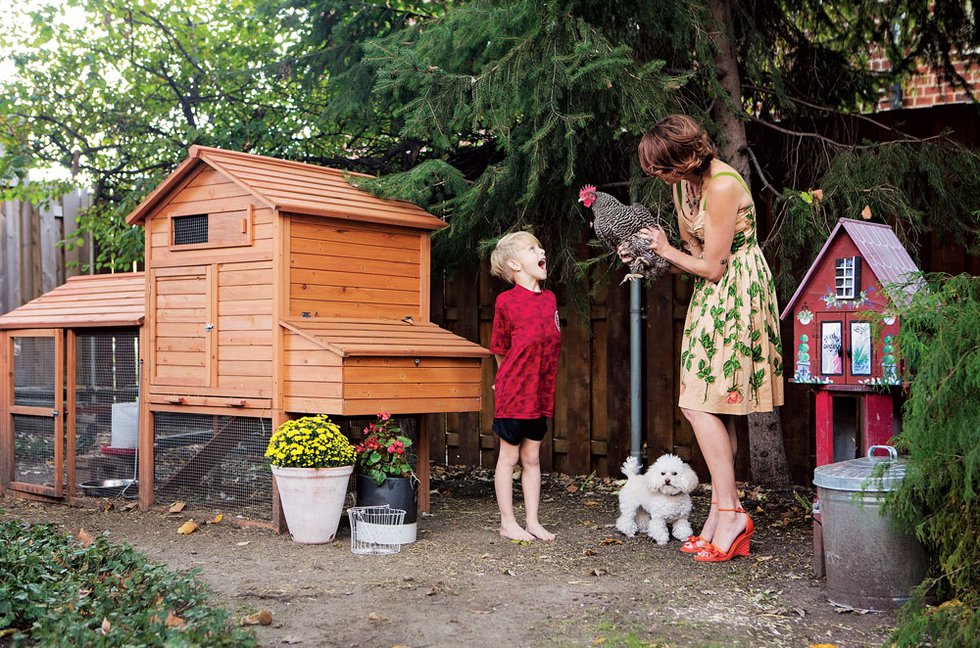
At first, keeping chickens seemed “like a dream” to Jessie Mueller. She’d seen friends’ chickens but didn’t know much about the realities of keeping the birds: “It starts out with these cute pictures—and then it turns into something that’s really real.” After more research, Mueller realized that chickens could actually benefit her family.
Get a weekly dose of home and style inspiration
Subscribe to the St. Louis Design+Home newsletter to explore the latest stories from the local interior design, fashion, and retail scene.
Fresh eggs are the obvious advantage, but Mueller also loves “the day-to-day of caring for them—getting up in the morning, going outside, being a part of the elements.” She also finds chicken clucks soothing, even meditative. “It’s getting you out of your air-conditioned home and being a part of the start of the day,” she says of her new avocation.
Mueller reports that the family’s three chickens have unexpectedly become companions. “I’ve been most surprised by how bonded they are to us,” she says.
Owning chickens has also brought her children more in touch with how food is made. “You get so detached from the food-to-plate pipeline. The farms are out there, and we’re in the city, and you just go to the grocery store to get fed,” Mueller says. “Food is real, and it’s hard to create. It’s work.”
To get started, the family bought their chickens, supplies, and an A-frame coop from The Easy Chicken.
“If you’re starting out, try to get some chickens or chicks that do well in the cold, that are good egg layers,” Mueller recommends. She found that feeding table scraps prevented her birds from becoming picky eaters. Besides reducing food waste, she says, “It’s great because you’re literally putting your dinner outside, they’re eating it, and you’re getting eggs.”
Benefits aside, be prepared to make adjustments. Don’t expect chickens to leave your garden in peace. “They do have a tendency to pick at hostas and mess up your beds,” Mueller says.
Raising chicks, in particular, requires a time commitment. But for Mueller, the extra effort was worth it. “With children, it’s a magical experience,” she says.
Butterfly Fantasy
Shelley Pryor has lived in University City for 22 years. In that time, she and her husband have converted their yard almost entirely to native plants. “They feed the critters,” she says, “and we’re all about becoming a restaurant for the food chain—for the birds, the bugs, and all the things that people don’t realize depend on our garden.”
Now, the couple has 1,200 perennials, 70 shrubs, and 24 trees. The garden’s been given “gold” status by the St. Louis Audubon Society, which evaluates yards on the basis of their degree of conservation. Since transitioning their yard to native plants, the couple has seen more critters. “We see honeybees, we see songbirds—woodpeckers—and bullfrogs,” she says. “Yesterday we saw a Pandora sphynx moth that was the size of a child’s fist.”
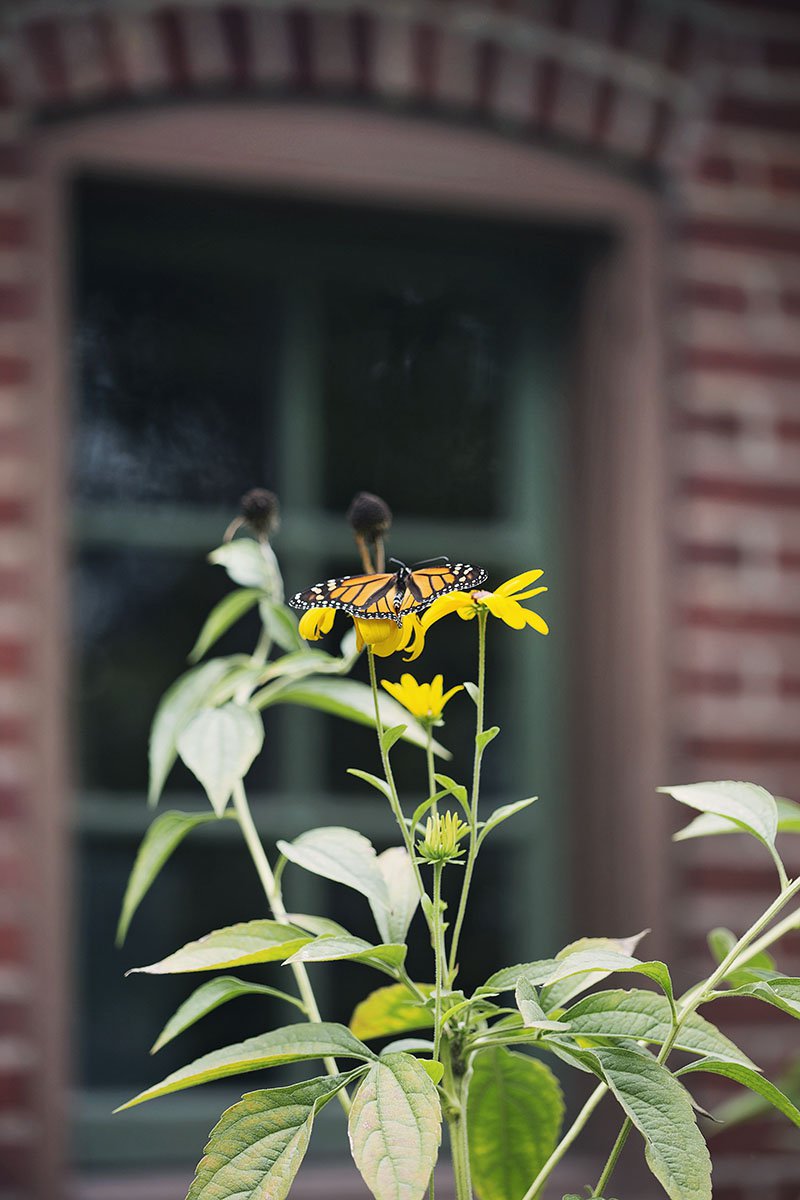
Pryor’s watched rare and endangered fauna, such as monarch butterflies and honeybees, return, and she enjoys playing a part in that. “We’ve become quite a roadside attraction or restaurant for the native population in our neighborhood,” Pryor says. “We’re building a little restaurant for them.”
Native plants require less coddling than exotic species do. “Sometimes it takes a year or two to get them started, as with any plant,” Pryor says, “but once they’re going, and they’re happy, it’s awe-inspiring.” Pesticides and other chemicals are unnecessary. Native plants can be used to solve drainage problems, because they need the extra water, and they’re an important part of the food web: Non-native plants don’t feed animals and bugs in the same way.
Interested in following Pryor’s lead? Get in touch with the St. Louis Audubon Society to join an evaluation list for Bring Conservation Home. The society will examine your yard, point out native and invasive species, and provide ideas for improvement.
Even if the gold certification seems out of reach, Pryor encourages other gardeners to think of the food web. “You can simply plant one or two natives,” she says. “Don’t be daunted.”
Bees Business
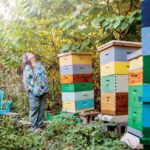
“Honeybees first came to attention when we were playing in the fields beside the grade school. We would go barefoot at recess, run across the clover, and try not to get stung,” recalls Jennifer McComb.
Decades later, McComb began hearing that honeybees were dying out. She watched a movie called Sister Bee. “I had thought of beekeeping as something for men,” says McComb. But the movie made her think: “Yeah, I could do that.”
She took a class through the Eastern Missouri Beekeepers Association in February 2010, and two months later, she was a beekeeper.
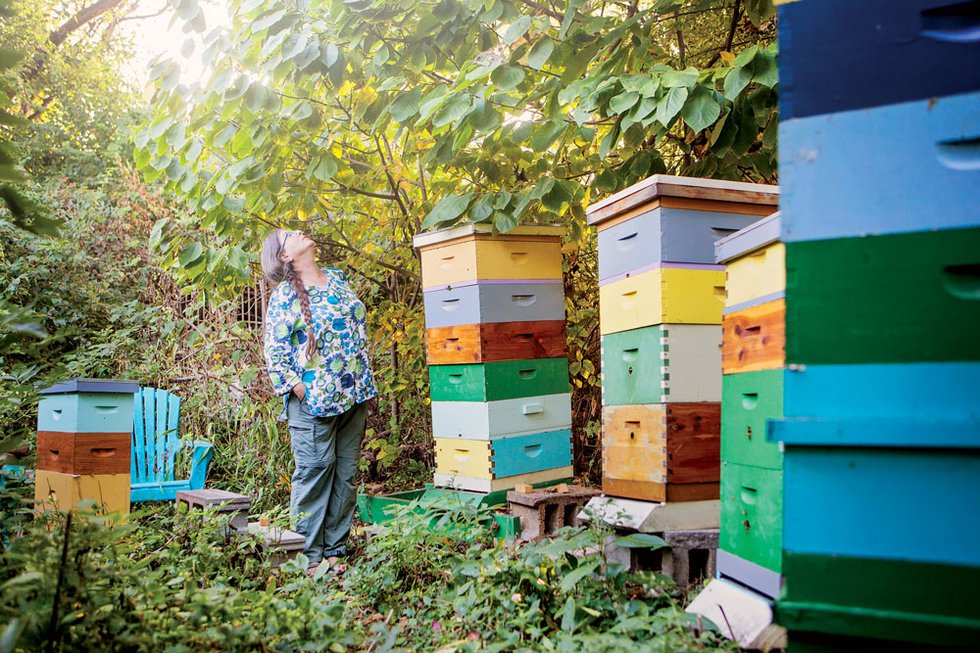
McComb started with two packages of bees and a beginner’s kit that contained the wooden ware and protective gear. Now 59, she keeps 28 hives on different properties across the city and sells honey through Union Studio; her honey has even graced the menu at Vicia. She also sells beeswax candles, skin care products, and propolis, a resinous mixture that bees use to fortify their hives that has antimicrobial properties. “To me, the smell of this stuff—it’s the most luscious fragrance,” she says.
She was encouraged to keep two hives to start because sometimes one hive will flourish and the other will fail. “If you have two, you can use one hive to help the other,” she explains.
McComb made sure to ask her neighbors whether they’d be OK with having hives nearby: “Everybody said, ‘Yay, save the bees!’”
But before you consider keeping bees, McComb suggests spending some time around honeybees. As much as potential beekeepers can learn from reading, she says, “There’s nothing quite like an open hive.” Go to a class that involves an open hive experience; if you haven’t been stung, figure out how you feel about it. To keep bees, you should be able to work with them once a week and lift at least 25 pounds, McComb says, and she stresses the need for storage space: “Even if you only have two hives, there’s lots of stuff you need.” And prepare for the busy time of year, starting when the dandelions bloom and running through June.
McComb likes to set up a lawn chair and watch the bees come and go. “It’s enchanting,” she says, laughing. “Oh, and then there’s honey.”