When Noah Smutz was a classics student at the University of Kansas, he moved to the island of Crete to work for a summer. In search of real-world experiences, he saw his future—a job in academia with bouts of travel to dig sites every year—unfolding before him. “It was clear archeology was not for me,” he recalls, “starting with digging in the dirt in 120-degree heat.”
The discovery that summer, though, of a 4-inch piece of carved ivory depicting a religious ceremony and dating to 2700 B.C., opened up a new world to him. “When we took it to the object conservator on site, I learned for the first time that conservators exist. I also realized that instead of pulling broken objects out of the ground, I wanted to put them back together.”
Get a weekly dose of home and style inspiration
Subscribe to the St. Louis Design+Home newsletter to explore the latest stories from the local interior design, fashion, and retail scene.
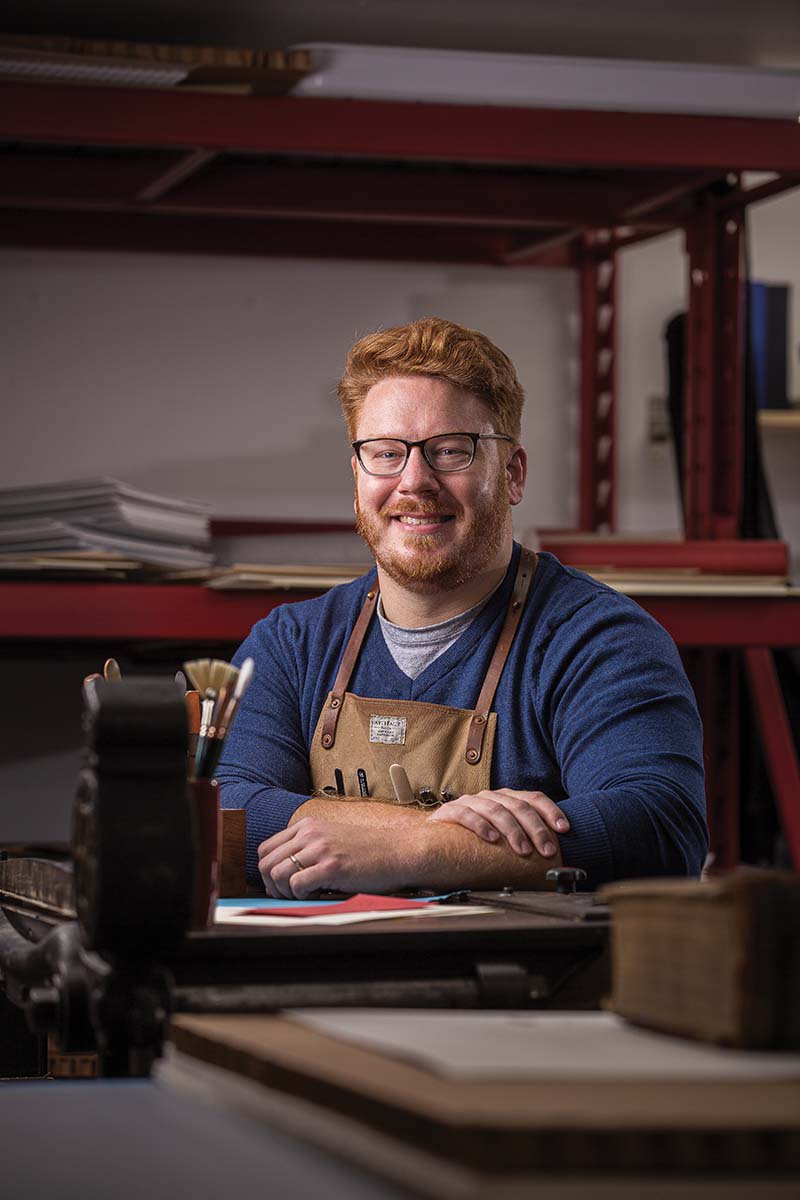
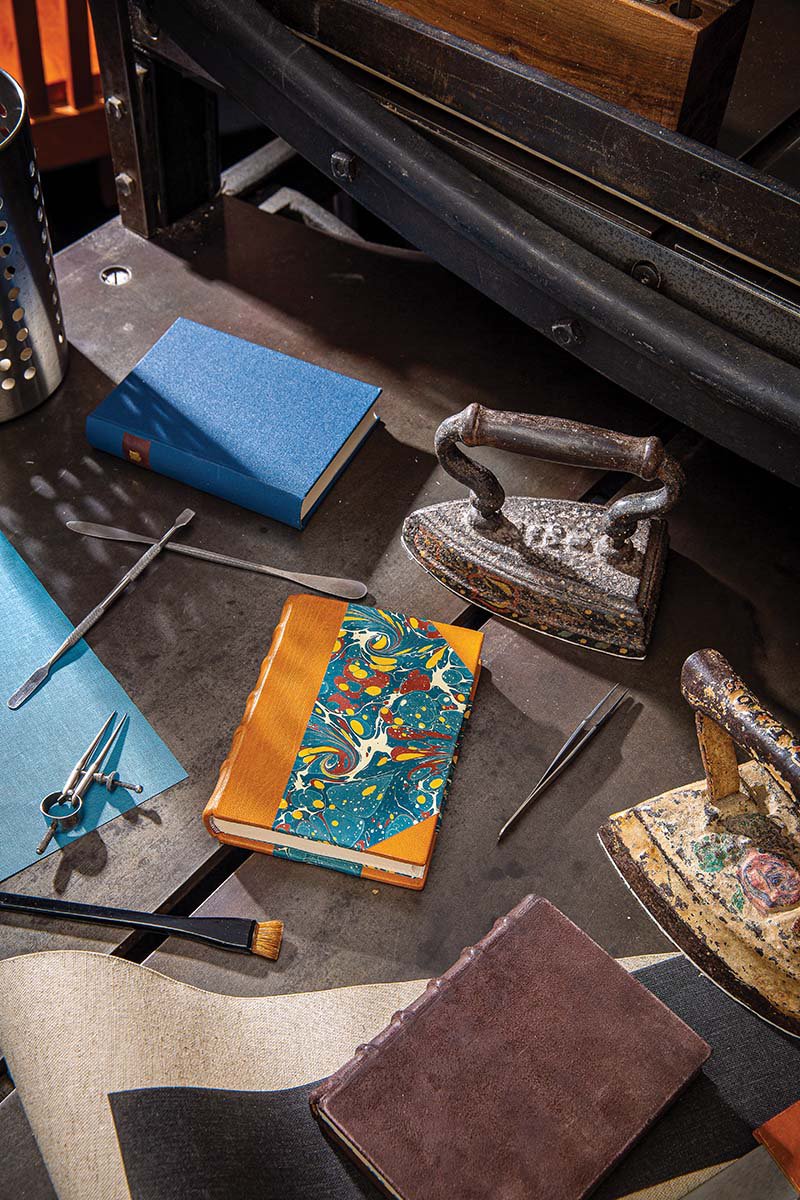
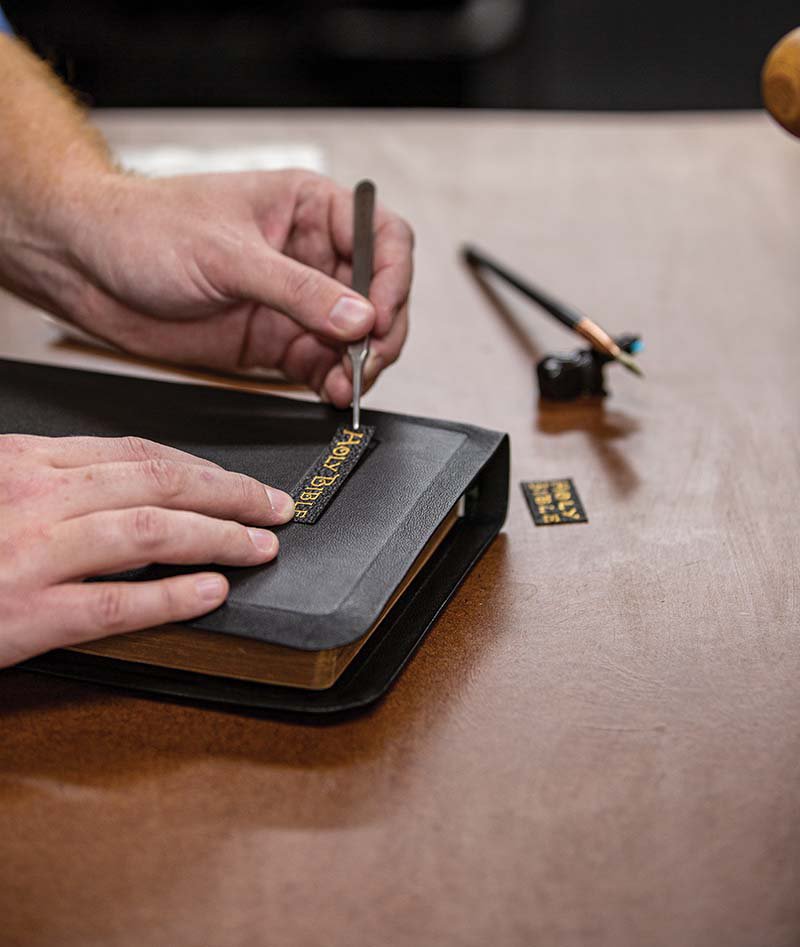
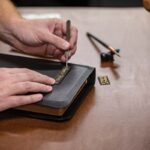
Today, conserving artifacts to preserve them is Smutz’s lifework. As a conservator of books both antique and modern, he ensures that they’re available for future generations to enjoy. From family Bibles bound in millboard to an ancient Jewish prayer book dating to 1342, and other rare first editions, Smutz is an expert at putting books to right.
“Spilled coffee, torn pages, damaged bindings…we did it all,” he says, recalling the student job in the conservation lab that he took after returning from Crete. “Within two weeks, I knew I wanted to be a book conservator,” he says.
After completing a bachelor’s degree in classical antiquities in 2012, Smutz applied for an internship at the Smithsonian Institution Archives and later earned a master’s degree in arts in conservation of books and library materials from West Dean College of Arts and Conservation, in West Sussex, England. He then moved back to Washington, D.C., to work as a book conservator at The Smithsonian Libraries.

Smutz’s peripatetic travels across oceans and continents were more exciting than his jaunts around the Midwest as the son of a pastor, but St. Louis held a special place in his heart. “My dad, Bill Smutz, was raised in Webster Groves,” he says. The family, also including his mother, Gina, and two brothers, Jacob and Mark, visited their grandparents every year on the Fourth of July and at Thanksgiving. In the summers, the three brothers packed their bags and joined their grandparents for a week.
“My grandmother used to take me to the art museum, but as a 5-year-old I was most excited about the gift shop and lunch. But I have great memories of walking through the museum with her,” he says.
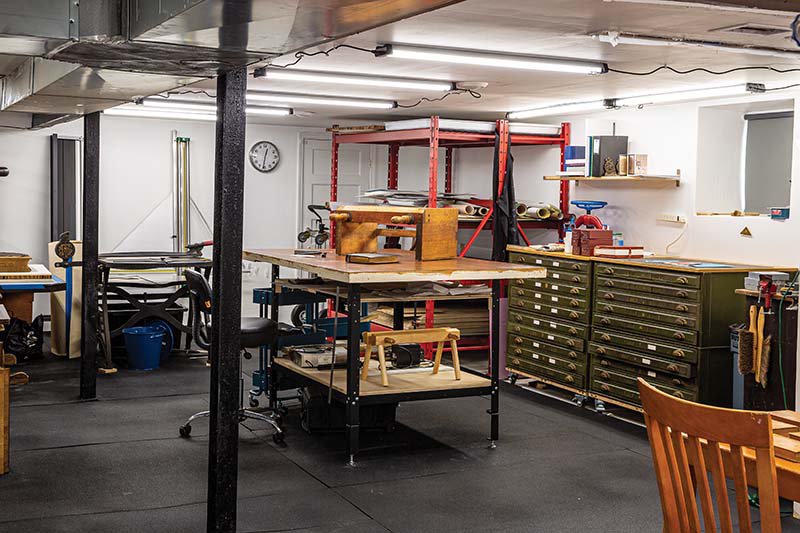
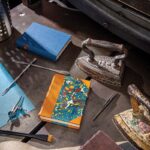
Today, Smutz lives in Affton with his wife, Sophie Barbisan, who moved to St. Louis to work as a paper conservator at the Saint Louis Art Museum. The two met at a 2017 Washington Conservation Guild meeting; Smutz followed her here two years later and started his own business, NS Conservation. The studio, located in the basement of their home, features antique and specialized machines built to save books.
Smutz purchased a 30-inch board shear, circa 1880, from a retired English bookbinder in Georgia. “I found my standing book press at a furniture conservator’s shop in Illinois who used it for more than 50 years to secure veneers. Now it’s back to stabilizing books and making book boxes,” he says.
“A hundred years ago, St. Louis was the fourth-largest city in the country. There’s a large amount, and a real variety of materials here, including Civil War diaries, land grants from the 1800s, marriage certificates. Today, we live in a disposable society. It’s comforting that people bring me so many objects and that we can conserve them for the future.”