Based in Wildwood, Staehling expresses her love of nature across the spectrum of her work, from art prints to dinnerware and stationery. An avid gardener who says she feels most at home “woven between the trees,” she’s written and illustrated Happy Houseplants, a charming and informative read for anyone wishing to bring a bit of the outdoors inside.
In your book you cite the benefits of plants, among them their capacity to help us “relax, restore, and rejuvenate.” Houseplants, no matter their size, add life and color to a room. They are living décor, but they also help remove toxins and purify the air.
Get a weekly dose of home and style inspiration
Subscribe to the St. Louis Design+Home newsletter to explore the latest stories from the local interior design, fashion, and retail scene.
What plants make a big impact in a small space? One of my favorite plants to use in a small room is the snake plant. It grows vertically, so it won’t branch out and take over a space. Snake plants have a sleek, slender leaf that looks architectural, so they add a design element while also adding a touch of green.
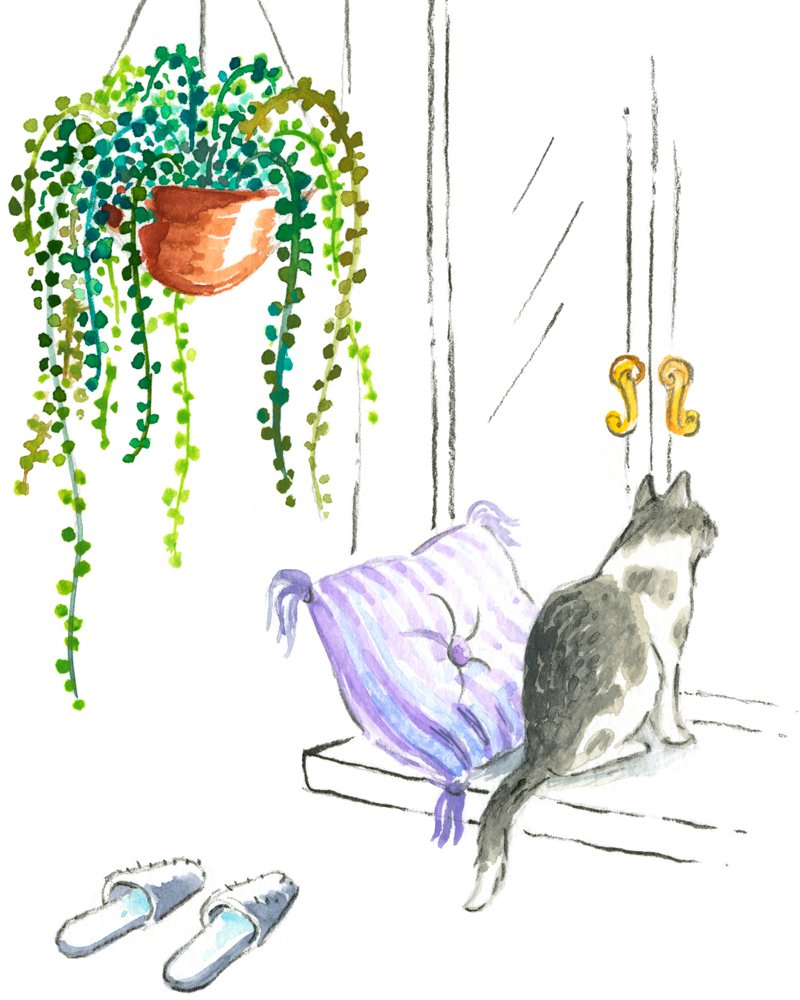
What are creative ways to display plants? Hanging is a great option because you get the benefit of a plant without taking up floor space. I like to hang multiple plants together: A set of three pots or baskets, all at varying lengths, helps create interest. The best plants to put in hanging containers are those with trailing stems that will grow over the side and cascade toward the floor, like the string-of-pearls plant. Terrariums are also beautiful. Fill one with moss or a succulent and place it on a shelf or coffee table. Terrariums are transparent, so they won’t crowd a room visually.
Should a container match the room or the plant? I always choose a container that complements the room but doesn’t compete with the plant. If a plant is fussy and busy, like a maidenhair fern, I find something simple to house it in. Let the plant be the star of the show. Similarly, if the plant is simple, spice it up with a bold pot to make a statement.
Are there unusual places where you like to grow plants? Growing a plant along a wall by “tracking” it is unique and unexpected. Place the plant on a shelf or dresser and then guide its growth, using pegs to create a design. This works best with vine-like plants, like the pothos, known for its waxy heart-shaped leaves.