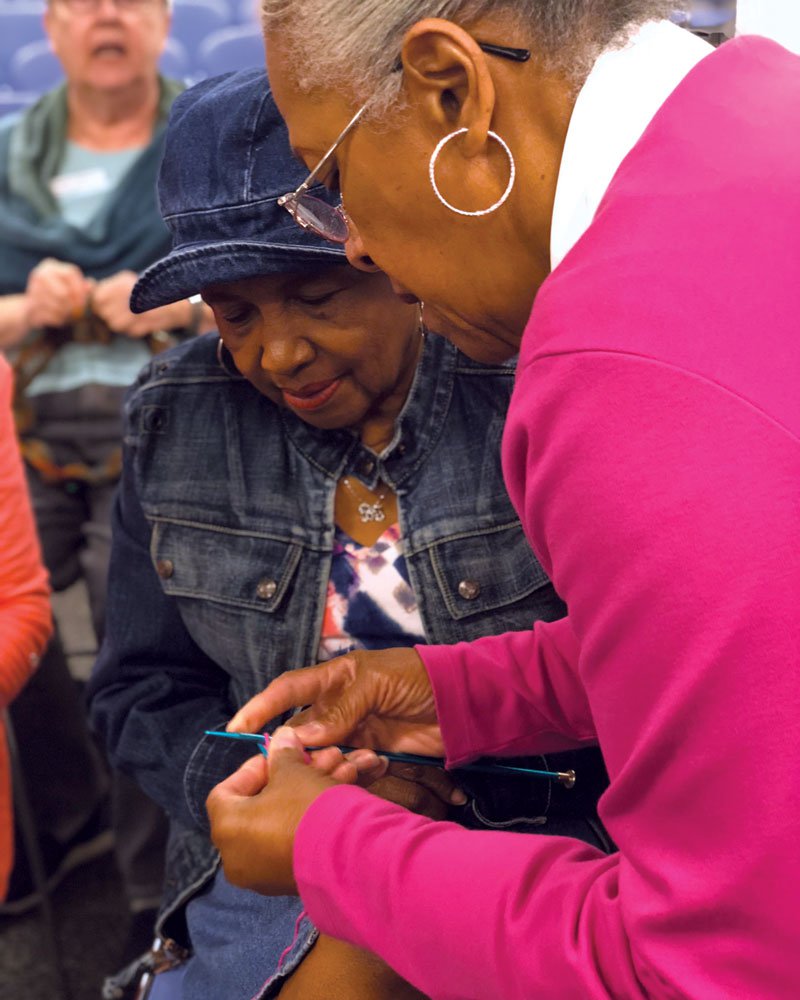
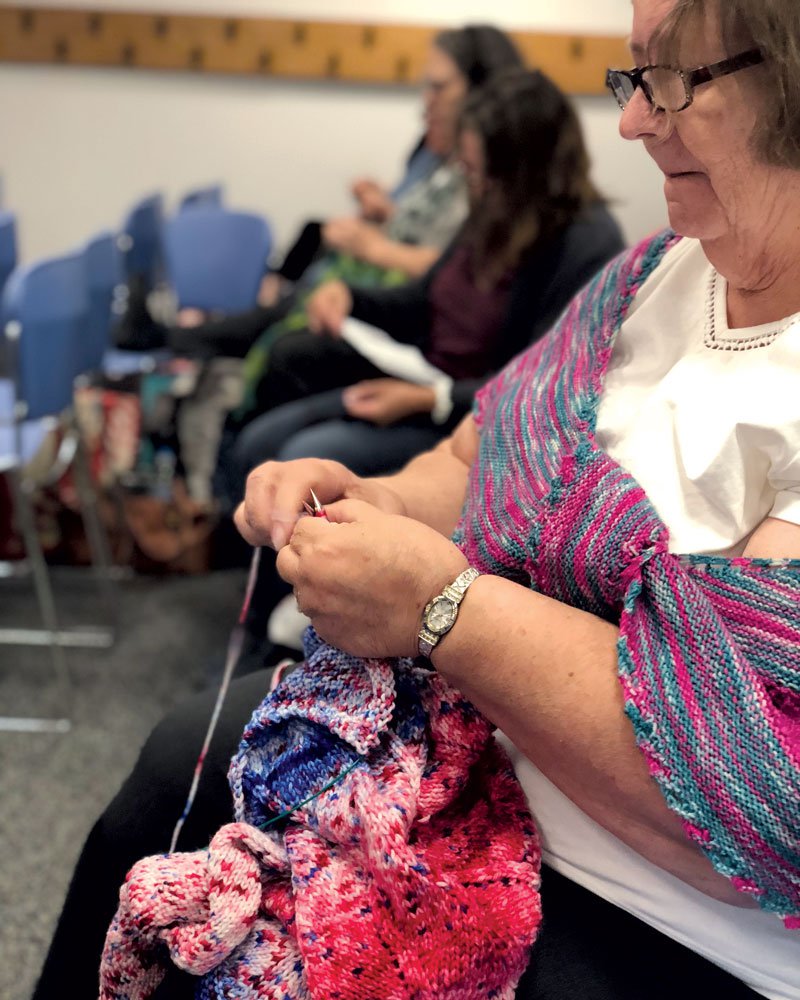
It’s a rainy Saturday afternoon in St. Louis, but the clouds haven’t kept 60 people from gathering at the St. Louis County Library headquarters. Supplies tucked into their backpacks, they greet one another warmly by name, their camaraderie eliciting a cozy, familial feel, much like the object of their shared affection.
With more than 200 active members, the monthly meetings of the Greater St. Louis Knitters’ Guild are much-anticipated events, complete with officers, an agenda, annual dues, and even an official photographer.
Get a weekly dose of home and style inspiration
Subscribe to the St. Louis Design+Home newsletter to explore the latest stories from the local interior design, fashion, and retail scene.
Members gather to socialize, knit, and show off their latest handmade wares, but the guild’s mission runs deeper.
“Charity is a big part of it,” says Joan Rangel, president of the Knitters’ Guild. “We donate more than 100 knitted hats every month to local nurseries, chemo wards, and shelters. You’ll rarely find a member selling their handmade creations. We’d much rather donate or gift them,” she says.
The Craft Yarn Council reports that more than a third of American women now know how to knit or crochet, a 51 percent increase from 10 years ago. The most significant growth of active knitters is among the 18-and-under set, among whom knitting participation has increased by 100 percent since 2004.
Jenny Bessonette, executive director of The Craft Yarn Council, attributes the popularity of knitting to the rise of the maker movement and a do-it-yourself mindset. The internet plays an important role as well. Learning to knit is more accessible, thanks to YouTube and Ravelry, but social media fuels awareness. “Young people are craving authenticity. They want to focus on the process; they want to make something beautiful and then share the experience and the result on social media,” Bessonette says.
Ann Konzen, an avid knitter and employee at local yarn shop Knitorious is amused by the supposed popularity of knitting among the younger generation. “Young people, old people, men, and women have always knit … what endures is non-knitters’ perception of who is knitting.”
Still, the way people knit has changed, she says. “My generation learned to knit from their grandmothers, but millennials learn by watching videos. They buy their yarn online, download patterns on their phones, and are highly unlikely to attend a knitting meet-up at the local library.”
Regardless of the practitioner’s age, knitting is known to help reduce stress and curb anxiety. The repetitive motions induce a relaxed state, much like that in meditation or yoga. And with mental relaxation come physical benefits: Knitting has been found to lower heart rate and blood pressure and even slow the onset of dementia. Members of the Knitters’ Guild cite relaxation and a desire to keep busy as the two reasons for picking up the craft.
Ultimately, though, what brings them together on a gloomy, damp day is one another. “It’s less about the end product and more about sharing the process,” Rangel says. “You learn to knit because it’s calming and relaxing, but you keep knitting because it’s social.”