Creating a welcoming ambiance is the goal of every good interior designer and dedicated homeowner. Home fragrance, or what the pros refer to as scentscaping, can play an important role in designing environments that draw interest, elicit memories, and speak to the style of a space.
For years, the event and hospitality industries have harnessed the aromatic power of notes from lavender to vanilla. But, as homeowners grow more aware of the practice of incorporating fragrance through candles, diffusers, sprays, and flowers, more of them are seeking ways to use it with intention.
Get a weekly dose of home and style inspiration
Subscribe to the St. Louis Design+Home newsletter to explore the latest stories from the local interior design, fashion, and retail scene.
According to market research firm Grand View Research, home fragrance sales in the U.S. totaled $2.6 billion in 2023, and are projected to grow 8.6 percent by 2030, driven by candles, sprays, diffusers, essential oils, plug-in devices and more. And, while the market is dominated by mass marketers, demand for non-toxic or hypoallergenic components is gaining traction.
Still, scent is too often overlooked, yet it’s one of the most impactful and least expensive ways to connect emotionally and leave a positive, lasting memory, says Tim Wheeler, director of digital services at NewGround International, a St. Louis-based plan, design, and build firm that works with clients across retail, financial, and corporate environments. The company began offering scent technology to clients in 2010, he says, and studies show that 81 percent of consumers say that having scent in a retail or commercial space creates a positive impression. “It was a matter of time before they wanted this experience in their own home,” Wheeler says.
In her work as an interior designer at Castle Design, Emily Quinn focuses on creating customized, visually appealing spaces, while prioritizing functionality, comfort, and a rich sensory experience. “Home fragrance plays a part in that,” she says. The surge in travel, particularly after the pandemic, she adds, fueled a desire to hold onto the signature scent of a beloved hotel, resort, or destination, offering everyday reminders of experiences travelers didn’t want to soon forget.
Delivery methods
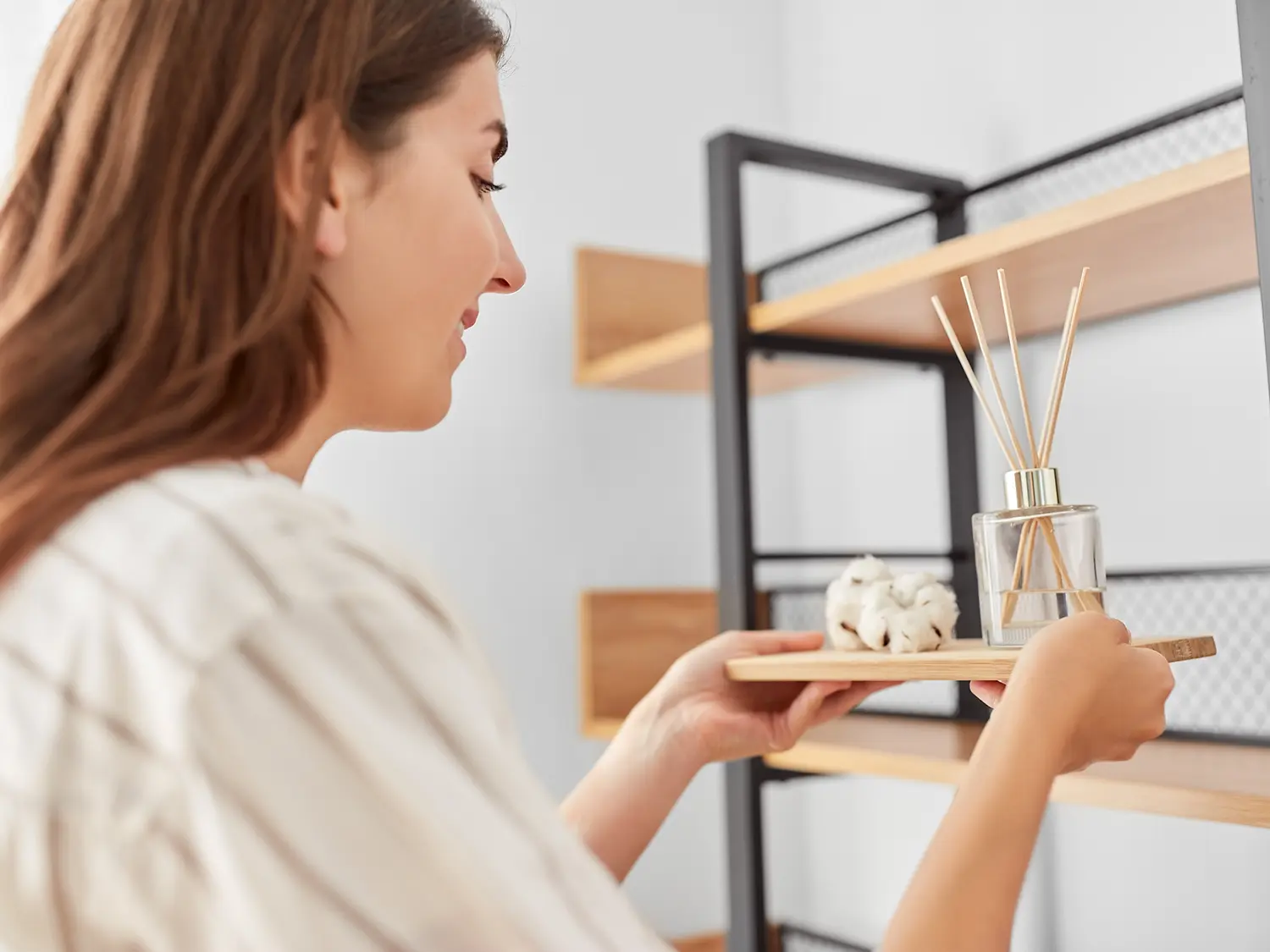
From sweet and spicy to fresh and flowery, there’s a fragrance and fragrance-delivery method for everyone. Cassie Buell, owner of Cassie’s Fragrance Boutique & Scent Bar in University City, advises homeowners to consider both their purpose and space before choosing a delivery option. Diffusers–both reed and plug-in–are great, she says, because they’re safer and more efficient than candles. She’s partial to catalytic diffusers from Paris-based Lampe Berger, which use a porous, heated stone to diffuse fragrance. “These diffusers are extremely efficient. They’ll purify a 400-square-foot space in 20 minutes, which makes them great for [covering up] cooking odors,” says Buell.
Cassie Chapie, a manager at Sallie Home in Ladue, is a big fan of diffusers from Agraria San Francisco. “Each fragrance is topped by flowers made of balsa wood,” she says. Diffuser oils filter up through the flower to color it the shade of the fragrance oil, a twist from traditional diffusers. “It’s such a special way to deliver this brand’s beautiful scents,” says Chapie. NewGround’s Wheeler is partial to oil diffusers that are either rechargeable or Bluetooth-controlled. “These are great technologies you can move around and control how much or little fragrance you want to diffuse,” he says. “I always advise a hypoallergenic oil to avoid reactions.”
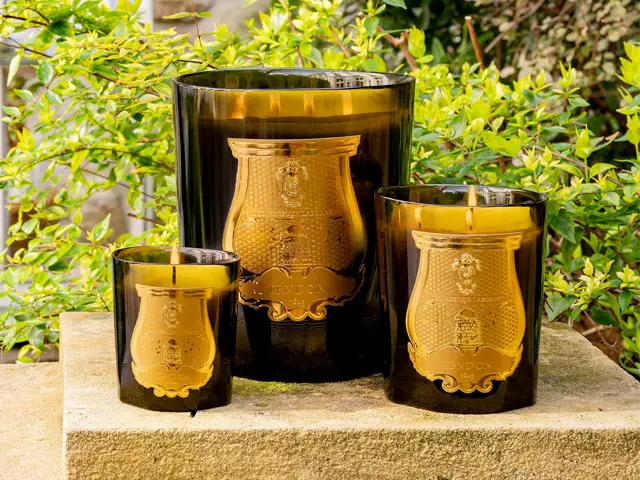
Though there are many options for diffusing scent, candles still dominate the home fragrance market mostly because they’re sold in every shape, scent, color, and price point. The National Candle Association (NCA) estimates that there are more than 10,000 candle scents in the United States, giving consumers plenty of options. Amy Kuntz, owner of Forth and Home in Webster Groves, has been stocking Brooklyn Candle Studio’s “Escapist” line for years. “The sleek and minimalistic containers, and high-quality fragrances, are what my customers want,” she says. “Plus, they’re so affordable it doesn’t feel like an extravagant indulgence.” French purveyor Trudon offers fragrance and high-end design in one. “Trudon is the oldest candlemaker in the world,” says Chapie. Founded in 1643 and manufactured by master candle makers at the company’s workshops in Normandy, France, they are also priced accordingly, from $52 for the petit-size “Joséphine” to $660 for the scent’s grande-size candle. Trudon’s vessels resemble a Champagne bucket and are as desirable as the candles themselves. “Customers love to use them for flower vases long after the candle has been burnt,” says Chapie.
Scentscape for your nose
When selecting a scent, trust your nose. “Get what appeals to you and not the flavor or the celebrity of the moment,” says Bruell. Any type of fragrance, whether it’s body perfume or home scent, is best bought in-person. “Bring your nose to the store and come in with a full stomach to avoid distracting olfaction,” she says.
Some experts, like Wheeler, think fragrance should complement the décor of a house. If your home is full of wood, leather, and rich tones, consider fragrances with notes of tobacco, amber, or wood. For homes decorated with a light and airy touch, green or floral scents are good choices. A fragrance minimalist, Wheeler cautions against over-scenting, preferring a scent that greets homeowners and their guests when they enter and leave a home. “The key is you want fragrance to carry across your interior design,” he says.
But some areas of the house are better suited for scent than others. To imbue a relaxing vibe, consider a candle or diffuser with lavender, chamomile, or vanilla notes. Citrus, mint, and ginger are known to enhance a person’s alertness and motivation, making them smart choices for a home office or exercise room. Family rooms do well with musky or powdery notes, or you might lean into cozy with notes like cinnamon, clove, and wood, especially desirable during the end-of-the-year holiday season. Most of us want our bathrooms to smell refreshing and spa-like, so appropriate options would be cucumber, lemon, and mint notes. Scentscaping the kitchen can be a challenge because of the aromas that naturally arise during cooking. “Treat spaces lightly and stay away from food and drink areas,” says Wheeler. “You don’t want to interrupt taste and smell with a strong, competing fragrance,” he says. And what about changing scents as one might swap out the throw pillows on a sofa, at the change of seasons? Go for it–or not–say our experts. A home fragrance should change based on the seasons of your life, so the decision is unique to each individual.
Understand ingredients
Terms such as “clean,” “eco-friendly,” and “non-toxic” get used quite a bit in the home-fragrance world. Whether it’s candles, diffusers, room sprays, or sachets, opt for products that are made with essential oils, fragrance oils, and natural waxes, like soy or beeswax. Avoid products with phthalates, parabens, synthetic dyes, silicone, PEG, BHT, BHA, and sulfates. Look for soy wax or beeswax candles made with natural fragrance oils; room or linen sprays that use natural ingredients; and diffusers composed of essential or natural oils. “A good candle is hard to make. That’s why I suggest going the DIY route,” says Buell. “The good ones use quality components, from the wax to a cotton wick, which promotes cleaner burning.”
If you’ve already embarked on a scent journey in your home, you’ve already engaged in the transformative power of fragrance. If not, now might be the right time to explore using scent to elevate your space. Whether it’s a cozy living room or a restful bedroom, scentscaping helps create a complete home experience.