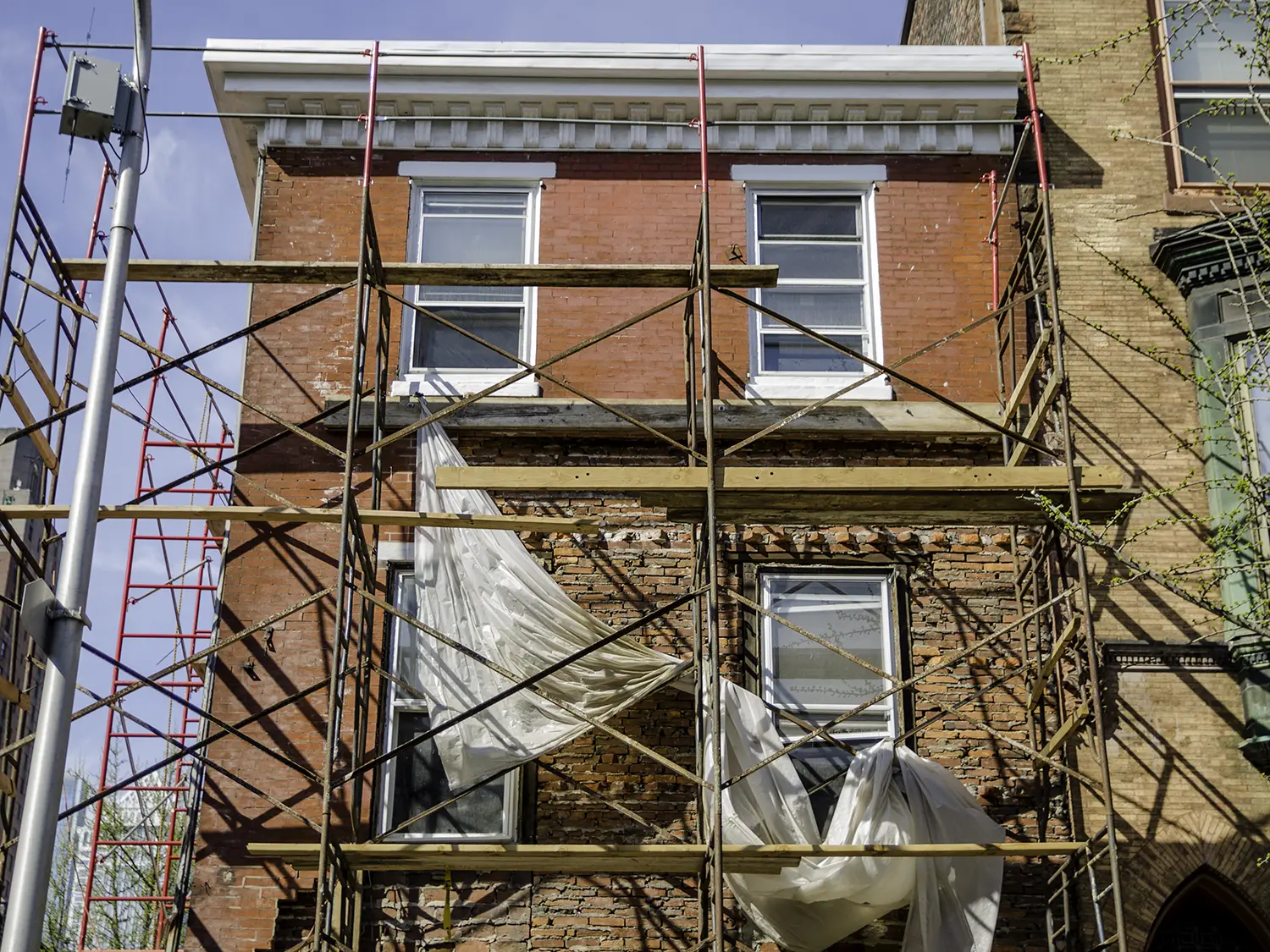
When a tornado hit St. Louis this past May, many houses underwent roof, window, and siding damage, and many homeowners are still grappling with the unique problem of planning these fixes. As it turns out, more goes into these sorts of repairs than just the cost of labor and materials: scaffolding is a fundamental (and pricey) ingredient to completing these types of projects.
Scaffolding consists of wood planks and metal bars, providing a stable platform for working on repairs. More importantly, it enables an easy transfer of materials and tools. Case in point, scaffolding is essential to masonry repair work: bricks are heavy and scaffolding platforms are used to stack them up the height of a project. Scaffolding is also required when fixing roofs with slate or clay tiles, delicate pieces that should never be walked on.
Get a weekly dose of home and style inspiration
Subscribe to the St. Louis Design+Home newsletter to explore the latest stories from the local interior design, fashion, and retail scene.
Scaffolding’s importance—along with the sheer amount of wreckage from the May tornado—has forced its price to skyrocket. Hence, local homeowners are feeling the pinch. As Blake Partney, project manager at Atlas Restoration and Allied Roofing, two divisions of the same full-service construction and restoration company based in Missouri, explains, “Scaffolding is like any other building material. It’s about supply and demand.” As local scaffolding dealers’ supply dwindles, they’re forced to order more stock, he says. “And obviously the more demand there is, the more scaffolding is charged for.”
But after any major storm—including the heavy hail storms this past year—the volume of jobs requiring scaffolding for roof repair, window replacement, and structural stabilization spikes dramatically. This is especially true in the Midwest and central United States due to the regions’ frequent tornado damage, says Michael Feazel, CEO of Roof Maxx, which has Missouri-based dealers. “But the main reason for the scaffolding price spikes really comes down to supply chain challenges.”
Unfortunately, there are only a few scaffolding rental companies in St. Louis, and homeowners typically find themselves last in line. Contractors get first crack at materials, and roofer and restoration companies get even more pull, due to the large number of projects they complete on average, says Partney.
Worse still, renting scaffolding means renting it per day. The longer you have it, the more costs rise. “One 5-by-5 section of scaffolding will typically cost around $30 a day,” says Partney. If you are working on a traditional size house, you’re going to need at least 6 to 8 sections. Plus, scaffolding rental companies charge homeowners for setting up and taking it all down once the project is completed.
Finally, insurance (or lack thereof) can play a major role in scaffolding costs. Insurance companies have been slow in getting scaffold-based homeowner project estimates approved due to a variety of reasons, delaying project completion further, Partney points out. His business works with insurance companies directly, ensuring timely approval of their projects.
In the end, you’re better off hiring a restoration company to repair your outstanding roof, siding, and window damage. If it is a roof repairs only situation, they can have the project completed in two to three weeks. However, projects that require vinyl siding and windows can take longer. They typically require an average wait of four to six weeks from the time they are ordered, says Partney.