Ask Veronica: With warmer months headed our way, I want to get a jump start on cleaning the front entrance to my home. What’s the best way to clean a stone/cement walkway?
According to Travis Irvin of Earthworks Stone, a local manufacturer of natural stone products and dealer of other hardscape materials, routine maintenance throughout the year is key to not letting your walkways and entries accumulate too much dirt and debris.
Get a weekly dose of home and style inspiration
Subscribe to the St. Louis Design+Home newsletter to explore the latest stories from the local interior design, fashion, and retail scene.
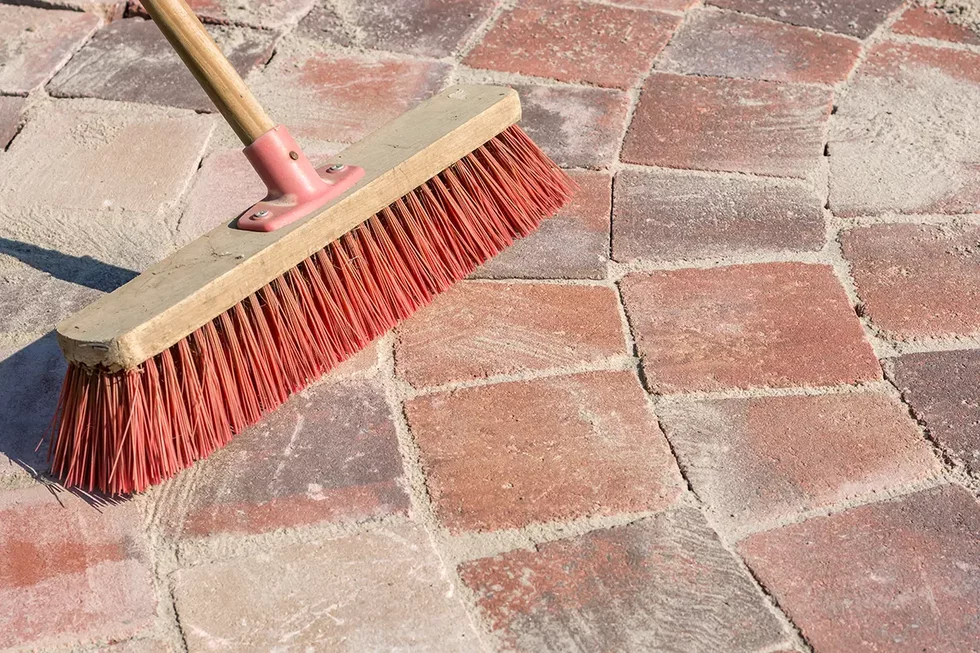
“Just a regular quick sweep with a medium to stiff bristle brush is recommended because the more natural materials that would decay on the surface, whether it be concrete or natural stone, are going to cause more biological staining. Clean up any messes right away,” he suggests.
For deeper cleaning, Irvin recommends using the same type of bristle brush along with water from a regular hose sprayer and a mild detergent or chemical cleaner, diluted with water. Cleaning agents can range from old fashioned natural products, such as vinegar or baking soda, to specialized chemical cleaners found in most hardware or home improvement stores. Store professionals can offer advice on what cleaners are best for your particular surface.
“Tide actually has been known to clean masonry materials and sometimes can be enough to take off some stubborn stains, especially if you’re talking about decomposed leaves and grass and sticks and things like that,” Irwin says.
The key is to always keep the surface wet, before and during cleaning, or the detergents could cause damage or chemical burns to the stone or concrete. How you use the brush is as important as the brush you use.
“You want to be very consistent in your brushing technique,” says Irwin. “Try to avoid spot cleaning as much as possible because when you over clean a certain area, you run the risk of not being able to get the rest of the area to match.”
As for power washing, Irvin cautions against it, particularly for novices.
“It can be very effective, but because of the pressure and people not necessarily knowing the best nozzles and the spray pattern, it can cause etching or actual damage to the materials.”
If using a power washer, Irvin recommends dialing it down to the lowest setting of PSI – pounds per square inch, preferably around 50 PSI.
“Some power washers don’t have the capability to be pressure controlled. If you’re going to use a power washer, use a wide spray, be very consistent in your patterning and don’t go too close up with a very narrow spray,” he says. “One power wash could be equivalent to three to five years of natural wear or so it can add age to your patios or your walkways.”
When in doubt, he says, always consult a professional.