If a lush green yard is on your list of home-improvement projects, start planning now.
According to the experts–Josh Kresse, director of operations at Quiet Village Landscaping, and Linda Melton-Schroeder, co-founder of R. Schroeder Sod Farms–seasonality plays an important role. To give grass the best chance of survival, be it from sod or seed, homeowners are wise to install in the fall season.
Get a weekly dose of home and style inspiration
Subscribe to the St. Louis Design+Home newsletter to explore the latest stories from the local interior design, fashion, and retail scene.
Why fall? Autumnal gardening allows plants to continue to grow root zones. “This is where its source of nutrients are all winter and throughout the spring, so it’s a healthy, robust plant with deep roots by the time summer comes,” says Kresse. “When we start getting cooler evenings–the plants respond,” adds Melton-Schroeder. (Root systems grow fastest in the fall.)
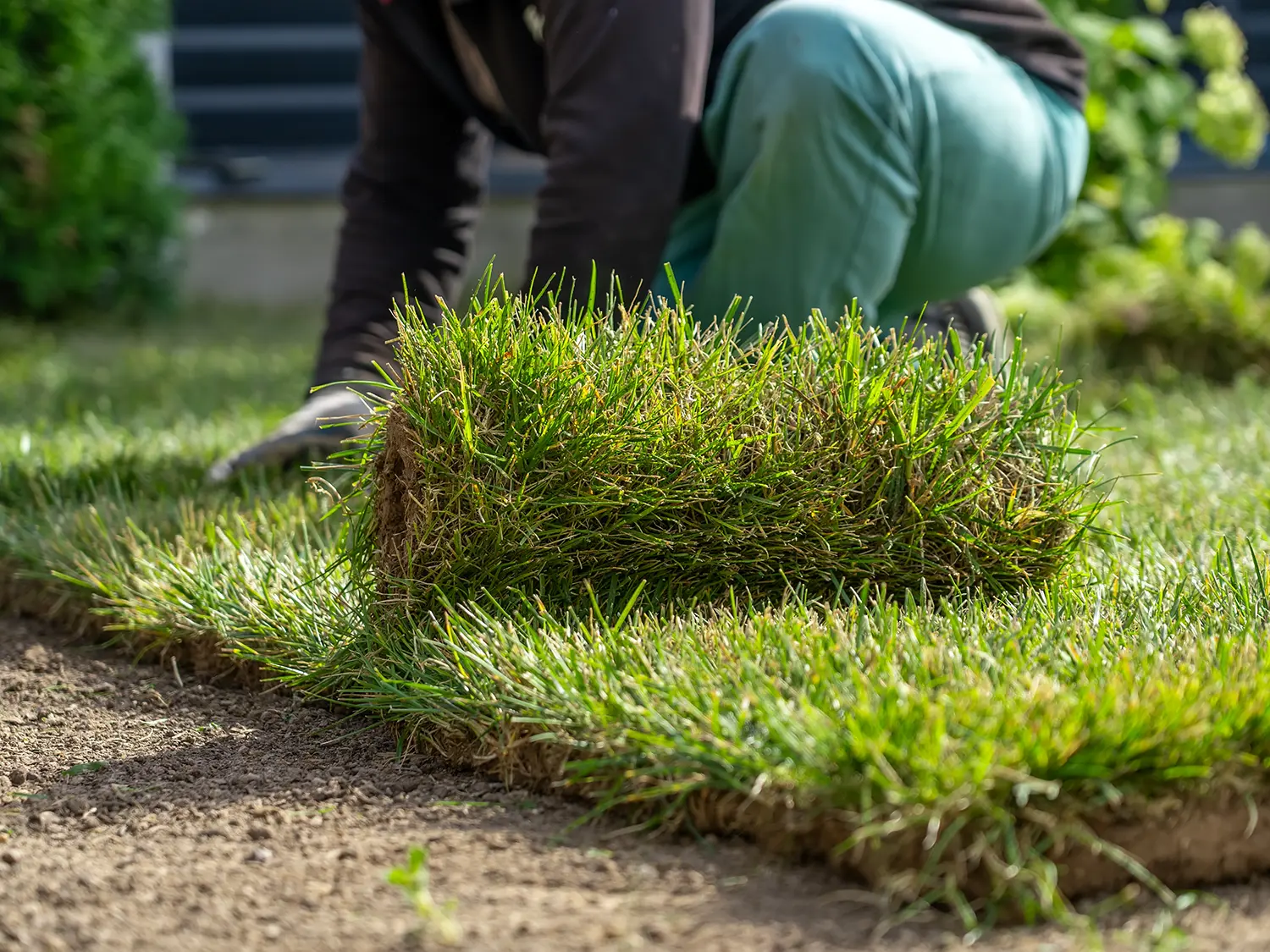
Whether you elect to install sod, packaged in panel-like strips of pre-grown and pre-cut living grass, or go with grass seed that gets tended to from the ground up, sod outperforms seed on price and efficiency. “Sod is typically going to cost three to four times more than seed,” explains Kresse. But the instant gratification factor delivered with sod is one way to account for paying the higher premium. Choosing to work from seed gives clients “one shot” to get it right, says Kresse, noting the challenges that come with raising any living thing. “If it dries out at any time between when it gets fully saturated, and when that little seedling breaks through the casing of the seed, it’s dead,” he says.
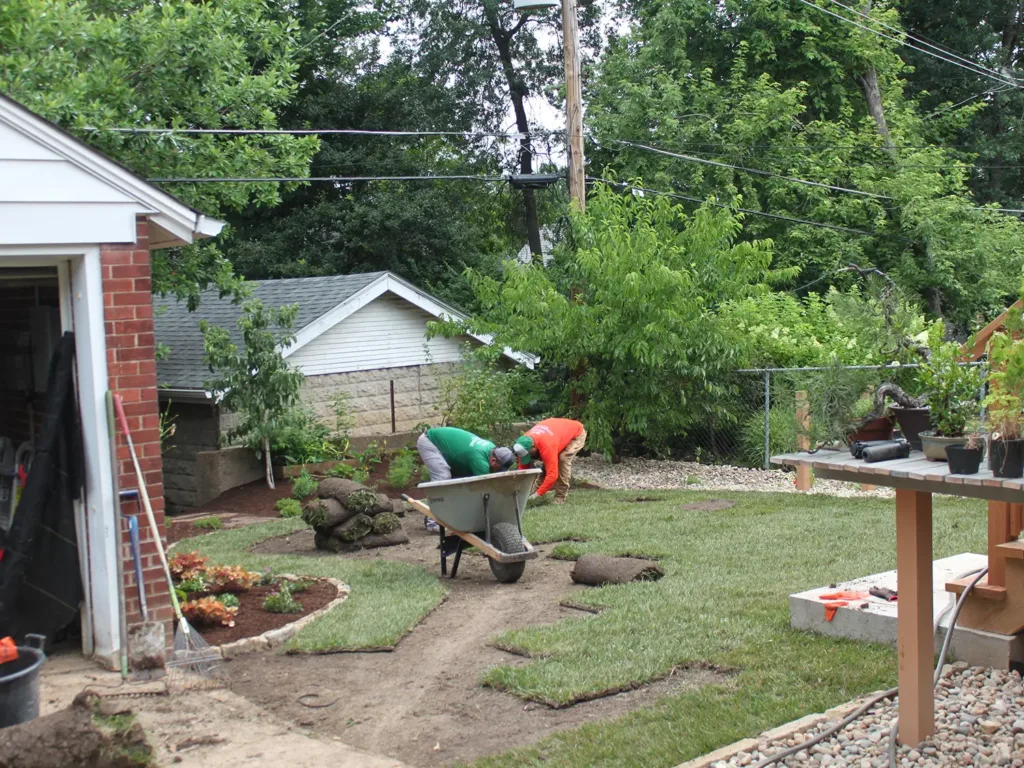
On the topic of weather, Melton-Schroeder says: “Once it rains, you lose your grade. You get a hard night, and if it’s just [young, unrooted] seed on the top soil, there goes your dirt,” she says. What’s more, sod atop a hillside is also “great for erosion control,” she says.
Regardless of the delivery method, be ready for a commitment, say the experts. Both landscapers report that sod requires two-to-four weeks of total saturation in order for the roots to take hold. Seed doesn’t require as much moisture initially, but is a bigger gamble. Melton-Schroeder recommends fescue grass, in either seed or sod. “It’s the best for Missouri weather and clay soil,” she says.
Kresse’s parting wisdom: Invest in an accompanying irrigation system to help combat substantial watering needs.