A few weeks ago, I interviewed Laura Dooley, owner of LoKey Designs, and Nicole Walter, greenhouse buyer for Garden Heights Nursery, for the latest episode of my podcast House of Lou. Naturally, we talked about plants — but specifically about how to decorate with them. I left that conversation feeling inspired by their knowledge and experience, all of which reaffirmed my own belief in the power of plants to make any room feel more alive and inviting.
Here’s a sneak peek at that conversation. The full episode drops June 10 in my weekly newsletter Design + Home.
Get a weekly dose of home and style inspiration
Subscribe to the St. Louis Design+Home newsletter to explore the latest stories from the local interior design, fashion, and retail scene.
Dooley and Walter share the philosophy that plants are living things first (more on faux plants in the episode), and they work them into rooms by prioritizing their health and longevity above all else. Walter sees plant placement through the lens of a room’s windows and light quality. “That tells me what plants will survive in that space, and also what kind of height we’re working with,” she says. Dooley looks for air vents and high-traffic areas — “spots that are going to make a plant unhappy,” she says.
Similar to advice we often hear from design experts about living in a house before decorating it, get to know a room — its flow and other conditions — before introducing plants. “Live in your space ahead of plants so that you’re not moving stuff around and you like where it’s going,” says Dooley. Homeowners who work closely with an interior designer have the advantage of knowing exactly how their furniture will be placed — and the confidence that it won’t move. “Designers are being very specific on how things are fitting and moving and flowing,” she says. “But those people that maybe don’t have that set, I really want them to know where their stuff is going to be prior to having plants.”
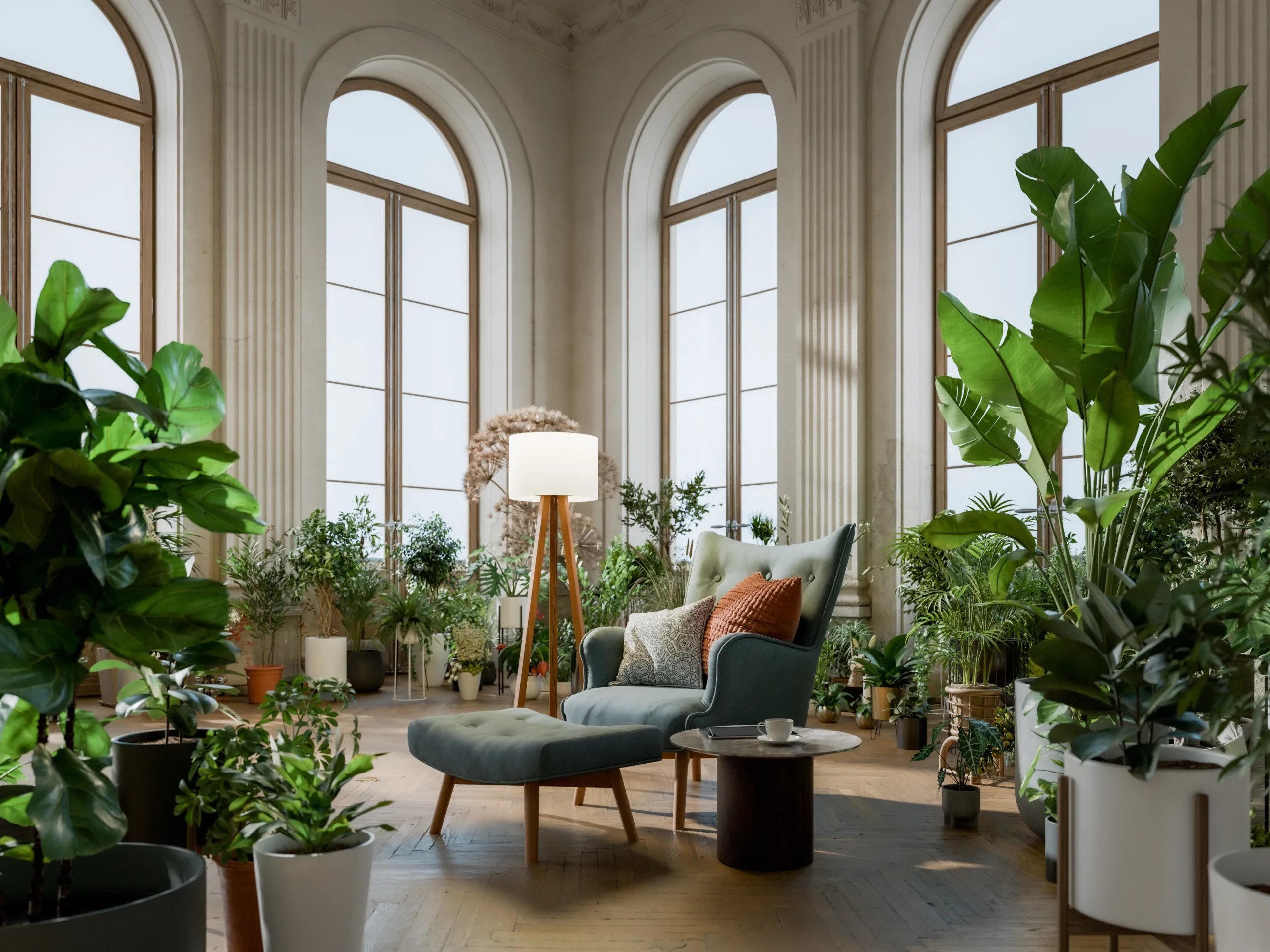
Once you know the room, think carefully about scale. One of the biggest mistakes homeowners make is adding too many plants without giving enough thought to how they’re styled. A three-level grouping — a floor plant, a mid-height plant, and a tabletop plant — is a good rule of thumb rather than randomly clustering plants together. Statement plants or trees add a focal point in large, open spaces where furniture won’t be rearranged; clusters suit smaller, more flexible rooms. “If there’s a two-story room, you’re not going to want to put a couple clusters on the floor and wait for them to grow. You’re going to do something big and impactful in the space,” says Dooley.
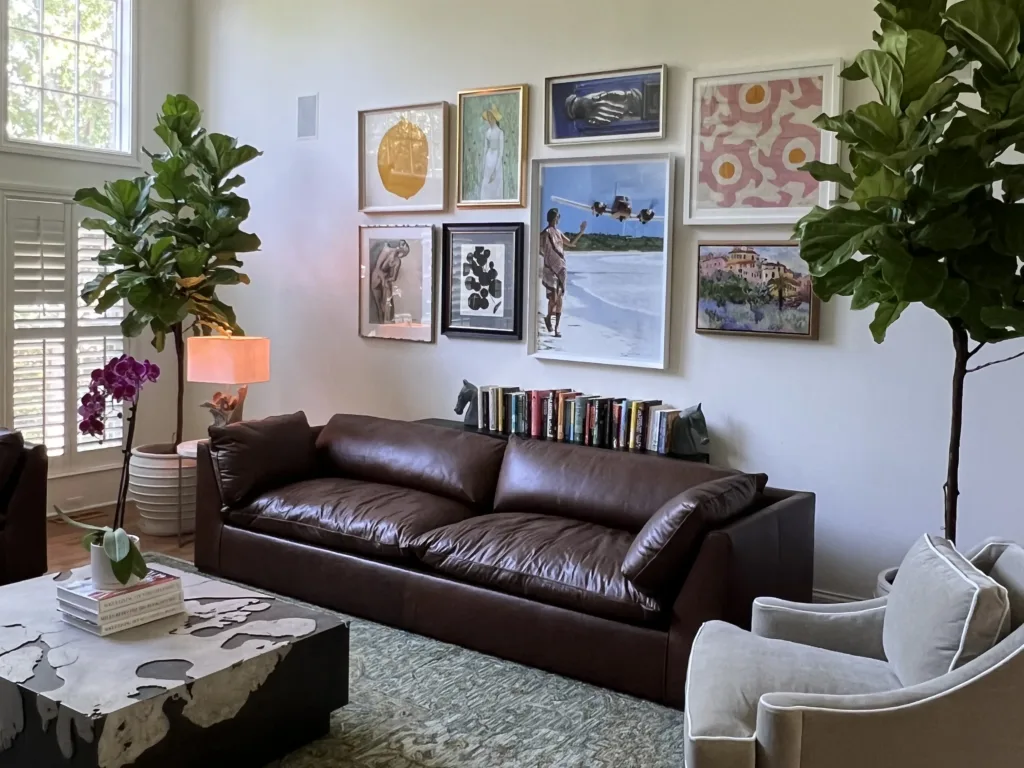
From there, don’t underestimate the containers — they’re as integral to the look of a room as the plants themselves. Rather than matching container colors to the room’s existing palette, Walter suggests selecting hues that pop. “You could have, for instance, a lot of blue — maybe a blue couch, a blue chair. You don’t want to put a blue pot right next to it because it’s going to get lost. Mix in maybe a pop of green, a yellow, something to make that stand out amongst the other things in the room,” she says. If a room already features a lot of texture, go sleek and simple with the planter. Walter has a preference for geometric shapes; Dooley likes her containers to feel unique to a space, often sourcing them secondhand at vintage and antique stores to add atmosphere and individuality. “Finding those pieces that can go into spaces that make you feel something a little bit deeper,” says Dooley.
For more on styling with plants—including hanging plants, what to do when a plant just isn’t thriving, and the one simple habit both experts swear by—tune in to the full episode of House of Lou: