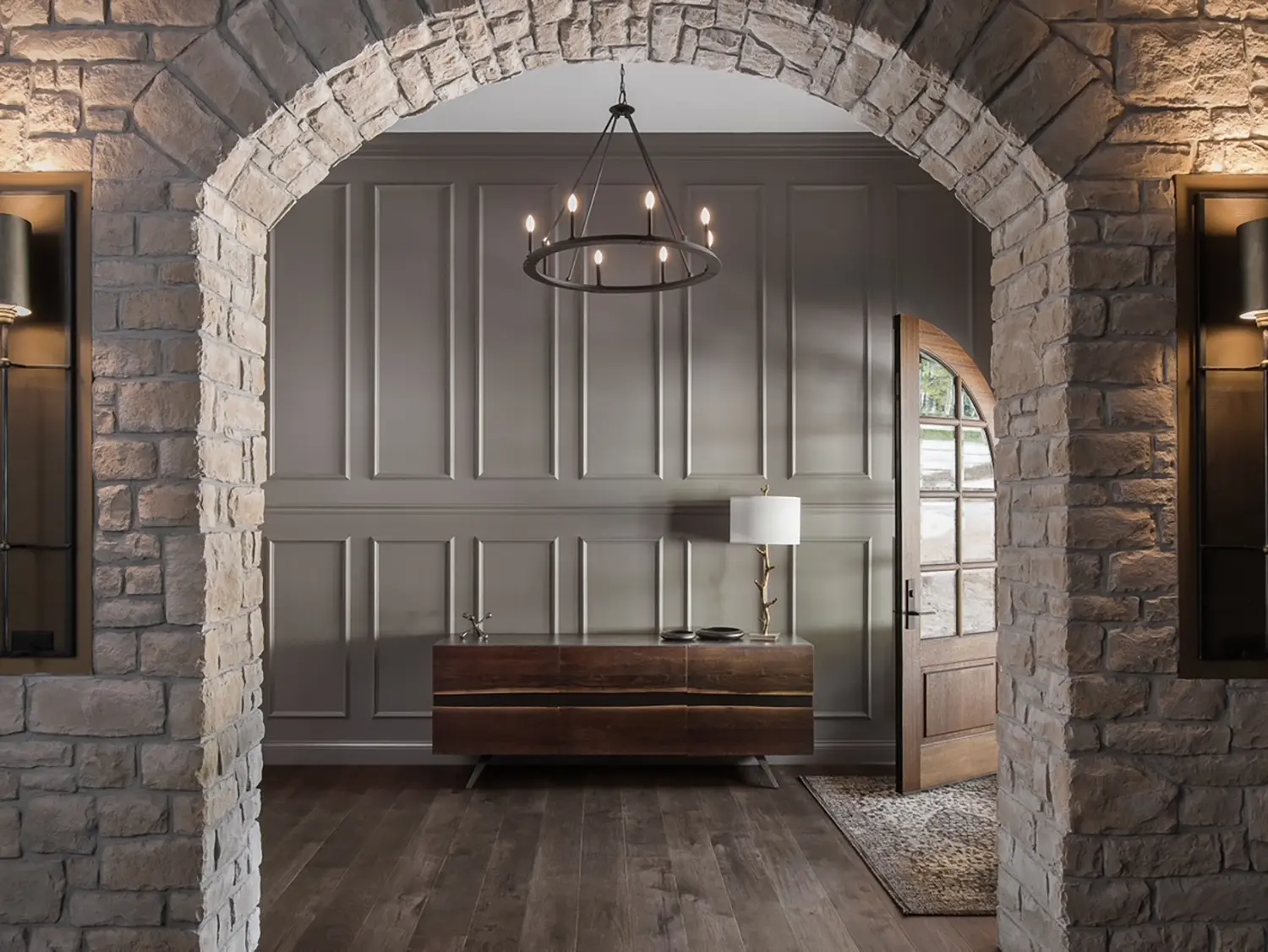
I called three designers to seek their advice about furnishing entryways, the first visual clue as to what guests can expect to see in other rooms around the house. Whether it’s furniture, art, a rug, or all three, the foyer should reflect the overall aesthetic of the house.
“The foyer communicates the home’s character, whether it’s classic or contemporary,” says interior designer Candice Wideman, president of ASID Missouri East and owner of Youtopia Designs.
Get a weekly dose of home and style inspiration
Subscribe to the St. Louis Design+Home newsletter to explore the latest stories from the local interior design, fashion, and retail scene.
“If you’re greeted by shoes lined up on the floor, what that’s telling you is chaos,” adds designer Joni Spear of Joni Spear Interior Design.
Think about what you want your home to say about you–and start the conversation in the entry.
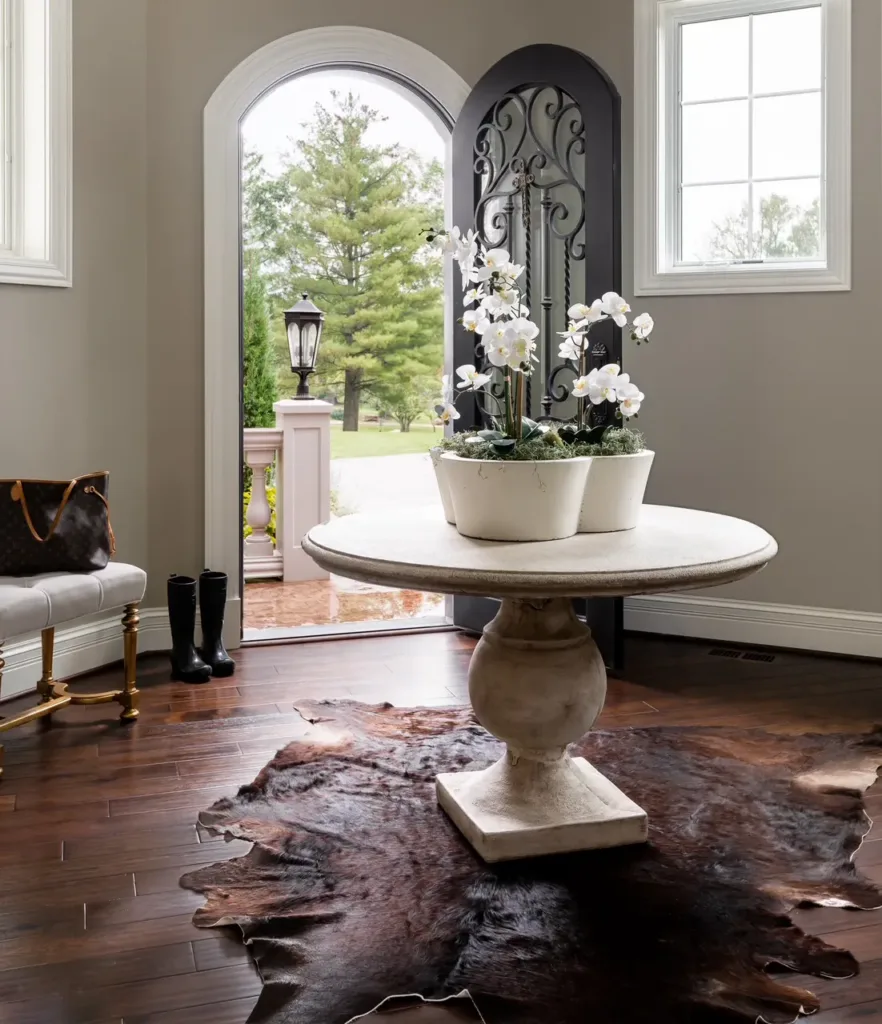
How you design your home–and, by extension, the foyer–can be determined by lifestyle, taste, or a desire for the home to function in a particular way. Spear is often inspired by the architecture of a house, she says. And for a recent project in St. Louis–a large Mediterranean-style home–she sourced a concrete center table for the foyer because “I wanted to bring in a lot of garden elements,” she says, noting the style’s indoor/outdoor aesthetic.
Other designers, like Marcia Moore, owner and creative director of Marcia Moore Design, seek guidance from rooms that are adjacent to the foyer. “I think [the look] is dictated by what the room directly next to it looks like, mostly,” she says. “If I have a center hallway where you’ve got a formal dining room and the formal living room, then I want the foyer to be a little more formal,” says Moore. “But if those rooms are more casual, then I think the foyer needs to follow suit.”
Blending style with the needs of the homeowner should always underpin any design. “Is this house going to be more formal or is it needing to be more on the practical side?” asks Wideman. “Think of your entry as that “moment of arrival that sets the tone for the rest of the house,” she says.
The foyer is typically a busy area inside any residence simply because of the number of people who pass through it on a daily basis. For that reason it’s important to provide adequate “breathing room” around your furniture, whether you go with a center table, bench, or console. For maximum comfort, Moore recommends keeping approximately 42 inches of space around furniture. “The minimum you would want is 30 inches wide to walk by and not feel crowded. If you have 42 inches total, then we can get a 10-inch wide console, and you still have 32 inches of open space,” she says.
Most console tables, by virtue of their long and narrow profile, are good options for an entry. Center tables, especially lovely when topped with a seasonal arrangement of flowers, can be a bit more difficult to use because the home needs a big enough entry to absorb the look. “There aren’t a lot of homes that have that big of an entry for that kind of a table,” says Moore, “but most entries have some wall space where a console table works really well–and there are interesting ones out there.”
To visualize how a piece of furniture will look , Wideman suggests using painter’s tape to outline the space, or gathering shipping boxes and arranging them according to your layout and the dimensions of your furniture. For big projects, Wideman suggests a company called Walk Your Plans, which creates scaled floor plans to help clients visualize their rooms.
Once you’ve figured out how to furnish your entry, don’t forget to have fun decorating it. Use lighting—a pair of buffet lamps on a console sets a moody atmosphere—and a mirror or a piece of art draws the eye up. If you’re going for a center table, a floral arrangement is your best option because it can be enjoyed from all angles, unlike a sculpture or framed pictures that can only be viewed from one direction. Seating, such as an ottoman tucked under an open console, or a chair placed near a center table, is always a good idea for those homeowners or guests who need a place to sit while taking off their shoes.
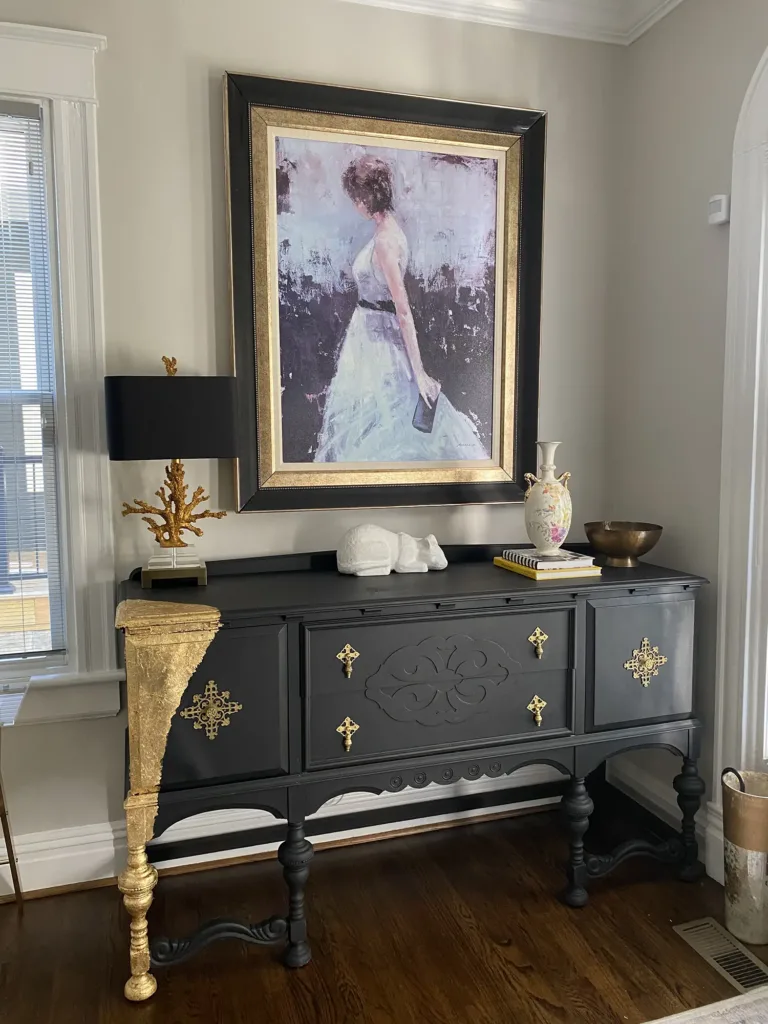
Whatever you desire, don’t forget to get creative. Moore still keeps a picture of a favorite side table from an Airbnb she stayed at in Virginia. She says it was a “traditional piece of furniture” but painted black with a leg sheathed in gold leaf.
“I just thought that was the most interesting take on an old piece of furniture that I had ever seen,” she says.