Water features vary in size, cost, and maintenance, making them an attraction option to homeowners.
“You don’t have to be a millionaire to have one,” says Virginia Mueller, publicist and secretary for the St. Louis Water Garden Society, a local organization with more than 300 members. “You can have something that’s just fitting to your space,” she says.
In addition to bringing beauty, movement, and tranquility to a yard, water features are also eco-friendly, adding to the upside of owning one. “You have the sights and sounds of flowing water, along with birds and pollinators and fish and aquatic plants,” she says. What’s more, water features invite homeowners to spend more time outdoors, which has been proven to lower stress levels and lift moods.
“Everybody thinks they’re going to start out small,” says Mueller. “Then, after they get a feature they want it bigger and better.”
Here, Mueller and Kati Osborne, a garden designer at Landscape St. Louis, with more than a decade of experience, share the most popular options.
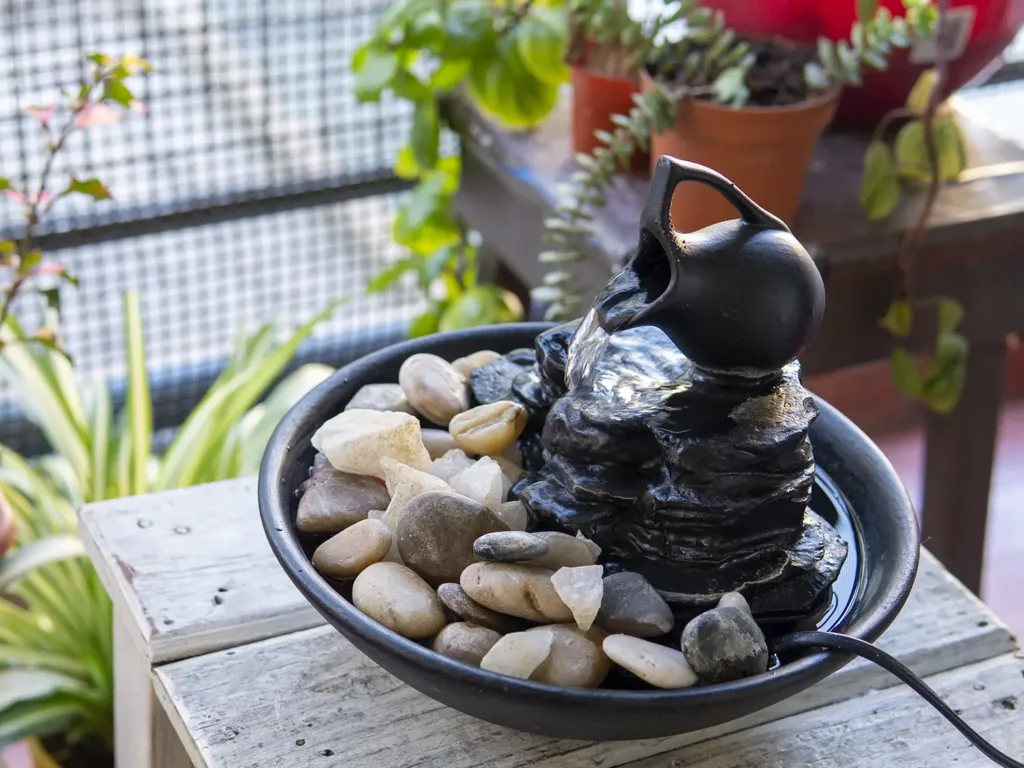
Bubbler
This is the most basic of the water features and it is all-inclusive, which means that it can be easily assembled by simply adding water and plugging it in. Whether you want a small, tableside, or ornamental feature for your garden, there is no shortage of sizes and shapes. To maintain your bubbler, simply unplug it, dump out the water, and wipe it down with a dry cloth. Refill it when you’re ready to use it and enjoy it.
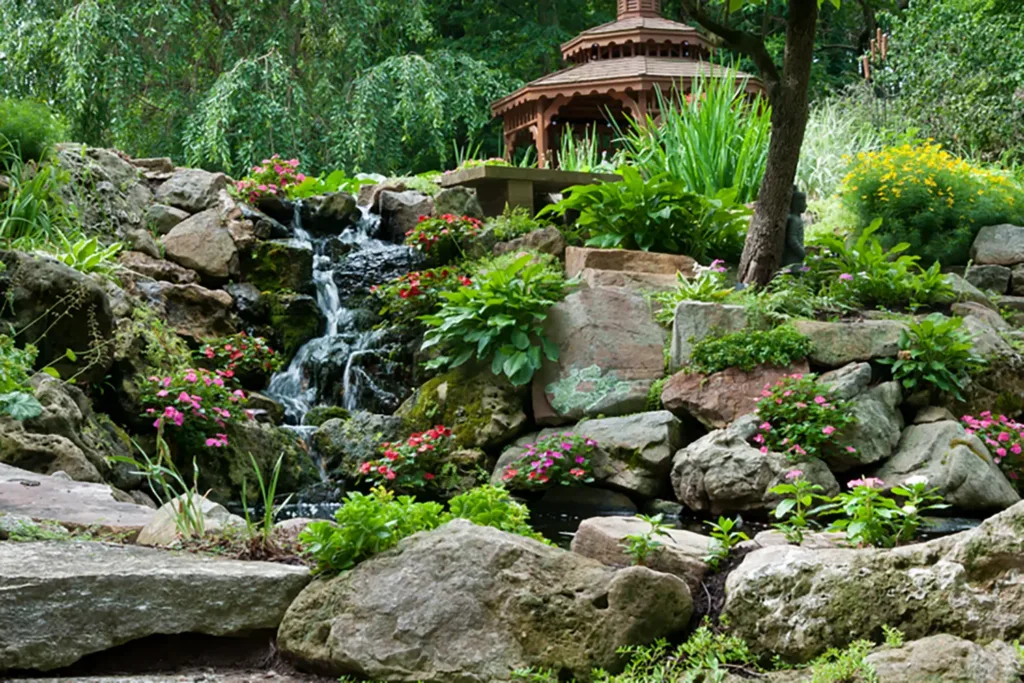
Pondless Features
Pondless features offer a fresh, contemporary look that imbues outdoor spaces with the calming sound of water, without the maintenance of a more complex feature. An elevation, such as a boulder or a granite sphere with a hole drilled through its center, is required. Water flows from the top of that elevation and trickles down into a basin. The reservoir is generally underground, armed with a pump to circulate water back to the top. The benefit of an underground reservoir is that there’s no exposed or standing water, which alleviates the build up of leaves and muck and prevents a gathering spot for flies and mosquitoes.
In the past few years, pondless features have been gaining in popularity, says Osborne. With their simple aesthetic and minimal maintenance, they are an easy option for busy homeowners who are flirting with the idea of installing a water feature for the first time.
Get a weekly dose of home and style inspiration
Subscribe to the St. Louis Design+Home newsletter to explore the latest stories from the local interior design, fashion, and retail scene.
Fountains & Streams
Fountains and streams are a level up in complexity from the pondless features, but provide an aesthetic that is familiar and inviting to most homeowners. With their multiple collection pots, water starts at its source and trickles downward through several layers to a basin “where people drop coins,” says Osborne.
Maintenance is a relatively easy lift. It’s important to regularly clean the foundation and treat it with the appropriate chemicals to avoid the build up of mold. According to Osborne, all water features need to be “winterized,” which involves shutting it down and clearing the pipes to prevent frozen water from damaging the mechanics.
Ponds
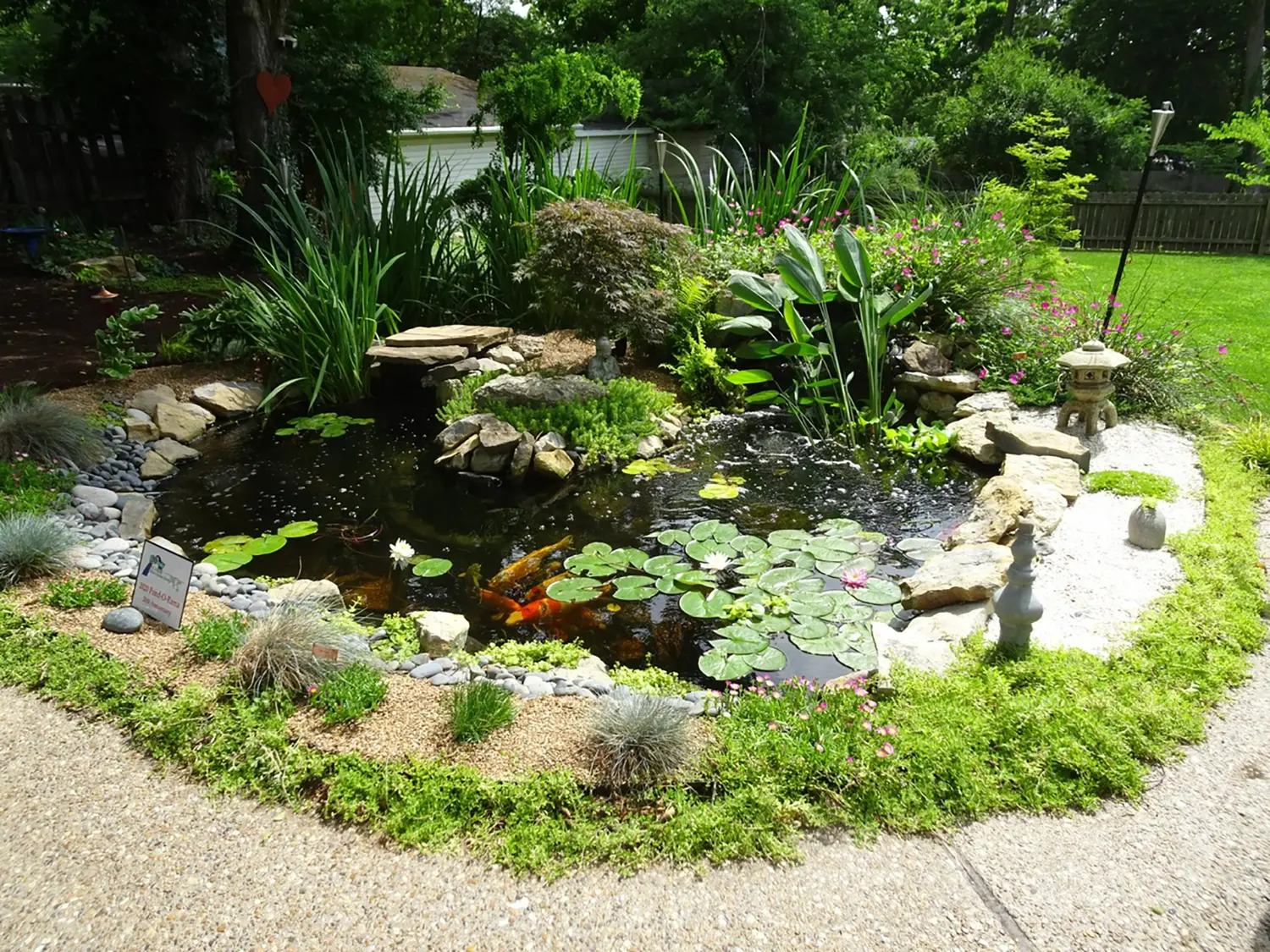
Homeowners who want a statement feature should consider a pond. These bodies of water can be spruced up with the addition of aquatic plants or fish, depending on homeowner preference.
Keep in mind, though, that maintenance of ponds can be hefty, especially when there’s aquatic life, such as lilies or koi fish. It’s also important to maintain water depth to keep it from freezing during the winter season and to protect it from neighborhood animals. Installing a screen or more helps shade it from falling debris and chemicals that could contaminate the water.