
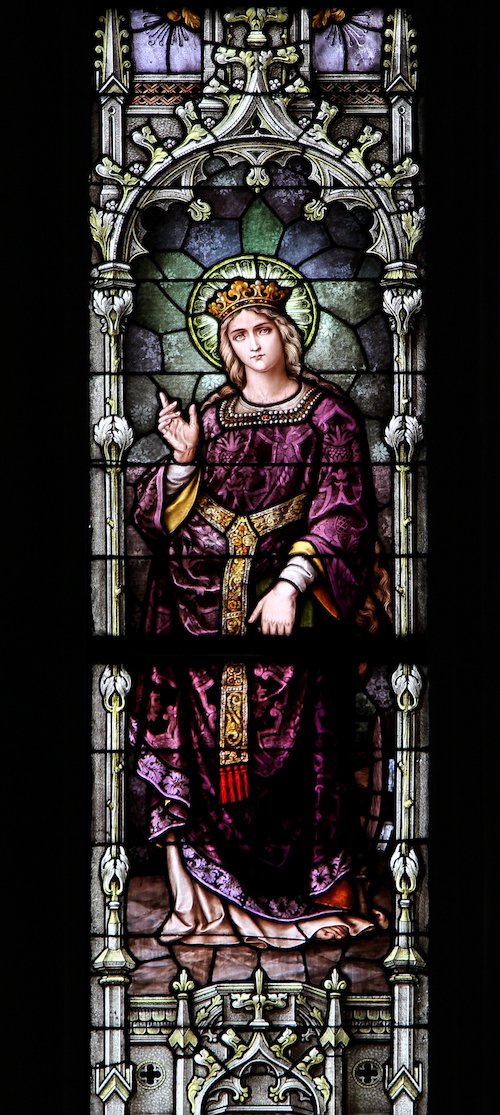

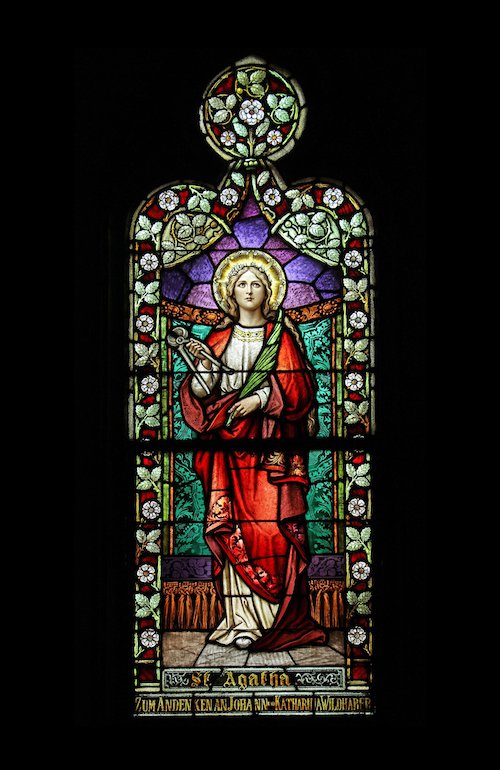
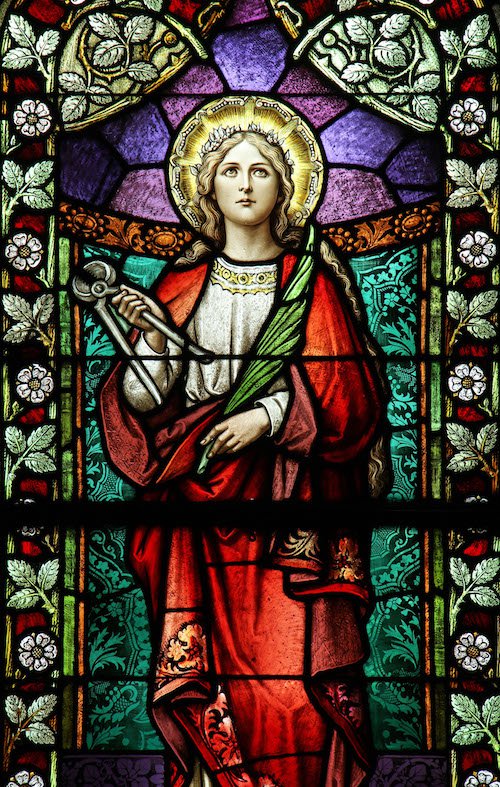
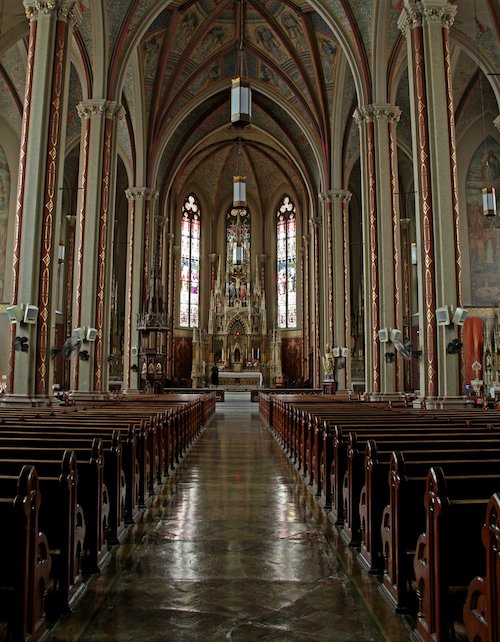
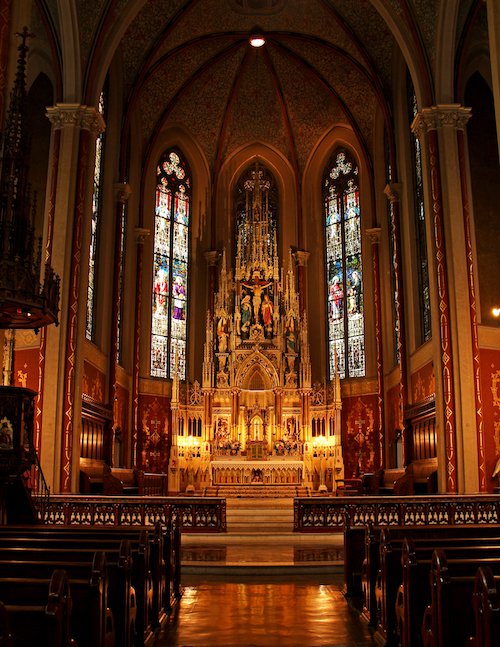




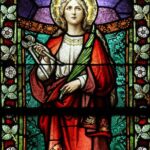
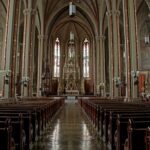
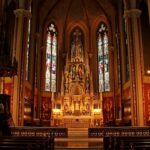
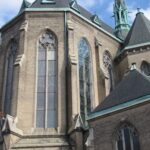
The work of caring for one of the largest—and most beautiful—churches in St. Louis is a task that is never complete. St. Francis de Sales Oratory, operated by the Institute of Christ the King Sovereign Priest, continues its steady rebirth in the heart of South City. The tower’s foundation problems, which I had written about in the past, have been resolved, so the Institute’s attention has now turned to conserving and repairing the terra cotta and stained-glass elements of the church. I recently met with Emil Frei and Associates’ Aaron Frei and John Wheadon at the church to learn about their continuing work repairing and cleaning the church’s dozens of stained glass compositions, as well as the terra cotta work framing the windows.
Also see: A Tour of St. Francis De Sales, South St. Louis’ most iconic cathedral
Get a weekly dose of home and style inspiration
Subscribe to the St. Louis Design+Home newsletter to explore the latest stories from the local interior design, fashion, and retail scene.
We will never send spam or annoying emails. Unsubscribe anytime.This site is protected by reCAPTCHA and the Google Privacy Policy and Terms of Service apply.
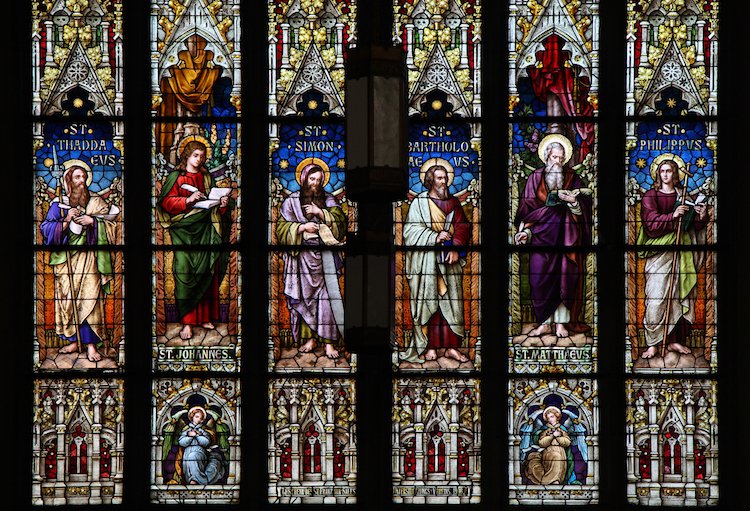
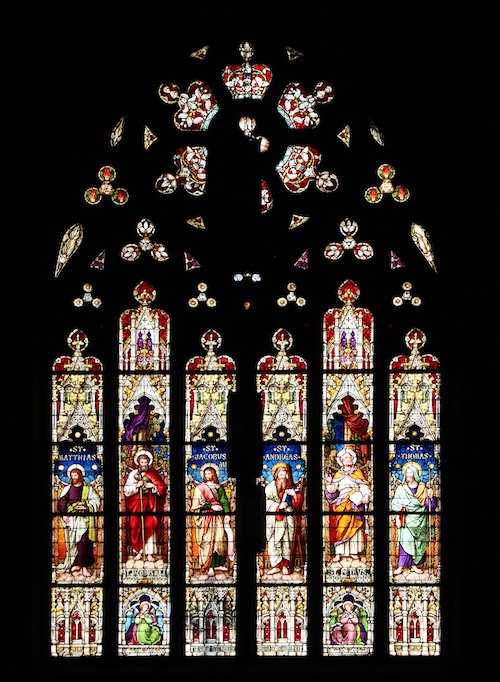
The church could not find a better group of people to restore their church; the ancestors of Aaron Frei were the original artisans who created the beautiful stained glass windows a century ago. Emil Frei had immigrated to San Francisco from Bavaria in 1895, but originally his wife was homesick in their new country. Passing through St. Louis, Frei worked on the windows of St. Francis Xavier Roman Catholic Church, and in the process, his wife found in the German American community of St. Louis a new home. Emil Frei worked in the Munich Pictorial Style of stained glass, and his compositions soon graced a large percentage of St. Louis churches of many denominations. Like other aspects of the Gothic Revival, Frei’s stained glass are not rote copies of Medieval stained glass; rather, they incorporate a more Raphael-like Italian Renaissance compositional mode, with carefully delineated and shaded figures. While Emil Frei and Associates still produce original compositions, much of the firm’s business today consists of restoring their ancestors’ works, just as what is being done at St. Francis de Sales.
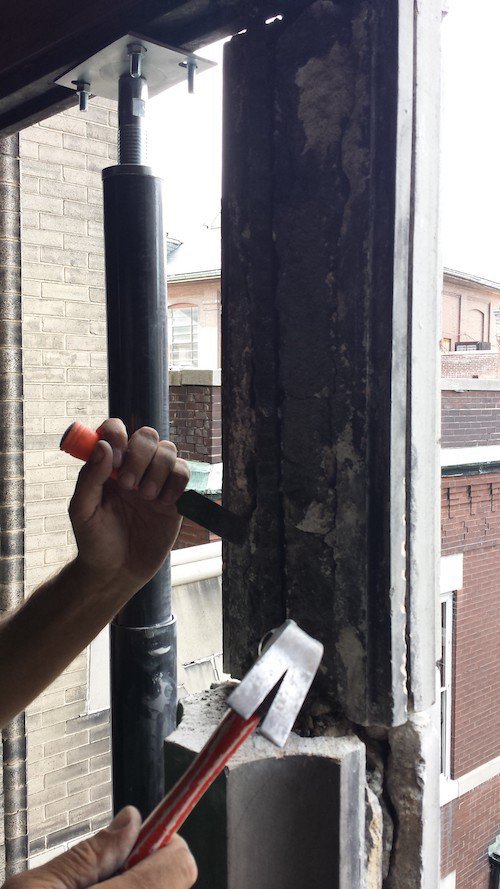
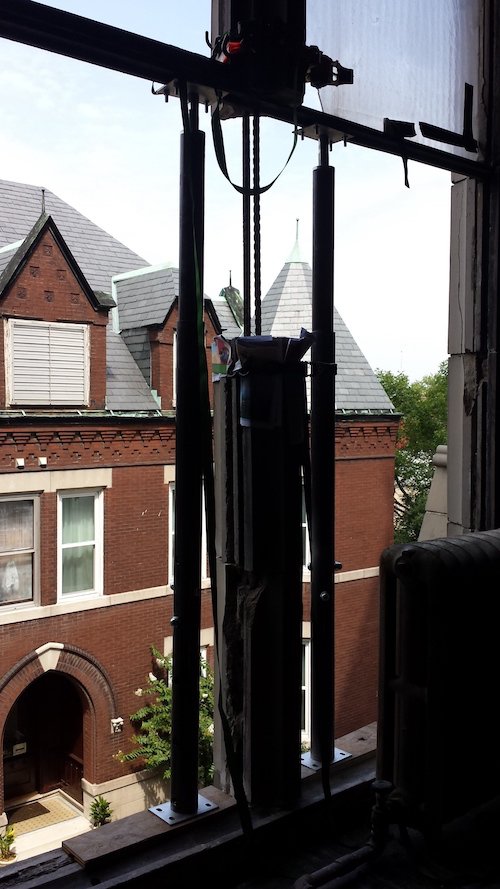
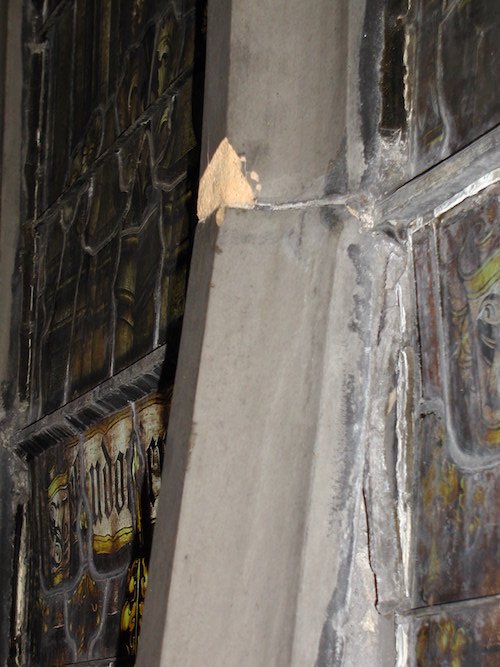
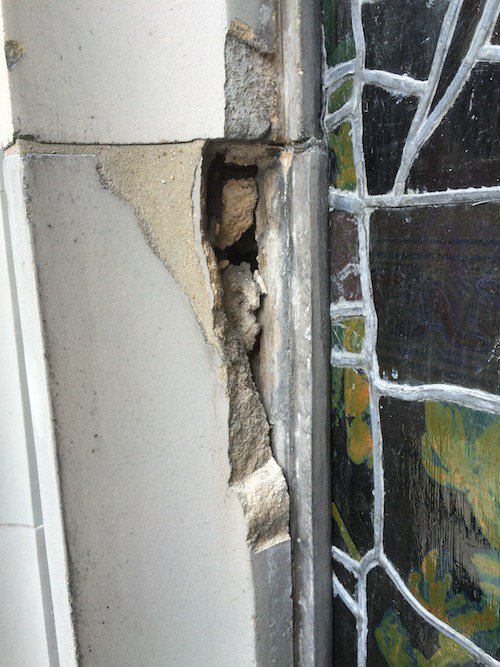
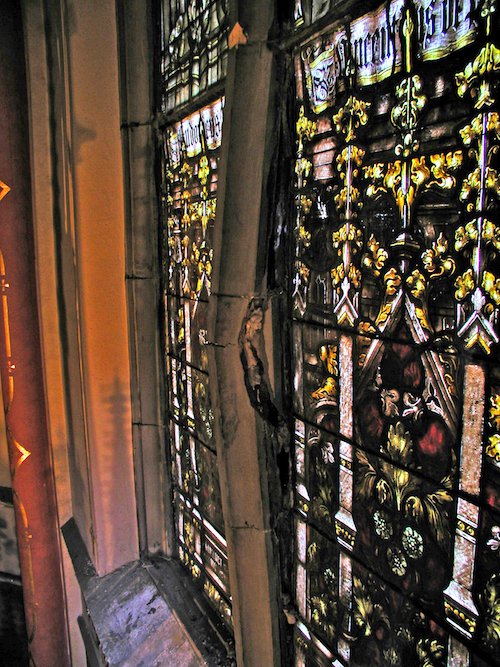
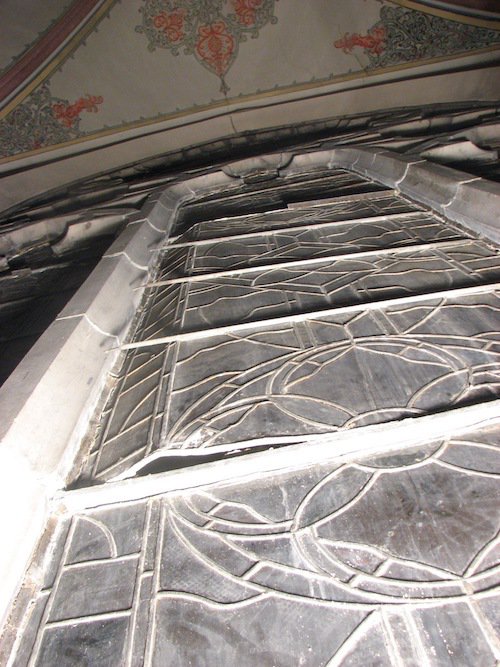
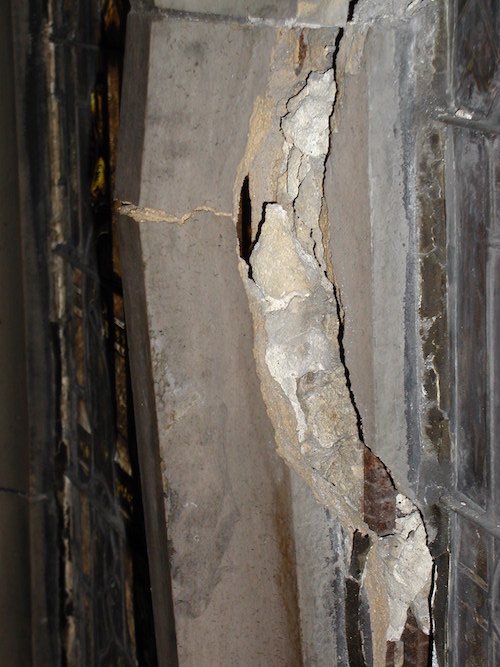
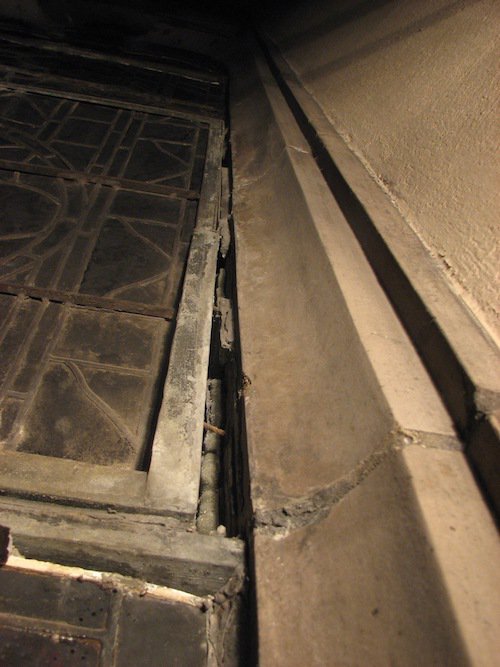
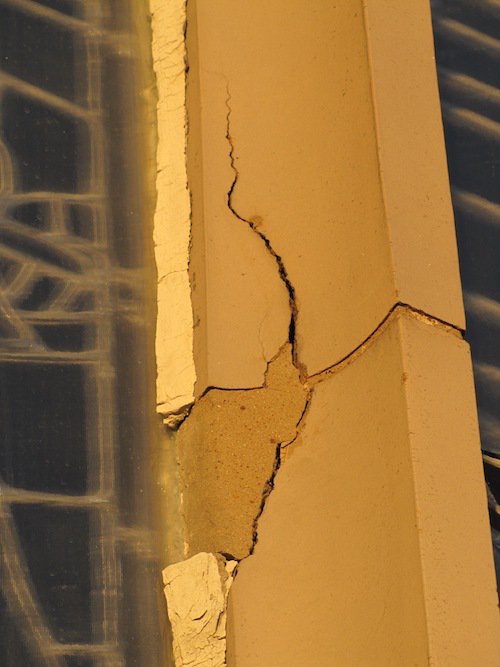
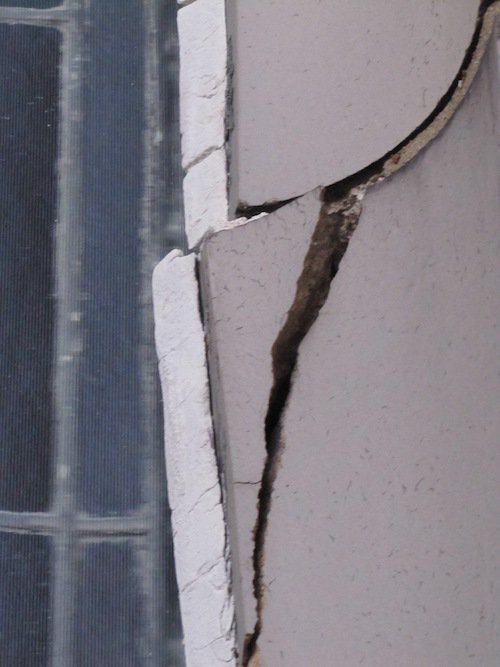
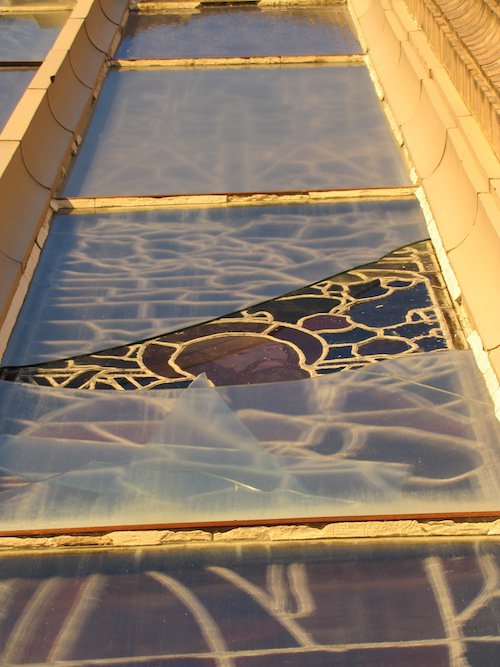
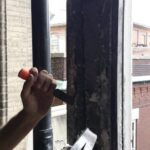
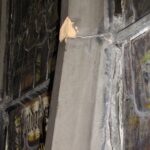
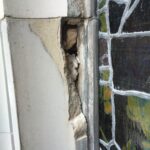
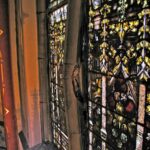
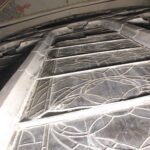
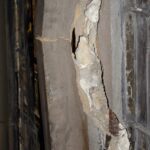
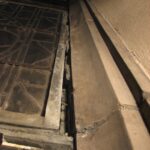
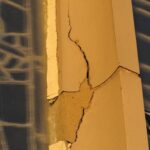
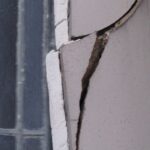
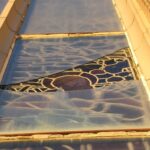
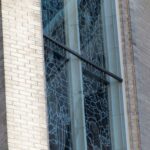
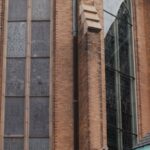
Most of the deterioration in the stained glass windows comes from movement of the building itself and the tracery, the terra cotta frame in which the windows sit, causing mortar loss that allows water infiltration. There is an inside, iron rod, and an outside piece of terra cotta for each piece of tracery. An L-shaped pin set into the mortar between the pieces of terra cotta holds the pieces to the iron rods. Water infiltration causes the expansion of the various parts of the window, creating spalling, the breaking off of pieces of the glazed front of the terra cotta. Besides spalling and rusting of the iron rods, the water itself expands and contracts enough to cause damage. The movement in the building creates stress fractures; the pressure causes continuous cracks in the mortar and brick. Different materials—glass, brick, iron, lead, and terra cotta—expand and contract at different rates due to temperatures changes, creating further deterioration.
It is not the intention of Frei and Wheadon to restore everything to its original look, as that would be impossible. For example, the Mississippi diffusion glass, used on many of the glass panes in the windows, is no longer produced, and is not easily replicated. Luckily, Munich Pictorial Style stained glass creates its own diffusion due its paint layer, making replacement of the diffusion glass unnecessary. Instead, they are installing an aluminum “slip pocket” frame that covers the stained glass and terra cotta at the same time, preventing water infiltration. Meanwhile, the spalling of terra cotta must be fixed, using an epoxy patch made for terra cotta to glue on chunks of separated pieces. The patching material must replicate the terra cotta’s original patina exactly. Unfortunately, some prior restoration by another company used cement harder than the original terra cotta, causing fractures as the two materials expanded and contracted at different rates.
Likewise, choosing the proper covering for the stained glass is fraught with challenges. Plexiglass will yellow after ten years due to exposure to UV radiation, and will turn completely opaque in thirty. Lexan glass, introduced in the 1970s, also yellows and clouds and becomes brittle. XL1 Lexan is a new and improved version that has a longer life, but it still eventually breaks down—like all plastics. Silica-based glass products are stronger, as it is a more inert material, with fluxes and metals added.
Also see: A pictorial tour of Frei Studio
Meanwhile, to clean the walls around the windows, care must be taken to protect the porous limestone. Power washing is too risky for stone, so cleaning must be done carefully. Emil Frei and Associates works with Starr Restoration, which recently cleaned the Apotheosis of St. Louis, in order to wash the stone clean from soot and pollution. It is remarkable how different the terra cotta looks before and after it has been cleaned.
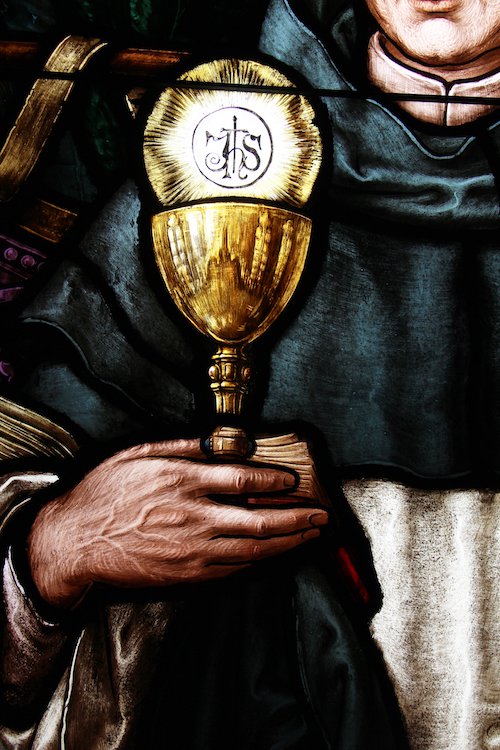
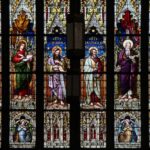
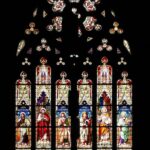
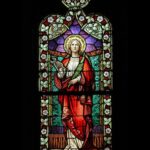
We then headed inside the church, and Frei and Wheadon explained how oil-based putty, originally used to affix stained glass windows, dries out, cracks and falls off churches of this era after a product life of forty years; consequently, they now use a more stable compound to seal their windows. St. Francis DeSales’s stained glass windows have popular saints of the time of its construction, such as St. Rose of Lima, St. John Nepomuk, St. Louis IX, as well as the Doctors of the Church. One of my favorite details revolves around the chalice of St. Thomas Aquinas, which has a reflection of the church in its golden, convex surface.
Also see: A look inside Mrs. Emil Frei’s kitchen
Frei and Wheadon then showed me some smaller windows, at floor level. One depicted Mary Magdalene, which received during its conservation a half-inch plate glass cover after they fixed the bulging glass. The window contained a steel casement vent that was rusting, and its moving parts exposed the glass to damage when closed incorrectly. Steel reinforcement bars are added in a such a way so as to blend in with the composition. The windows are laminated on the outside when there is a crack. Metal oxides and gun arabic, a paint stabilizer, are used to create the paint brushed on the glass.
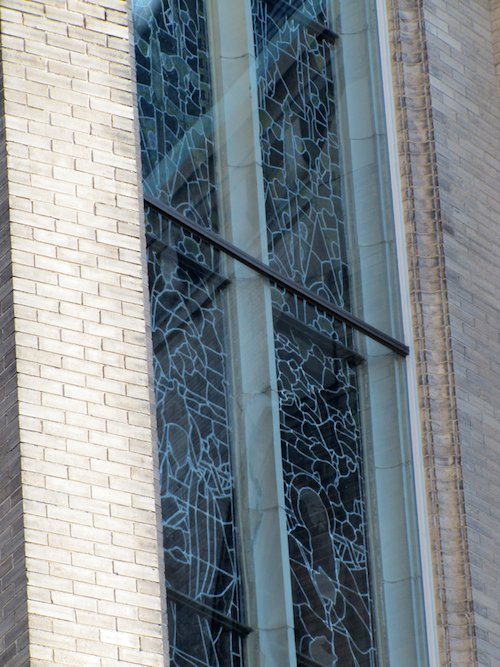
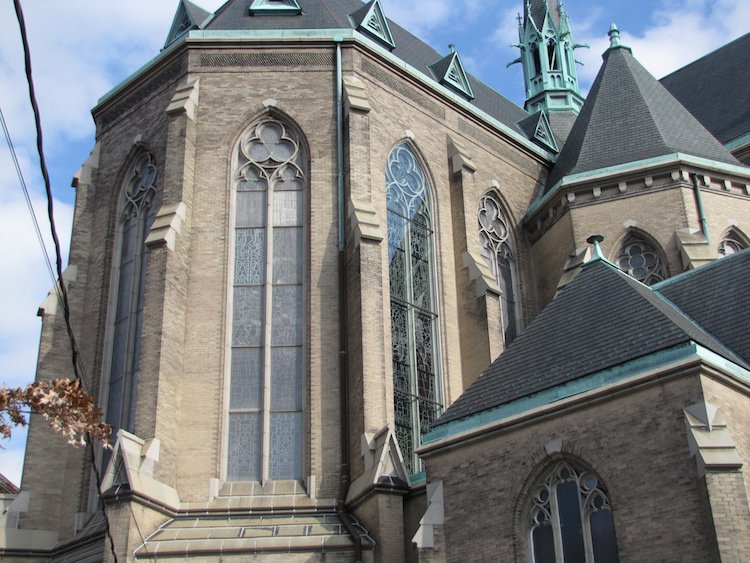
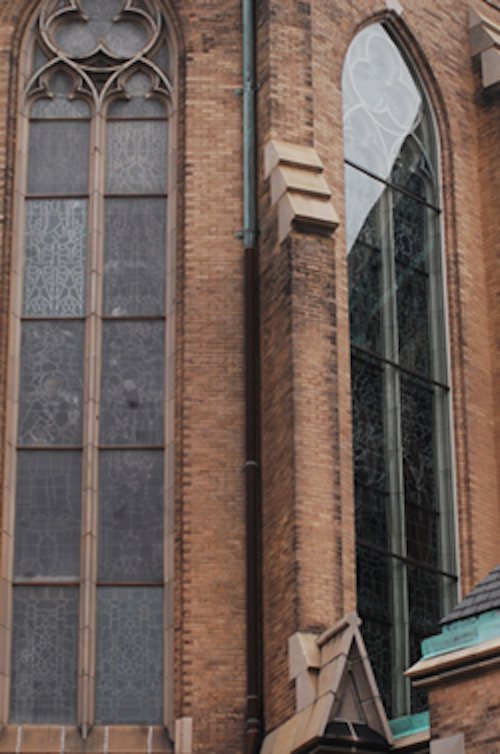
The work of Emil Frei and Associates at St. Francis DeSales is ongoing, and there are still plenty of windows and terra cotta to be repaired and conserved. Progress so far has been steady, but the church still largely relies on the generosity of donors to commission more work. The names of the original donors are preserved in the stained glass windows, and the list of names reads like a “Who’s Who” of influential businessmen and brewers, including the Griesediecks, and other important members of the South City German American community. In fact, there are probably thousands of St. Louisans around the region whose families once attended the church. In particular, the Good Shepard Window is one that the Institute would like to conserve next. What better way to connect with one’s ancestors than to donate towards the conservation of the windows of St. Francis de Sales?
The author wishes to thank Bob Shea for alerting him to the ongoing stained glass work at the church.
Chris Naffziger writes about architecture at St. Louis Patina. Contact him via email at [email protected].