




Alley, 3: a narrow street; especially: a thoroughfare through the middle of a block giving access to the rear of lots or buildings.—Merriam-Webster Dictionary
I’ve always been intrigued by alleys. They have such a bad reputation in America. When I traveled on a class trip to Venice, Italy back in high school, my teacher warned us to “not wander down any dark alleys,” though perhaps he was meaning that in more of a figurative than literal sense. After all, in Europe, alleys are nothing to be afraid of, and in the tight confines of old Medieval cities, it is perfectly normal to have small, pedestrian-oriented streets. Germany even differentiates between Straβe and Gaβe, street and alleyway, but there is no negative connotation to Gaβe.
Get a weekly dose of home and style inspiration
Subscribe to the St. Louis Design+Home newsletter to explore the latest stories from the local interior design, fashion, and retail scene.
Perhaps the negative connotation of alleys in America arose due to the rectilinear street grids in cities such as St. Louis. Unlike an older Medieval city in Europe (or many parts of the world), American cities had proper streets carefully placed to every plat of land. There was no need to find oneself walking down a narrow little street to get somewhere important. Alleys were relegated to the back, the “service” side of houses. In fact, in many American cities today, it’s actually illegal to build a house along an alley—I’ll never forget when a developer of luxury alley houses had to prove that poor people were not going to live in the homes he was renovating in Washington, DC to get a building permit.
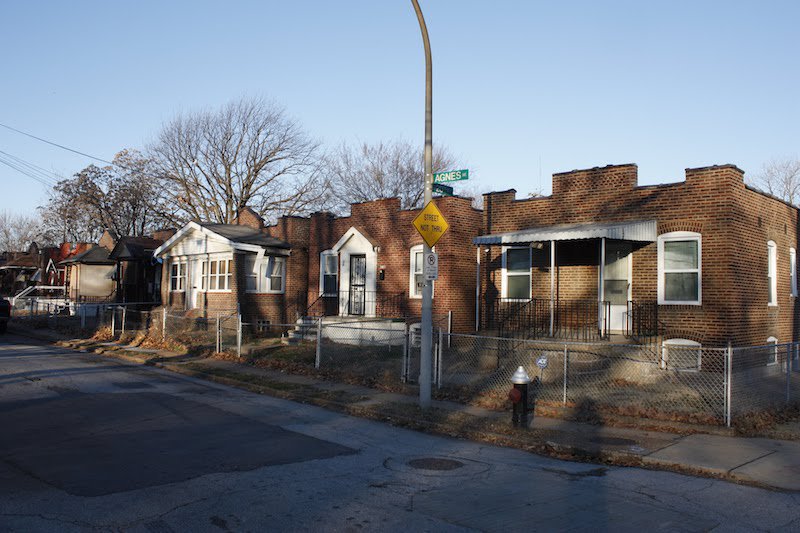
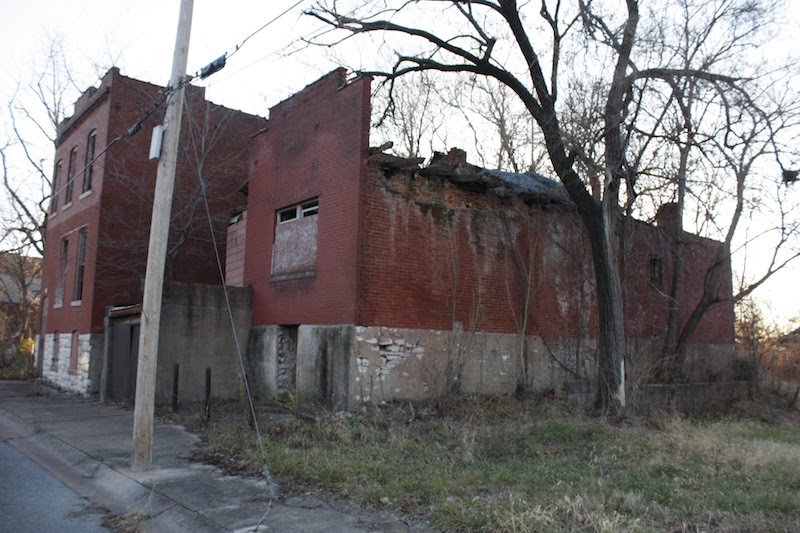
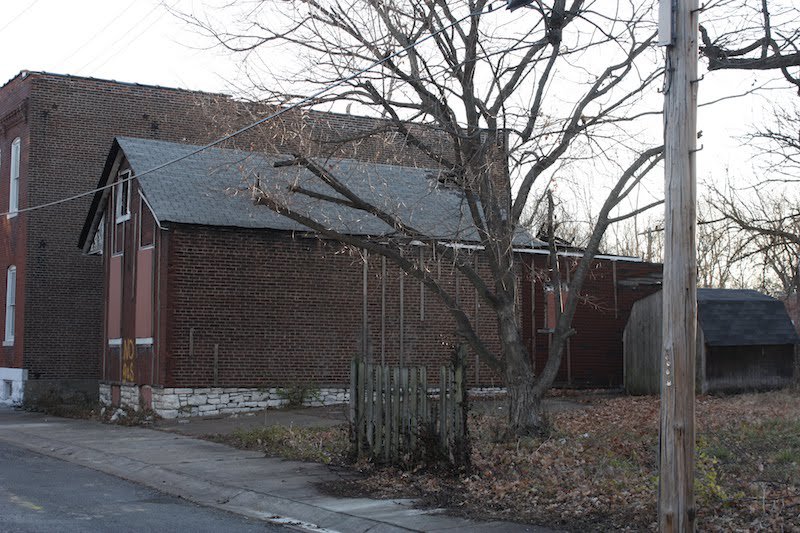
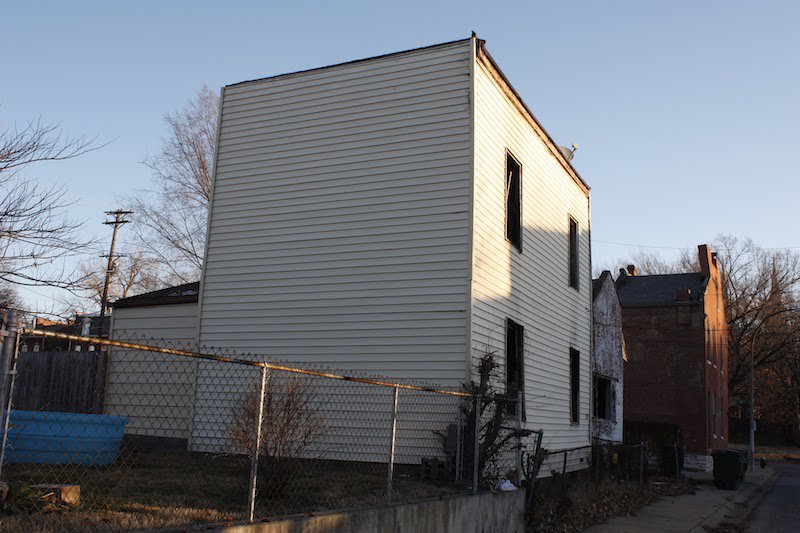
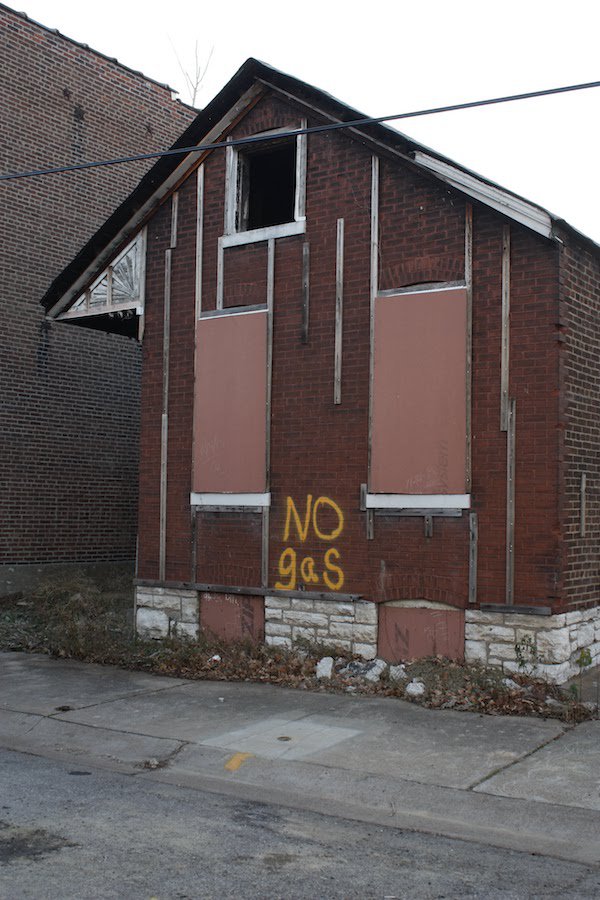
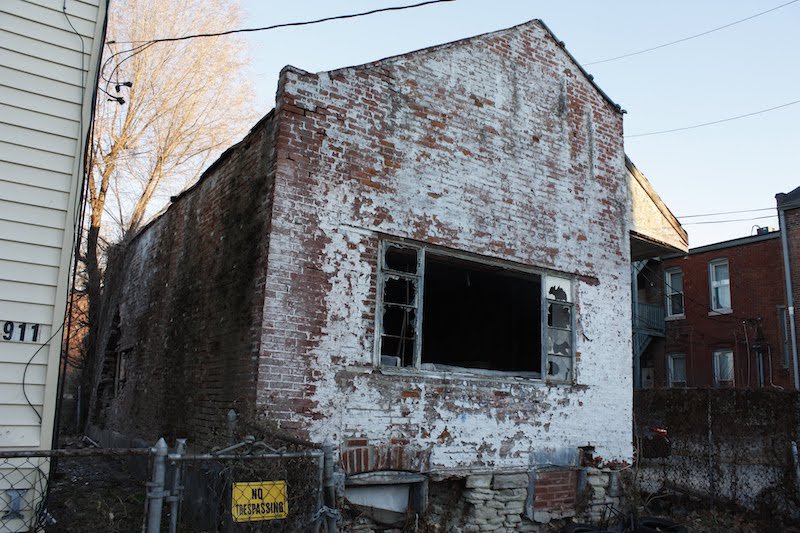
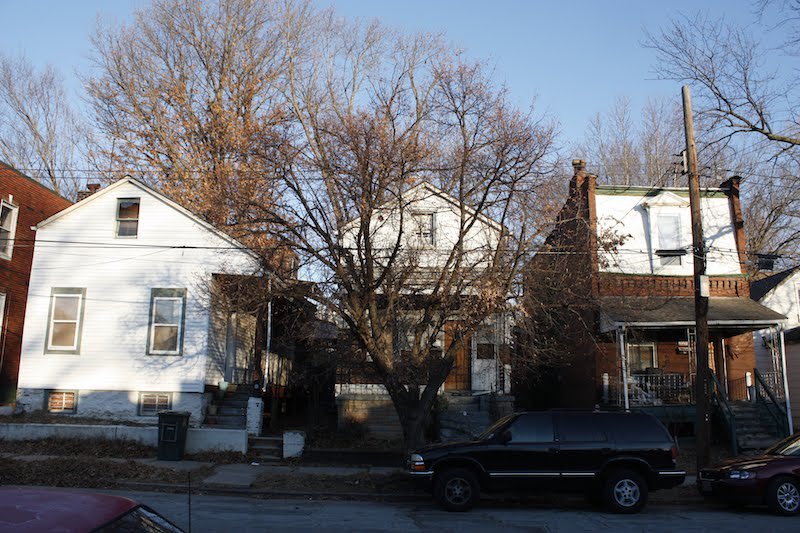
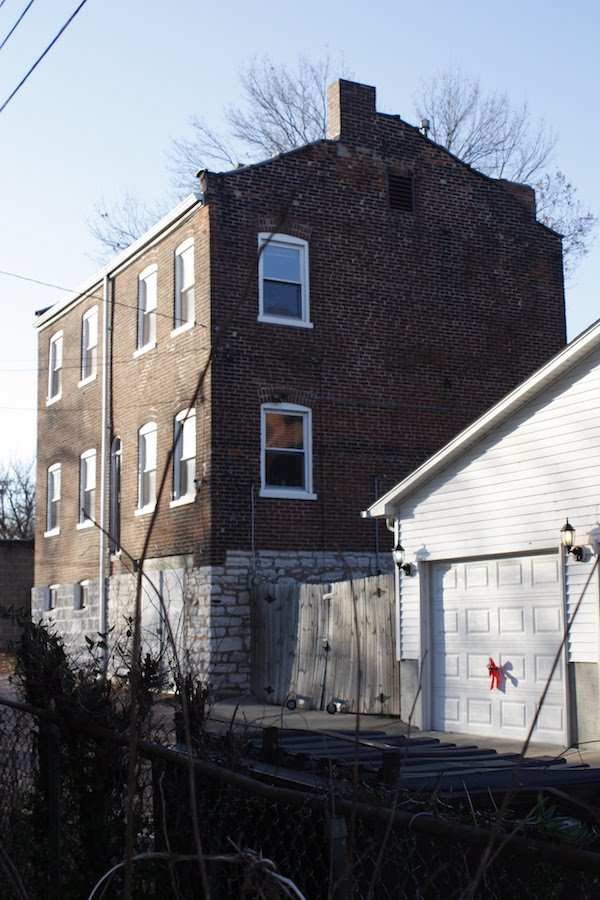
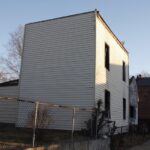
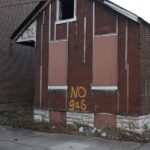
And that last detail, that poor people wouldn’t live there, centers around America’s distrust of alley houses: this was where the indigent lived in crowded, dilapidated rental properties, while the “reputable” property owner lived in the “front house,” as I call them, along the named street. But for tens of thousands of people, this was the way they lived in neighborhoods such as Soulard, Benton Park, Old North, St. Louis Place or Hyde Park. Arriving from cramped conditions in Europe, they probably felt at home in those narrow, cozy lanes where there was little traffic. While Soulard has embraced its back houses, increasingly, our alley houses are gone. But in Hyde Park, in particular, many of them survive, forgotten by most people.
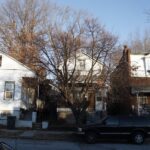
Last Saturday morning, as I was walking around Hyde Park, easily one of the most fascinating places in the City, I realized that early St. Louis neighborhoods had two faces, the front and back. There is a whole other neighborhood hiding down alleys in Hyde Park, and a whole other street life. In fact, it seems that some alleys actually saw themselves “promoted” to named streets. There’s little Benjamin Street, just off of North Florissant, behind the former Bethlehem Lutheran. There’s Garden Street just south of Salisbury, and finally, there’s Klein, which appropriately means “little” in German.
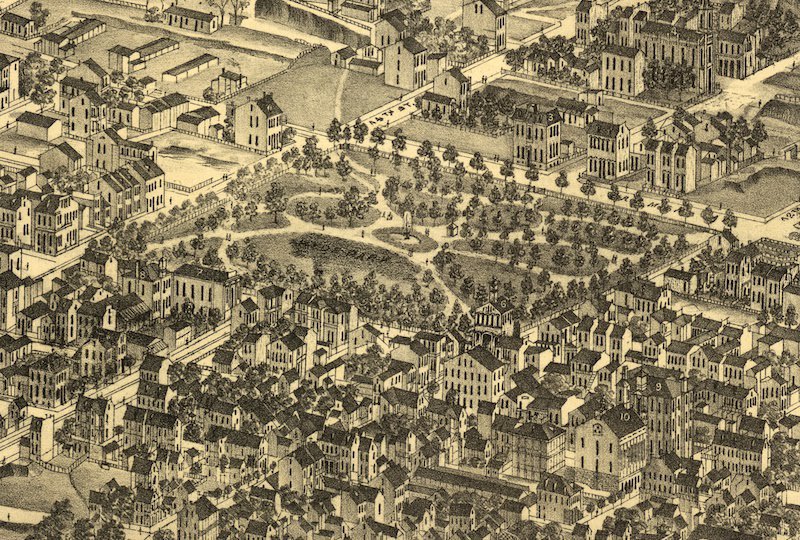
Looking at the 1875 Compton and Dry View of St. Louis, in particular the plate that covers most of Hyde Park, one quickly realizes that even back then, the neighborhood was a dense mixture of different housing styles, with buildings lining streets and alleys in almost equal numbers. I wonder what it was like to live in such close quarters; I suspect that with modern electronic amplifiers, allowing people to be more obnoxious and intrusive than at any time in the history of human civilization, that such living would not be possible.
What is also fascinating about those small streets and alleys are the ages of many of the houses that still stand. Many are built of wood, meaning they were constructed before annexation by the City of St. Louis. Just as the Three Little Pigs learned, even the most well-built wood frame house is never stronger than a brick masonry house. But nonetheless, wood frame alley houses still survive, clinging on even though many are abandoned. Indeed, on one street, a row of simple wood frame buildings is still well-maintained and occupied, while their brick neighborhoods ironically are abandoned. It goes to show the importance of dedication to one’s home. Also, it’s important to realize that our modern concept of a front and back yard has meant different things in different eras; many of the earliest houses in the city were built on the alley, allowing for a huge, uninterrupted front yard for vegetable gardens and away from the noise of wagons and carriages. Today, it is a battle between being too close to the noise of the street or the noise of the alley when garbage trucks make their rounds.
The Landmarks of Hyde Park: Preserving History and a Sense of Place
The value of these houses today is manifold. They show us that higher density buildings can work, even if auxiliary buildings do not function as independent homes. These alley houses can function as artist studios, extended-family member housing, or other small home offices. Community leaders often talk about “eyes on the street,” but eyes on the alley are also of value, especially considering that many are lined with blank garage doors. Houses placed on the alley line also provide the opportunity for a large, unobstructed garden, as mentioned above, but still desirable to many gardeners. As St. Louis becomes less and less dense, and as tax rolls get smaller and smaller, Hyde Park shows us a better way.
In other news, in case readers are interested in my opinion on the demolition of the Isaac-Taylor designed warehouse on Broadway (owned by St. Louis Community College), for a new glass and steel apartment tower, it seems more logical to me for the developers to cut off a chunk of the Stadium East Garage instead and renovate the remaining parking structure to make it more visually appealing, while providing spots for tenants’ automobiles. It still mystifies me that any structurally sound building is ever torn down in this city while there are so many vacant or poorly utilized lots and aesthetically unimportant buildings sitting dormant and underperforming economically. And just wait for the tax abatement that will keep the STLCC property-turned luxury apartment building off the tax rolls for another 20 years.
Chris Naffziger writes about architecture at St. Louis Patina. Contact him via e-mail at [email protected].