Nothing freshens up a space like a few houseplants, yet the idea of caring for another living thing—even a plant—can be intimidating. Jessica Douglass, owner of Flowers & Weeds (3201 Cherokee), and Suzanna Creighton, greenhouse associate, say it’s important to set yourself up for success by first assessing your space: What direction do your windows face? How much light is in the room? How much attention are you realistically able to give to a new plant?
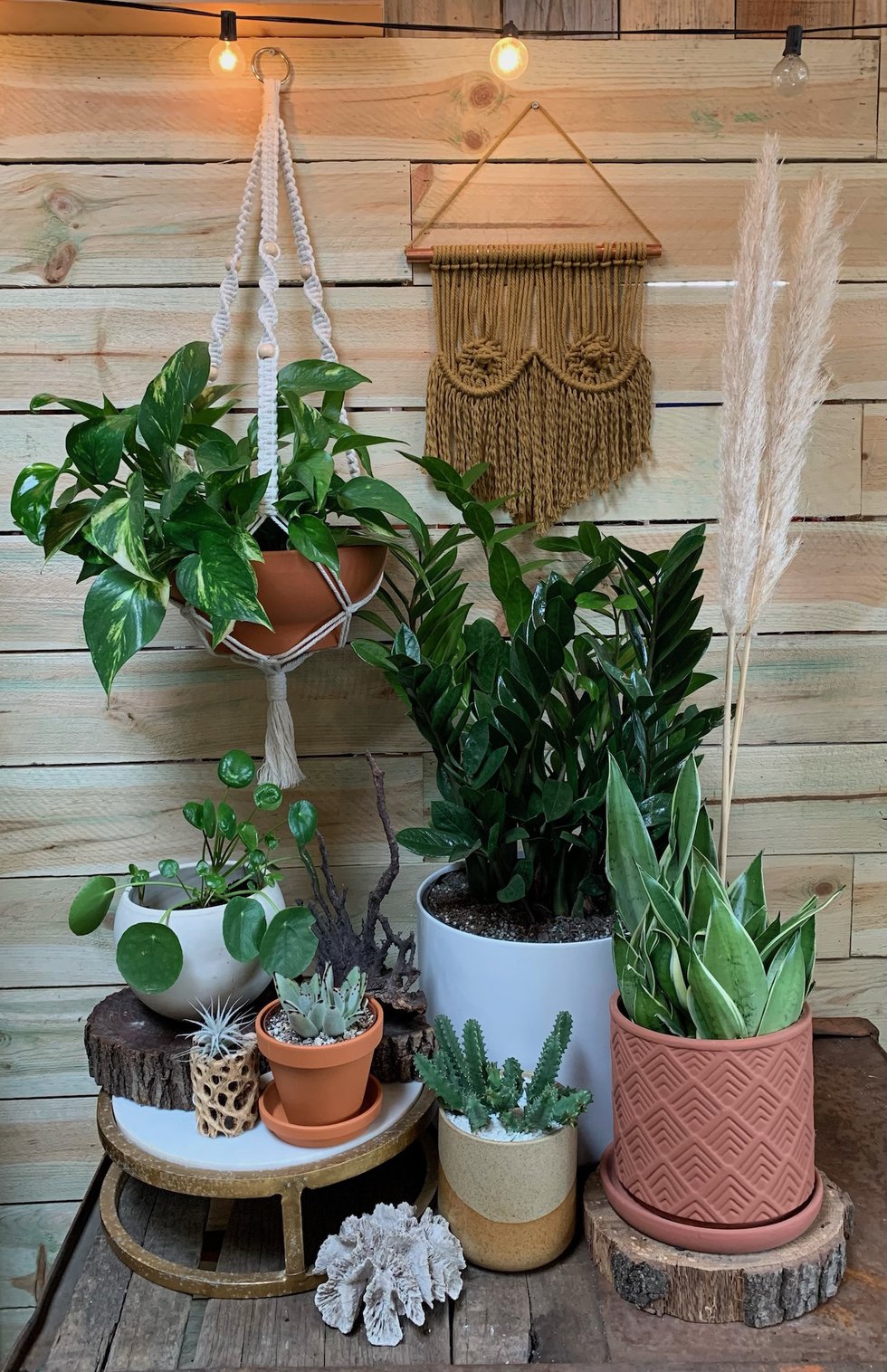
Then, head to your local garden shop and pick out a plant, like any one of the following easy-to-care-for suggestions from Douglass and Creighton. Keep in mind that plants like to go together, says Douglass. “Try creating a little vignette by adding a brass object or a candle,” she says. “Or create a collection that’s interesting to the eye, with a vertical snake plant, along with something more bushy like a spider plant, and then having something that trails down like a Hoya.”
Get a weekly dose of home and style inspiration
Subscribe to the St. Louis Design+Home newsletter to explore the latest stories from the local interior design, fashion, and retail scene.
Snake plant
There’s a reason people choose a snake plant when looking for a “set it and forget it” houseplant. “They can tolerate pretty much any conditions, including low light,” Creighton says, noting that they also don’t need much water. Snake plants tend to be slow growers, which means that they don’t often need to be repotted, but some of the larger varieties can grow several feet tall.
Spider plant
Another classic houseplant is the spider plant, which likes indirect light and moist soil (without being overwatered). These bushy plants can be displayed in a hanging pot or look good grouped together with several other plants of different sizes and shapes.
ZZ plant
Zamioculcas zamiifolia, or ZZ plants for short, are sometimes mistaken for artificial plants due to their shiny leaves and incredibly low water and light requirements. These plants do well in a home or office since they tolerate fluorescent light. The ZZ plant’s biggest drawback is that it can be toxic, so display with caution around children and pets.
Euphorbia trigona
For a south-facing window or a spot that gets a lot of light, Douglass suggests the Euphorbia trigona (also known as the African Milk Tree). This succulent has an interesting shape and a cactus-like appearance. Under the right conditions, it can grow quickly and will need to be repotted periodically.
Hoya
One of Creighton’s favorite houseplants is the Hoya, or wax plant, because of its waxy leaves and “plastic-looking flowers.” These tropical plants are easy to care for, although it’s important to choose the right location for a Hoya because they need more light than some of the other plants on this list. For best results, consider setting a Hoya in a south-facing window.
Aspidistra
The Aspidistra, or cast iron plant, is a versatile plant that can thrive in many areas of the home due to its low light requirements. Although easy to care for, the Aspidistra, like any wide-leafed plant, will need to be dusted occasionally. “They will accumulate dust, and it covers up the top of the leaf so it can’t photosynthesize as well,” Creighton says.
Pothos
The Pothos is the most versatile plant on this list in terms of how it can be styled in a room. Not only are Pothos low maintenance due to their water and light requirements, but “they’re great hanging plants because they vine or trail. You can lead them up your wall, which is a cool way to design with them,” says Douglass, who has one growing around the window frame in her own home. “Start with longer ones, or let it grow long, and then drape it around nails or plastic hooks on the wall.”
Get more advice on houseplants from local experts on the House of Lou podcast: