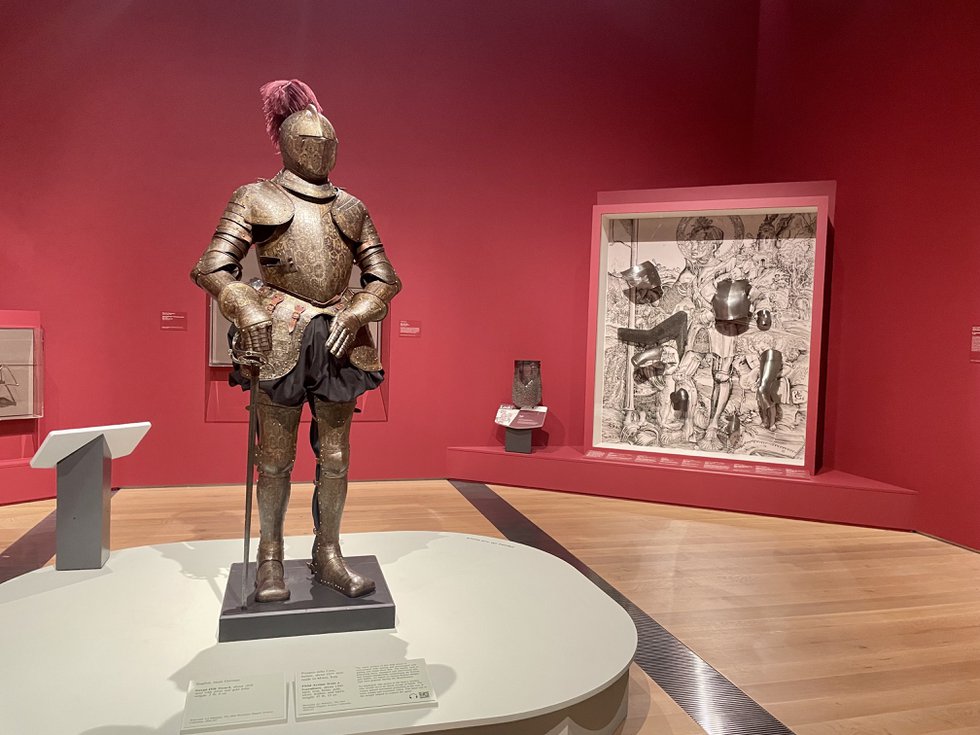
Signs and a teaser case of artifacts lead the way through the Saint Louis Art Museum toward Age of Armor: Treasures from the Higgins Armory Collection at the Worcester Art Museum, like breadcrumbs guiding visitors toward Gallery 212, a new home for some of the museum’s ticketed exhibitions.
There, tucked into a series of galleries between the museum’s European and Contemporary collections, is what Barbara B. Taylor Director of SLAM Min Jung Kim is calling a “once-in-a-generation opportunity for visitors.”
Stay up-to-date with the local arts scene
Subscribe to the weekly St. Louis Arts+Culture newsletter to discover must-attend art exhibits, performances, festivals, and more.
Age of Armor, on view February 18–May 14, highlights the history and development of armor, all the way from a Greek helmet to Stormtrooper armor featured in Star Wars: The Last Jedi. However, the central focus is on Renaissance European armor and the full suits evoked by the phrase “a knight in shining armor.”
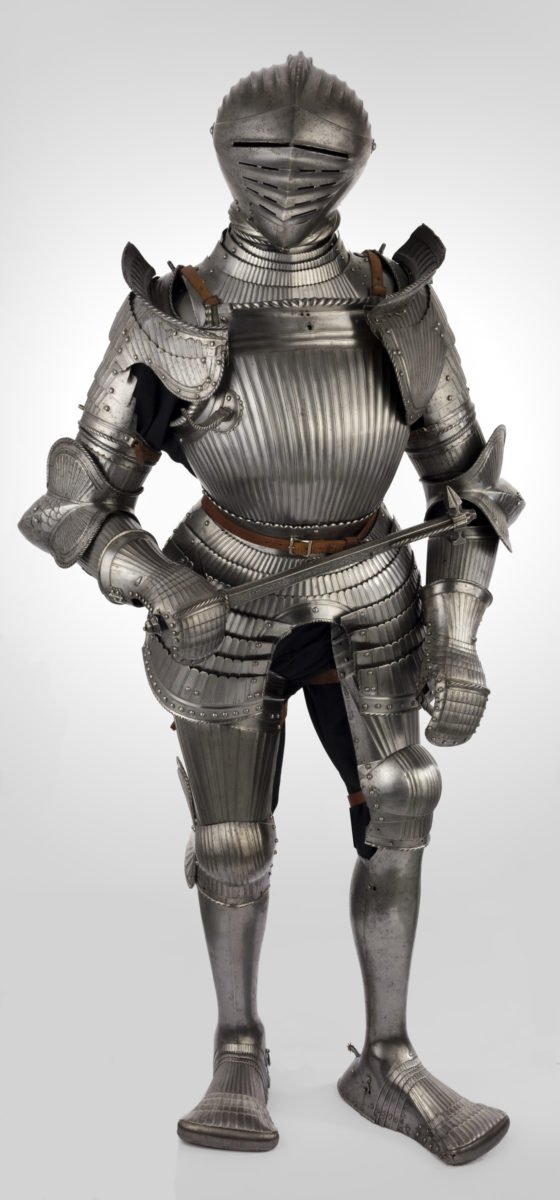
The collection of objects is on loan from the Worcester Art Museum, which houses the second-largest collection of arms and armor in the country (behind The Metropolitan Museum of Art). Much of the collection was originally acquired by Massachusetts industrialist John Woodman Higgins, owner of the Worcester Pressed Steel Company.
“It’s just a great collection, and it’s shown here as a survey of how plate armor developed in Europe,” says David Conradsen, SLAM’s Grace L. Brumbaugh and Richard E. Brumbaugh Curator of Decorative Arts and Design. “Armor was used for thousands of years, all around the globe. But the idea of the fully-encompassing suit of plate armor is unique to Europe and from a relatively short period of time, about the mid-1300s to the mid-1600s.”
Divided into six sections—“The Rise of Plate Armor,” “Armor as Fashion,” “Uses of Armor,” “Decorating Armor,” “A Changing Battlefield,” and “Armor in the Modern Age”—Age of Armor features several full suits, each representing intricate craftsmanship, as well as developments in the history of arms and armor. Their stories are supplemented by weapons, objects, and depictions of armor from the museum’s own collection, such as rarely seen Flemish tapestries and works by celebrated German painter and printmaker Albrecht Dürer.
Highlights include an intricately etched suit of field armor created by Pompeo della Cesa, which dominates the exhibition’s first gallery, and examples of tournament arms and armor, including a lancer on horseback. Spread throughout the galleries are interactive elements that help to dispel misconceptions about complications of wearing armor. Visitors can touch chainmail, peek through the eye slits of a knight’s visor, and slip their hands into gauntlets to test their flexibility.
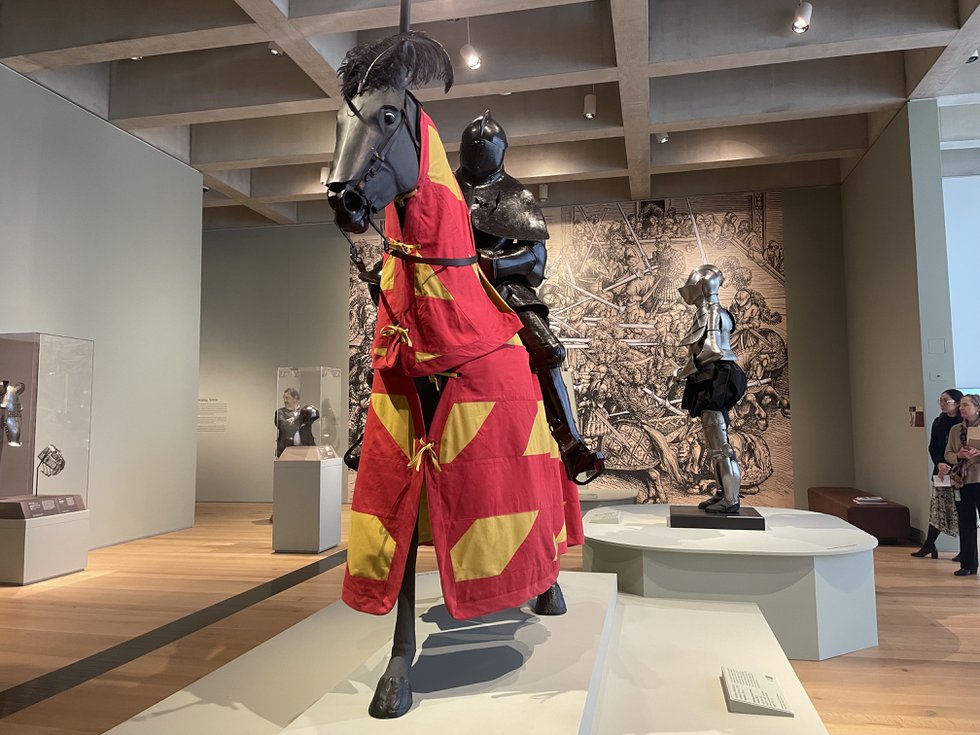
The final gallery, a surprising twist capping off the history lesson, includes examples of armor from beyond Europe and two Hollywood examples—the Stormtrooper suit and a suit worn by Chadwick Boseman in Marvel’s Black Panther—as well as current body armor used by the U.S. military.
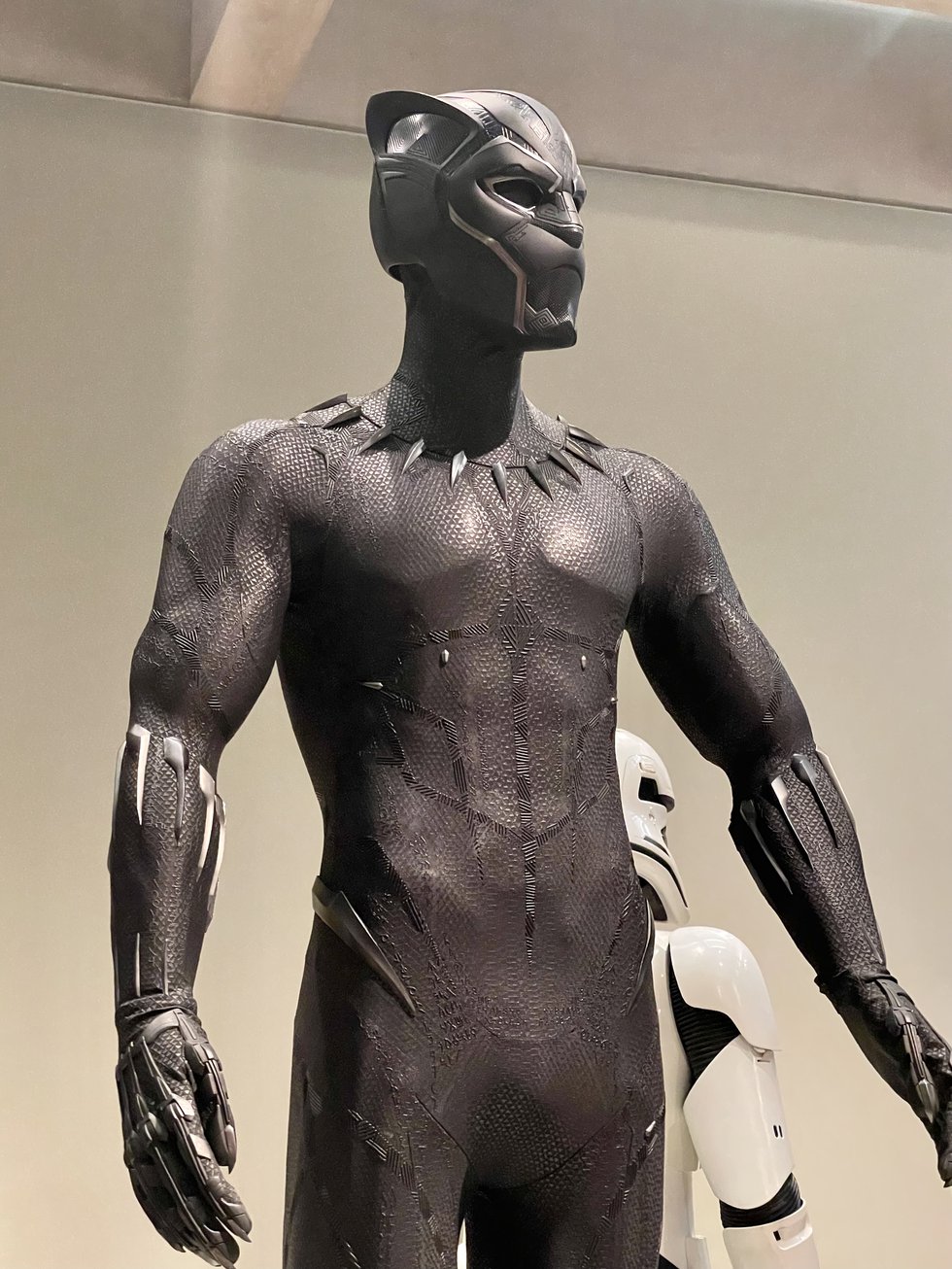
“With this part of the gallery we really wanted to demonstrate armor’s commonalities across time,” says Katherine Feldkamp, research assistant for decorative arts and design. “Armor is defensive, but it can also be very decorative, and really demonstrate and tell a story about the wearer.”
The exhibition kicks off Friday, February 17, with a public preview from 4–8 p.m. Free tickets to Age of Armor are available during the opening, and the evening will feature live music and cocktails. A series of accompanying free and ticketed events are scheduled throughout the exhibition’s run, including family craft and learning experiences, the latest iteration of SLAM Underground, and an April film series. For a full schedule and more details, visit slam.org.