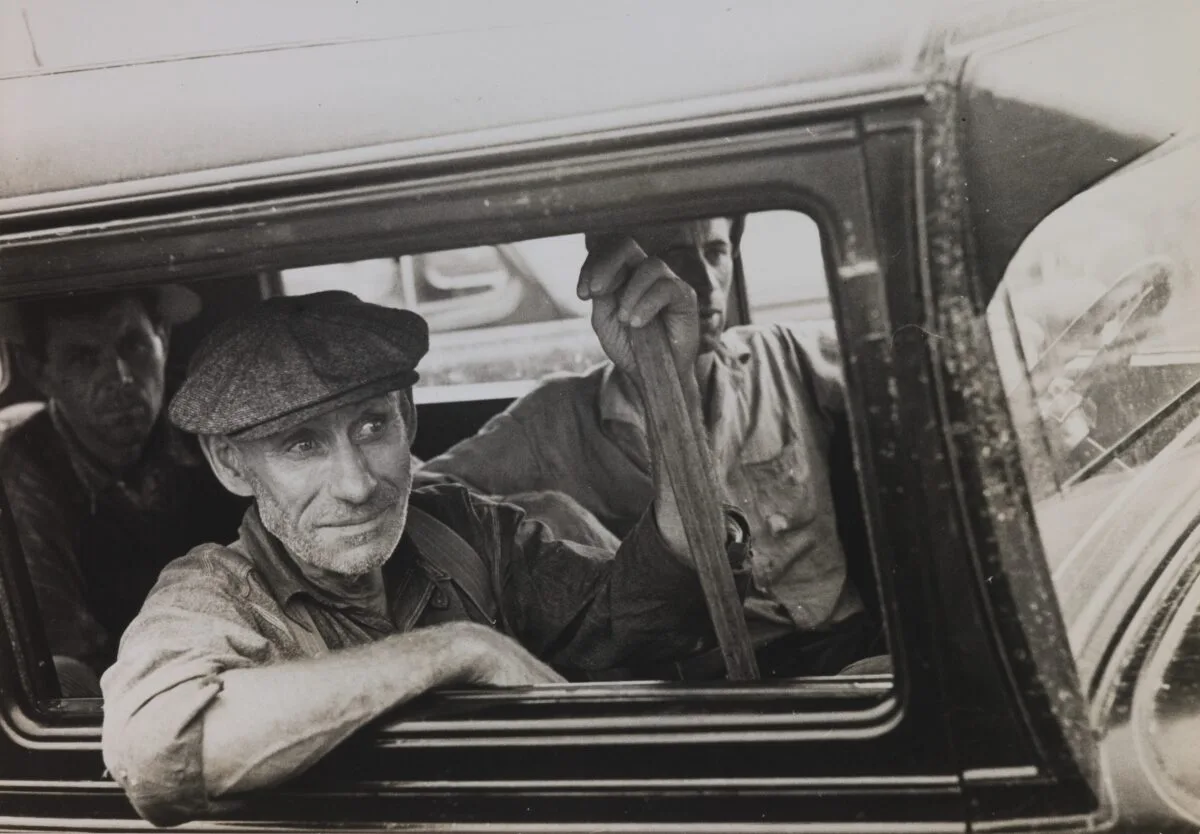
Summer is approaching, which, for many of us, means piling into the car and heading out on the highway. Road trips are as American as baseball and Route 66. They represent not only fun and self-discovery, but family and nostalgia. The Saint Louis Art Museum pays homage to that great tradition in its new exhibit, In Search of America: Photography and the Road Trip, which runs May 2 through October 19.
The display coincides with Roaring: Art, Fashion, and the Automobile in France, 1918-1939, which comprises art, fashion, films, furniture, and vintage cars that illuminate how the automobile impacted pre-World War II France. In Search of America further explores the car theme. The nearly 100 photographs are separated into two galleries, one organized chronologically—dating back to the early 20th century—and the other dedicated to the work of Emil Otto Hoppe.
Stay up-to-date with the local arts scene
Subscribe to the weekly St. Louis Arts+Culture newsletter to discover must-attend art exhibits, performances, festivals, and more.
“It’s exciting to see how far back road trip photography goes,” says exhibition curator Eric Lutz. “We think of it as a more recent phenomenon, but it’s been around for 120 years now. A lot of museum shows on road trip photography are usually from the 1950s, ‘60s, ‘70s. So it’s fun to balance it out with this important work, right when the highway system was starting to be developed and people could access all areas of the country through automobiles that they really couldn’t before.”
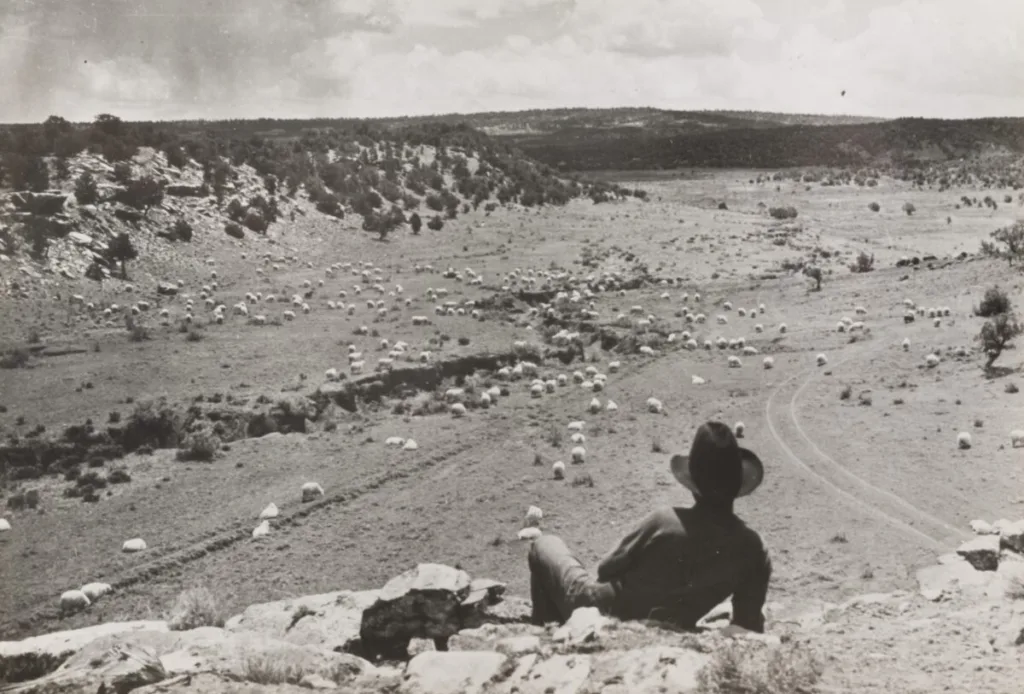
Born in Germany, Hoppe traveled across the country in 1926, photographing the deserts, mountains, mesas, and pueblos of the American Southwest and other areas. His findings were published in his photography book, Romantic America.
“It was the first kind of transcontinental photo survey and attempt to synthesize what America is,” says Lutz. “He was based in London. He had an outsider perspective. He had a slightly critical eye on America, comparing the myths about it that he saw in silent motion pictures or read in books with the reality he found. He was really interested both in the southwest and its landscape that was very unique to America. But he was also intrigued by indigenous cultures and communities. He found a way to photograph these communities that was respectful, taking a little bit of a distance and not trying to ask people to dress up or present an idealized version of what he thought Americans would look like.”
Swiss photographer Robert Frank is another foreign-born artist featured in the collection. His image of an old Chevrolet with a bumper sticker that reads, “Christ Died for Our Sins,” was printed in his 1958 photography book, The Americans, which featured a foreword written by Jack Kerouac.
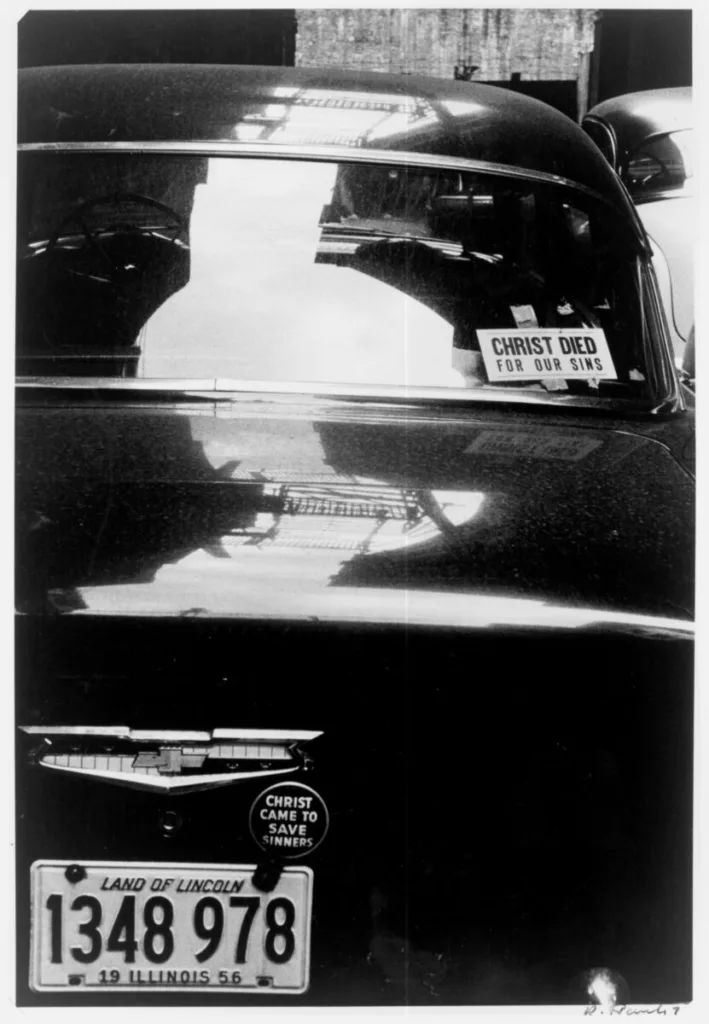
“The conflation of auto culture and religious expression was something that really stuck out,” says Lutz. “A lot of his photography was about our obsession with automobiles and the conflation with our own identities.”
Esther Bubley, who photographed for Vogue, Life, Ladies’ Home Journal, Pepsi-Cola, and PanAm, was commissioned by the U.S. Office of War Information and Standard Oil Company in 1943 and 1947 to document riders, drivers, porters, and mechanics at Greyhound bus stations in various cities.
“It was important to both include her as an early, pioneering female photojournalist, but also show a road trip can be in the bus or motorcycle,” says Lutz. “It doesn’t have to just be an automobile.”
In addition to Edward Weston, Walker Evans, Dorothea Lange, and Lee Friedlander, the exhibit also highlights contemporary artists, namely Catherine Opie and Kelli Connell. For her mid-’90s series, Domestic, Opie embarked on a 9,000-mile trek in an RV to capture lesbian couples and their families. Similarly, Connell photographed her partner, Betsy, in parts of California and the West Coast, inspired by Weston and his 1937 travels with his wife, Charis Wilson.
“As the photographs get closer to the present, we get a different perspective on the country, unlike certainly earlier in the 20th century, which tends to be more male and white,” says Lutz. “It’s nice to branch out more.”
Lutz will take part in exhibit-related lectures, while other museum events include tours, art activities, live concerts, and screenings of such films as Easy Rider, Little Miss Sunshine, and Duel.
“The title, In Search of America, leaves the show open-ended,” says Lutz. “It’s this idea that everybody that goes out on a trip is gonna see something different. Photographers are always trying to encapsulate some particular American quality, but it’s impossible to do with such a diverse country, geographically and culturally. But people keep trying, and it’s an interesting challenge. It’s important to think about the idea of being separated from your daily life, separated from urban environments, and give yourself the space to think about life in a different way when you’re off the grid.”