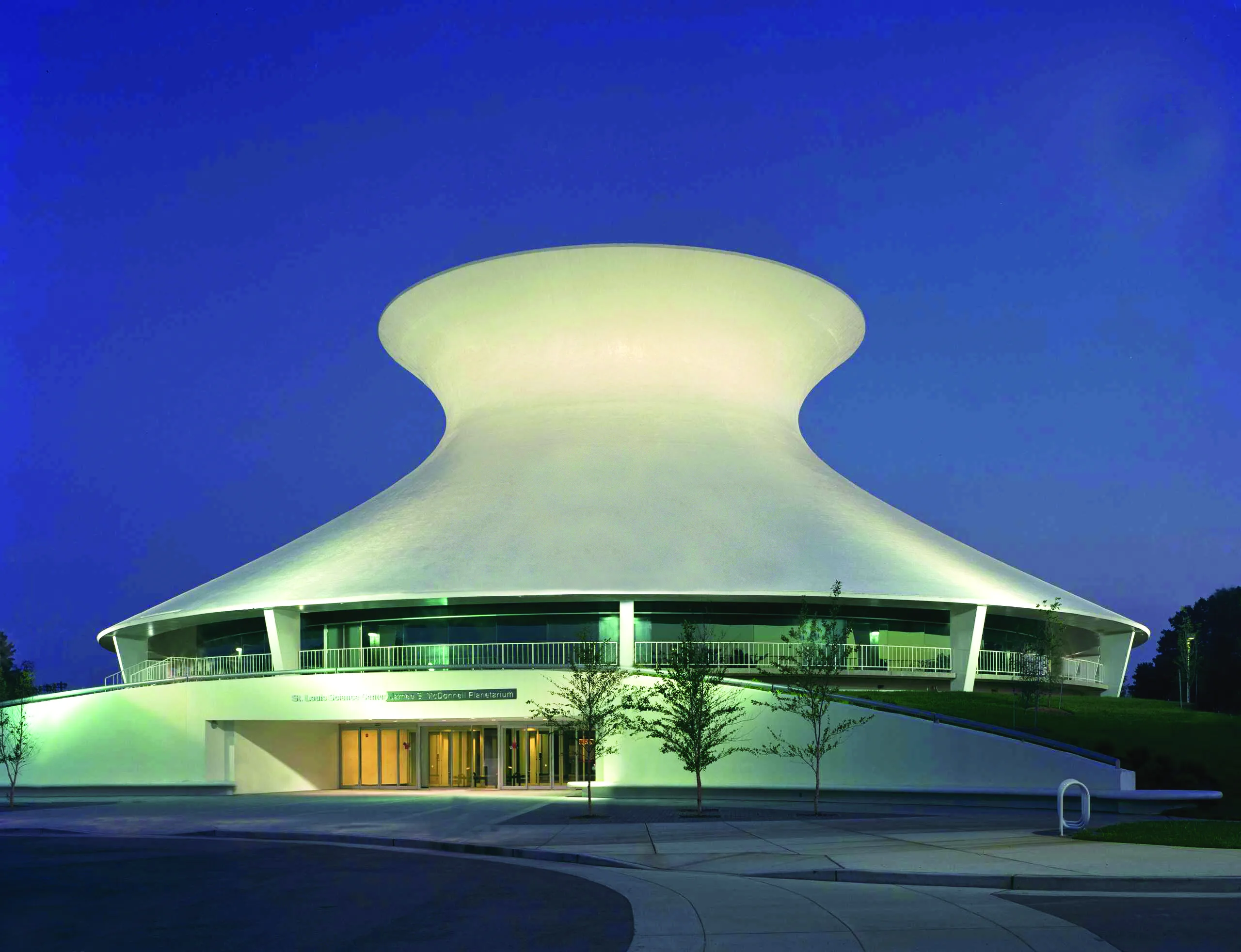
The Saint Louis Science Center will reopen the James S. McDonnell Planetarium on July 18, featuring revolutionary new technological upgrades to the space’s sound, visuals, and capabilities. Alongside the new upgrades, the Science Center will introduce three new live shows that take full advantage of the planetarium’s updated features.
“This equipment allows us to match the exciting visuals with the exciting science that we’re sharing,” planetarium manager Will Snyder says. “We can illustrate these concepts in a way that will help people be more interested in them and better appreciate topics that are hard to understand in words.”
Stay up-to-date with the local arts scene
Subscribe to the weekly St. Louis Arts+Culture newsletter to discover must-attend art exhibits, performances, festivals, and more.
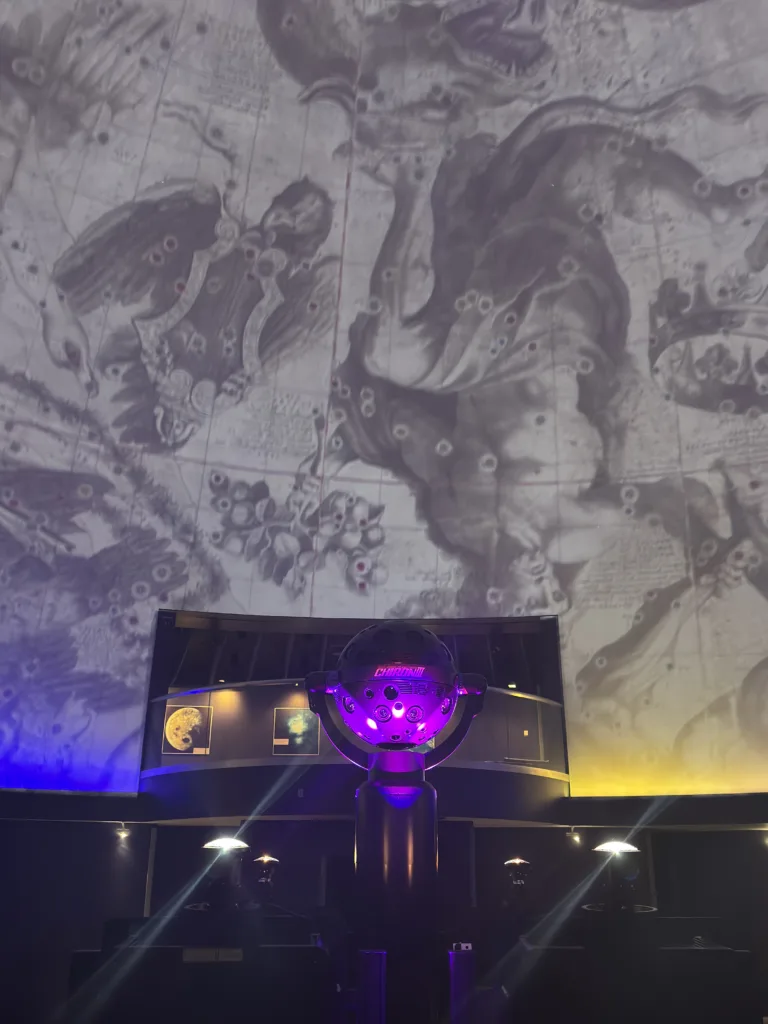
One notable upgrade includes the new GOTO Chiron III Hybrid Star Projector (the only one of its kind in the United States), which will allow visitors to gaze into the night sky with unparalleled accuracy and depth. Snyder notes that while the planetarium’s previous star projector was wonderful, any previous attendees will not be disappointed in the new one.
The 9,000 stars visible to the naked eye (and an additional 100 million observable with binoculars) will have accurate color temperatures, allowing visitors to distinguish between red, blue, and other types of stars—all projected from a machine no more than 48 centimeters in diameter. The new star projector also has the ability to filter the displayed sky by visual color of the stars and magnitude of stars, allowing for educators at the planetarium to have greater flexibility in what is shown.
“It’s a cool teaching tool,” Snyder says. “There’s a lot of nuance and flexibility that we have now that we didn’t have before.”
The second notable upgrade is the planetarium’s new Cosm Digistar Full-Dome Data Visualization System, which will allow visitors to see views beyond the night sky from Earth. Using real-time software from NASA, the National Oceanic and Atmospheric Administration, and other scientific sources, the system will have the capability to show visitors the surface of planets or even the edge of the observable universe.
“The Digistar is really powerful in its dynamism, in its ability to bring new discoveries and new content to us,” Snyder says. “It’s a completely new way of looking at the sky.”
The new system will also allow the planetarium to connect with other planetariums across the globe, broadcasting lectures from local scientists to the public, as well as viewing programming hosted in other cities.
The upgrades will expand the scope of the planetarium’s live shows, which Snyder says the Science Center is fortunate to have. The shows, as usual, will be tailored to each show’s specific audience and feature educators from the St. Louis community. The new technology, however, will allow visitors to both expand the scope of their knowledge and investigate their astronomical interests much more closely
“People want to know about exoplanets or life in other star systems,” Snyder says. “These are now concepts that we can explore much more easily and much more engagingly.”
Tickets for three new live shows, The (New) Sky Tonight—which will explore constellations and the outer reaches of space—The Earth Today, featuring satellite imagery of the Earth itself, and The Little Star That Could: 360 go on sale July 6.