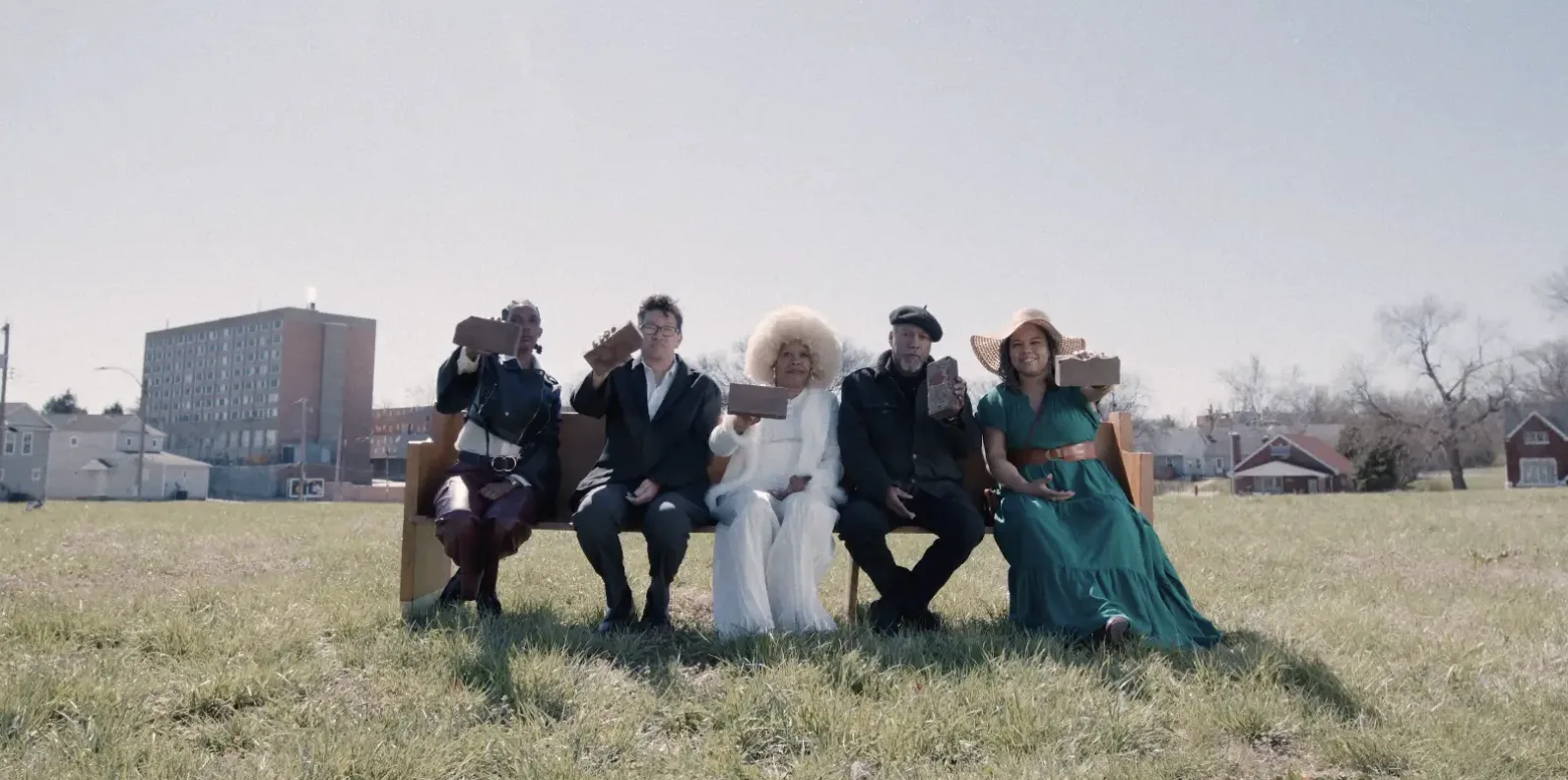
The tornado that tore through St. Louis on May 16, 2025, left lasting marks on the community that are still felt on the city’s north side. One year later, director Cami Thomas’ documentary short film Red Brick Blue Tarp shows that there’s still much work to be done.
While she is a filmmaker by trade, Thomas’ first thought in the immediate wake of the tornado was not to pick up a camera and start filming. Instead, she focused on how she and her collaborators could help with relief efforts and mutual aid.
Stay up-to-date with the local arts scene
Subscribe to the weekly St. Louis Arts+Culture newsletter to discover must-attend art exhibits, performances, festivals, and more.
“In the immediate aftermath of the storm, me and my arthouse production company, My Friends and I, basically cancelled production and business as usual because the moment very much called for our tangible assistance,” Thomas says. “I didn’t feel like my camera had a place in that fight. We were delivering food and supplies and helping people in a very tangible and actionable way, because that’s what emergency response requires.”
Thomas had previously worked on storytelling pieces with Dr. LJ Punch and Stephanie Reynolds, the team behind the tornado recovery resource group 314Oasis, and when they began noticing things that weren’t working around the city’s response to the recovery effort, they asked Thomas to bring out her camera for a couple of days and start recording. As a result, Thomas and her team were able to capture both on-the-ground and drone footage of the immediate aftermath of the storm while out on their normal supply runs.
While Thomas was hesitant to make anything at first, as the one-year anniversary approached, she began to see discrepancies between public recovery narratives and what it actually felt like on the ground. It became clear to her that a film could be an important tool in these ongoing relief efforts.
“Traditionally, documentaries serve as a backward-looking exposé on what has happened, but in this case, we’re still very much in the middle of the fight,” Thomas says. “There are still people living in tents, people who do not have a clear path on what to do. This film, in my opinion, can be one of many tools that we use to reach that goal of building toward a north side that is whole—really making it something the north side has always deserved.”
Thomas’ documentary filmmaking approach is based in visual poetry, capturing the way things feel in a given moment. She used poems she wrote while processing the heavy emotions and trauma of the tornado aftermath as a starting point, then got to work shooting footage and pulling relevant archival footage to accurately capture these elements. Thomas wanted to find a way to tell the collective story around the storm, the aftermath, and the ongoing recovery efforts. So, she and her production team captured 19 interviews with subjects from the community to get a chorus of voices and perspectives.
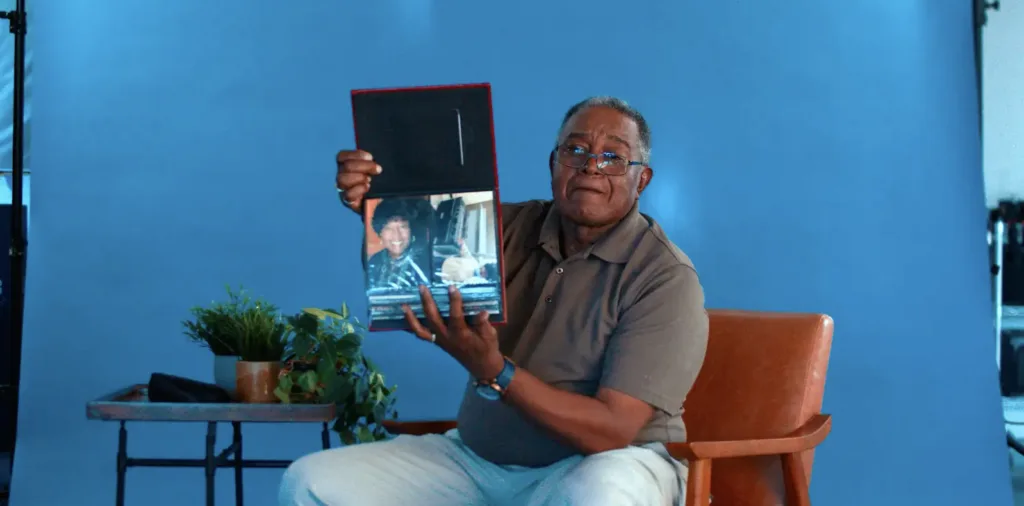
The final product, Red Brick Blue Tarp, is equal parts visual poetry piece and mini-documentary. Thomas hopes the film can serve as an introduction to the storm’s destruction, a healing piece for the people who experienced it, and a rallying cry about the need for St. Louis to come together to help North City recover before the situation becomes unfixable—a sentiment that was underscored by a recent visit from the Carnegie Endowment for International Peace.
“The anniversary of a tragedy is a really tricky time,” Thomas says. “To me, the timing of it is to reignite the truth that St. Louis is in trouble as a whole city if we do not get this recovery right.”
The free premiere of Red Brick Blue Tarp will take place on May 16, the first anniversary of the tornado, at 6:30 p.m. at The Luminary (2701 Cherokee), a space that served as a hub for the mutual aid work that Thomas and her team were doing in the immediate aftermath of the storm. The screening will also feature a collective piece that audience members can sign and contribute to, which will be displayed in North City all summer, to show the entire city’s commitment to the ongoing recovery effort. Thomas hopes the screening can be a calm place for audiences from all parts of the city to see the film, reflect on the past year, and decide as a group to commit to the work that still needs to be done in the years to come.
“It’s not just a screening, but it really is a community gathering and a level set of what’s next,” Thomas says. “Because I have been shown, and we are being shown, that the future of recovery might continue to fall into the hands of the people. And we’re going to need all hands on deck involvement if we’re going to get this done.”