In the nearly 150 years since it first drew a group of prominent St. Louis men together in pursuit of power and prestige, the Veiled Prophet Society has waned in influence and reputation. These days, according to VP Saint Louis chief operating officer Michael Ruwitch, who gave a rare interview with St. Louis on the Air’s Danny Wicentowski in 2024, “VP is just letters. It stands for nothing.”
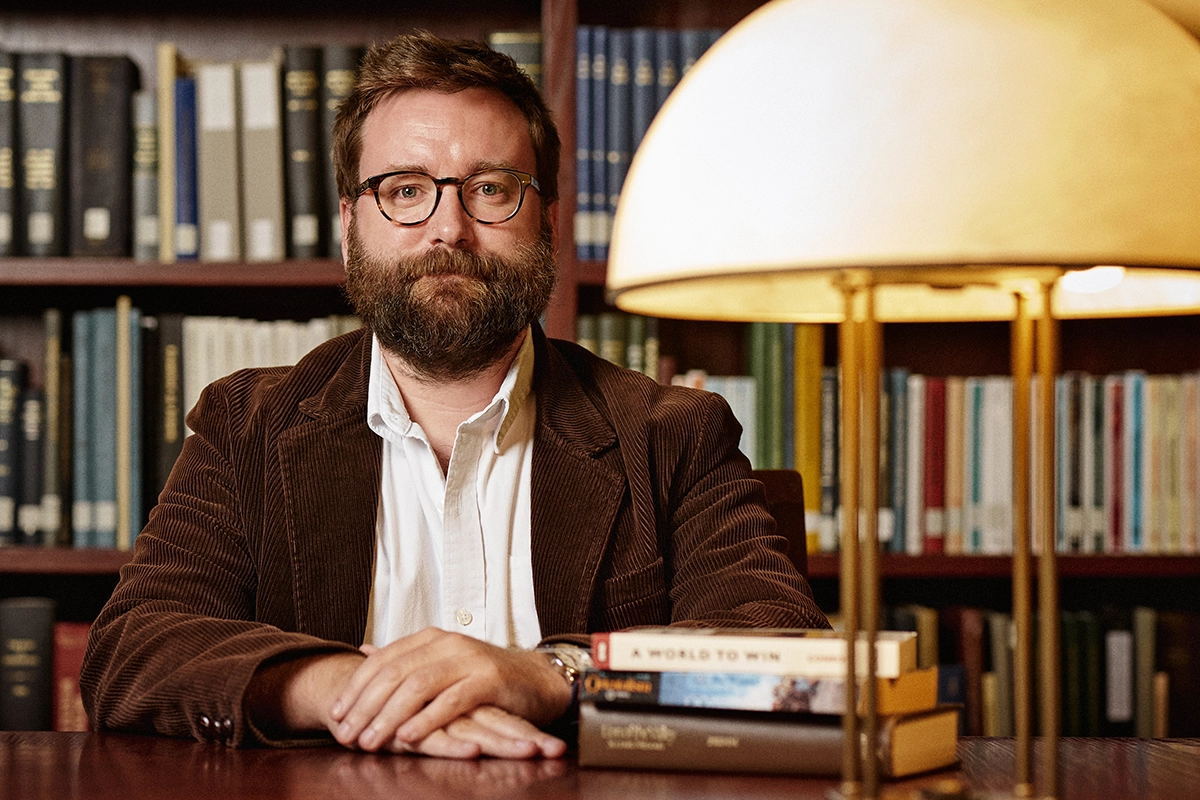
But history is not easily erased, especially for those willing to troll the city’s vast libraries and archives, fishing for treasure among newspaper clippings and advertisements. Author (and sometimes SLM contributor) Devin Thomas O’Shea is one such person. Over a decade of research, an idea for a Thomas Pynchon–esque novel set in St. Louis morphed into a comprehensive look at one of St. Louis’ strangest stories.
Stay up-to-date with the local arts scene
Subscribe to the weekly St. Louis Arts+Culture newsletter to discover must-attend art exhibits, performances, festivals, and more.
The Veiled Prophet: Secret Societies, White Supremacy, and the Struggle for St. Louis, out June 23 from Haymarket Books, is a shocking, far-reaching, and often entertaining account of the Veiled Prophet, a secret society founded in the wake of St. Louis’ 1877 general strike that exists to this day. The story winds its way through a colorful cast of characters, from the chivalry-obsessed Confederates who hatched the idea to captains of industry and their scepter-toting daughters to power brokers in the White House, FBI, and CIA.
“… IT IS RANCID AND UNNERVING, BUT IT’S ALSO A NECESSARY STEP TOWARD BUILDING THE KIND OF CITY PEOPLE MIGHT WANT TO LIVE IN.”
General interest in the Veiled Prophet was in relatively short supply before actress and St. Louis native Ellie Kemper’s past as a Veiled Prophet Queen of Love and Beauty went viral in 2021. The actress apologized for her ignorance about the organization’s fraught history, writing that “the century-old organization that hosted the debutante ball had an unquestionably racist, sexist, and elitist past. I was not aware of this history at the time, but ignorance is no excuse. I was old enough to have educated myself before getting involved.”
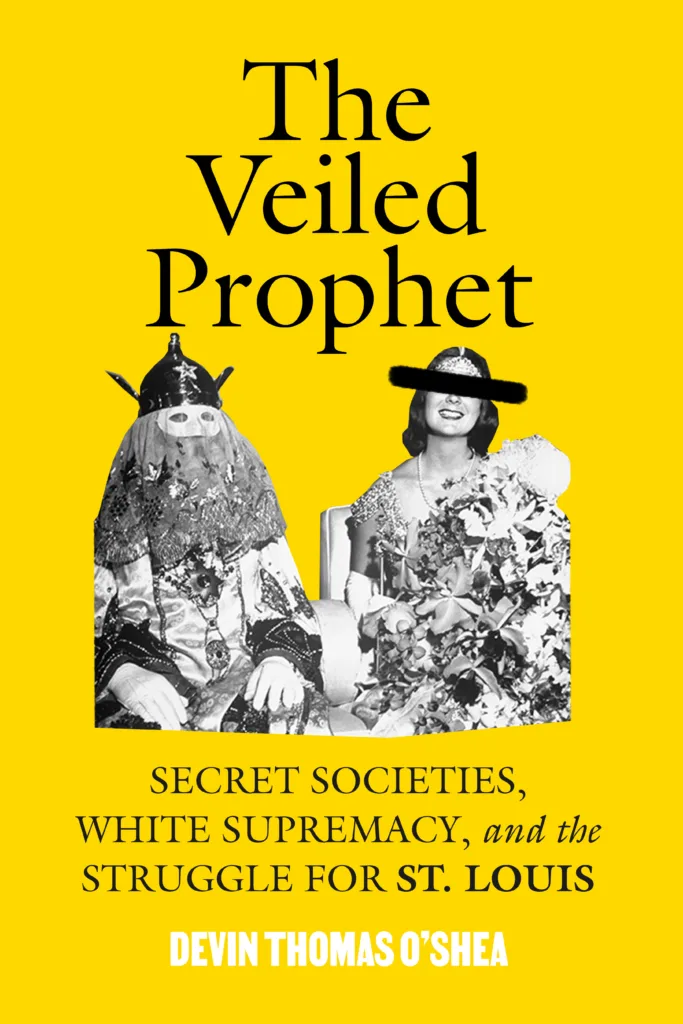
Secret Societies, White Supremacy, and the Struggle for St. Louis
It would have been a difficult education to acquire. Much of the Veiled Prophet’s own lore is confused and contradictory, and the organization’s influence and impact spreads across St. Louis’ history with labor, civil rights, land development, entrepreneurship, and politics. It is impossible to tell one story without understanding the context of the others with which it is intertwined. This is a problem that O’Shea has managed to tackle through extensive research and analysis (VP itself declined to be involved in the book’s writing) while keeping the story refreshingly readable.
“It is a lot to tie into one unified, cohesive symbol, which is a guy with a tea doily on his head and a crown who’s magic, and he’s also the richest guy in town,” O’Shea says. “It is an authentic expression of my class politics—because that is the ideology of the bourgeois, that they are flawless. The Veiled Prophet is such a perfect vehicle to tie all that stuff together.”
Readers may come for the secrets and strangeness of the Veiled Prophet. In pursuit of the juicy details about CIA directors, odd rituals, and familiar surnames, however, they will also encounter fascinating stories of labor disputes, civil unrest, and environmental disaster. These pieces of local history are essential to understanding where we find ourselves now. Yet these details are often unknown or misunderstood. In the conclusion of The Veiled Prophet, O’Shea writes that he is “not disheartened by this ugly past. It is rancid and unnerving, but it’s also a necessary step toward building the kind of city people might want to live in.” In learning about the past, O’Shea hopes that readers might take steps toward a brighter future.
“The kind of city that I would like to live in is one that actually is democratic and has input from working-class people on important issues up and down the tickets. We still have encoded into us the DNA from the socialist Germans who won the Civil War and saved St. Louis from absolute destruction by dying in droves in those battles,” he says. “That promise is still laced into St. Louis’ DNA. There is a collectivist, socialistic project here that can still work. And there’s lots of people who are fighting all the time to make that happen.”
Want to hear more about The Veiled Prophet? Then add these local book tour stops to your calendar: The St. Louis Public Library will host a book launch event with O’Shea, Jacqui Germain, and Leviathan Books on June 23. On July 7, Left Bank Books will host O’Shea in conversation with Kella Thornton.