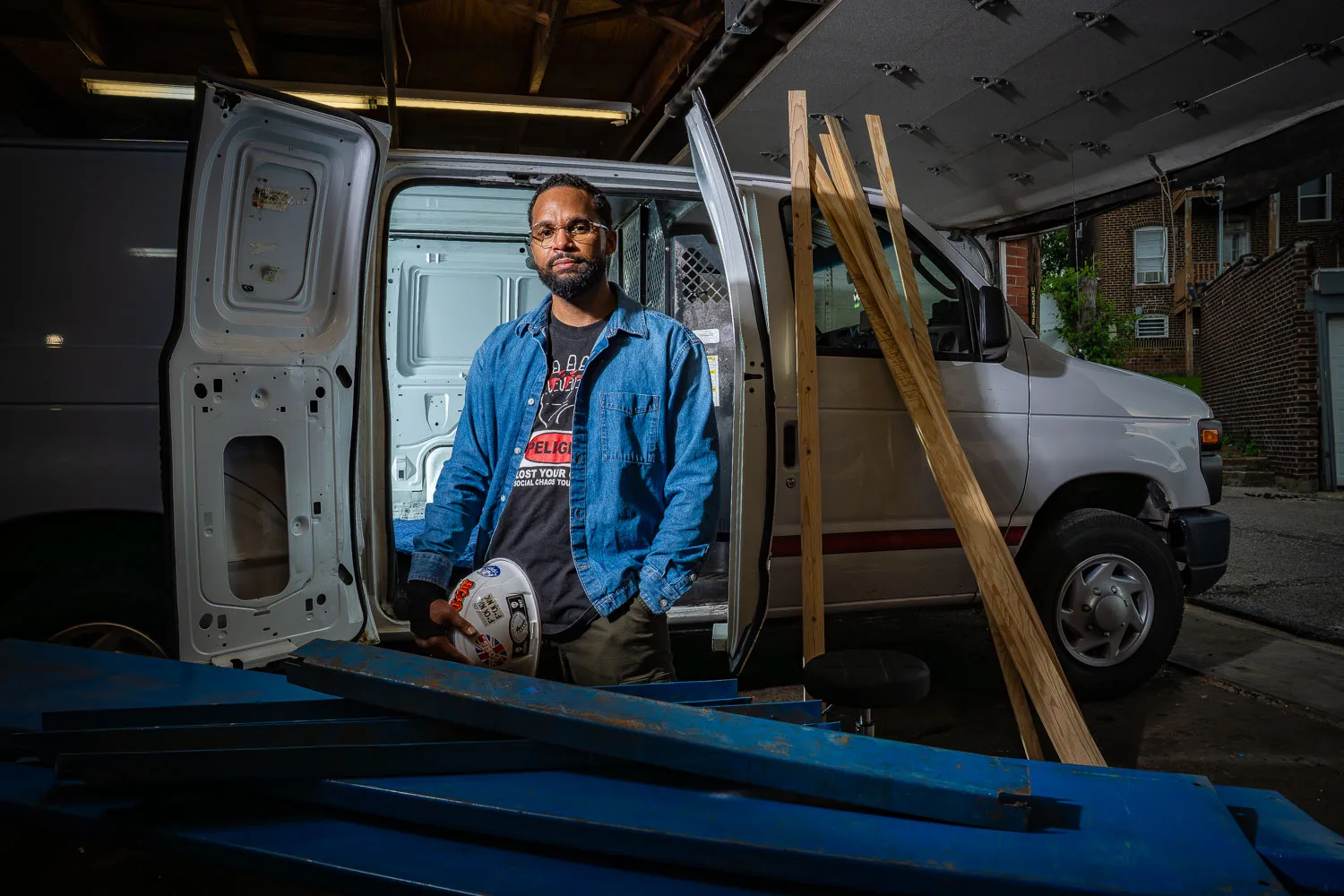
Brendan Logan wasn’t always close with his late uncle, D.H. Peligro. During his childhood, he likens his uncle’s presence to a sitcom guest star who appears once a season, stirring applause and celebratory whoops from the studio audience.
“He’s someone that I didn’t really grow up with,” Logan says. “He lived in California. I lived here. But he was always kind of like my artistic dad in a way.”
Get a guide to the region’s booming music scene
Subscribe to the St. Louis Music newsletter to discover upcoming concerts, local artists to watch, and more across an eclectic playlist of genres.
When Logan was 16, Peligro taught him how to play guitar. Later, he scored tickets for Logan to see the Red Hot Chili Peppers when they were performing in town, and shouted him out from the stage. Logan also got to see his uncle play at Webster Hall in New York, and the two hung out backstage afterwards. The pair grew closer when Logan moved to L.A., where Peligro lived at the time.
Born Darren Henley, D.H. Peligro grew up in various homes around St. Louis. He discovered a talent for drumming and a love of rock music and played in several garage bands. After graduating from North County Technical High School, he boarded a Greyhound bus to San Francisco with only his drums and some clothes that could fit in the cases.
When he arrived, Peligro became enmeshed in the bay area’s burgeoning hardcore punk scene. In 1981, he auditioned to join the Dead Kennedys. He joined the band and contributed to their albums Plastic Surgery Disasters, Frankenchrist, and Bedtime for Democracy before the Dead Kennedys disbanded in 1986. His vicious, frenetic percussion became an iconic element of the group’s unrelenting sound.
Later, Peligro had a stint as drummer for the Red Hot Chili Peppers and recorded and toured with his own band, Peligro. He played several reunion shows with the Dead Kennedys, and in 2013, he published an autobiography, Dreadnaught: King of Afropunk, which detailed his turbulent St. Louis upbringing, storied musical career, and decades-long battle with addiction.
Peligro died unexpectedly in 2022 at the age of 63. Logan says it was a pivotal moment of grief. While sorting through his uncle’s belongings, he had the desire to make something from the objects, an art piece that would function as both a tribute and commentary on Peligro’s legacy as a human being and an artist.
A few years later, he pitched the idea in an application for the Luminary Futures Fund, an annual regranting program that financially supports projects from innovative artists in the St. Louis region. He initially called the project “PUNKS NOT DEAD! (but my uncle is)” as a placeholder title, but the name stuck. For Logan, the phrase calls to mind the posthumous influence of Peligro’s music, as well as the irreverent attitude of punk’s ethos. “PUNKS NOT DEAD! (but my uncle is)” will debut on May 23 at the Punk Rock Flea Market in Tower Grove Park.
“Death is such a morbid thing and a thing that we don’t talk about,” he says. “Inherently, punk doesn’t take a saccharine approach to anything. So if I’m going to be able to have a conversation about death and what it really means, this is the person and the element to do it with.”
The multimedia installation will be housed in a refurbished van, combining artifacts and memorabilia from Peligro’s collection with audio and visual elements, as well as a companion zine. Curating and crafting each of these elements draws upon Logan’s experience in film and journalism, along with his work as a DJ.
“I’ll be cutting his stuff and his footage with my perspective, some of my own original work,” he says. The result will be a “funhouse reflection” that seeks to capture the complexities of his uncle’s life while exploring themes of death, legacy, art, commodification, and persona.
“I want my uncle to be remembered as a full human being,” Logan says. “As a dynamic artist, someone who was a really instrumental black musician in an art form where that really wasn’t there a lot.”
He hopes the installation will provoke an emotional response from the audience and unpack some of our cultural taboos around death.
“There’s no right way to grieve. There aren’t any rules around it,” he says. “This is my way of doing it. Obviously it has an audience, but it’s only my perspective. That’s all I can give.”