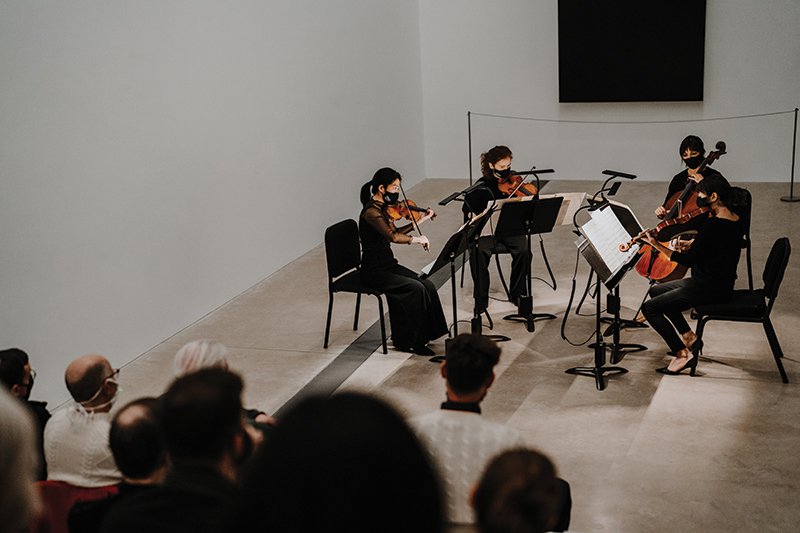
For the past two decades, the St. Louis Symphony Orchestra has expanded its reach into the Pulitzer Arts Foundation for its Live at the Pulitzer series. These intimate contemporary concerts bring live music into the galleries with programs inspired by the museum’s rotating exhibitions, presenting audiences with a curated experience that bridges the gap between visual and performing arts. St. Louis–based composer Christopher Stark has curated a trio of concerts to mark the series’ 20th anniversary, bringing together works from all over the world to demonstrate the themes of the Pulitzer’s current and upcoming exhibitions. We caught up with the composer ahead of the January 30 event, Material and Memory, to discuss programming the 20th season, exciting upcoming pieces, and how thinking across media has affected his own work.
Can you describe the format of Live at the Pulitzer for those who haven’t been before?
Get a guide to the region’s booming music scene
Subscribe to the St. Louis Music newsletter to discover upcoming concerts, local artists to watch, and more across an eclectic playlist of genres.
Live at the Pulitzer is a series of usually three or four concerts that take place throughout the St. Louis Symphony Orchestra season at the Pulitzer Arts Foundation. They’re shorter programs—usually only about 60-90 minutes—and they’re really intensely focused on giving people a sense of the state of the art and what’s new, fresh music happening in the classical music world. Most of the music that’s programmed is stuff that was written in the last five or 10 years by young and upcoming composers. It’s a chance to get a sense of what’s next and who might be the voices that eventually could become great composers or could be a composer that you might hear in a symphony orchestra concert sometime in the future. But it’s really focused on hearing something new. The second part of that is that it’s always curated in reference to the artwork that’s on display at the museum. It’s tightly associated with that. So it starts with the art that’s at the museum and then finding new, exciting young voices to pair with that art.
Tell us about this upcoming iteration, Material and Memory.
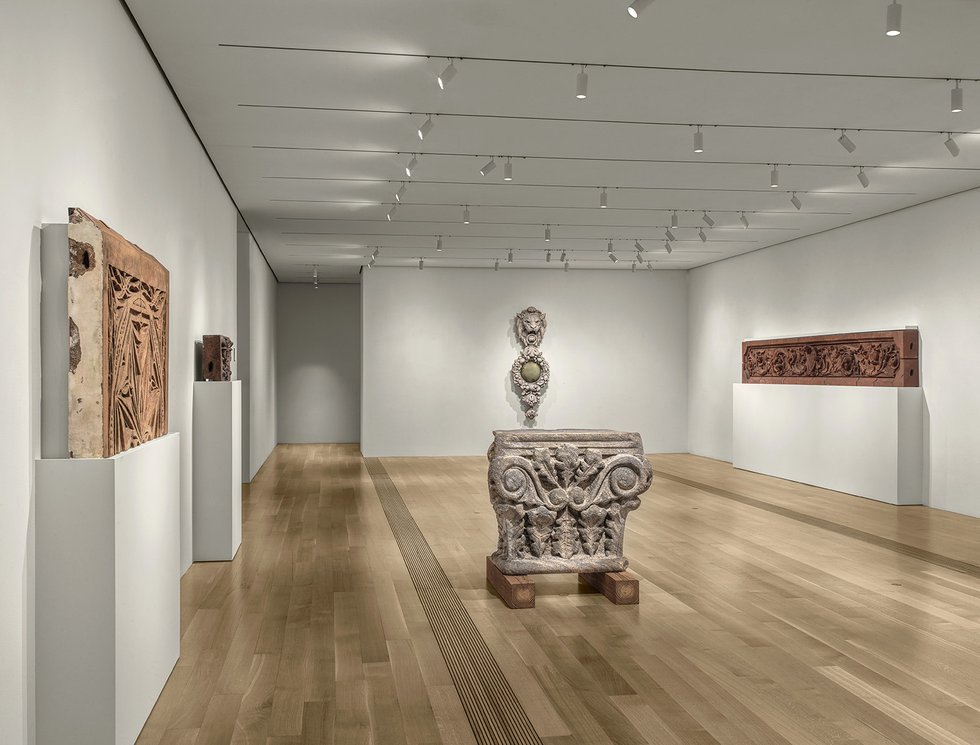
There’s some really cool exhibitions at the Pulitzer right now. I mean, there’s always amazing exhibitions at the Pulitzer, I think. I go as often as I can because the stuff they install there, it’s just mind blowing and interesting. Most of the music on the program is in response to an exhibition called Urban Archeology: Lost Buildings of St. Louis. It’s about the National Building Arts Center, which has collected a lot of artifacts from St. Louis’ heyday. There’s a lot of artifacts in the museum right now—little bits of facades and ornaments and things that would’ve been in St. Louis in the mid 20th century. So it was cool to program that because it’s focused on St. Louis and it gives me a chance to talk about some composers that live in St. Louis and bring in some other voices to highlight what it feels like to go through an exhibition of stuff from St. Louis in the mid 20th century or earlier, which has this deep sense of nostalgia and history. It’s impossible, when you’re moving through that, not to think about race and class and the history of the city, which is in many ways the perfect melting pot of almost all of the issues in the United States at any given time. So it’s nice to highlight voices on this program, like Olly Wilson, who most people in St. Louis don’t know is a very famous modernist, avant garde composer. He was born in 1937 in St. Louis, went to Washington University, and went on to start the first electronic music program at Oberlin College. Eventually, he ended up as a very renowned professor of music composition at UC Berkeley in California, where he taught a lot of very well-known composers today. Highlighting a voice like his, being one of the most important African-American modernist composers of the 20th century, and pairing that with this exhibition to get a sense of some of that history and bringing some of that to light is really exciting.
This series is so focused on the new and the next, but this exhibition brings to mind those ideas of history and nostalgia. What was it like for you balancing those two ideas while curating this program?
Many artists and composers really love nostalgia. It’s hard to avoid. It comes up in so much of our work so naturally. I did intentionally program a few pieces that are very nostalgic sounding. There’s a piece by a young composer named Cassie Wieland called to live in static. When I listen to it, I feel like I’m watching the closing credits of a movie or something, which always has this reflective moment where you think back about what you just experienced over the last two hours or whatever when you’re watching a film. It really does give that sense of like, Let’s just sit here and think about this for a second. Even though it is a piece that’s only a few years old, it has that ability to elicit that feeling. Another piece, called Homeland, by another awesome young African-American composer named Allison Loggins Hall, is about thinking about what your homeland is and the complexity of that, particularly for African-Americans. That one has that nostalgia, but it’s imbued with this complexity.
This is the 20th anniversary season of Live the Pulitzer. How does it feel to have been responsible for putting together this particular series?
It’s a huge honor. It’s so much fun. Many people who become composers, like myself, we love making music, but I think sometimes even more than that, we love listening to music and discovering music and finding music. So the idea that they asked me to curate this series was so exciting because I have an archive of music that I’m just dying for other people to hear. It’s so cool to actually get to go to the concerts and see the audience and get to tell them why you love these pieces so much and how they relate to the exhibitions. I can’t think of something that I get more joy out of than that. I mean, I love to write music, and writing music is hard. But this idea of getting to curate a series like this for such a great orchestra with really great players who are really open to the challenge of playing new ideas and new music, it’s fun and exciting. And the idea of doing it in an art museum…it’s such a unique and special little gem. I’m so happy that it’s been happening for 20 years. Honestly, it’s crazy that it’s been going on that long, because it still feels very fresh. I just can’t think of almost anything else that’s like it in St. Louis.
Are there any particular works, whether it’s on the music side or on the art side, that you’ve been particularly excited to highlight this season?
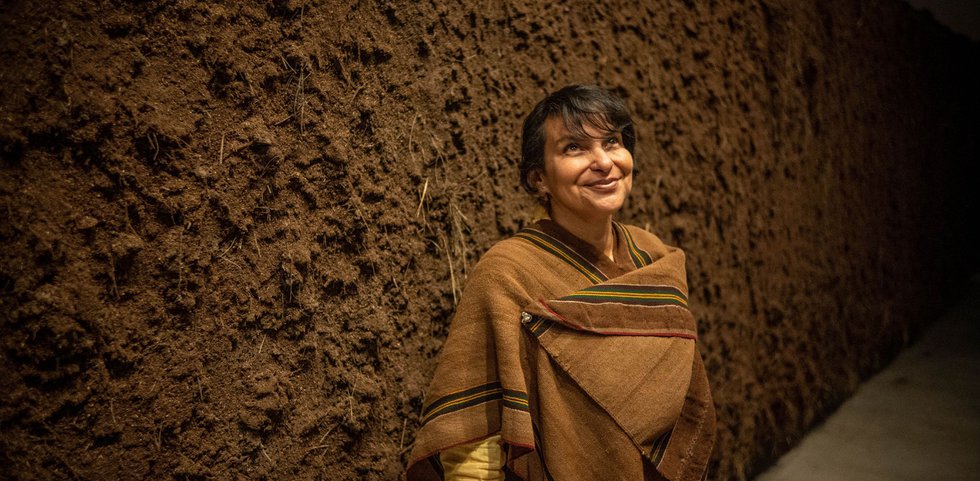
Yeah, I definitely think this next art installation that’s opening on March 8 by the Colombian artist Delcy Morelos is going to be very cool. Delcy builds these massive installations out of earth and soil. The stuff I’ve seen before has just blown my mind. I have a program on April 9 built around that exhibition, bringing together a lot of Indigenous voices and South American voices. I have Raven Chacon, who’s a really well-known Native American composer and was just awarded a McCarthy Genius Fellowship. He’s a really exciting voice right now, and I just think that that’s going to be a really cool exhibition. I think that the music will both highlight just how dynamic South America is as a culture and how it would be nice to have more of that in North America more frequently, but also how exciting a lot of Indigenous music is in the United States.
What have you learned or what has challenged you as you were putting this season together?
It’s made me have to think more specifically. With most of these kinds of series for a symphony orchestra, they’ll often just program whoever the kind of young, hot phenom composer is without sort of any context. And I feel like this series forces you to think through a broader context, which is to engage with the contemporary art world and to find some themes that are moving through music and art simultaneously, not just things that are in your niche. It’s so easy to get siloed in and to start speaking to only people that are in your discipline. Just looking outside of your medium and seeing if there are things that can connect to that…it just creates a hundred times more possibilities for people to be able to connect with the work. I’m programming music that I don’t think I would’ve programmed otherwise. It gives you a great challenge to say, Okay, what is music right now that’s speaking more broadly what’s going on? It’s just really fun to find work that can connect to the broader culture and which naturally just communicates better. It’s made me have to rethink that even as a composer. Is my work in dialogue with contemporary art or contemporary society, or is it just in dialogue with contemporary music?
Have you been able to answer that question for yourself?
I think just asking the question is the first step, but it has made me rethink it for sure. I mean, when you have to put something on a program and you’re responsible for an audience’s evening of enjoyment, it definitely makes you think about your own work and how it communicates. So yes, it definitely has changed how I think about that.
What do you hope that audiences take away from these performances?
I think what they will come away with is that they will hear a piece of music that they’ve never heard before, and, to me, that is in short supply right now. There is a kind of growing homogeneity around social media culture and media in general. We have all these algorithms and things that are supposed to specify something specifically for you and find you all the content in the world and bring it to you and your taste. But I think, honestly, the opposite is happening. It’s making everything the same from city to city and from listener to listener. I I think [Live at the Pulitzer] hearkens back to that feeling of, here’s the music that you’ve never heard before. And that, to me, is the most exciting thing in the world, especially right now. It’s honestly becoming harder to find things rather than easier, even though we have access to so much. Things have become so narrowed to meet your “personal taste.” But I think that people honestly want that shaken up regularly. I think that everybody wants new things, wants a new experience, wants to have their worldview rattled a little bit, and wants to have to think again and ask what is it that I like about music? What is it that I like about art? I think that this series does that in a very fun and exciting way.
Material and Memory will be performed at the Pulitzer Arts Foundation January 30 at 7:30 p.m. Tickets are available at shop.slso.org.