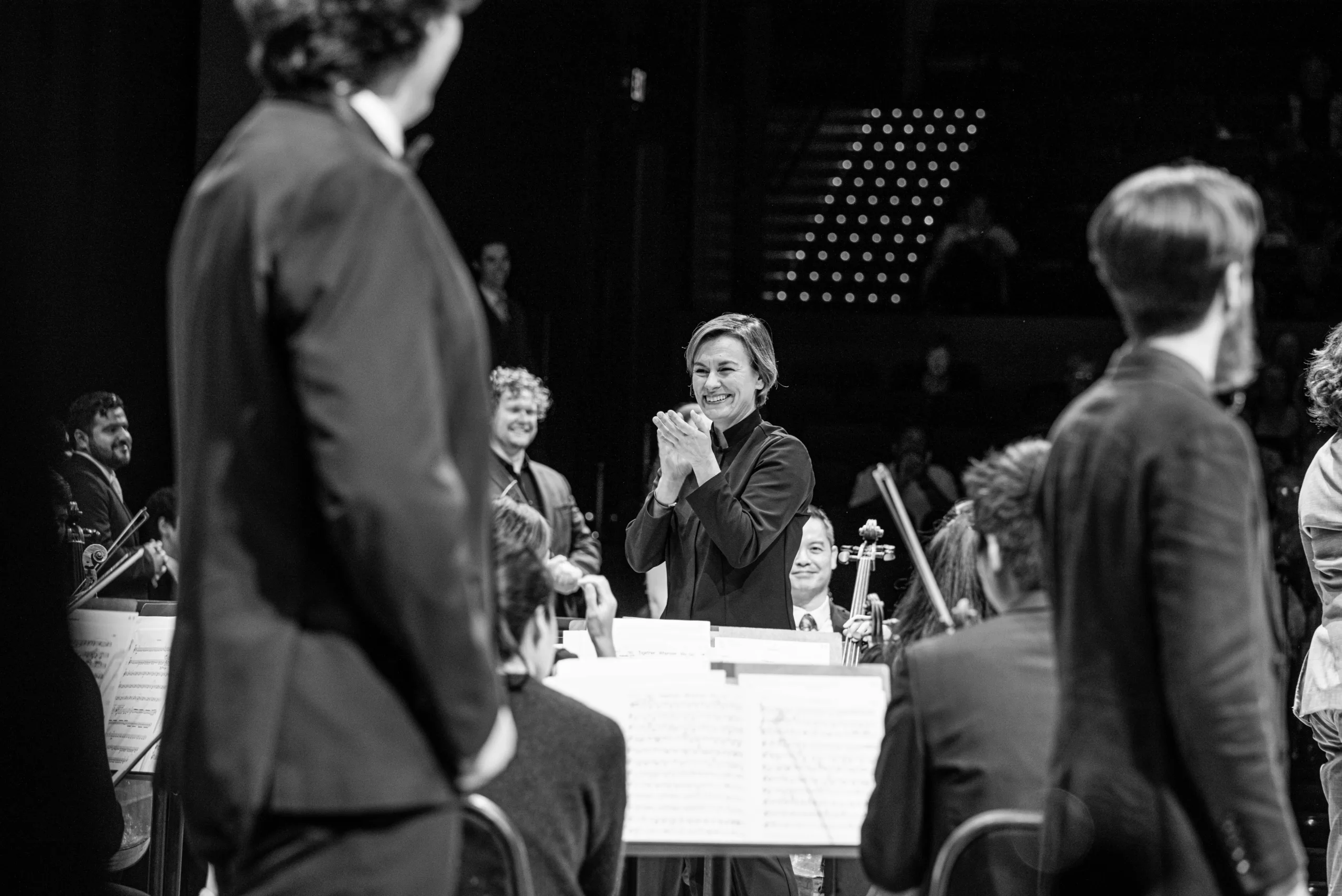
Opera Theatre of Saint Louis is known for bold storytelling, from reimagined classics to powerful contemporary works. But how does a spoken play transform into a fully sung opera? According to Principal Conductor Daniela Candillari, the process begins not with music, but with words.
How it works:
- Every opera begins with creating the dialogue.
- Adapting a play requires choosing one central dramatic focus.
- The librettist and composer collaborate to shape text, pacing, and emotion.
“Every opera starts with the libretto,” Candillari explains. A libretto is the text of an opera—the script that shapes the story, characters, and dramatic arc.
How Plays are Simplified for Opera
Opera thrives on clarity. Unlike a play, where dialogue can move quickly between subplots, opera stretches time. A single emotional moment may unfold across several minutes of music. That means the storytelling lens must be sharp, and that’s why shorter source materials often make the strongest operas.
Take one of the Opera Theatre’s 2026 productions, Romeo and Juliet, a work layered with themes. Beyond the central love story, the play explores political tension, class divisions, generational conflict, and family feuding.
“In the play itself, there are multiple themes being discussed,” Candillari says. “When adapting a layered work, you have to decide what story you want to tell.”
- Is it the intimate love story?
- The violence between the families?
- Or the societal forces that make tragedy inevitable?
An opera cannot give equal weight to every layer. The librettist and the composer choose a focal point—then shape everything around it.
Collaboration Between the Librettist and the Composer
Once the focus is clear, the collaboration deepens to determine how passages combine narrative drive with musical expression.
“It’s always a conversation between the librettist and the composer,” Candillari explains.
Composers often bring musical ideas to the table, including rhythms and emotional arcs, and ask: What text supports this? What needs expanding? What should be cut?
Every word matters, and every phrase must serve both drama and melody.
Ultimately, transforming a play into an opera means distilling its essence. Dialogue becomes heightened emotion, speech becomes song, and subtext becomes sound.
For audiences at Opera Theatre of Saint Louis, that transformation is part of the magic. A familiar story like Romeo and Juliet can feel entirely new when music reveals what lies beneath the words.
Frequently Asked Questions
Candillari answers common queries about turning a play into an opera.
How does a spoken play become a sung opera? It begins with the words, as the librettist and the composer shape the text into a focused dramatic arc that music can expand and deepen.
How does the orchestra influence the story? Orchestration can signal mood, represent setting, highlight psychological tension, and even guide the audience through the passage of time and between scenes.
Can the same story feel different in opera, theater, and musicals? Absolutely. Just as different stagings of Romeo and Juliet emphasize different themes, each production can bring its own artistic lens.
Should an opera adaptation just copy a play’s source material? Not exactly. It’s more about honoring the source while using music to reveal new emotional and thematic layers.
Why do many operas come from shorter stories? Shorter source material often works best because opera magnifies emotion and benefits from a clear central focus rather than multiple competing subplots.
Does the audience play a role in opera performances? Yes—audiences bring a powerful, unspoken energy to the theater, and performers respond to that presence, creating a dynamic exchange that makes every performance unique.
Read more in this series:
- What changes when words are sung in an opera vs. spoken in a play?
- How close should an opera be to a play’s source material?
This post was created by SLM Partner Studio on behalf of Opera Theatre of Saint Louis. For more information about the season and to purchase tickets, visit opera-stl.org.