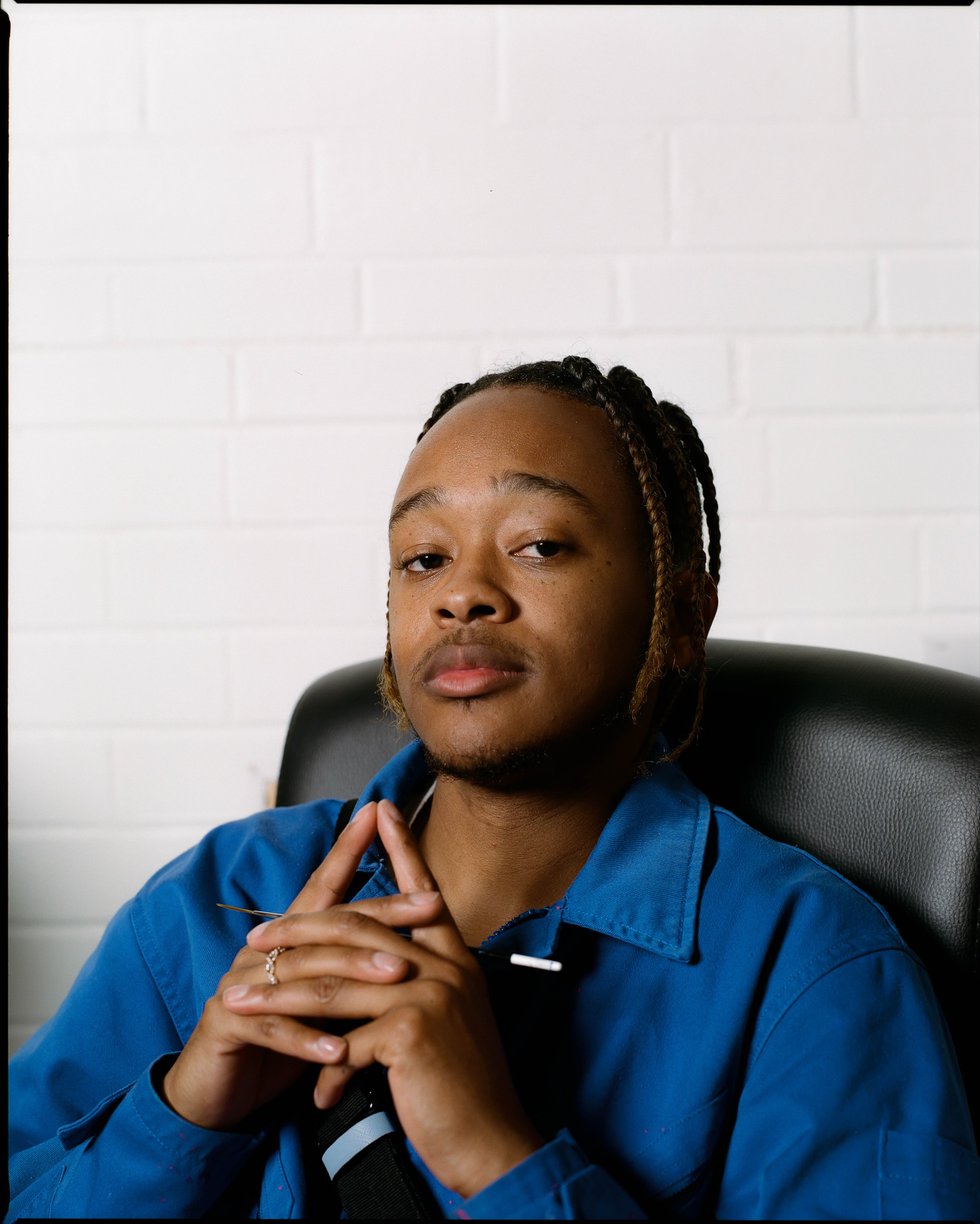
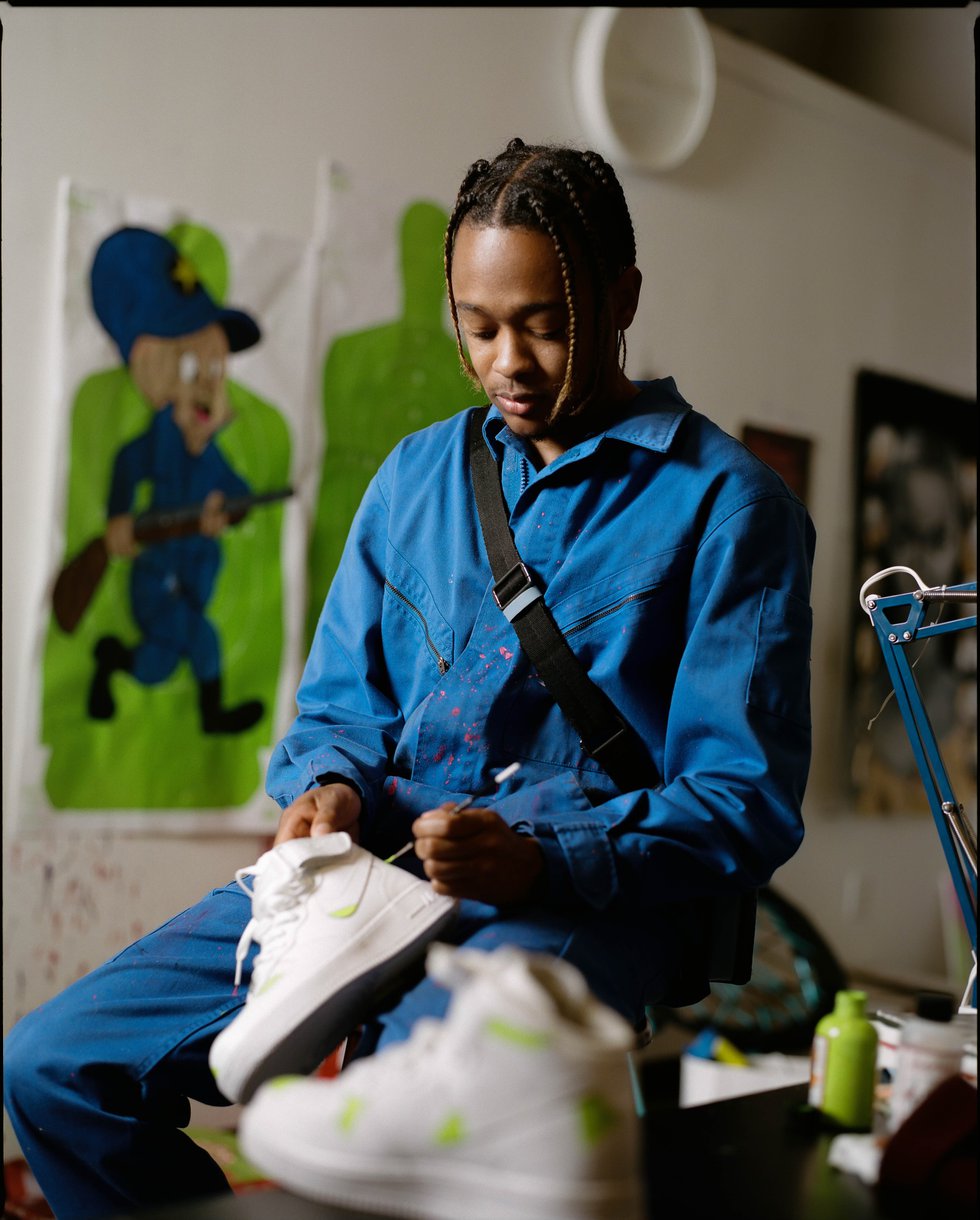
St. Louis rapper, artist, and activist Brock Seals is one of the biggest young names in the city. While he is best known for his custom sneakers, worn by everyone from professional football players to celebrity musicians, he also exhibits his paintings at high-profile venues like the Contemporary Art Museum St. Louis and Art Basel in Miami, Florida. And on March 4, he is establishing himself as a powerful force in hip-hop with the release of his new album, The Artivist.
The Artivist tells the story of the last decade of Seals’ life—his rise from high school clothing designer to national-level painter. But as the title (a portmanteau of the words “artist” and “activist”) suggests, the album also explores the rapper’s growing political consciousness and his willingness to share those views with his audience. “The art is my voice,” he says. “And I want to make change. So being an artist, this is how I’m making change.”
Get a guide to the region’s booming music scene
Subscribe to the St. Louis Music newsletter to discover upcoming concerts, local artists to watch, and more across an eclectic playlist of genres.
While Seals was an aspiring rapper as a teenager, he spent a good deal of his time running a clothing line with friends and even planned to study fashion in college. But the school he enrolled in lacked a design program, so he chose the next closest major: fine arts. Before long, he was applying his newfound skills to jackets, T-shirts and shoes, developing a colorful, geometric style rooted in both Black traditions and postmodern aesthetics.
After graduation, he caught the attention of influential figures like Dapper Dan and Nipsey Hussle, as well as then–St. Louis Rams players like Todd Gurley and Lance Kendricks, who wore his illustrated cleats on the field. And while he created a number of Black Lives Matter pieces, much of his commercial work focused on pop culture and cartoons: Bugs Bunny, SpongeBob, Pikachu. “I’m always tapped into my inner child,” he admits.
But 2020 was a transformative year for Seals. He moved beyond the custom designs that earned him his reputation into larger projects—both in terms of their size and scope. After the death of George Floyd, he joined the organization PaintedBlack STL in turning boarded-up storefronts across the city into urgent statements on racial equity; honored the actor Chadwick Boseman, who played Black Panther, with a mural on the campus of Washington University; and at the height of the pandemic, partnered with The Luminary art gallery to create a billboard that reads, “You’re Not Alone.”
Despite the notable collaborations, the piece that he is most proud of is equal parts graffiti, performance, and protest art—and all his own. Over the summer, he was given a permit to hold a block party in front of St. Louis City Hall. And on June 20, he used the gathering as cover for painting the word “reparations” in huge, yellow letters down the street. “I felt like this was a time where I was really using my work to make change,” he says. “But I don’t think that City Hall liked it. They got it cleaned up that night.”
At the same time that Seals was building his art career, he was also rising through the ranks of the St. Louis hip-hop scene. In 2019, he dropped his debut album Bless the Youth, Vol. 0, which introduced fans to his dense, reference-packed style. Over the next year, he released a steady stream of singles, including “Reparations,” his most political track to date and a kind of audio counterpart to the piece at City Hall. But despite the productivity, Seals was feeling burned out as a rapper. “I was making music,” he says, shrugging. “But I wasn’t having fun doing it.
Then as Seals started recording The Artivist, he met local producer Sinclair and was impressed by the beatmaker’s unique sound: gritty, melodic, and full of live instruments. As a result of the collaboration, the new tracks are more fully realized than the rapper’s previous work. They feature complex harmonies, layered synths and jazz saxophone courtesy of St. Louis horn player VintvgeVibes. According to Seals, the final product is cinematic. “Every time I listen, I think that this could be the soundtrack to a Batman film,” he laughs. “So I’m back happy with making my music.”
At the same time, the album is more mature in its themes and objectives. While Seals is reluctant to speak about politics in public, he is increasingly willing to put his views into his art—especially his music. “I do want to help expose and kind of break down the systemic institutions that hold Black people back,” he notes. On the lead single “Pardon My Melanin” for instance, he addresses police violence with the lines: “If they pull me over, got to act all casually / Hate to be a victim of brutality.”
While Seals is less vocal about his opinions than some of his peers, he is unapologetic about this new direction. And as he fights for racial justice and equity, he hopes that his journey inspires other young people to take a similar path – to improve their lives and their communities through their creative work. “At the end of the day, it’s what we do as artists,” he says. “We express ourselves. Even though it’s not always going to be liked.”
But despite all the successes of 2020, Seals is continuing to grow and experiment. At the moment, he wants to combine his disciplines by creating an action figure to accompany The Artivist. And like most painters, he is more interested in listening to others than in talking about himself. Rather than discuss the album, he wants the audience to bring their own experiences to the music. “I am giving you me, but a lot of it is up for interpretation,” he laughs. “And that way, I learn a lot about myself too.”