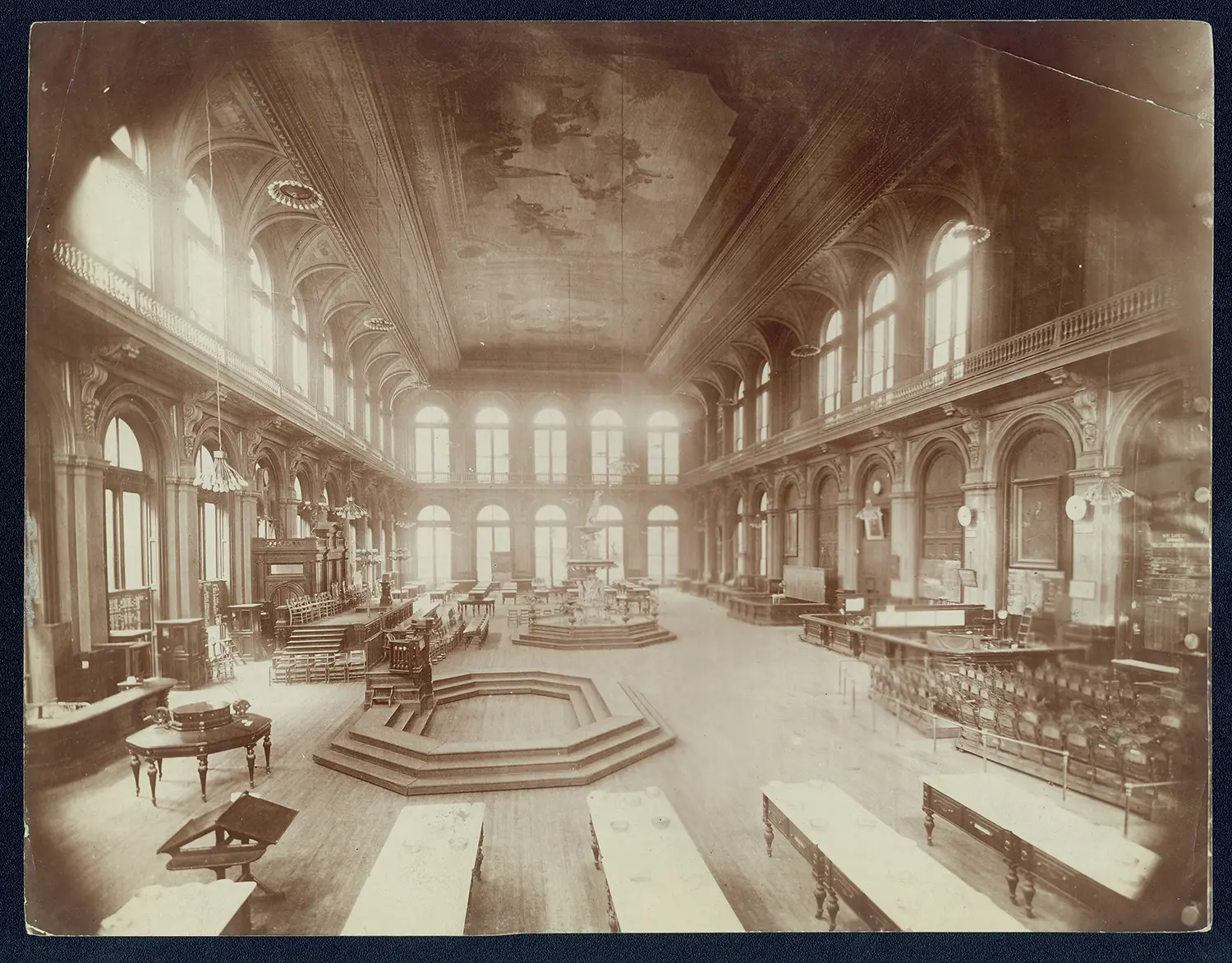
With a pedigree dating back to 1836, the Merchants Exchange claimed to be the oldest commodities exchange in the United States. Originally named the St. Louis Chamber of Commerce, the bustling trading floor, which boasted the third-busiest grain market after Chicago and Minneapolis, called three buildings home over its storied history. After temporarily splitting apart during the Civil War, in 1875 the Merchants Exchange erected one of the city’s finest buildings on the west side of Third between Chestnut and Pine. Thomas Annan and Francis Lee’s second-place design was chosen when George I. Barnett’s first-place design proved too expensive. The giant trading hall—measuring 221 feet long, 93 feet wide, and 80 feet tall—was said to be the largest in the United States; it would be the perfect setting for the 1876 Democratic National Convention. But not even its superlative architecture could save the Merchants Exchange from mid-20th century urban renewal. The building was demolished in 1958, and the site later became the eastern half of the Adam’s Mark Hotel. The Merchants Exchange moved to a new location before being forced out again by the expanding Saint Louis Science Center.
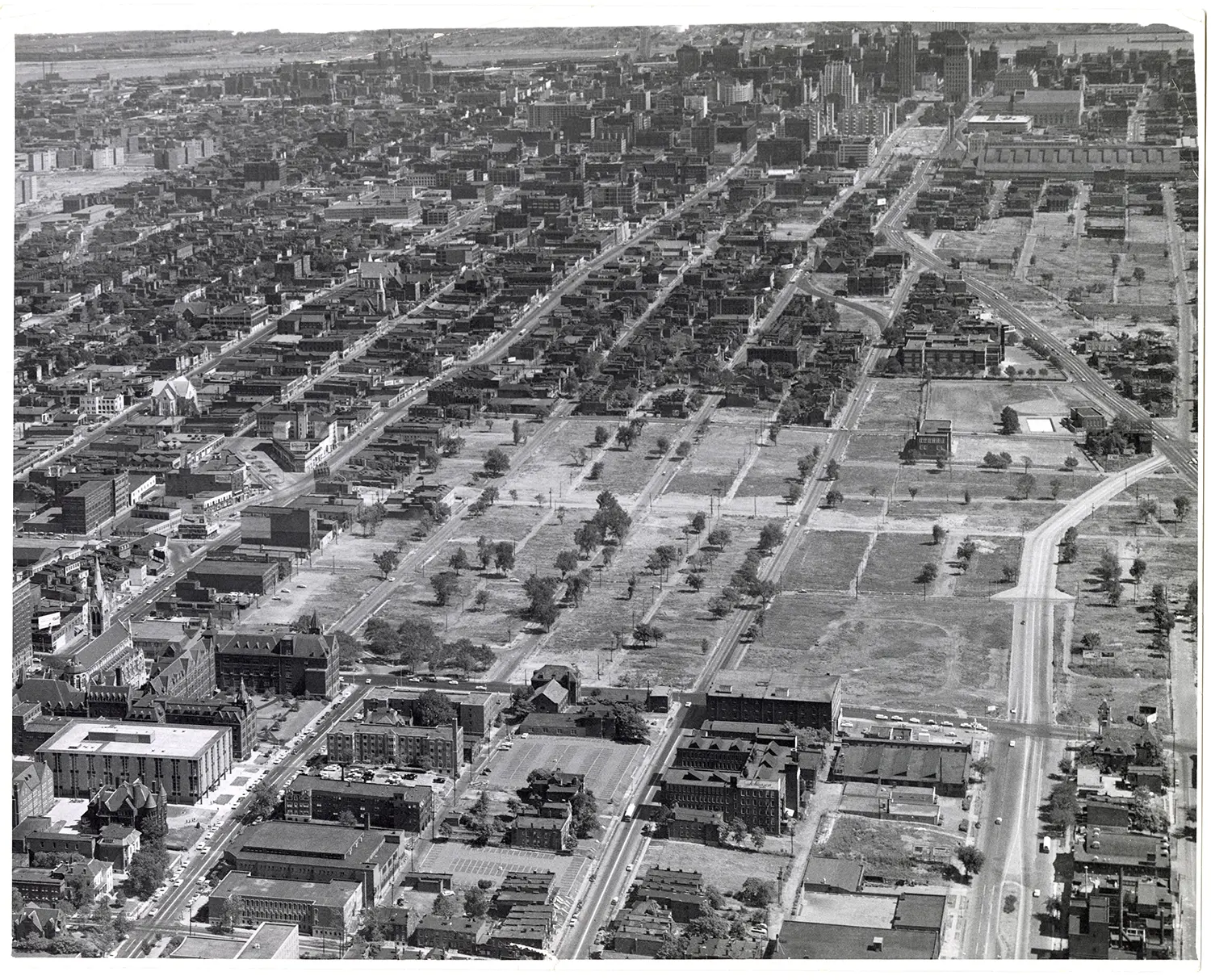
New play ‘Mourning Mill Creek’ explores the tragic destruction of community
A Call to Conscience will stage the production at the Missouri History Museum on July 12.