Photography by Ann White
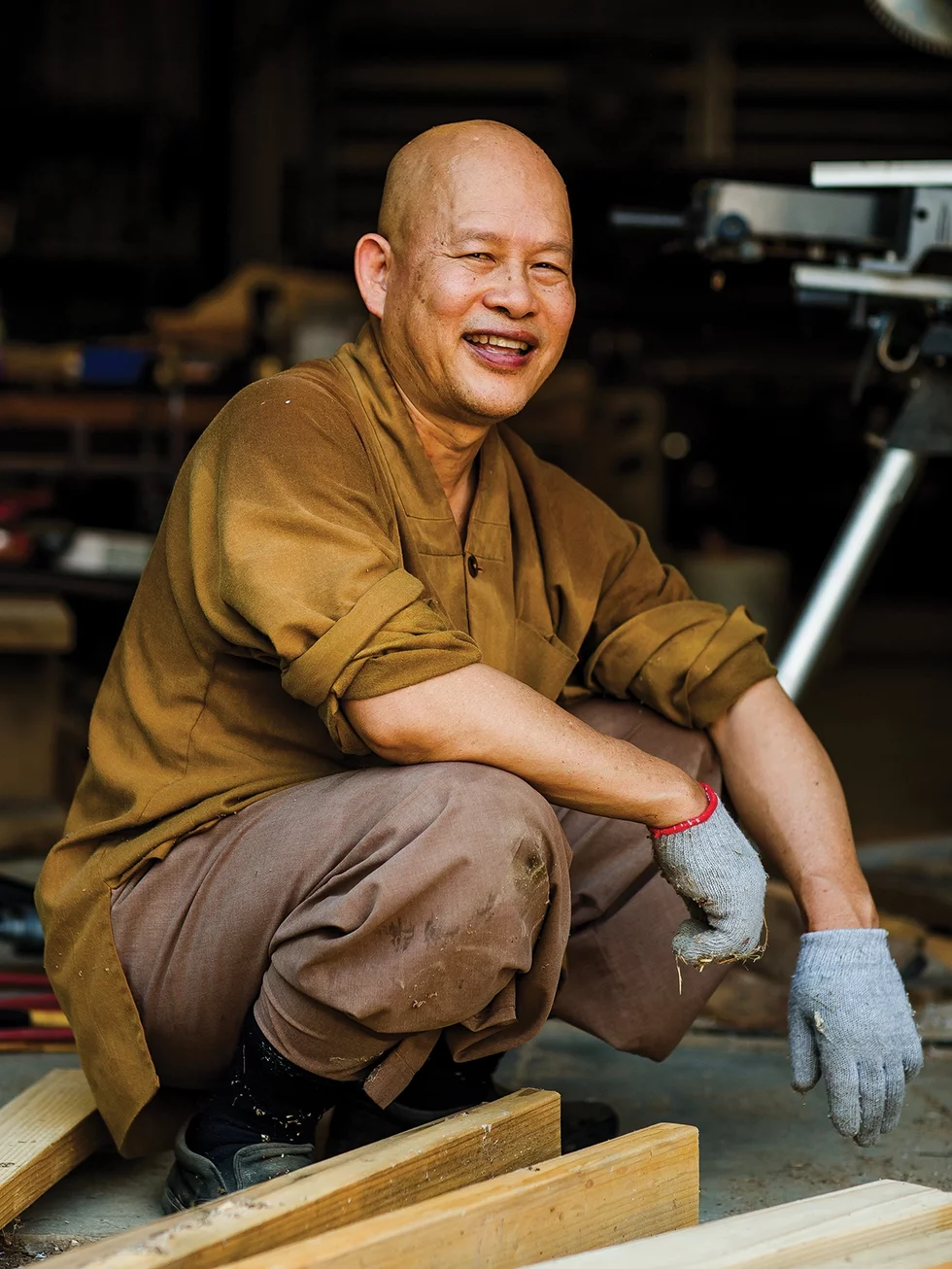
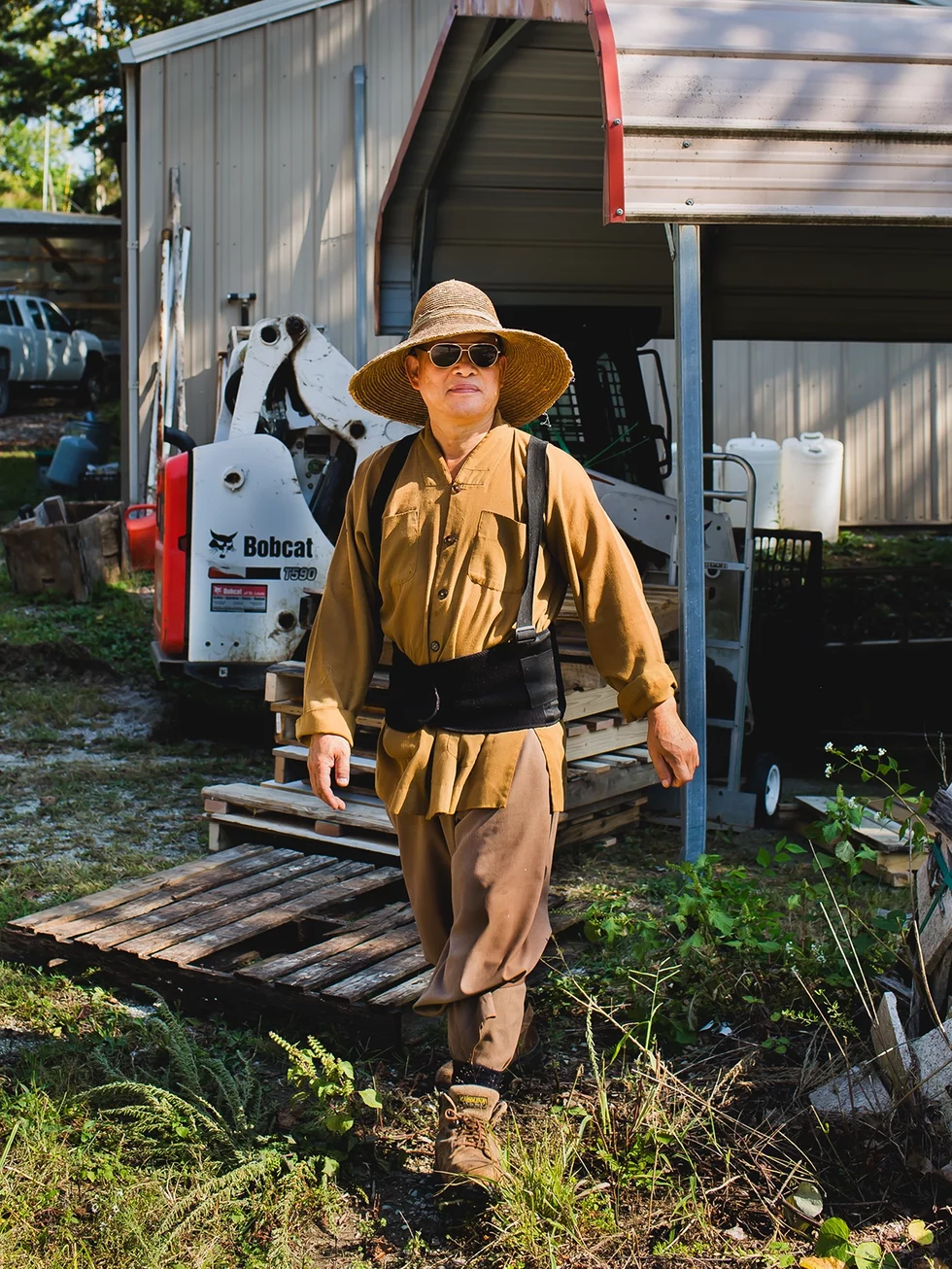
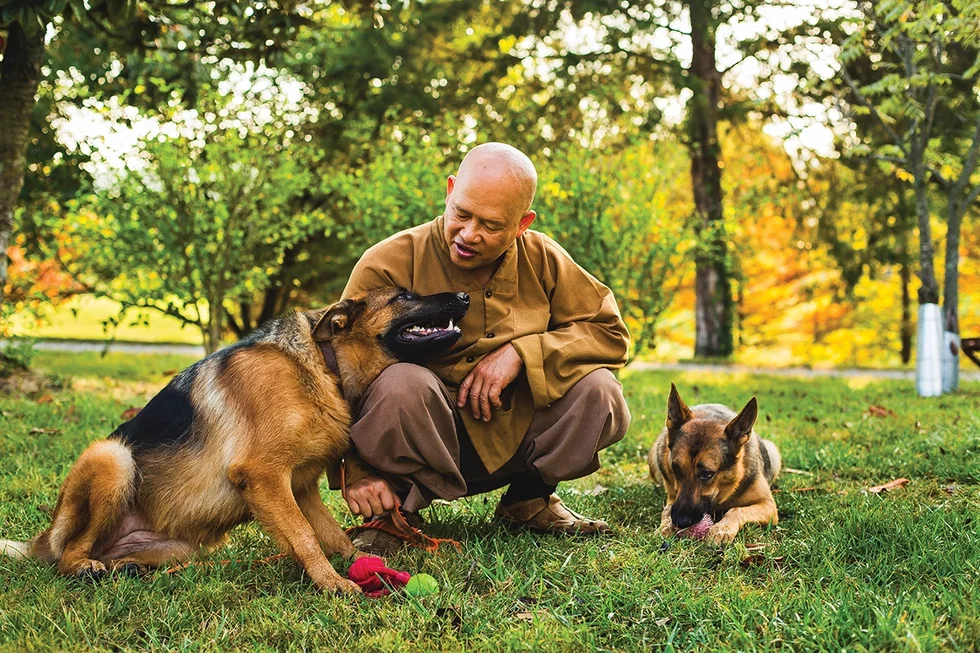
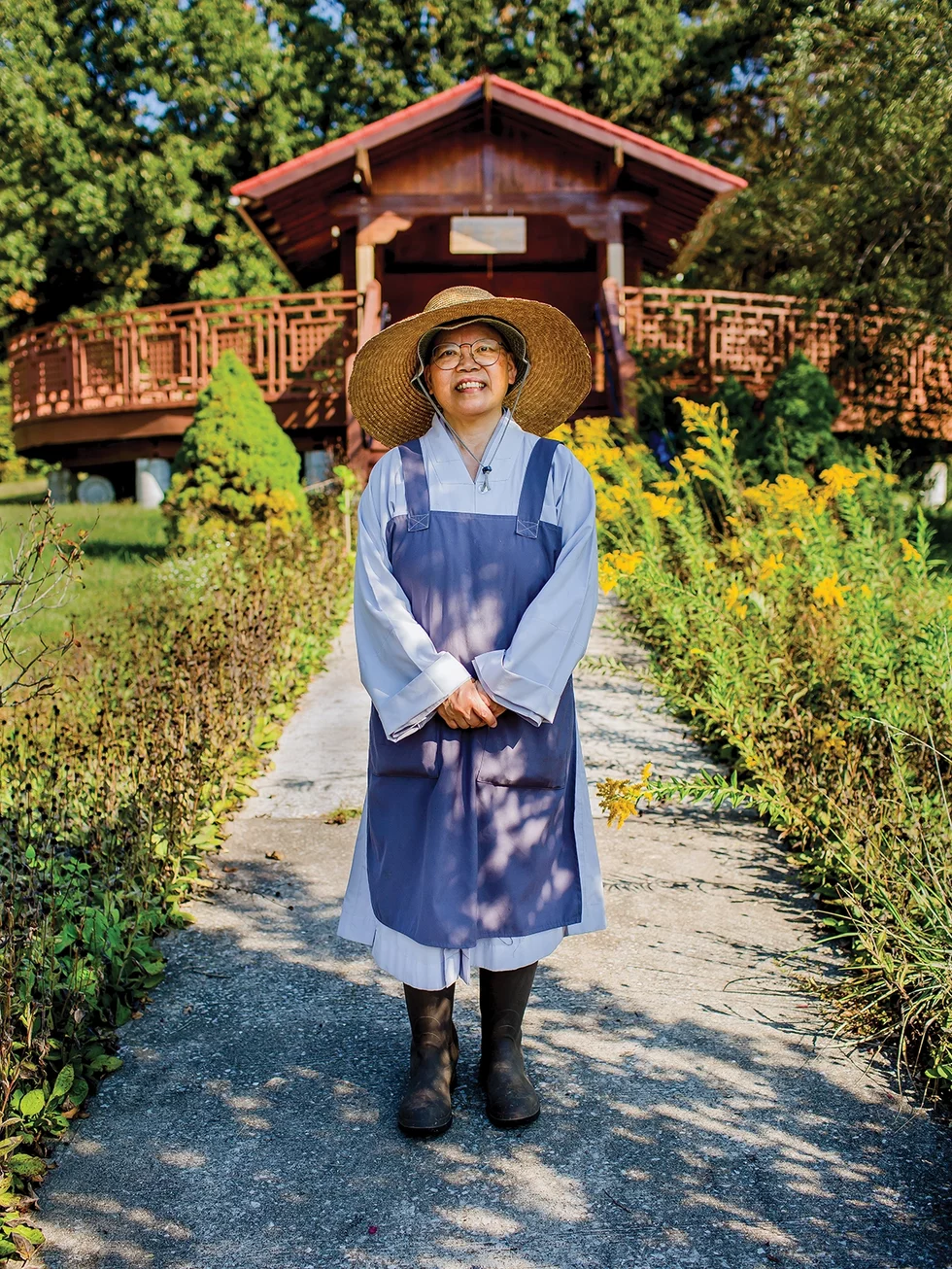
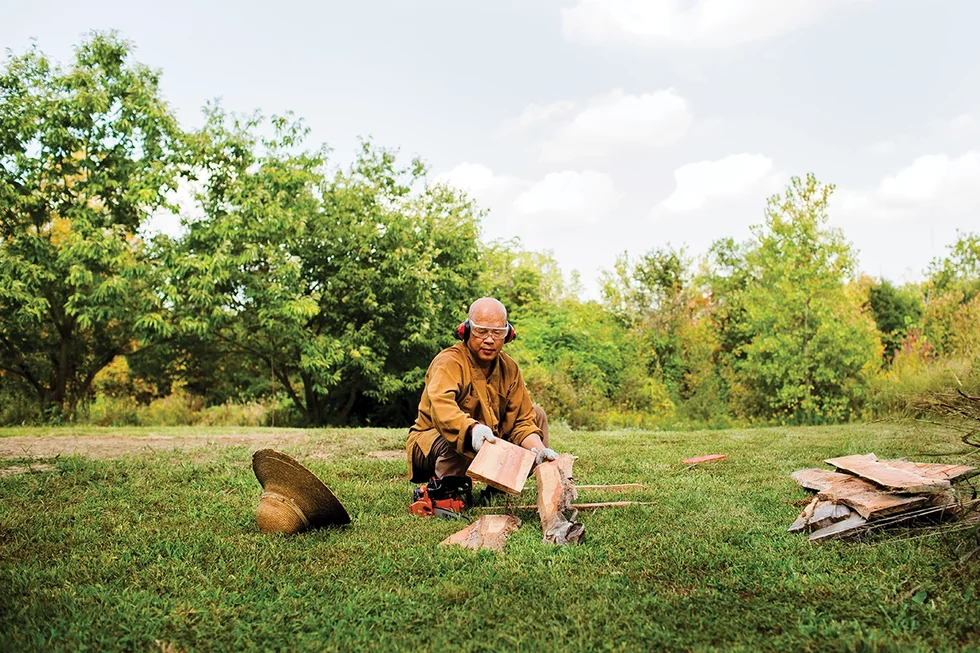
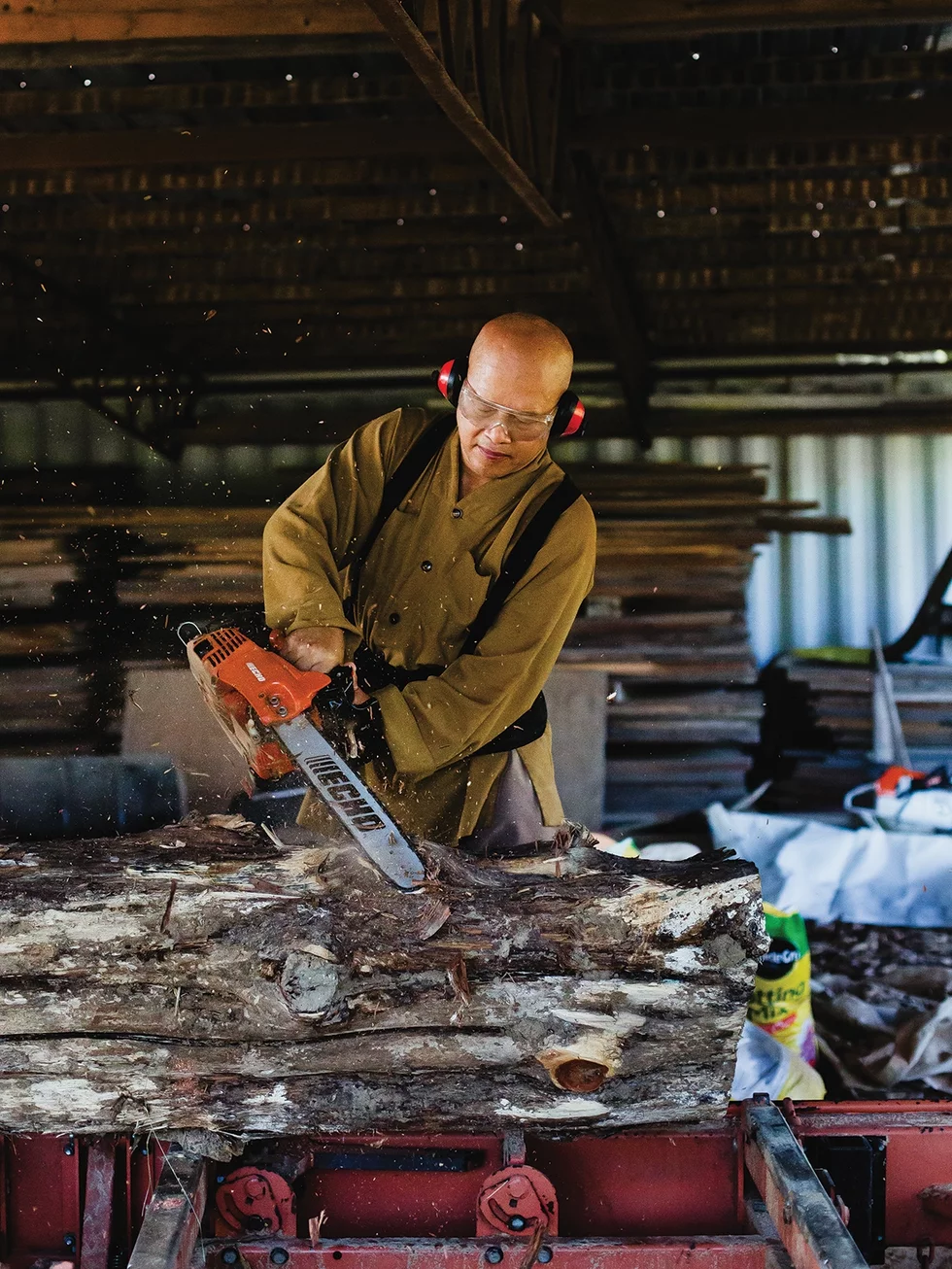
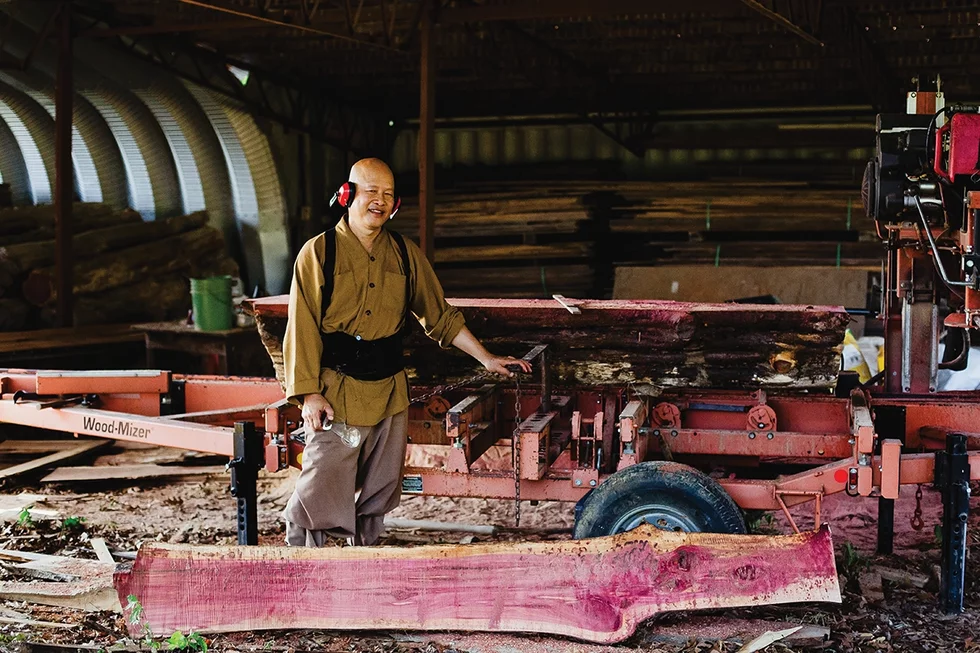
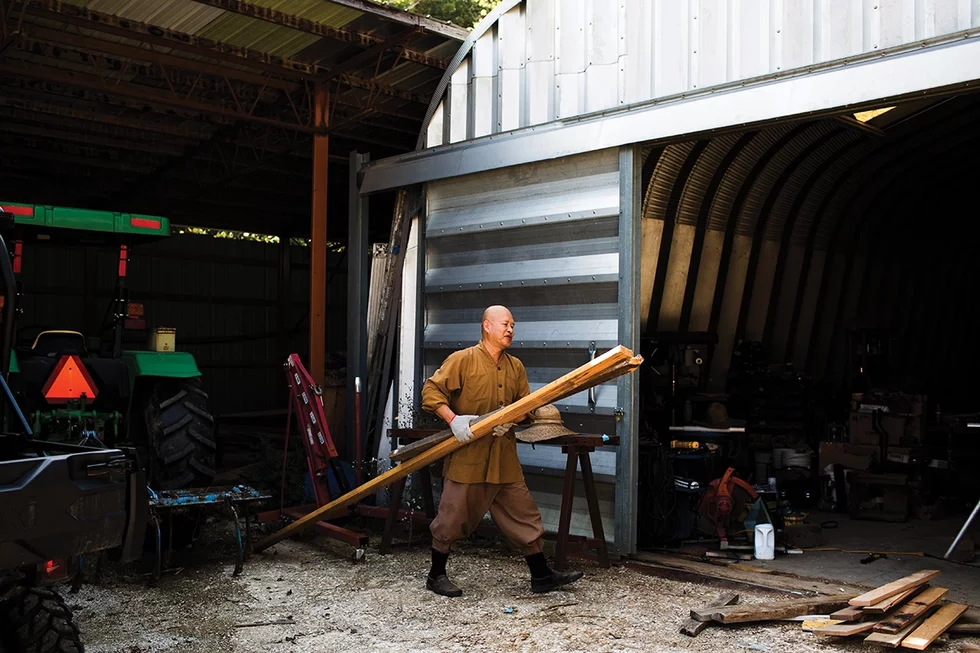
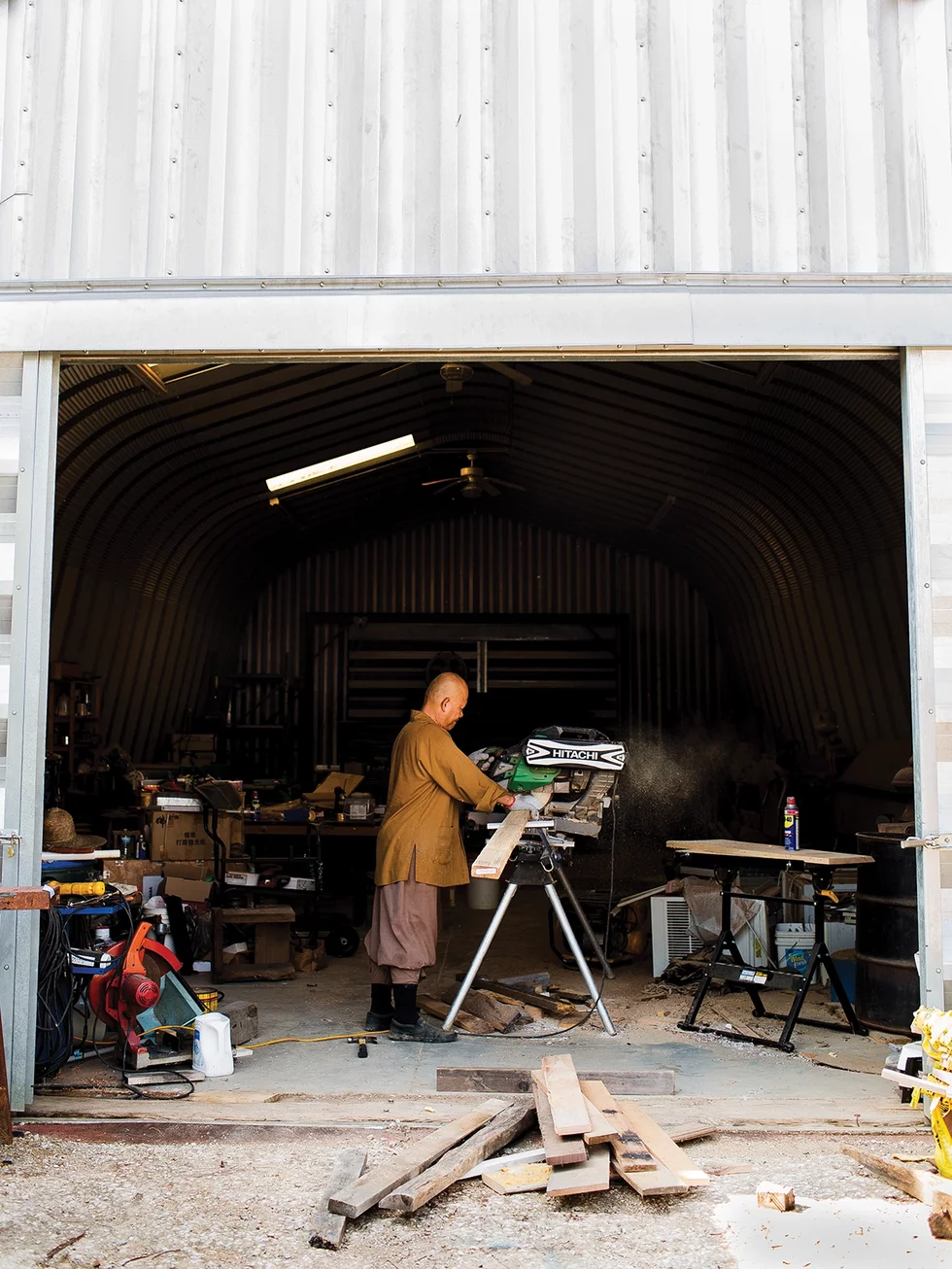
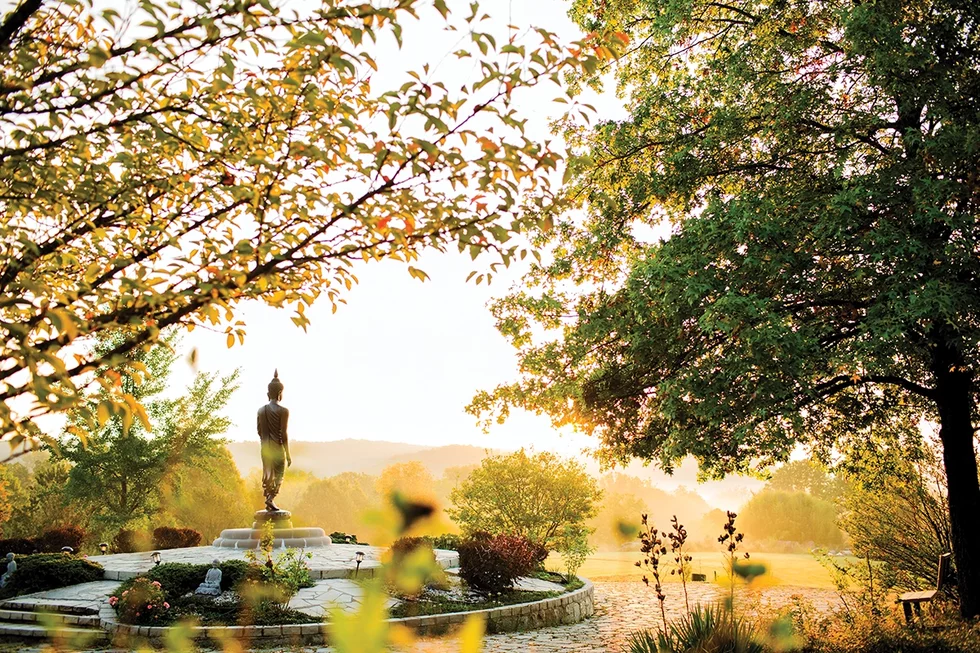
The Buddhist monk Jìrú Shīfù first appeared in Missouri wine country in the 1990s, wrapped in a robe. He had large hands and a shaved head. Locals didn’t know what to make of him. His English was choppy. The Malaysian-born newcomer didn’t smile much either in those early days, recalls one associate; he had a “strict” aspect. His ambition was to do something with the 76-acre farm purchased by the Mid-America Buddhist Association, an organization he had come to helm. The land was rolling and wooded, just north of Augusta. But MABA had very little money. So over a period of years, Shīfù taught himself various skills—tractor driving, carpentry, masonry, concrete mixing, welding—and scrounged enough discount materials to create, largely with his own hands, the complex where he and several nuns live today.
Stay up-to-date with the local arts scene
Subscribe to the weekly St. Louis Arts+Culture newsletter to discover must-attend art exhibits, performances, festivals, and more.
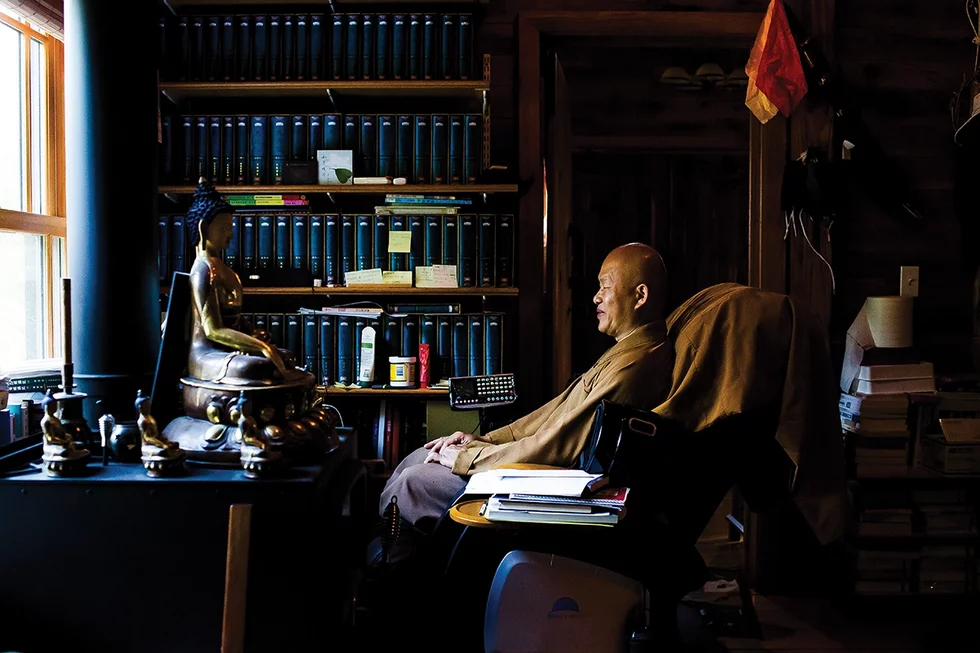
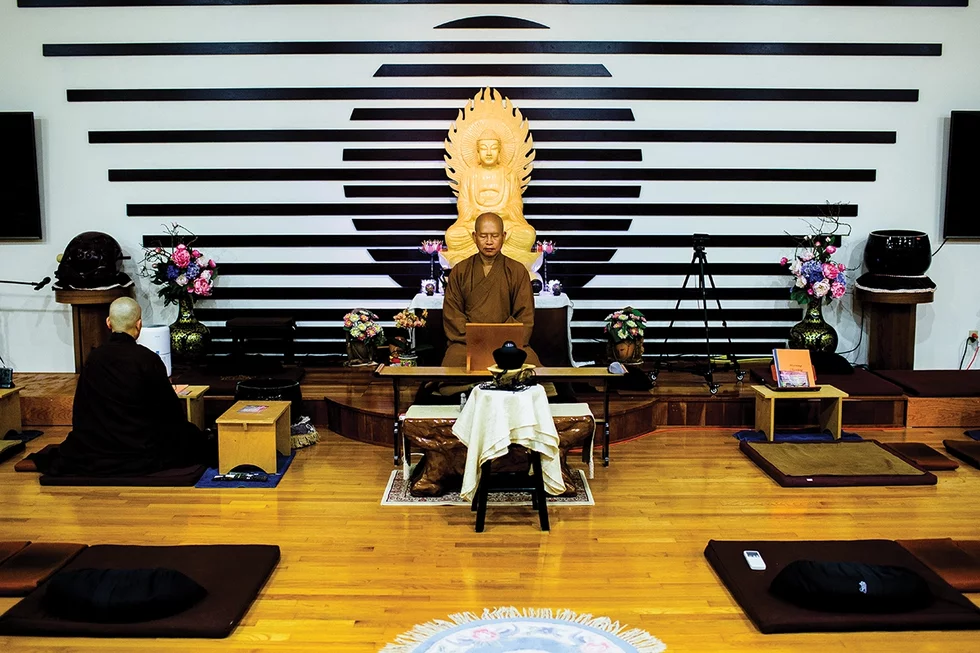
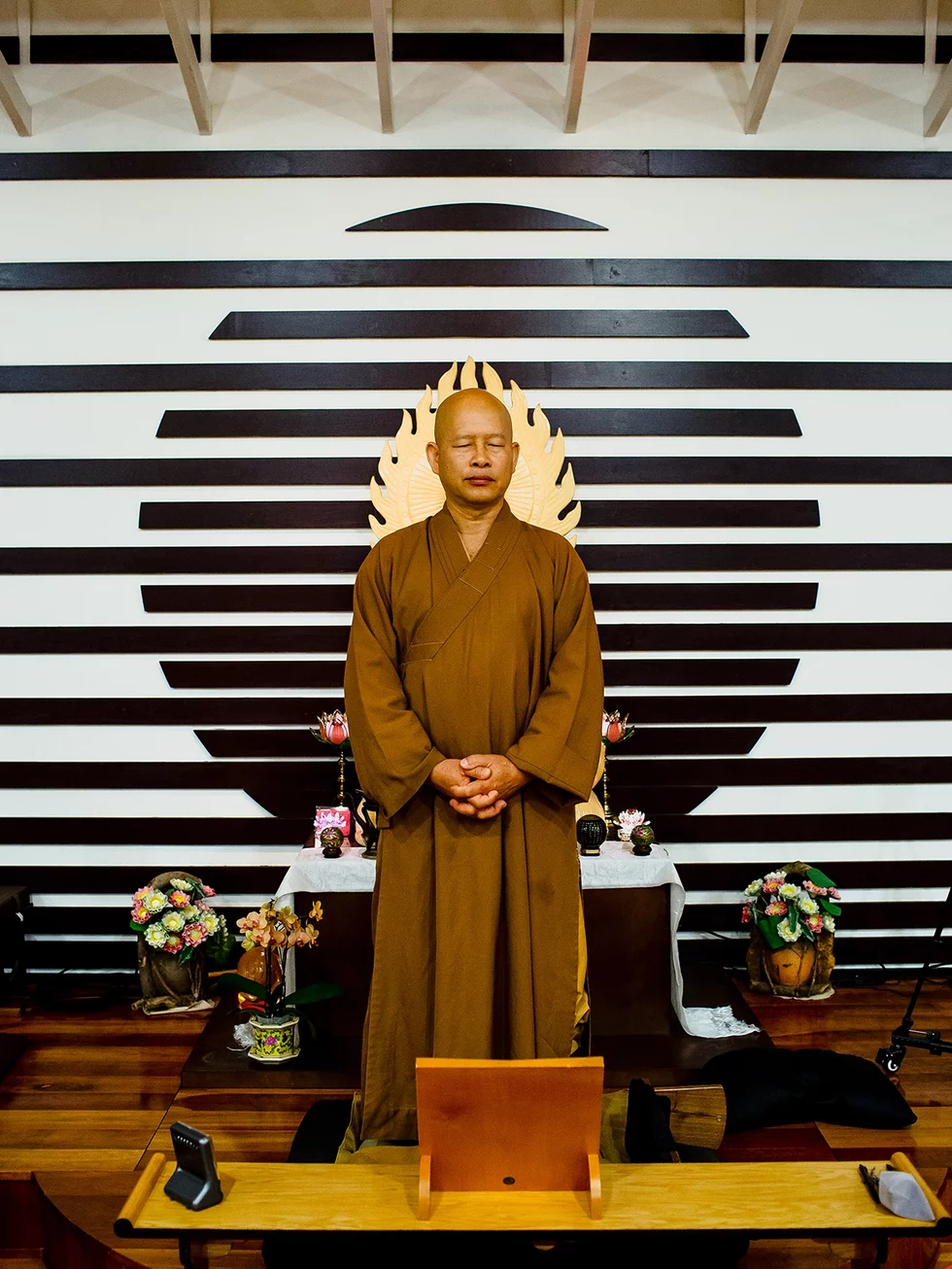
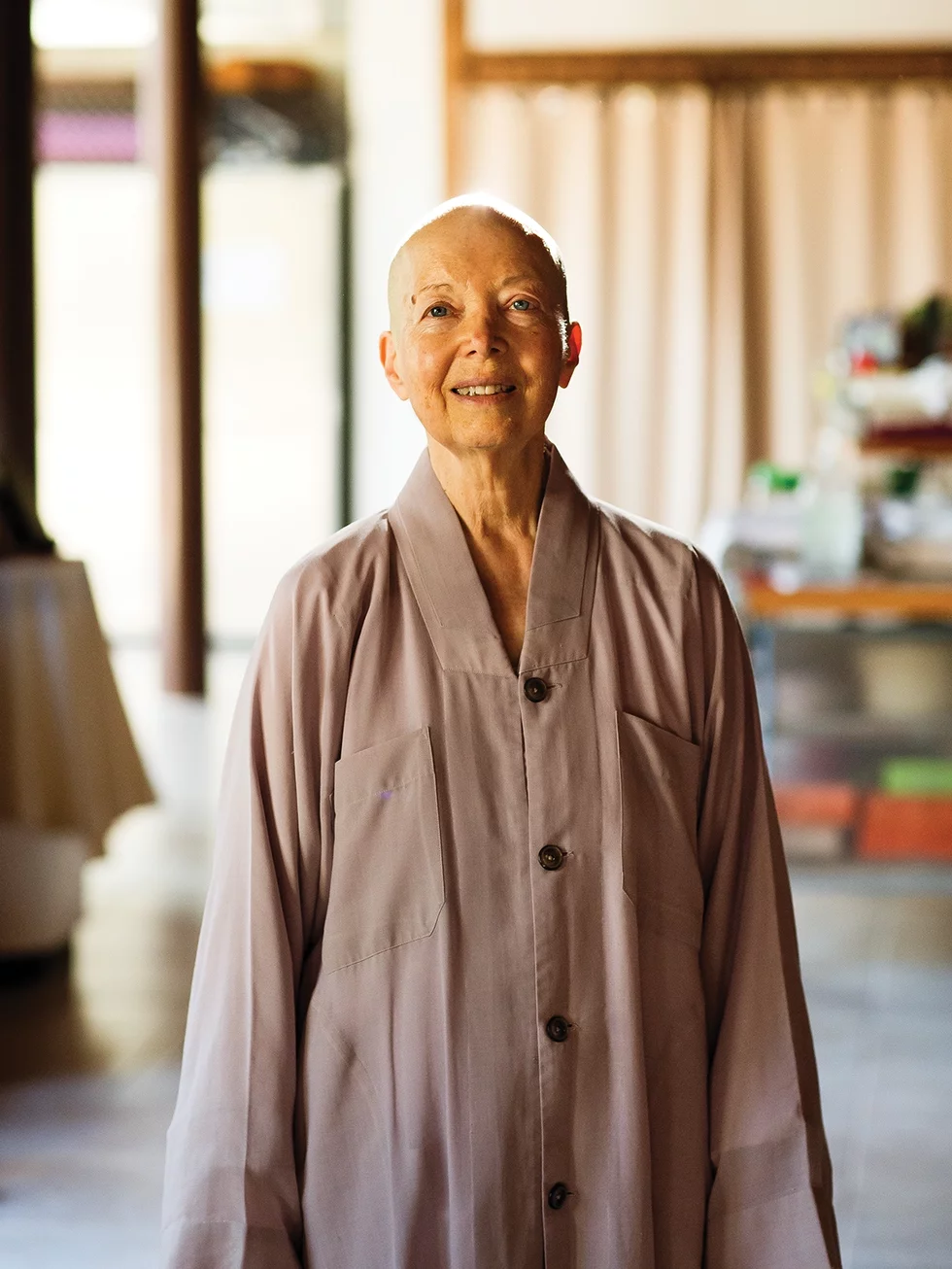
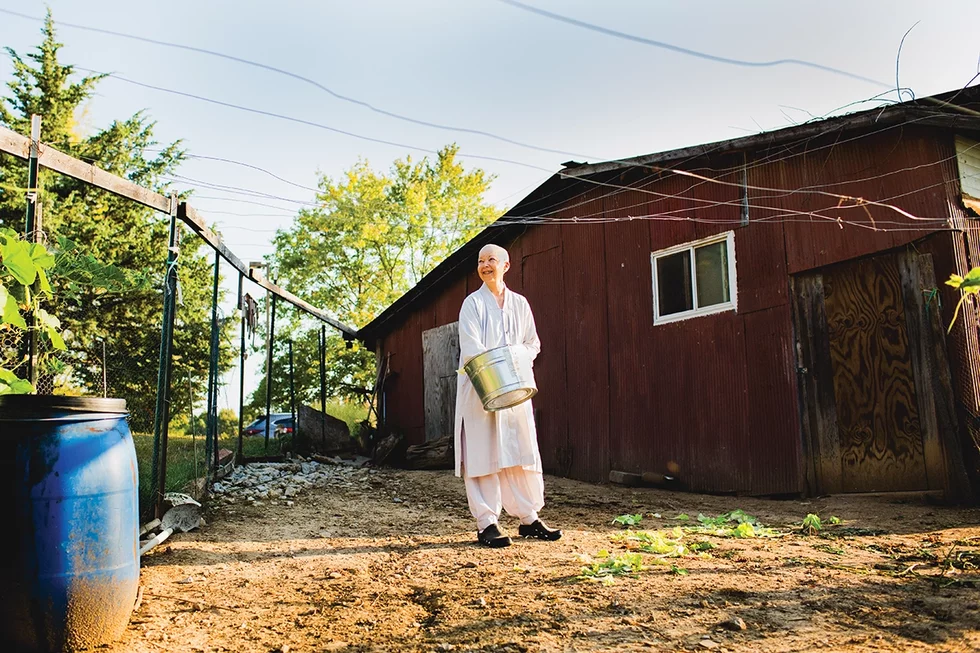
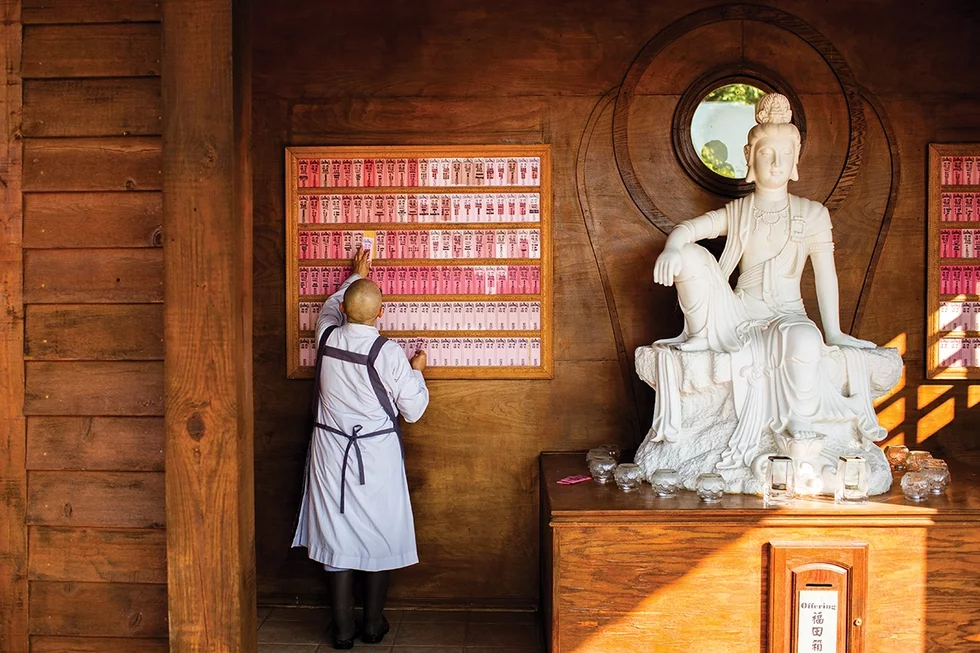
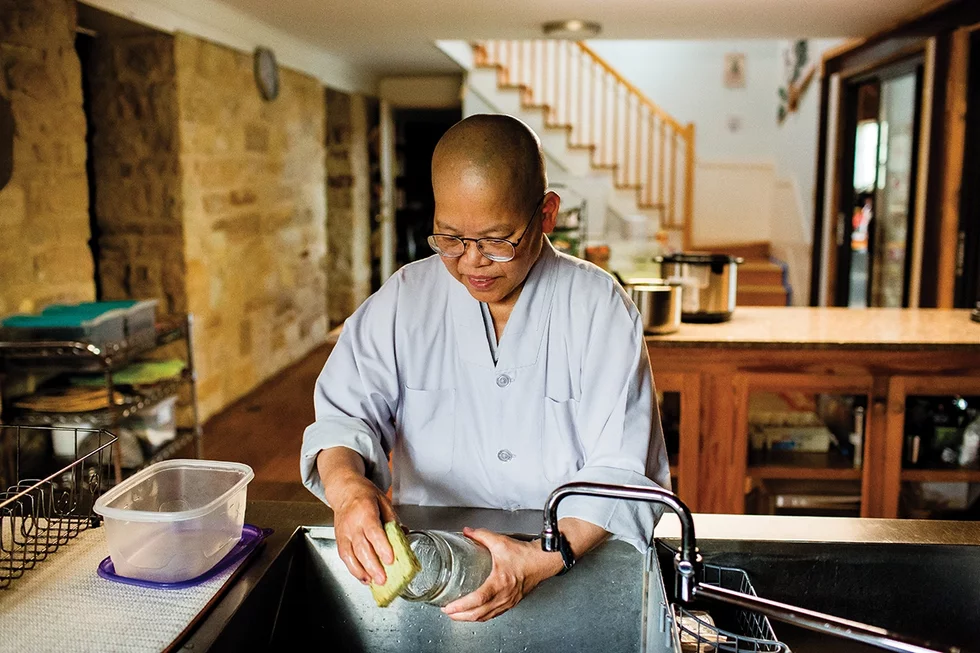
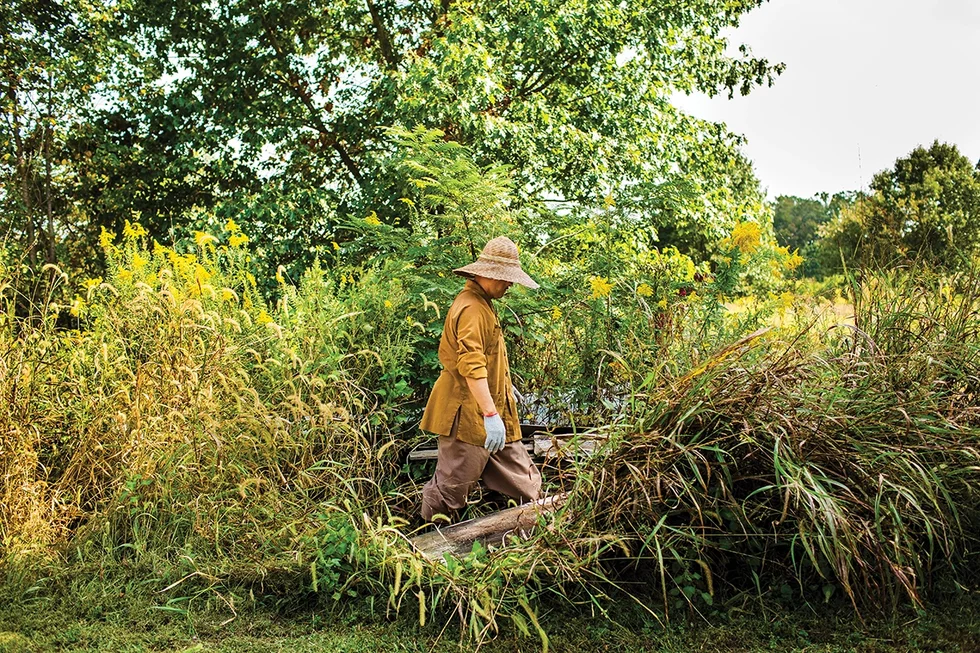
It’s near several wineries but they don’t drink wine. They keep scores of chickens, but they don’t eat chicken. In summer, they rise at 5 a.m. and meditate for an hour. They stretch, chant, do Tai Chi. Then come the chores: cooking (all vegetarian, sometimes with eggs), cleaning (often with homemade detergent derived from fruit peels), and gardening (be it broccoli, beans, bok choy, or chestnuts). In the evening, they meditate for another hour. ¶ They also host retreats. Photographer Ann White went on one in 2023 and resolved to come back and do a photo essay. “I’m hearing it from so many people,” she says. “Things are moving too fast. I have too many obligations. People are just searching to slow down. Even if you can just meditate five minutes a day or walk more peacefully, you can learn these things there, and you don’t have to become a Buddhist.” It’s a notion echoed by one of the nuns, Bhikshuni Kōngshí, who says that Buddhism “is not a believing thing. It’s a thing that you experience…and if it’s good for you, you continue.” ¶ As for Jìrú Shīfù, he sees himself as a reformer, synthesizer, and simplifier of various strains of Buddhism. More than ever, he says, because of the “small machines” (cell phones), people suffer from a “monkey mind”—distracted, fragmentary thoughts. He seeks to help them learn practical skills to address this on a day-to-day basis. He also wants to stay in rural Missouri, which he prefers to big cities such as New York. “I’m a country boy,” he jokes. “The Midwest is more in the spiritual life.”